Did you know your windshield provides up to 60% of your cabin's structural strength in a rollover accident? This glass is more than a transparent barrier. It's a critical safety component and a housing for complex digital sensors. When you require a windshield replacement, you're doing more than fixing a crack. You're restoring the essential structural integrity of your vehicle and ensuring your safety systems perform as designed.
You likely feel some anxiety about vehicle downtime or confusion regarding how your safety cameras work. It's common to worry about insurance claims and whether your driver-assistance systems will remain accurate. This guide provides the clarity you need. You'll understand why modern technology makes professional service more vital than ever. We'll cover the necessity of ADAS recalibration, the impact of new safety laws, and the exact steps to get you back on the road with total confidence. Learn how to protect your passengers and maintain your vehicle's advanced safety features through proper maintenance and expert care.
Key Takeaways
- Understand the vital structural role your glass plays, providing up to 60% of cabin strength during a rollover.
- See how a professional windshield replacement ensures your passenger-side airbags deploy correctly in an emergency.
- Learn why ADAS recalibration is a non-negotiable step for restoring the accuracy of your vehicle's safety sensors.
- Evaluate the differences between OEM and aftermarket glass and how they impact clarity for features like Heads-Up Displays.
- Discover efficient fleet and commercial truck glass solutions designed to minimize downtime and keep your business moving.
Beyond Visibility: The Structural Role of Your Windshield
Most drivers view their glass as a simple way to see the road. It's actually a safety-critical component of the vehicle's frame. Modern automotive engineering relies on the glass to maintain the cabin's shape during impact. Unlike side windows made of tempered glass, your front glass consists of laminated safety glass. This specialized material features a layer of polyvinyl butyral (PVB) sandwiched between two sheets of glass. This design ensures that if the glass breaks, it stays in one piece. It prevents occupants from being ejected and keeps external debris out of the cabin during a collision.
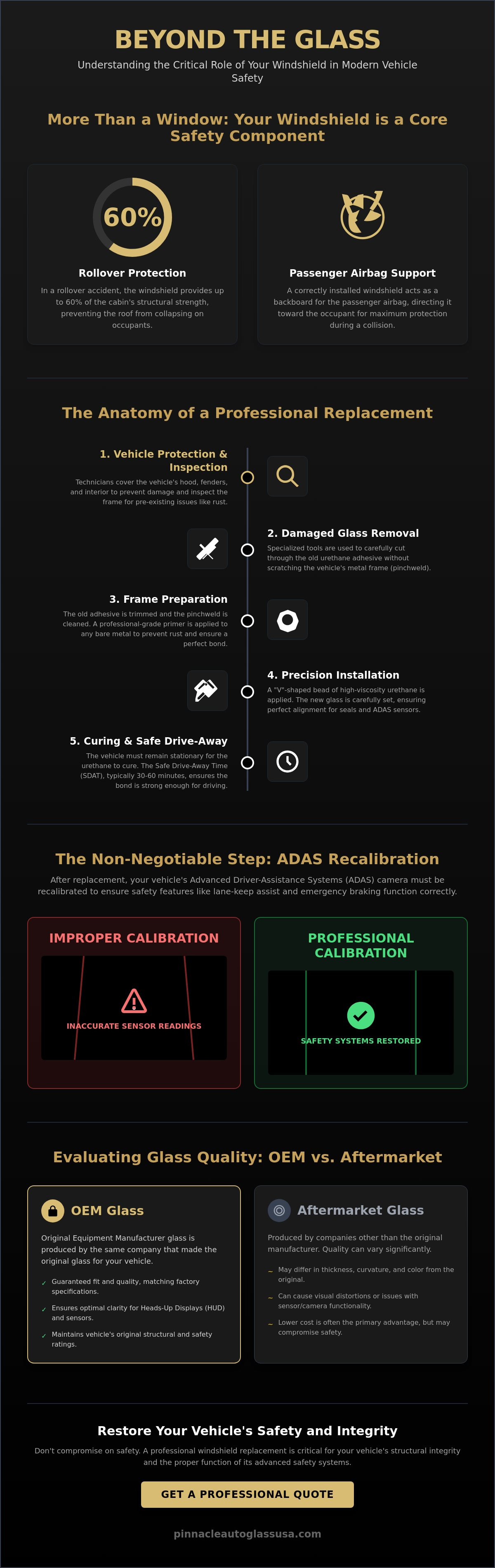
In a rollover accident, the windshield provides up to 60% of the cabin's structural integrity. It acts as a vertical support that prevents the roof from caving in on the passengers. When you ignore a large crack, you're weakening the entire roof structure. A professional windshield replacement restores this strength by using high-grade adhesives to bond the glass to the vehicle frame. This bond must be perfect to handle the immense weight of the vehicle if it flips. If the seal is compromised, the glass can slide or pop out, leading to a catastrophic structural failure.
Airbag Support and Safety Synergy
The passenger-side airbag relies on the glass to work correctly. During a crash, the airbag fires upward and bounces off the interior surface of the windshield. It uses the glass as a solid wall to redirect its expansion toward the passenger. A weak bond or a poorly executed windshield replacement can cause the glass to detach under this extreme pressure. If the glass pops out, the airbag inflates into the empty space outside the car rather than protecting the occupant. This synergy between the glass and the safety system is why precision matters during every installation.
Roof Crush Resistance and Rollover Protection
Roof integrity is the second major structural job of your glass. It serves as a support pillar that prevents the vehicle's roof from collapsing during a rollover. This protection is only possible if the glass remains firmly attached to the pinch weld. Technicians use high-viscosity urethanes to create this essential bond. When the glass is cracked or the seal is degraded, the risk of roof failure increases. A solid windshield helps distribute the force of an impact across the entire frame. This reduces the energy that reaches the passenger compartment and keeps the cabin space intact for the occupants.
While maintaining your vehicle's roof integrity is a priority for road safety, ensuring the durability of your home or business structure is just as critical. For those in need of dependable property maintenance, visit Colorado Pro Roofing to learn about their residential and commercial services.
Professional Replacement Standards: The Step-by-Step Process
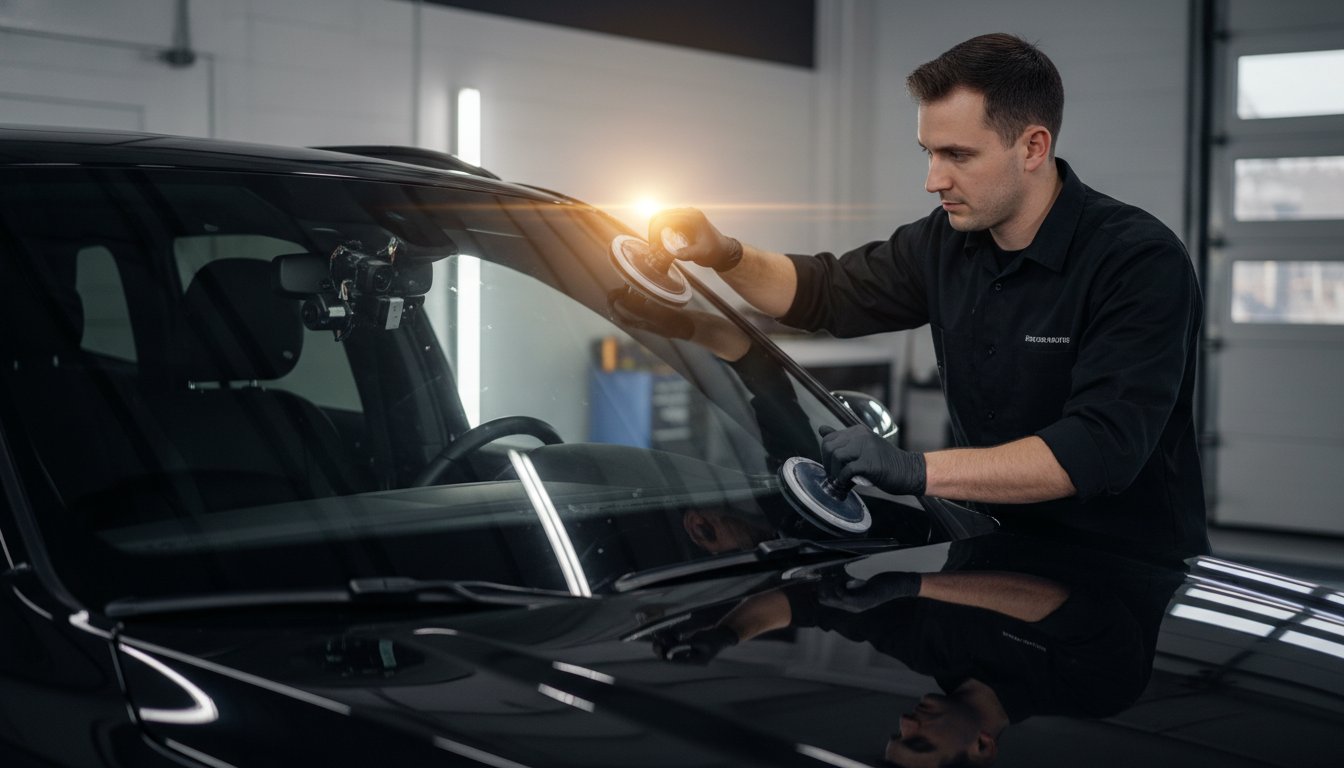
Professional service starts with protection. Technicians begin by inspecting the vehicle's frame and glass for any pre-existing damage. They apply protective covers to the hood and dashboard to prevent scratches or adhesive contamination. Executing a high-quality windshield replacement is a technical operation that requires a controlled environment and specific sequences to ensure the glass stays bonded during an accident. Skipping these preparatory steps can lead to long-term issues like wind noise or water leaks.
The Removal and Preparation Phase
Removing the damaged glass is a delicate task. Professionals use specialized tools like fiber lines or power cutters to slice through the old urethane without gouging the pinchweld. If the metal frame is scratched during removal, it must be treated immediately. Technicians apply professional-grade primers to any bare metal to prevent corrosion. This step is vital because rust can weaken the bond over time, compromising the vehicle's structural integrity. Once the frame is prepped, all old adhesive is trimmed down to a thin, uniform base. This creates a clean surface for the new urethane to grip, ensuring a leak-proof seal that lasts for the life of the glass.
Installation and Curing Requirements
The installation phase focuses on the science of adhesion. Technicians apply a high-viscosity urethane bead in a specific "V" shape. This triangular bead ensures that when the glass is pressed into place, the adhesive spreads evenly without leaving air pockets or gaps. Precision alignment is mandatory during this stage. Even a slight shift can interfere with the accuracy of safety sensors or cameras mounted behind the rearview mirror.
Safety doesn't end when the glass is set. Every windshield replacement follows the Safe Drive Away Time (SDAT) protocol. You must wait for the adhesive to reach a specific level of hardness before operating the vehicle. This waiting period is non-negotiable for your protection.
- Drive-away time: Most modern adhesives allow for a safe drive-away time of 30 to 60 minutes.
- Full cure period: It takes approximately 48 hours for the bond to reach maximum strength.
- Maintenance: Avoid high-pressure car washes for at least 48 hours to protect the curing seal.
Following these timelines ensures the glass remains a permanent, safe part of your vehicle's frame. If you're ready to restore your vehicle's safety, consider scheduling expert glass services today.
The Critical Step: ADAS Recalibration and Safety Systems
Modern vehicles are essentially computers on wheels. Most new cars feature Advanced Driver Assistance Systems (ADAS) to help prevent accidents. These systems rely on forward-facing cameras and sensors usually mounted behind the rearview mirror. When you schedule a windshield replacement, these sensitive components are disturbed. They must be reset to their factory specifications to function correctly. This process is known as recalibration. It ensures your car's "eyes" are looking exactly where they should be.
Precision is the absolute priority here. A camera that is misaligned by a single millimeter can result in a massive error on the road. According to the Auto Glass Safety Council, ADAS recalibration is necessary because a tiny shift can cause your car to miscalculate the distance to the vehicle ahead. This can lead to delayed automatic braking or incorrect lane-departure warnings. Effective December 19, 2025, growing regulatory trends and industry best practices will increasingly require shops to disclose if your vehicle needs this service. This is becoming a critical aspect of legal compliance and personal safety.
How Sensors and Cameras Interact with Glass
The forward-facing camera is the primary sensor for collision avoidance. It tracks lane markings, traffic signs, and other vehicles. If the glass thickness or clarity varies, the camera's vision is compromised. Secondary sensors also rely on the glass. Rain sensors detect moisture to trigger wipers; light sensors manage your automatic high beams. Professional technicians ensure these components are perfectly seated against the new glass to prevent system errors. This attention to detail prevents your safety tech from becoming a liability.
Recalibration Methods: Static vs. Dynamic
Shops use two primary methods to reset these systems. Static recalibration happens in a specialized bay. Technicians set up physical targets at precise distances and use diagnostic tools to align the camera. This requires a level floor and controlled lighting. Dynamic recalibration involves a road test. The vehicle is driven at a specific speed on well-marked roads while connected to a handheld computer. Some vehicles are complex and require both methods. This dual-process ensures your windshield replacement doesn't disable your car's most important safety features.
Evaluating Quality: OEM vs. Aftermarket and Insurance Logistics
Choosing the right glass is a balance between performance and budget. Original Equipment Manufacturer (OEM) glass is identical to the part your vehicle had when it left the factory. It matches the original thickness, tint, and shape exactly. Original Equipment Equivalent (OEE), or aftermarket glass, is a safe alternative produced by different manufacturers. While aftermarket glass can be 50% to 70% less expensive than OEM parts, it must still meet federal safety standards to be used in a windshield replacement. Your choice depends on your vehicle's specific technology and your insurance coverage.
Does Your Choice of Glass Affect Safety?
Modern glass does more than block the wind. If your car features a Heads-Up Display (HUD), the glass requires a specific polarized layer to prevent "ghosting" or double images. Standard aftermarket glass might lack this precision. Optical clarity also impacts ADAS camera performance. Distortions in cheaper glass can cause the camera to misread road lines. You should also consider acoustic glass. This specialized laminated glass features a sound-dampening inner layer that significantly reduces cabin noise. Using the wrong glass type can lead to a louder ride and less reliable safety sensors.
Insurance Claims and Coverage Basics
Navigating insurance doesn't have to be difficult. Most glass damage is covered under the comprehensive portion of your policy. In many cases, filing a glass-only claim won't increase your premiums because these are considered "no-fault" events. However, state laws vary regarding deductibles. As of May 2026, Florida and Kentucky maintain zero-deductible laws for windshield replacement. South Carolina currently offers this benefit, though legislative changes (Bill H. 4817) could shift this to an optional coverage by January 1, 2027.
Legal requirements are also tightening to protect consumers. For example, New York law effective December 19, 2025, requires shops to obtain an insurance claim number before starting any work. This ensures your coverage is verified and prevents surprise bills. A professional shop will handle the paperwork and direct billing for you. If you need help starting your claim, contact our team for expert glass services and we will guide you through the process.
Commercial and Fleet Solutions: Minimizing Vehicle Downtime
For business owners, a cracked windshield represents more than a repair bill. It represents lost revenue and operational delays. Commercial vehicles must meet strict Department of Transportation (DOT) standards for glass safety. Any crack that interferes with the driver's view or compromises the structural integrity of the cabin can lead to a failed inspection. Professional windshield replacement for commercial assets ensures your vehicles remain compliant and your drivers stay safe. Failing a DOT inspection can result in heavy fines and immediate "out-of-service" orders that disrupt your entire supply chain.
Heavy-Duty and Specialized Vehicle Glass
Semi-trucks and large commercial vehicles require specialized handling. Their glass is significantly larger than passenger vehicle glass and must withstand extreme wind pressure at highway speeds. We provide expert installation for various commercial needs:
- Class 8 semi-trucks and tractor-trailers.
- Delivery vans and box trucks with unique glass shapes.
- High-mileage fleet vehicles.
Efficiency for Business Operations
Downtime is the hidden cost of every repair. Bringing a vehicle to a shop consumes fuel and expensive driver hours. Our Fleet Glass Services focus on maximizing your uptime through on-site mobile solutions. We bring the equipment directly to your fleet yard or job site. This allows you to schedule repairs during off-hours or while vehicles are being loaded for their next route. You don't have to worry about the logistics of moving multiple trucks to a service center.
Centralized management is another key benefit for growing businesses. We maintain detailed maintenance records and offer streamlined billing for multiple vehicles. This organized approach helps fleet managers identify recurring issues and reduces long-term liability. By prioritizing speed and precision, we help you keep your delivery schedules intact and your operations running smoothly. Our goal is to act as a dependable partner that simplifies complex technical tasks for your vehicle fleet.
Secure Your Vehicle's Structural Integrity and Technology
Your windshield is a structural pillar that protects you during a rollover and enables your safety sensors to function correctly. A professional windshield replacement ensures that every safety feature, from airbag deployment to lane-departure warnings, remains fully operational. By following strict installation standards and prioritizing ADAS recalibration, you maintain the long-term reliability of your vehicle and the safety of your passengers.
Whether you manage a commercial fleet or need service for your personal car, choosing expert care is the best way to minimize downtime. Pinnacle Auto Glass provides comprehensive solutions, including mobile and in-shop services to fit your schedule. Our team consists of certified ADAS recalibration specialists who understand the fusion of mechanical and digital expertise required for modern vehicles. We handle the technical details and insurance logistics so you can focus on the road ahead.
Get a Professional Windshield Replacement Quote from Pinnacle Auto Glass today. Restore your vehicle's safety and drive with confidence knowing your glass is in expert hands.
Frequently Asked Questions
How long does a professional windshield replacement actually take?
A standard installation typically takes between 60 and 90 minutes to complete. This timeframe includes the removal of the damaged glass, cleaning the pinchweld, and setting the new windshield. If your vehicle requires ADAS recalibration, you should plan for additional time to ensure all safety sensors are properly aligned and tested before you leave the shop.
Can I drive my car immediately after the glass is installed?
You must wait for the Safe Drive Away Time (SDAT) to expire before operating the vehicle. This period is usually 30 to 60 minutes after the glass is set, depending on the type of adhesive used. Driving before the urethane has sufficiently cured can cause the glass to shift, which compromises the seal and the structural safety of the vehicle.
Is it safe to drive with a small crack in my windshield?
Driving with any amount of glass damage is a safety risk. Even a small crack weakens the structural integrity of the glass and can expand rapidly due to road vibrations or temperature shifts. Because the windshield supports the roof during a rollover and aids in airbag deployment, you should address any damage immediately to determine if you need a windshield replacement.
Does my car insurance cover the full cost of windshield replacement?
Coverage depends on your specific insurance policy and your state of residence. Many comprehensive plans cover glass damage, though you may need to pay a deductible. Some states currently mandate zero-deductible glass replacement under certain conditions. You should verify your specific benefits with your insurance provider or ask your service provider to assist with the claim details.
What happens if I don't recalibrate my ADAS cameras after glass replacement?
Your vehicle's safety systems may provide false warnings or fail to respond during an emergency. Misaligned cameras can cause errors in lane-keeping assist and automatic emergency braking systems. Skipping recalibration means your car's safety technology is no longer reliable. Proper calibration ensures the cameras are looking at the road from the correct angle and distance.
What is the difference between an OEM and an aftermarket windshield?
OEM glass is produced by the original manufacturer and matches the factory specifications exactly. Aftermarket glass is made by third-party companies but must still meet federal safety requirements. While aftermarket glass is a safe and cost-effective option for many vehicles, OEM glass is often recommended for cars with specialized technology like Heads-Up Displays to ensure perfect optical clarity.
Will a new windshield leak or whistle if it isn't installed correctly?
Air whistles and water leaks are definite signs of an improper installation. These problems usually stem from gaps in the adhesive bead or poor preparation of the vehicle frame. A professional windshield replacement utilizes a specific V-bead application to create a continuous, airtight seal. If you notice unusual wind noise at highway speeds, the structural bond may be compromised.
How do I know if my windshield needs to be repaired or completely replaced?
Repairs are often possible for small chips or cracks that are not in the driver's direct line of vision. However, if the crack is longer than a few inches, reaches the edge of the glass, or involves multiple points of impact, a replacement is necessary. Technicians also recommend a full replacement if the damage penetrates the inner layer of the laminated glass.


