
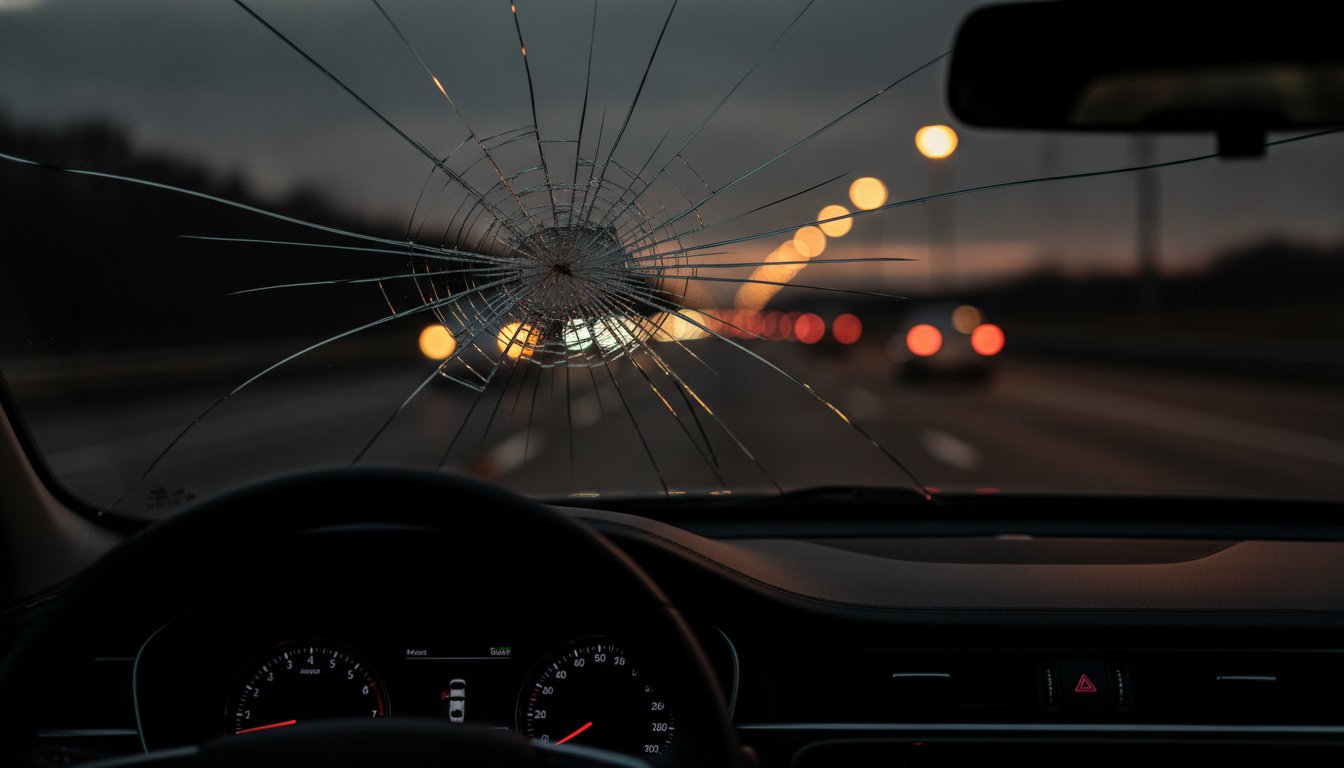
Did you know your windshield provides up to 60% of your vehicle's structural integrity during a rollover accident? It isn't just a window. It's a critical safety device designed to support your roof and ensure proper airbag deployment. Most drivers spot a small chip and assume it's a minor cosmetic issue they can handle later. You likely feel that familiar anxiety when a pebble hits the glass, wondering if that tiny mark will suddenly spiderweb across your view.
The short answer to whether is it safe to drive with cracked windshield damage is usually no. Even a small crack compromises the three pillars of vehicle safety: vision, structure, and technology. This guide explains the specific criteria for repair versus replacement and how federal standards like FMCSA § 393.60 affect your legal standing. You'll also learn why modern Advanced Driver Assistance Systems (ADAS) make professional recalibration a non-negotiable step for your safety. We'll help you identify exactly when it's time to stop driving and seek a professional solution.
Key Takeaways
- Understand why the direct answer to is it safe to drive with cracked windshield damage is no, as any compromise affects your vehicle's structural integrity.
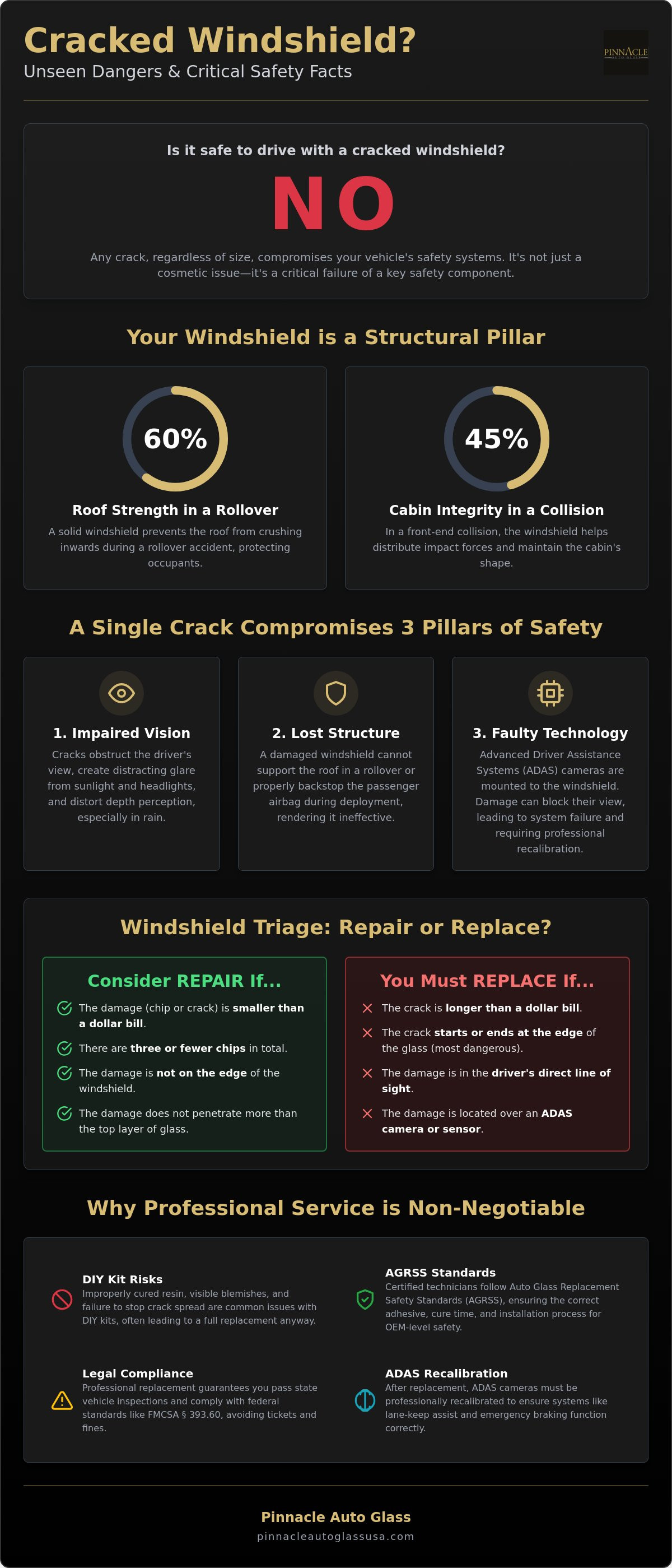
- Discover how your windshield provides up to 60% of your roof's strength during a rollover accident and 45% of cabin integrity in front-end collisions.
- Learn why cameras for Advanced Driver Assistance Systems (ADAS) rely on clear glass and require professional recalibration to maintain safety.
- Use the "Dollar Bill" rule and depth assessment to decide if your damage needs a professional repair or a full replacement.
- Identify the risks of DIY kits and the critical importance of using technicians who follow Auto Glass Replacement Safety Standards (AGRSS).
Is It Safe to Drive With a Cracked Windshield? The Immediate Answer
The short answer is no. Any crack, regardless of its size, compromises the safety and structural integrity of your vehicle. In the automotive industry, "safe" glass refers to the ability of laminated safety glass to withstand a sudden impact and support critical safety systems without failing. When the glass is damaged, it loses the internal tension and strength required to perform these functions effectively. You aren't just looking through a window; you're relying on a structural component of the car's cabin.
The "Field of Vision" rule is a primary standard used by safety experts. Any damage located in the driver's direct line of sight is an immediate safety failure. This isn't just about personal preference. It's about the ability to identify road hazards without visual distortion. Even a small chip can distract the eye or hide a distant object. If you find yourself leaning or stretching to see around a crack, the vehicle is no longer safe to operate.
Glass is highly sensitive to environmental stress. Temperature changes cause the glass to expand and contract. If you turn on the defroster on a cold morning or the air conditioning on a hot afternoon, the thermal shock can cause a chip to spiderweb instantly. Road vibrations from hitting a pothole or driving at highway speeds apply constant pressure to the damaged area. This often leads to "crack spread," where a minor blemish becomes a massive fissure during a single commute. This unpredictability is why is it safe to drive with cracked windshield damage is a question with a clear negative answer.
Visual Obstruction and Glare Hazards
A crack does more than block your view; it changes how light enters the cabin. Cracks refract light, which creates a dangerous glare during sunrise, sunset, or night driving. This refraction can create a "blind spot" effect. A spiderweb crack can easily hide a pedestrian or a cyclist from your view. Rain and snow make this worse. Moisture fills the crack and creates a lens effect that distorts your depth perception and peripheral vision.
Legal Implications and Traffic Citations
Driving with compromised glass often leads to legal trouble. Federal standards like FMCSA § 393.60 dictate that damage must not obscure the driver's view. If an officer determines your windshield is a hazard, you may receive a "fix-it" ticket or a formal citation. Law enforcement prioritizes glass safety because it's a visible indicator of vehicle maintenance. Additionally, you'll likely fail a state vehicle inspection if the damage falls within the wiper path. Addressing the issue early prevents these costly legal interruptions.
The Structural Role of Your Windshield in a Collision
In modern automotive engineering, the windshield is far more than a transparent barrier. It's a "stressed member" of the vehicle's frame. Engineers design the glass to carry part of the structural load during both normal driving and emergency maneuvers. When drivers ask is it safe to drive with cracked windshield damage, they often overlook this load-bearing reality. A damaged windshield cannot distribute these forces correctly. It's a compromised component in a complex safety system.
During a front-end collision, the windshield provides up to 45% of the cabin's structural integrity. This percentage increases significantly in a rollover accident, where the glass provides up to 60% of the roof's strength. It acts as a pillar that prevents the roof from crushing the passengers inside. A crack acts as a perforation in this safety shield. Just like a pre-cut line on a piece of paper, the glass will fail along the crack line when under pressure. Solid glass can resist thousands of pounds of force, but perforated glass yields almost instantly. Adhering to NHTSA safety standards for windshields ensures your vehicle maintains these life-saving capabilities.
Airbag Deployment and Support
The passenger-side airbag uses the windshield as a critical backstop to deploy correctly toward the occupant. If the glass is already damaged, the explosive force of the airbag can cause the windshield to shatter or pop out of the frame. This failure leaves the airbag without the necessary support to protect the passenger, rendering the safety device useless. The Polyvinyl Butyral (PVB) interlayer is the plastic core that keeps laminated glass together. Cracks weaken the bond between the PVB and the glass layers. This reduces the glass's ability to absorb energy during a crash.
Edge Cracks vs. Center Chips
Cracks that reach the edge of the glass are the most dangerous from a structural standpoint. The black enamel border, known as the "frit," is the primary bonding surface for the adhesive. An edge crack compromises this adhesive seal that holds the glass to the vehicle frame. If the bond is weak, the entire glass pane may eject during a high-speed collision. This increases the risk of the roof collapsing or the occupants being thrown from the vehicle. Because structural integrity is paramount, a professional windshield replacement is the only way to restore the original safety ratings of your car.
Cracked Windshields and ADAS Technology
Modern vehicles are essentially computers on wheels. Most new models feature Advanced Driver Assistance Systems (ADAS) that act as an extra set of eyes for the driver. These systems rely on high-definition cameras mounted directly behind the rearview mirror. These cameras must have a perfectly clear view of the road to function. If you are asking is it safe to drive with cracked windshield damage on an ADAS-equipped car, the risks are significantly higher than on older models. Even a hairline fracture can refract sunlight or streetlights directly into the camera lens. This leads to data errors that can compromise your safety.
The camera monitors a specific "keep out" zone on the glass. This area is calibrated to precise mathematical tolerances. If a crack or chip enters this zone, the camera may misinterpret the visual distortion as a physical obstacle on the road. This can trigger "ghost" obstacles. In some cases, the car may engage automatic emergency braking while you are traveling at highway speeds because it "sees" the crack as a stopped vehicle. Maintaining federal motor vehicle safety standards ensures that your windshield remains a reliable housing for these critical sensors. This unpredictability is why drivers often question is it safe to drive with cracked windshield damage when their sensors start acting up.
Lane Departure and Collision Warning Systems
Damage to the glass directly interferes with Lane Keep Assist (LKA) and Forward Collision Warning (FCW). These systems track lane markings and calculate the distance to surrounding traffic. If a spiderweb crack distorts the camera's perspective, the system might steer the car incorrectly or fail to warn you of a pending collision. In many cases, the vehicle's computer will detect the obstruction and disable these safety features entirely. For a deeper look at the technology behind these systems, read our ADAS Calibration and Auto Glass: The Complete 2026 Reference Guide.
The Necessity of Recalibration
Installing a new windshield is only half the job. Every time a windshield is replaced, the camera must be recalibrated to its new environment. Even a shift of a single millimeter at the glass level can result in a safety system being off by several feet at a distance of 100 yards. Professional recalibration restores the precise alignment required for your car to protect you. Choosing a specialist like Pinnacle Auto Glass ensures that your ADAS recalibration is performed by experts who understand the intersection of automotive glass and computer vision. This precision is what keeps your safety systems reliable and your vehicle road-ready.
Windshield Triage: When to Repair vs. Replace
Determining the right course of action for glass damage requires a methodical assessment. Most drivers wonder is it safe to drive with cracked windshield damage while they wait for a convenient time to visit a shop. However, the decision to repair or replace is based on strict safety criteria. We use four primary factors to evaluate the severity of the damage: size, depth, quantity, and location. Ignoring these standards can lead to a sudden glass failure when you least expect it.
The "Dollar Bill" rule is a standard industry benchmark. If the crack or chip is larger than a standard dollar bill, a professional replacement is mandatory. Beyond size, we look at the depth of the impact. Automotive glass consists of two glass layers with a plastic interlayer. If the damage penetrates that inner layer, a repair cannot restore the necessary structural strength. We also consider the quantity of damage. If your windshield has more than three chips, the cumulative weakness usually triggers a recommendation for a full replacement. Finally, location is critical. Any damage in the "acute area" directly in front of the driver requires a new windshield to ensure an unobstructed view.
Criteria for Professional Repair
A rock chip is often a candidate for resin injection if it's caught early. This process involves cleaning the impact site and injecting a specialized clear resin that bonds the glass back together. It's an effective way to stop a chip before it spiders into a non-repairable crack. Time is your enemy here. Environmental stress and road vibrations will eventually expand even the smallest mark. You can learn more about the technical process in our Professional Windshield Repair: A Comprehensive 2026 Guide. Early intervention saves money and maintains your original factory seal.
When Replacement is the Only Safe Option
Certain types of damage make a repair impossible or unsafe. Cracks longer than 6 inches are too unstable for resin to hold. Similarly, any crack that reaches the edge of the frame compromises the adhesive bond and requires a full swap. Contamination is another major factor. If dirt, oil, or rain penetrates a crack, the resin cannot create a clean bond, leaving the glass weak. You must also replace the glass if damage occurs over ADAS sensors or integrated heating elements. These sensitive components require perfect glass clarity to function. To ensure your vehicle meets all safety standards, schedule a windshield replacement with our expert team today.
Professional Glass Solutions: Restoring Your Vehicle's Safety
DIY repair kits are a popular temporary fix, but they rarely restore the structural integrity of your vehicle. These consumer-grade kits lack the industrial-strength vacuum and pressure tools required to fully evacuate air from a crack. Without a perfect vacuum, the resin cannot penetrate deeply enough to bond the glass layers back together. While a DIY kit might hide a blemish, it does not answer the question of is it safe to drive with cracked windshield damage with a resounding yes. These products focus on aesthetics but ignore the load-bearing requirements of modern safety glass.
Professional technicians follow the Auto Glass Replacement Safety Standard (AGRSS). This strict protocol dictates every step of the process, from the specific chemical primers used to the precise cure time for the adhesive. Following these standards ensures your cabin remains a pressurized, quiet, and safe environment. A professional installation prevents air leaks and wind whistling. More importantly, it guarantees that the glass will stay bonded to the frame during a collision. This bond is what allows your roof to stay upright and your airbags to deploy as intended.
Navigating the repair process is more straightforward than most drivers expect. Mobile service options allow technicians to reach you at home or work, minimizing your time off the road. Many insurance providers waive deductibles for chip repairs because they prefer to stop the damage before it requires a full replacement. We handle the paperwork and coordination with your insurance carrier to ensure the process is seamless. This professional oversight eliminates the guesswork and restores your vehicle to factory safety levels.
The Pinnacle Auto Glass Standard
We prioritize your safety by using only high-quality glass and professional-grade adhesives that meet or exceed original equipment manufacturer (OEM) specifications. Our team provides an integrated approach that addresses both physical and technological needs. We don't just swap the glass; we perform full ADAS recalibration in the same service to ensure your safety sensors are perfectly aligned. You can learn more about our commitment to quality in our guide on Pinnacle Auto Glass: Professional Solutions for Modern Vehicle Safety.
Next Steps: Getting Back on the Road Safely
If you have a fresh crack, place a small piece of clear tape over the damage to keep out dirt and moisture. This simple step keeps the area clean and increases the chances of a successful repair. During a professional replacement, we remove the old glass, prep the frame, and set the new pane with precision. We then guide you through the "drive-away time" to ensure the adhesive has fully cured. Ultimately, the question of is it safe to drive with cracked windshield damage is resolved by restoring the vehicle to its original factory specifications. Schedule your professional windshield service with Pinnacle Auto Glass today.
Prioritize Your Road Safety and Structural Integrity
Your windshield is a sophisticated safety component that protects you in ways a simple window cannot. It supports your vehicle's roof, ensures airbags deploy correctly, and provides the clear vision your ADAS sensors require to function. When you ask is it safe to drive with cracked windshield damage, the answer depends on the integrity of these systems. Delaying a repair or replacement doesn't just risk a citation; it compromises the foundational safety of your car or commercial fleet.
Pinnacle Auto Glass offers the specialized expertise needed for modern vehicles. Our certified auto glass technicians follow strict AGRSS standards to restore your vehicle to factory specifications. We provide expert ADAS recalibration services alongside our glass solutions, ensuring your technology and structural frame work in perfect harmony. Whether you manage a commercial fleet or own a personal vehicle, we are ready to assist. Get a Professional Windshield Quote from Pinnacle Auto Glass and drive with confidence knowing your vehicle is fully protected.
Frequently Asked Questions
Will a cracked windshield shatter while I am driving?
No, your windshield will not shatter into loose pieces of glass while you drive. Modern vehicles use laminated safety glass with a plastic interlayer that holds the pane together even when broken. However, the glass loses its ability to support the roof or withstand an impact. While it won't rain shards on you, the lack of structural support makes it unsafe to continue driving.
Can a cracked windshield fail during a car wash?
Yes, a car wash can cause a cracked windshield to fail or spread significantly. High-pressure water jets and heavy mechanical brushes apply concentrated force to the glass surface. This pressure can push against the crack, forcing it to expand across the entire pane. Additionally, the rapid temperature change from the water can trigger thermal shock, causing the glass to fracture further.
How long can I wait before a small crack becomes dangerous?
You shouldn't wait at all because a small crack can become a major safety hazard in seconds. The answer to is it safe to drive with cracked windshield damage is always no because hitting a pothole, driving at high speeds, or using your defroster creates enough stress to spread the damage. A small chip is often repairable, but once it spreads, you'll need a full replacement.
Is it illegal to drive with a cracked windshield in the United States?
It is often illegal to drive with a cracked windshield if the damage obstructs the driver's view. Federal regulation FMCSA § 393.60 prohibits cracks that intersect or damage larger than 3/4 of an inch in the wiper area. Many states issue "fix-it" tickets or citations for glass damage. Officers prioritize this because it impacts your ability to see hazards and pedestrians clearly while on the road.
Does insurance usually cover the cost of windshield replacement?
Most comprehensive insurance policies cover windshield replacement and repair costs. In many cases, insurance companies waive the deductible for chip repairs to prevent more expensive replacements later. States like Florida currently require insurers to cover the full cost of replacement without a deductible for drivers with comprehensive coverage. Check your specific policy details to see if your glass claim is fully covered.
What happens if I don't recalibrate my cameras after a windshield replacement?
Your Advanced Driver Assistance Systems (ADAS) will likely malfunction or shut down entirely without proper recalibration. Cameras mounted to the glass must be aligned to within a fraction of a millimeter to function correctly. If the system is off, your car might engage emergency braking for no reason or fail to warn you when you drift out of your lane. This creates a significant risk.
Can a windshield crack spread if the car is just sitting in the driveway?
Yes, a crack can spread even when your vehicle is parked and stationary. Temperature fluctuations are the primary cause of this movement. As the glass heats up in the sun and cools down at night, it expands and contracts. This constant movement puts pressure on the weak point of the crack, causing it to grow. Even a car sitting in a driveway is subject to environmental stress.
Is a repair as strong as the original glass?
A professional repair is designed to restore the structural integrity of the glass and prevent further cracking. While it is incredibly strong and sufficient for daily driving, it is not a 100% restoration of the factory-original strength. This is why technicians have strict limits on repairable damage. Ultimately, if you're wondering is it safe to drive with cracked windshield damage that has been professionally repaired, the answer is yes.


