Did you know that your windshield provides up to 60% of your vehicle's cabin strength during a rollover accident? It is easy to feel anxious when a pebble strikes your glass, leaving a small chip in your line of sight. You likely worry about the crack spreading overnight or wonder if your insurance covers the fix. Most drivers feel the same pressure to act quickly before a simple windshield repair turns into an expensive total replacement.
This guide explains how professional service restores 90-95% of your glass's original structural integrity. We promise to clarify the differences between DIY kits and expert solutions so you can make an informed choice. You will also learn about the critical role of ADAS recalibration for safety cameras and how 2026 legislation in states like New York and Vermont affects your coverage. We'll outline the specific limits of glass restoration, the benefits of professional resins, and the steps to take to ensure your safety systems remain fully functional.
Key Takeaways
- Use the "Dollar Bill Rule" to quickly assess whether your glass damage is eligible for a quick fix or requires a full replacement.
- Learn why professional windshield repair utilizes specialized vacuum technology and high-grade resins to outperform standard consumer kits.
- Identify how the location of a chip can impact your vehicle's safety cameras and advanced driver assistance systems (ADAS).
- Understand the critical role your glass plays in maintaining cabin strength and how to restore that integrity after a strike.
- Compare the benefits of mobile and in-shop services to find the most reliable and efficient solution for your schedule.
What is Windshield Repair and Why is it Critical?
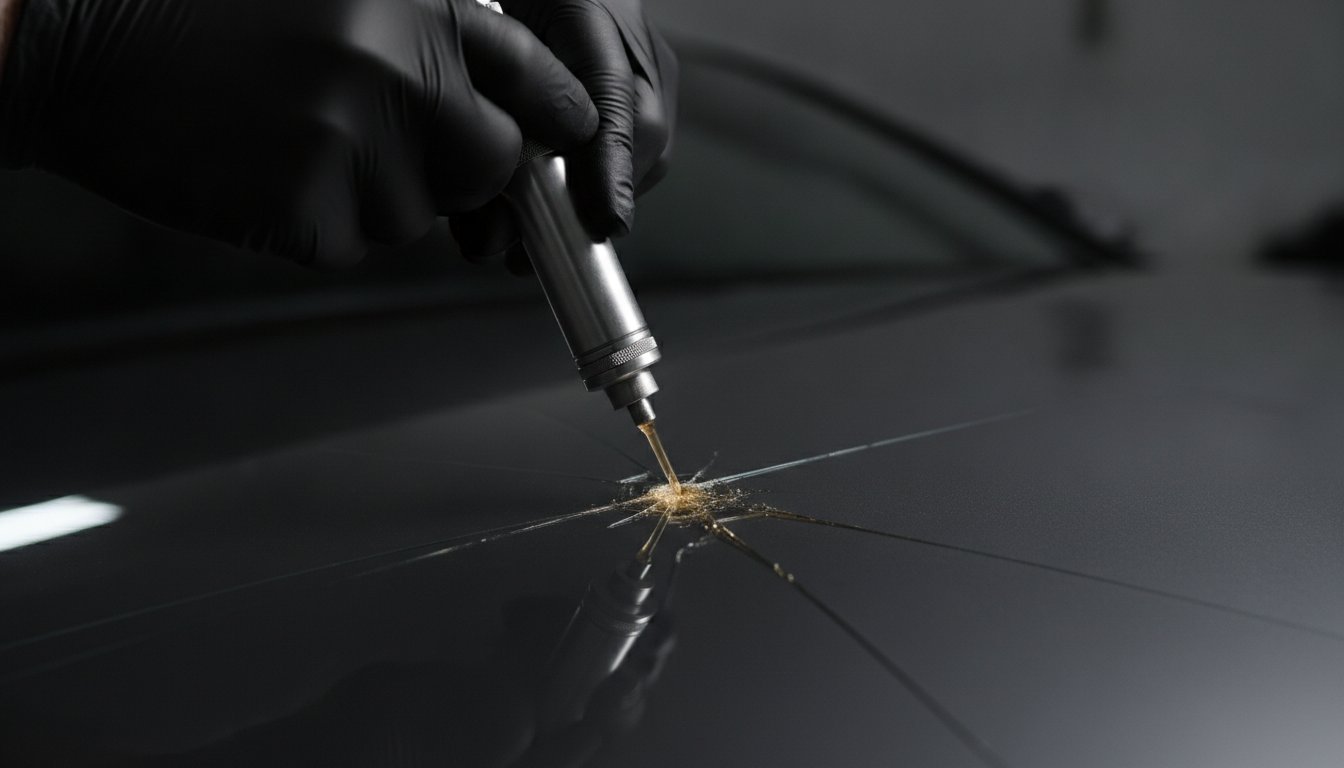
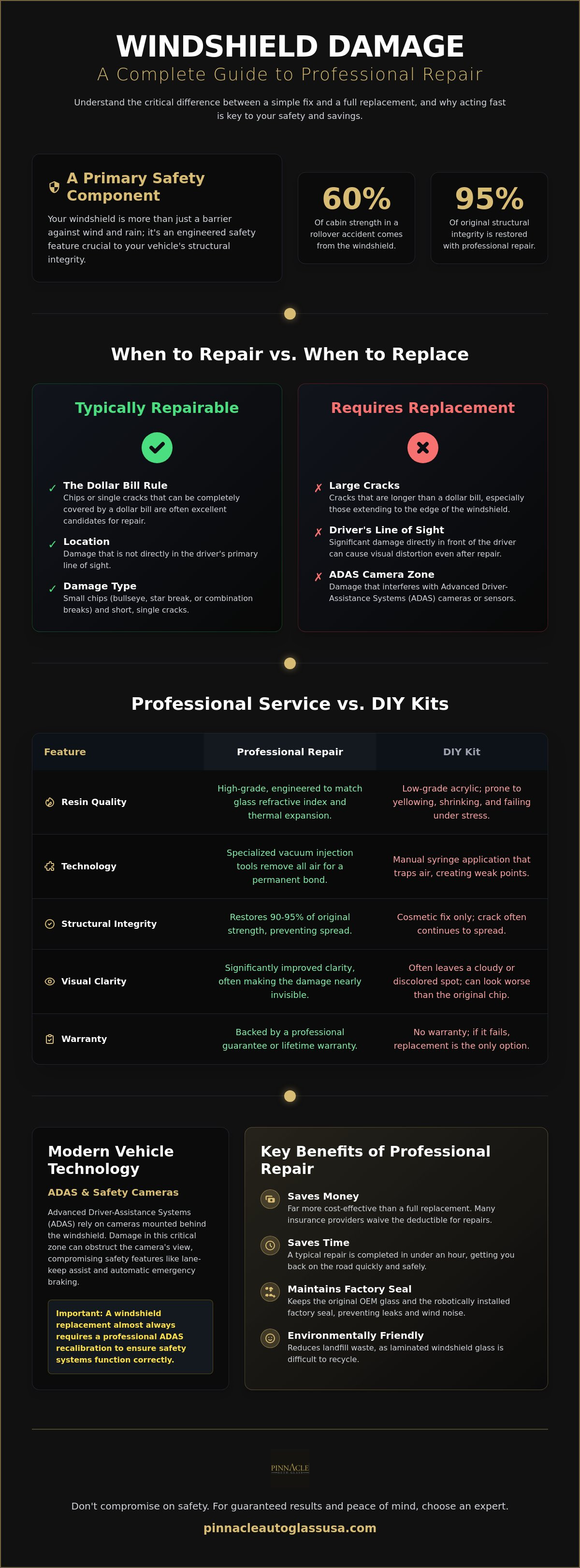
Professional Windshield safety glass is a marvel of modern automotive engineering. It does more than block wind and debris; it acts as a primary safety component of your vehicle's frame. Professional windshield repair is a technical process that uses a vacuum-sealed resin injection to restore the glass. Unlike retail kits that simply bridge a gap, a professional technician uses specialized tools to remove all air from the break before injecting high-grade resin. This process can restore 90-95% of the glass's original structural integrity, preventing the damage from spreading further.
The windshield provides up to 60% of the cabin's structural strength in a rollover accident. It also provides the necessary support for the passenger-side airbag to deploy correctly. Even a minor chip creates a weak point that can fail under pressure. Choosing a repair-first approach allows you to keep your Original Equipment Manufacturer (OEM) glass and the factory seal. This seal is installed by precision robots in a controlled environment. Maintaining it is the best way to ensure your vehicle remains as safe as the day it was built.
Urgency is essential when dealing with glass damage. Small chips are highly sensitive to temperature changes. When you turn on the defroster on a cold morning or the air conditioning on a hot afternoon, the glass expands and contracts. These fluctuations often cause a small chip to "spiderweb" into a massive crack within minutes. Acting quickly saves you from the higher costs and complexity of a full replacement.
The Science of Laminated Safety Glass
Modern windshields feature a triple-layer construction. Two sheets of glass are bonded together by a plastic interlayer, typically made of polyvinyl butyral (PVB). This inner layer is designed to prevent the glass from shattering into dangerous shards during an impact. While the PVB layer stays intact, a surface chip compromises the tension of the outer glass sheet. This disruption creates a focal point for stress. If left untreated, the tension eventually releases, causing the crack to migrate across the entire surface of the windshield.
Economic and Environmental Benefits
Opting for a repair is a practical financial move. Most insurance companies prefer this route because it is significantly more cost-effective than a total replacement. Many providers will even waive your deductible entirely for a professional repair. Beyond the immediate savings, this choice supports environmental sustainability. Laminated glass is difficult to recycle due to the plastic interlayer, and millions of windshields end up in landfills every year. By extending the life of your existing glass, you reduce waste and avoid potential post-replacement issues like wind noise or water leaks.
Professional Windshield Repair vs. DIY Kits: A Comparison
Many drivers are tempted by the convenience of a $20 retail kit found at a local auto parts store. These products promise a quick fix but rarely provide a permanent solution. The primary difference lies in the chemistry of the materials. Professional-grade resins are specifically engineered to match the refractive index of automotive glass. These resins are designed to expand and contract at the same rate as the glass itself. This prevents the bond from shearing when the sun hits the windshield. Consumer-grade resins are frequently thin acrylics that lack the bonding strength required to withstand road vibrations and extreme temperature swings.
Retail kits also lack a formal warranty. If a DIY repair fails or the crack continues to spread, the manufacturer offers no protection. At that point, the glass is usually too contaminated with low-quality resin to be fixed again. This leaves you with no choice but to pay for a full replacement. Professional service provides the peace of mind that the job is done right the first time. It is a reliable way to avoid the higher costs associated with replacing modern, tech-heavy glass.
The Vacuum Injection Advantage
A professional windshield repair relies on specialized bridge tools that create a high-pressure seal over the impact point. This equipment performs a critical function that manual kits cannot replicate: it creates a vacuum to pull every microscopic air bubble out of the break. Removing air is the only way to ensure the resin makes full contact with the glass surfaces. DIY kits often "hide" the crack by filling it partially, but trapped air remains inside. These air pockets act as weak points that can cause the glass to fail under stress. A professional vacuum injection ensures a solid, permanent bond that restores the structural integrity of your vehicle.
Longevity and Visual Clarity
Visual results depend heavily on how the resin cures. Professionals use high-intensity UV lamps calibrated to specific wavelengths. This precise curing process ensures the repair stays clear and stable for the life of the vehicle. In contrast, DIY resins often cure unevenly under natural sunlight. Over time, sun exposure causes these cheaper chemicals to shrink or turn yellow, a phenomenon known as "blooming." This cloudiness can obstruct your view and become a permanent distraction. Optical clarity is the measure of how well light passes through the repaired area without distortion or discoloration. To maintain this clarity, you should choose a professional windshield repair service to ensure your view remains unobstructed.
Assessment Criteria: When to Repair and When to Replace
Deciding between a quick fix and a full overhaul requires a methodical assessment of the damage. Professional technicians use the "Dollar Bill Rule" as a primary benchmark. If a crack is shorter than a six-inch bill, it is often a candidate for windshield repair. For chips, the diameter should generally be smaller than a quarter. However, size is only one part of the equation. We also evaluate the severity of the impact and whether the damage has penetrated the inner plastic layer. If you have more than three chips on a single piece of glass, the structural integrity is considered compromised. In such cases, the glass can no longer reliably support the roof in a rollover event.
Location is just as critical as size. Any damage located directly in the driver's line of sight presents a safety risk. Even a high-quality repair can leave a slight blur or "scar" in the glass. This distortion can distract you or catch the glare of oncoming headlights at night. To ensure maximum visibility, industry standards often dictate that chips in this critical viewing area should not be repaired. We prioritize your safety by recommending a new windshield when your vision is even slightly obscured.
The 6-Inch Benchmark for Cracks
Cracks come in several forms, including bullseyes, stars, and combination breaks. A bullseye has a circular shape with a dark center, while a star break features small cracks radiating from the point of impact. If these cracks extend beyond six inches, the tension within the glass is too high for resin to hold. In these cases, a full windshield replacement is the only safe path forward. Timing also plays a role. If a crack is old, dirt and road oils can settle into the crevice. This debris prevents the resin from bonding, making even a short crack unrepairable. You should cover a new chip with a piece of clear tape to keep it clean until you can get it fixed.
Critical "No-Repair" Zones
The edges of your windshield are its most vulnerable points. We observe a strict "no-repair" zone within the outer two inches of the glass perimeter. This area is where the glass is bonded to the vehicle's metal frame. A crack that reaches the edge compromises this structural bond and increases the risk of the glass failing during an accident. If your damage is located in the center of the glass, you can safely seek chipped windshield repair near me to resolve the issue. However, if the damage touches the black ceramic "frit" border, replacement is almost always the mandatory solution for your safety.
The Impact of Modern Vehicle Tech on Glass Repair
Modern vehicles are mobile computers. They rely on Advanced Driver Assistance Systems (ADAS) to keep you safe on the road. These systems use cameras and sensors that are often mounted directly to the interior of your windshield. This shift in automotive design has fundamentally changed the requirements for a successful windshield repair. It is no longer just a cosmetic or structural fix. It is now a critical maintenance step for your vehicle's safety electronics. If a chip or crack appears in the camera's line of sight, the repair process becomes much more complex.
A camera views the world through the glass just like you do. However, cameras are far more sensitive to light refraction. Even a high-quality repair can create a microscopic distortion in the glass's optical properties. This distortion can lead to system malfunctions. Your lane-keep assist might drift, or your automatic emergency braking could trigger unexpectedly. Because of these risks, many vehicle manufacturers now mandate a full glass replacement for any damage located in the camera's "viewing window."
ADAS Camera Clarity and Safety
Forward-facing cameras require a clear, unobstructed path to process visual data. When a technician performs a repair, they must ensure the resin is completely free of air bubbles and contaminants. A single microscopic bubble can act like a prism, bending light and confusing the safety computer. The relationship between glass and technology is so tight that ADAS calibration auto glass standards often require a flawless surface. If the repair cannot meet these strict optical standards, the system will not calibrate correctly, leaving your safety features disabled.
Sensor Obstruction Hazards
Your windshield likely houses more than just a camera. Rain sensors and light sensors are also common. These components detect moisture and ambient light to automate your wipers and headlights. A chip near these sensors can cause them to fail or act erratically. Professional technicians assess these sensor-heavy areas before beginning any windshield repair. They determine if the damage will interfere with the sensor's "eyes." After completing a cracked windshield repair, it is essential to run a diagnostic check. This ensures all automated systems are still communicating properly. If your vehicle features advanced safety tech, schedule a professional inspection to ensure your sensors are functioning at 100% efficiency.
Choosing an Expert for Your Auto Glass Service
Selecting the right specialist is the final and most important step in securing your vehicle. You need a partner who understands the high-tech nature of 2026 automotive glass and the precision required for a permanent fix. A professional auto glass specialist doesn't just fill a hole; they restore a safety component. Look for providers who utilize laboratory-tested resins and follow rigorous national safety standards. A dependable guide will always prioritize the long-term safety of your vehicle over a quick, low-quality fix.
Convenience is a major factor when scheduling a windshield repair. Mobile services allow a technician to come directly to your home or office. This is often the best way to address a chip before it has a chance to spread due to road vibrations. Most mobile repairs are completed in less than 30 minutes, allowing you to get back on the road quickly. In some cases, damage located near complex ADAS sensors might require an in-shop visit to ensure a perfectly controlled environment. Both options should deliver a result that meets factory safety specifications.
Evaluating Technician Certifications
Modern cars are far more complex than vehicles from a decade ago. This complexity is why certified auto glass technicians are necessary for modern vehicles. When you speak with a provider, ask about their resin quality and the specific UV wavelengths they use for curing. These technical details determine if the repair will remain clear or become a blurry distraction later. You should also confirm that the business offers a lifetime warranty on the repair. A professional operation stands behind its work and ensures that the bond will last as long as you own the car.
Streamlining the Insurance Process
Navigating insurance claims can be a hurdle for many drivers. However, most insurance companies are eager to cover the cost of a professional repair. They often waive the deductible entirely because fixing a chip is much more cost-effective than a total replacement. In states like Florida, Arizona, Kentucky, and South Carolina, zero-deductible glass service is actually mandated by law. A qualified specialist can handle all the paperwork and bill your insurance company directly. This process saves you from out-of-pocket expenses and ensures your claim is filed correctly. Choosing a national provider like Pinnacle Auto Glass gives you access to high safety standards and efficient administrative support, making the entire experience seamless.
Secure Your Vehicle's Safety and Value Today
Maintaining your auto glass is a fundamental part of modern vehicle ownership. You now understand that professional resin injection is the only way to restore the structural integrity of your glass while protecting your safety electronics. Acting quickly on small chips prevents them from spreading into expensive cracks and ensures your ADAS cameras remain functional. A high-quality windshield repair is a cost-effective alternative to a full replacement, especially when your insurance provider waives the deductible. By choosing an expert, you protect both your vehicle's frame and its resale value.
Pinnacle Auto Glass provides the technical expertise needed for personal vehicles and commercial fleet glass. Our services include expert ADAS recalibration to ensure your safety sensors are perfectly aligned after any glass work. We offer nationwide mobile and in-shop service options to fit your busy schedule. Don't wait for a small chip to compromise your safety. Get a Professional Windshield Repair Quote from Pinnacle Auto Glass and restore your peace of mind on the road. We are ready to assist you with reliable, high-quality solutions today.
Frequently Asked Questions
Is it better to repair or replace a windshield?
Repairing is the preferred option whenever the damage is small enough to be stable. It is a more efficient process that preserves your original factory seal and keeps high-quality glass out of landfills. A professional repair restores the structural integrity of the glass for a fraction of the cost of a full replacement. You should only opt for a replacement when the crack is too long or located in a critical safety zone.
How much does windshield repair cost without insurance?
The cost of service without insurance is typically much lower than the price of a full glass replacement or a standard policy deductible. Most drivers find the out-of-pocket expense for a single chip repair to be very manageable. Factors that influence the final price include the number of chips and the complexity of the impact point. Choosing to fix a chip early prevents the much higher expenses associated with new glass and ADAS recalibration.
Can a cracked windshield pass a vehicle safety inspection?
A vehicle will likely fail a safety inspection if a crack is located in the driver's direct line of sight or exceeds specific length limits. Regulations vary by state, but inspectors generally prioritize clear visibility and structural stability. Even a small chip can result in a failure if it obstructs the view of safety cameras or sensors. Repairing the damage before your scheduled inspection is the most reliable way to ensure your vehicle passes without delays.
How long does a professional windshield repair take to complete?
A standard professional repair typically takes between 20 and 30 minutes to complete. The process is fast because modern resins cure almost instantly when exposed to specialized UV light equipment. This efficiency makes it easy to schedule a mobile service at your home or office. Once the technician finishes the job and clears the surface, your vehicle is safe to drive immediately without any required downtime.
Will a windshield repair be completely invisible once finished?
No repair is 100% invisible, though a professional service will significantly improve the appearance of the damage. You should expect a small "scar" or a slight blur where the resin was injected into the break. The primary goal of the process is to restore the structural strength of the glass and prevent the crack from spreading further. While the cosmetic improvement is often dramatic, the focus remains on your safety and the longevity of the windshield.
What happens if a windshield chip is not repaired immediately?
An untreated chip will eventually spread into a large crack due to temperature changes and road vibrations. When you use your heater or air conditioner, the glass expands and contracts, putting immense stress on the damaged area. Simple bumps in the road or even closing your car door can cause the tension to release, forcing the crack to migrate. Performing a windshield repair immediately is the only way to stop this progression and avoid a total replacement.
Can I wash my car immediately after a windshield repair?
Yes, you can wash your car right after the service is finished because the resin is fully cured using UV technology. Unlike a full replacement that requires a 24-hour cure time for the adhesive, a repair is stable as soon as the technician completes the job. However, it's a good idea to avoid using high-pressure power washers directly on the repaired spot for the first day. This precaution ensures the new bond remains perfectly intact while it fully settles.
Does insurance cover windshield repair for commercial fleet vehicles?
Most commercial insurance policies provide full coverage for glass repairs to help businesses minimize vehicle downtime. Insurance providers prefer this option because it is much more affordable than replacing the large, specialized windshields found on commercial trucks. Many policies will waive the deductible entirely for these services to encourage proactive fleet maintenance. We offer specialized fleet glass services and can assist your business by handling the insurance paperwork and billing directly.


