
When a commercial truck has damaged glass, getting it back into operation takes more than finding the fastest appointment. The damage may affect visibility, driver safety, planned routes, and fleet schedules. Expedited glass service for commercial trucks starts with clear information and coordinated next steps, while leaving time for the assessment and work the vehicle requires.
Before arranging service, gather the truck’s make, model, year, glass location, damage details, and any visible cameras or sensors. Sharing these details early can help the service team understand the job and reduce avoidable follow-up. Clear communication also helps fleet managers plan around the vehicle’s return to service.
This guide explains how to prepare a complete request, coordinate glass work with fleet operations, and plan for ADAS recalibration when it applies after windshield replacement. Pinnacle Auto Glass provides commercial truck glass and fleet glass services, windshield repair and replacement, and ADAS recalibration. Use the steps below to make an informed service plan without overlooking driver safety or repair quality.
Key Takeaways
- Expedited glass service for commercial trucks means coordinating the work efficiently, not skipping safe installation or vehicle-specific steps.
- Prepare the truck’s identifying details, clear damage photos, access information, and operating needs to help organize the service request.
- Prioritize the job by considering visibility, how the truck is used, and the effect of downtime on fleet operations.
- Plan for applicable ADAS recalibration after windshield replacement as part of return-to-service coordination.
- Pinnacle Auto Glass provides commercial truck glass and fleet glass services to support a practical repair plan.
When Does Expedited Glass Service for Commercial Trucks Make Sense?
A damaged truck windshield can affect more than one vehicle. It may limit the driver’s view, make the truck unsuitable for safe use, and disrupt routes or fleet schedules. The impact depends on the damage, its location, the vehicle, and how the truck is used. A photo and clear description help communicate the issue, but they do not replace an assessment.
Commercial truck windshields are made with laminated safety glass, designed with layers that help hold the glass together when damaged. Even so, the condition of the specific damage determines whether repair or replacement is appropriate. Prompt attention is especially important when visibility or safe vehicle use may be affected. Document what you see, and limit vehicle use if the damage interferes with the driver’s view or ability to operate safely.
Which truck glass problems call for prompt attention?
Cracks, chips, or spreading damage in a windshield deserve prompt assessment, particularly when they cross the driver’s line of sight. Damage to other commercial vehicle glass can also affect visibility or the truck’s intended use. Record where the damage is and how it appears. If it is safe, take clear photos from inside and outside the vehicle. Do not assume every case requires full replacement; the appropriate service depends on the damage and vehicle.
Urgency is not the same as a final safety determination. Share the details with the glass service team so the damage can be assessed and next steps coordinated. If visibility or safe operation is affected, keep the truck out of use until it can be evaluated.
What does expedited glass service actually mean?
Expedited commercial truck glass service means prioritizing clear communication and coordinated next steps so a damaged vehicle can be assessed and serviced efficiently without skipping required safety procedures. It begins with a clear report: identify the truck, describe the damage, and share photos and operating needs. The service team can use those details to organize the next steps.
Expedited service is a focused process, not a guarantee of same-day completion. Scheduling can depend on the truck’s configuration, the required glass, the type of service, and vehicle-specific procedures. Some damage may be suitable for repair, while other cases call for windshield replacement. If replacement applies, include any required ADAS recalibration in return-to-service planning. Clear expectations help dispatch plan without treating speed as a reason to cut corners.
How Expedited Commercial Truck Glass Service Is Coordinated
A well-prepared request gives the service team useful information from the start. The process typically moves through four steps: report the damage, identify the truck, share photos when practical, and coordinate the next step. Clear details can help clarify the glass and service requirements before scheduling is arranged.
What information should a fleet provide first?
Gather the truck’s make, model, model year, and vehicle identification number (VIN), if available. Then describe which glass is damaged, where the damage is, what it looks like, and whether the truck is currently in use. Explain the operational urgency, such as a route disruption or a vehicle awaiting assessment.
Photos can help show the damage and its location. Take them only when it is safe to do so. Do not climb onto equipment, reach through broken glass, or move near traffic to get a closer image. The federal windshield regulations provide a reference for commercial vehicle windshield condition; an assessment of the specific damage still guides the service plan.
How are scheduling and service plans coordinated?
Intake details help organize the next appropriate step, but they do not guarantee a particular appointment or completion time. Parts identification, technician scheduling, and job complexity can all affect timing. Identifying the vehicle and glass configuration early can help clarify what the work involves. The vehicle’s location, site access, and fleet operating needs also inform coordination.
Designate one fleet contact to share updates among dispatch, the driver, and the service team. That person can relay changes to the truck’s location or availability, confirm site access details, and keep decisions from getting lost across multiple conversations. For fleets managing several vehicles, a consistent intake process makes each request easier to track.
To reduce avoidable back-and-forth, keep the vehicle details, photos, damage description, and operating constraints together in one request. This practical coordination is central to expedited glass service for commercial trucks, while the correct repair or replacement process remains specific to the vehicle and job.
For broader fleet planning, see our article on reducing fleet downtime with mobile glass repair. Pinnacle Auto Glass also provides commercial truck glass service to support fleet glass needs.
Fast Service Without Cutting Corners on Truck Glass Safety
Expedited scheduling should reduce avoidable delays, not skip installation steps or safety procedures. The right glass, fit, and work process depend on the truck’s design and the specific service. Rushing through those requirements can create more downtime if the work needs correction or the vehicle is not ready to return to service.
Correctly installed truck glass supports clear visibility and safe commercial vehicle operation. Glass is part of the vehicle’s fit and function, not just a panel to replace quickly. Procedures can vary by vehicle and glass type, so the work should follow applicable manufacturer requirements. A careful process gives fleet managers a sound basis for planning the truck’s return to service.
Why correct glass installation matters
Proper installation helps replacement glass fit the vehicle as intended and supports the driver’s view. The specific steps depend on the truck, the glass, and the work involved. A fast appointment is useful only when the job is completed appropriately. Skipping steps can undermine the repair and lead to additional service needs, defeating the goal of reducing downtime.
Fleet managers can also use inspection guidance as part of broader vehicle-readiness planning. The Commercial Vehicle Safety Alliance’s overview of the North American Standard Inspection provides context on commercial vehicle inspection areas, including windshield condition. It is a reference, not a substitute for assessing a particular truck’s glass damage.
When should fleets consider ADAS recalibration?
ADAS, or advanced driver-assistance systems, refers to technology that can support driving tasks through features such as lane or collision warnings. Some vehicles have cameras or sensors associated with the windshield. Whether recalibration is needed depends on the vehicle’s equipment and the glass work performed. Include information about visible cameras or sensors in the service request so the work plan can account for them.
Recalibration does not apply to every truck, but it should not be overlooked when the vehicle and repair process require it. Pinnacle Auto Glass provides ADAS recalibration alongside commercial truck glass service, supporting coordinated planning for applicable work. For more background on how recalibration relates to auto glass, consult the ADAS calibration and auto glass reference guide. Factoring in the right steps from the outset helps fleets plan around the full job, rather than focusing only on glass installation time.
A Fleet Buyer’s Checklist for Requesting Expedited Truck Glass Service
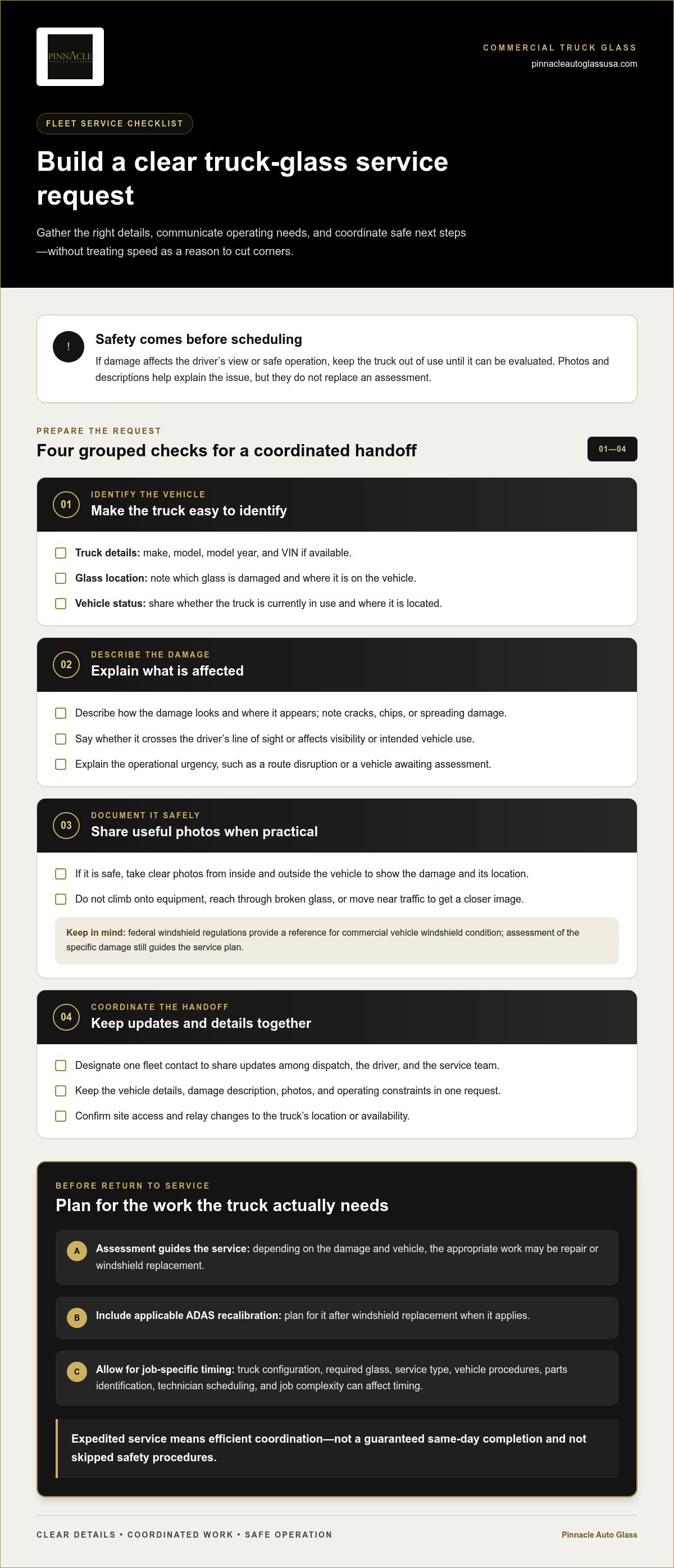
A clear request turns an urgent glass issue into a workable service plan. Before arranging expedited glass service for commercial trucks, gather the details needed to identify the vehicle, understand the damage, and coordinate access. Then explain the operational impact so the service team understands why timing matters.
How to prioritize a glass service request
Set priority based on the damage and its effect on vehicle use, not only the route schedule. If the damage affects visibility or safe operation, explain that clearly and limit use as appropriate. Also note the truck’s assignment, upcoming routes, and whether another vehicle could cover the work. These details communicate urgency without assuming a specific completion time.
What to prepare before arranging service
Keep the request practical and complete. Use this checklist:
- Vehicle identification: Make, model, model year, and VIN when available.
- Damage description: Which glass is affected, where the damage is, and how it affects visibility or use.
- Photos: Clear images from safe viewing positions, if practical.
- Vehicle location: Exact site or access instructions, including any entry or parking constraints.
- Operating needs: Route timing, vehicle assignment, and the operational effect of downtime.
- Fleet contact: One person responsible for coordinating updates and decisions.
Keep communication centralized. The driver can report what they observe, while the dispatcher or fleet manager shares scheduling needs and access details. A designated contact can record updates, pass along changes, and make sure the driver and dispatch understand the next step. This reduces confusion if the truck’s location or availability changes.
Before sending the request, check that the vehicle details and photos match the affected truck. Missing information can prompt extra follow-up, while an organized request gives the service team a clearer starting point. For broader context on commercial vehicle glass needs, review the commercial truck glass solutions article.
Use your checklist to prepare a commercial glass request with Pinnacle Auto Glass.
Pinnacle Auto Glass: Commercial Truck Glass Service and Next Steps
Commercial truck glass service helps fleet vehicles remain safe, functional, and ready for their assigned work. Pinnacle Auto Glass provides commercial truck glass and fleet glass services, along with windshield repair and replacement. When a windshield replacement involves driver-assistance equipment, ADAS recalibration is also part of the company’s service offering to support return-to-service planning.
Arranging expedited glass service for commercial trucks starts with a clear request, not a promised completion time. Vehicle details, damage information, access instructions, and operating needs help establish what the job involves and how to coordinate next steps. The repair or replacement approach depends on the damage and vehicle requirements.
What commercial customers can expect from Pinnacle Auto Glass
Pinnacle Auto Glass handles commercial truck glass needs and fleet glass service, including windshield repair and replacement. Fleet managers can use these services to address glass damage and organize the appropriate work. If the vehicle’s equipment and windshield service require recalibration, ADAS recalibration can be included in the plan. Each step should reflect the truck and the work needed, rather than treating every glass issue as the same job.
For dispatch and fleet teams, share the operational context along with the damage report. A truck assigned to a time-sensitive route may need different scheduling coordination than one that can remain parked. Communicate the impact clearly, while allowing the vehicle and job details to guide service timing.
How to take the next step
Before requesting service, gather the information that makes the request easier to assess and coordinate:
- Truck make, model, model year, and VIN when available.
- Which glass is damaged, where the damage is, and how it affects visibility or vehicle use.
- Clear photos, if they can be taken safely.
- Vehicle location, access instructions, and any site constraints.
- Route or fleet needs, plus a point of contact for updates.
Keep one fleet contact responsible for coordinating with the driver and dispatch. That person can share updates, clarify access, and relay next steps so the request stays organized as plans change.
Ready to move your commercial glass request forward? Organize the vehicle and damage details, then request commercial truck glass service from Pinnacle Auto Glass.
Plan Your Next Truck Glass Request with Confidence
Effective expedited glass service for commercial trucks depends on clear coordination and work that respects the vehicle’s safety needs. Share the truck’s identifying details, describe the damage, and explain how it affects visibility, vehicle use, and fleet operations. This gives the service team a useful starting point and helps reduce avoidable delays.
Keep the full job in view. Pinnacle Auto Glass provides commercial truck and fleet glass services, windshield repair and replacement, and ADAS recalibration when applicable. Coordinating the right glass work and any needed recalibration supports informed return-to-service planning without treating speed as a reason to skip essential steps.
Have the vehicle information, damage details, photos, access instructions, and fleet contact ready. Then request commercial truck glass service from Pinnacle Auto Glass to start coordinating the next steps. A well-prepared request gives your team a clearer path toward resolving the glass issue and keeping operations organized.
Frequently Asked Questions
How quickly can commercial truck glass be repaired or replaced?
Timing depends on the truck, damaged glass, parts identification, scheduling, and work required. An expedited request helps the service team understand the urgency and coordinate next steps, but it does not guarantee a completion time. Share the truck’s make, model, year, and VIN when available, along with clear damage photos. If the damage affects visibility or vehicle use, explain that in the request so fleet planning can account for it.
Can commercial truck glass service be arranged for a fleet?
Yes. Pinnacle Auto Glass provides fleet glass services for commercial vehicles. For a fleet request, share each affected vehicle’s details, damage information, operational urgency, and a designated contact for updates. A centralized contact can keep the driver, dispatcher, and service team aligned as plans progress. The service plan depends on the vehicles and work involved, so provide details for each truck rather than assuming all fleet jobs will follow the same schedule.
Does expedited truck glass service mean same-day replacement?
No. Expedited service prioritizes communication and coordination, but it does not promise same-day work or completion. Timing can depend on identifying the correct glass, service scheduling, job complexity, and applicable vehicle-specific procedures. Provide accurate truck details and explain the operational impact to support planning. Ask for clear next steps, then coordinate dispatch and vehicle assignments around the service plan rather than an assumed turnaround.
Is mobile service available for commercial truck glass?
Yes. Pinnacle Auto Glass provides mobile or in-shop glass care for commercial vehicles. The appropriate arrangement depends on the truck, the glass work, its location, and practical job requirements. Include where the vehicle is, whether it can be moved, and any access restrictions in your request. These details help organize the service plan. Not every repair or replacement will follow the same setup or schedule.
Does a commercial truck windshield replacement require ADAS recalibration?
It may, depending on the truck’s driver-assistance equipment and the glass work performed. ADAS, or advanced driver-assistance systems, includes technology that supports driving through features such as alerts or assistance. Vehicle-specific requirements guide whether recalibration is needed. Share the truck’s make, model, year, and any known camera or sensor details when arranging service. Pinnacle Auto Glass provides ADAS recalibration as part of its glass service capabilities.
What information should I provide when requesting expedited truck glass service?
Provide the truck’s make, model, model year, and VIN if available. Describe which glass is damaged, where the damage is, and whether visibility or vehicle operation is affected. Include clear photos if you can take them safely. Also share the vehicle’s location, access instructions, operational urgency, and the best fleet contact for updates. Complete details help the team coordinate the request and reduce avoidable follow-up.


