

A sudden crack, a burst of glass, and a blocked view can turn an ordinary drive into a safety emergency. If you’re wondering what to do when your windshield is smashed, focus first on getting yourself and your passengers to a safe place. Don’t keep driving if broken glass or poor visibility makes the vehicle unsafe to control.
It’s natural to feel unsure about what comes next. You may be concerned about loose glass, whether the damage can be repaired, and what your insurer will need. A few careful steps can protect everyone and make the next decisions clearer.
This guide explains how to respond at the scene, handle broken glass safely, and document the damage for an insurance claim. You’ll also learn how a glass professional assesses whether repair or replacement is appropriate, and why vehicles with advanced driver assistance systems may need ADAS recalibration after windshield replacement. With a clear plan, you can move from immediate safety measures to the right professional glass service without guessing.
Key Takeaways
- Knowing what to do when your windshield is smashed starts with moving people away from traffic and broken glass before assessing the damage.
- Reduce the risk of further damage, and photograph the windshield and surrounding scene before moving debris when it’s safe.
- Damage location, extent, visibility, and stability help determine whether professional repair or replacement is appropriate.
- Review your insurance policy and keep clear damage documentation as you arrange service.
- After windshield replacement, vehicles with windshield-mounted driver-assistance cameras may need ADAS recalibration.
What to Do First When Your Windshield Is Smashed
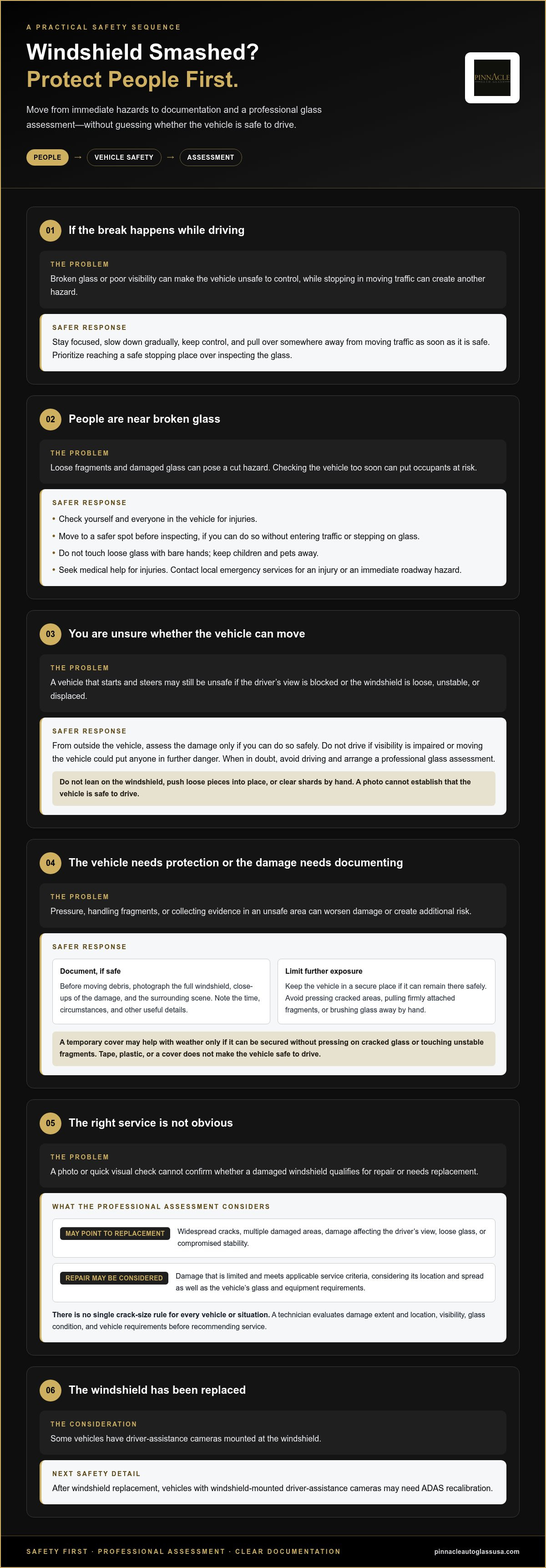
If the windshield breaks while you’re driving, stay focused. Slow down gradually, keep control of the vehicle, and pull over somewhere away from moving traffic as soon as it’s safe. If the vehicle is already stopped, move yourself and your passengers to a safer spot before inspecting the damage, as long as you can do so without stepping into traffic or onto broken glass.
For what to do when your windshield is smashed, follow this order: protect people first, assess immediate hazards from a safe position, then decide whether the vehicle can be moved. Don’t start arranging repairs until everyone is out of danger.
Check for injuries and move away from broken glass
Check yourself and everyone in the vehicle for injuries. Don’t touch loose glass with bare hands, and keep children and pets away from the damaged vehicle and any fragments on the ground. Windshields are generally made from laminated safety glass, which is designed to stay bonded when damaged, but cracks and loose pieces can still pose a cut hazard. If anyone is hurt, seek medical help first. Call local emergency services for an injury or an immediate roadway hazard, such as a vehicle or debris creating danger for passing traffic.
Decide whether the vehicle is safe to move
Assess the windshield from outside the vehicle, if you can do so safely. Check whether damage blocks the driver’s view, glass is loose, or the windshield appears unstable or displaced. Don’t drive if visibility is impaired or moving the vehicle could expose occupants or others to further danger. A photo can help document the damage later, but it can’t establish that the vehicle is safe to drive.
If you’re still on the road, prioritize reaching a safe stopping place over inspecting the glass. Don’t lean on the windshield, push loose pieces back into place, or try to clear shards by hand. If the car can’t be moved without creating a hazard, stay in a safe location away from traffic and contact emergency services when there’s an immediate danger to people on the roadway.
Once everyone is safe, consider the next steps for the vehicle. Extensive damage may make driving unsafe even if the car still starts and steers. When in doubt, avoid driving and arrange a professional glass assessment. A technician can evaluate the windshield and determine whether repair or replacement is appropriate.
How to Protect Your Vehicle After Windshield Damage
Once everyone is safe, focus on limiting further damage without touching unstable glass. Keep the vehicle parked in a secure place if it can remain there safely. Avoid pressing on cracked areas, pulling out firmly attached fragments, or brushing glass away by hand. Pressure or movement can worsen the damage and create more loose shards.
Document the damage without putting yourself at risk
Before moving debris, take photos if the area is safe. Capture the full windshield, close-ups of the damage, and the surrounding scene. Note the time, circumstances, and other details that may help with your records or an insurance claim. Don’t step into traffic, reach through broken glass, or collect evidence if doing so puts anyone at risk. Safety comes first.
Limit exposure while waiting for professional service
If practical, leave the vehicle in a secure location and keep children and pets away from it. If weather protection is needed, use a temporary cover only if you can secure it without pressing against cracked glass or touching unstable fragments. Don’t rely on tape, plastic, or a cover to make the vehicle safe to drive. These measures are temporary, not a substitute for professional assessment.
For vehicles covered by its construction motor vehicle standard, the Occupational Safety and Health Administration states that cracked and broken glass shall be replaced. This requirement applies within the standard’s scope, so it shouldn’t be treated as a rule for every personal vehicle. In any case, a temporary cover doesn’t resolve windshield damage or establish that the vehicle is roadworthy.
When considering what to do when your windshield is smashed, separate protecting the vehicle from deciding how it should be repaired. Photos can help document the condition, but they can’t determine whether the glass is stable or whether the vehicle is safe to drive. Arrange a professional assessment to identify whether repair or replacement is appropriate. For extensive damage, learn more about windshield replacement service and the safety considerations involved.
Repair or Replacement: What a Smashed Windshield May Need
Once the vehicle is in a safe place, the next question is whether the windshield can be repaired or needs replacement. Extensive shattering, poor visibility, or glass that appears unstable commonly points toward replacement. Limited damage may qualify for repair, but a photo or quick visual check can’t confirm the right service. A technician needs to assess the damage and the vehicle before recommending a solution.
Signs the damage may require windshield replacement
Widespread cracks, multiple damaged areas, or breakage that affects the driver’s view can make replacement necessary. The same may be true if the glass is loose or its stability is compromised. There isn’t one crack-size rule that determines the answer for every vehicle or situation. A technician considers the damage’s extent and location, visibility, glass condition, and the vehicle’s requirements before service.
When windshield repair may be considered
Repair may be an option when damage is limited and meets applicable service criteria. Its location and spread matter, as do the vehicle’s glass and equipment requirements. A windshield that is shattered or unstable isn’t a candidate for repair simply because some parts remain intact. The appropriate option depends on an in-person assessment, not a guess based on appearance alone.
Think of the decision as more than “small crack or large crack.” A contained chip away from the driver’s direct view presents a different assessment than damage spread across the glass, near its edge, or affecting visibility. The technician also needs to account for vehicle-specific requirements. If the windshield has a mounted driver-assistance camera, replacement may mean the system needs recalibration afterward.
For a closer look at the factors involved, use a repair-versus-replacement guide alongside a professional assessment. The Auto Glass Safety Council develops and maintains auto glass safety standards, offering a useful reference for understanding why proper replacement procedures matter. The final recommendation should reflect the condition of the windshield and the needs of your vehicle.
In short, extensive breakage or compromised stability commonly calls for replacement, while some limited damage may be repairable. If you’re deciding what to do when your windshield is smashed, don’t try to settle the question by pressing on the glass or relying on a photo. Arrange a professional assessment so the right glass service can be determined safely.
What to Do About Insurance and Service Arrangements
After documenting the damage and confirming everyone is safe, organize the insurance and service steps. Claim requirements vary by policy and by what happened, so don’t assume that a repair or replacement will be covered, that a deductible will be waived, or that a claim will be approved. Your insurer can explain the coverage and documentation needed for your situation.
Prepare useful details for an insurance conversation
Keep the details together so you can refer to them throughout the process. Gather:
- Photos of the windshield and surrounding scene, taken safely
- The date, time, location, and circumstances of the damage
- Your vehicle’s year, make, and model
- Your policy information and any claim reference details
Contact your insurer to learn how to submit a claim and what steps to follow before service. Save relevant messages, names, dates, and claim numbers in one place. Clear records can make follow-up easier, but the insurer determines coverage and claim requirements under your policy.
Choose a practical service setting
Once you understand the claim process, arrange professional glass service. Mobile or in-shop care may suit different vehicle and damage circumstances. Pinnacle Auto Glass provides mobile and in-shop glass care. The priority is an appropriate assessment and service plan, not an assumption about how quickly the vehicle can be repaired.
Share the damage details and vehicle information as you organize service. A glass professional can assess whether windshield repair or replacement is appropriate. If replacement is needed and your vehicle has a windshield-mounted driver-assistance camera, ADAS recalibration may be required after installation. Pinnacle Auto Glass provides ADAS recalibration as part of its glass services.
If you’re working out what to do when your windshield is smashed, keep the process simple: document the damage, ask your insurer about your policy, then arrange professional glass care. Explore professional windshield service to move forward with an assessment and the right service for your vehicle.
Get the Windshield Assessed and Restore Safe Vehicle Use
After handling immediate safety and insurance steps, arrange a professional assessment of the damaged windshield. A technician can evaluate the glass and vehicle, then determine whether windshield repair or replacement is appropriate. The decision depends on the damage and vehicle requirements, so avoid relying on a photo or a temporary cover to judge whether the windshield is ready for normal use.
What professional glass service addresses
An assessment considers the damage’s extent, location, visibility, and stability. If repair is suitable, the service addresses limited damage. If replacement is needed, the technician plans the glass service for the vehicle. A properly assessed and serviced windshield helps restore clear visibility and its intended role in the vehicle. Follow the technician’s guidance before returning the vehicle to regular use.
Pinnacle Auto Glass provides windshield repair and replacement for personal and commercial vehicles. The right service depends on the condition of the glass, not simply whether the damage looks severe from outside. Share any details about how the damage occurred and any concerns you noticed while driving or inspecting the vehicle.
Account for driver-assistance technology
Before arranging service, mention any dashboard warnings and whether a camera or sensor is mounted near the windshield. Some vehicles use windshield-mounted cameras for advanced driver-assistance systems (ADAS). After windshield replacement, these systems may need recalibration, depending on the vehicle. Pinnacle Auto Glass provides ADAS recalibration to help ensure these systems are functioning correctly after glass installation.
For more detail, refer to the dedicated ADAS calibration guide and the article about technicians. Keep any warning messages or system alerts in mind when discussing the vehicle’s needs. Don’t assume a warning will clear on its own after replacement; follow the service guidance for your vehicle and its driver-assistance equipment.
If you’re deciding what to do when your windshield is smashed, a professional assessment is the step that turns uncertainty into a service plan. Pinnacle Auto Glass provides windshield repair, replacement, and ADAS recalibration when applicable. Arrange windshield service to have the damage assessed and identify the appropriate next step for your vehicle.
Take the Next Step Toward Safe Driving
Knowing what to do when your windshield is smashed starts with protecting people from traffic and broken glass. Once everyone is safe, document the damage, review your policy, and arrange a professional assessment. A technician can determine whether the windshield needs repair or replacement based on its condition and your vehicle’s requirements.
Pinnacle Auto Glass provides windshield repair and replacement for personal and commercial vehicles, with mobile or in-shop glass care. If your vehicle has a windshield-mounted driver-assistance camera, ADAS recalibration may be needed after replacement. Pinnacle Auto Glass offers this service as part of its glass care.
Move forward with a clear plan. Arrange professional windshield service to have your glass assessed and identify the appropriate next step for your vehicle. With the right service, you can work toward restoring clear visibility and confidence on the road.
Frequently Asked Questions
Can I drive with a smashed windshield?
Don’t drive if the damage blocks your view, glass is loose, or the windshield appears unstable. Even a short trip can expose you and others to further risk if visibility or the glass condition is compromised. Move to a safe location if possible, then arrange a professional assessment. A photo can document the damage, but it can’t confirm that the vehicle is safe to drive.
What should I do if my windshield is smashed while I am driving?
Slow down gradually and pull over somewhere safe as soon as you can. Once stopped, check yourself and your passengers for injuries, and move away from traffic and loose glass if it’s safe to do so. Don’t continue driving if your view is blocked or the windshield seems unstable. If anyone is injured or the vehicle creates an immediate roadway hazard, contact emergency services.
Should I remove broken windshield glass myself?
Avoid handling broken glass unless there’s an immediate need to move away from danger. Cracked or loose pieces can have sharp edges, and pressing or pulling on them may cause more glass to shift or break. Keep children and pets away from the vehicle and fragments. If you need to move nearby debris, do so only when it’s safe, and don’t reach through damaged glass.
Can I cover a smashed windshield with plastic?
A temporary cover may help limit exposure to weather while you arrange service, but only use one if you can secure it without pressing on cracked or unstable glass. Don’t climb onto the vehicle or reach through broken areas to attach it. Plastic or tape won’t repair the windshield or make the vehicle safe to drive. Arrange a professional assessment to determine the appropriate glass service.
Does insurance cover a smashed windshield?
Coverage depends on your policy and the circumstances of the damage. Check your policy documents and contact your insurer to ask how to report the incident, what documentation is needed, and whether you should follow any specific steps before service. Keep photos, incident details, and claim communications together. Don’t assume a repair or replacement will be covered or that a deductible will be waived.
Does a smashed windshield need to be replaced?
Extensive shattering often requires windshield replacement, but the right service depends on the damage and vehicle. A technician assesses factors such as the extent and location of the breakage, visibility, and glass stability. Some limited damage may qualify for repair, but a photo alone can’t determine that. Arrange a professional assessment rather than trying to judge the repair options by appearance.
Will my car’s safety cameras need recalibration after windshield replacement?
They may, depending on the vehicle’s advanced driver-assistance system (ADAS) and camera setup. Some vehicles have a driver-assistance camera mounted near the windshield, and replacement can mean recalibration is needed. Mention any windshield-mounted cameras or dashboard warnings when arranging service. Pinnacle Auto Glass provides ADAS recalibration as part of its glass services, with the appropriate service determined by your vehicle’s requirements.


