
Will comprehensive insurance for glass damage cover your cracked windshield, or could your deductible make a claim impractical? The answer depends on your policy, the cause of the damage, and any glass-specific terms. A chip, spreading crack, or shattered windshield can raise different repair and coverage questions, so it helps to understand what to review before starting a claim.
This guide explains how comprehensive coverage generally applies to vehicle glass damage and what to consider before deciding whether to file. You’ll learn how deductibles and optional glass coverage may affect your out-of-pocket costs, why rules can vary by state, and what information to document after damage occurs. We’ll also cover how to determine whether glass repair or replacement may be appropriate. If a windshield replacement is needed, vehicles with driver-assistance cameras may also require ADAS recalibration. Knowing what to check can help you make an informed claim decision and arrange the right glass service.
Key Takeaways
- Comprehensive insurance for glass damage may cover certain non-collision losses, but your policy and the circumstances determine whether a claim qualifies.
- Review your deductible, glass-specific provisions, exclusions, and claim requirements before deciding whether to file.
- Document the damage, contact your insurer, and follow its instructions before arranging repair or replacement.
- Pinnacle Auto Glass provides glass repair and replacement for personal and commercial vehicles. Your insurer decides whether a loss is covered.
- After windshield replacement, vehicles with driver-assistance systems may need ADAS recalibration.
What Does Comprehensive Insurance for Glass Damage Usually Mean?
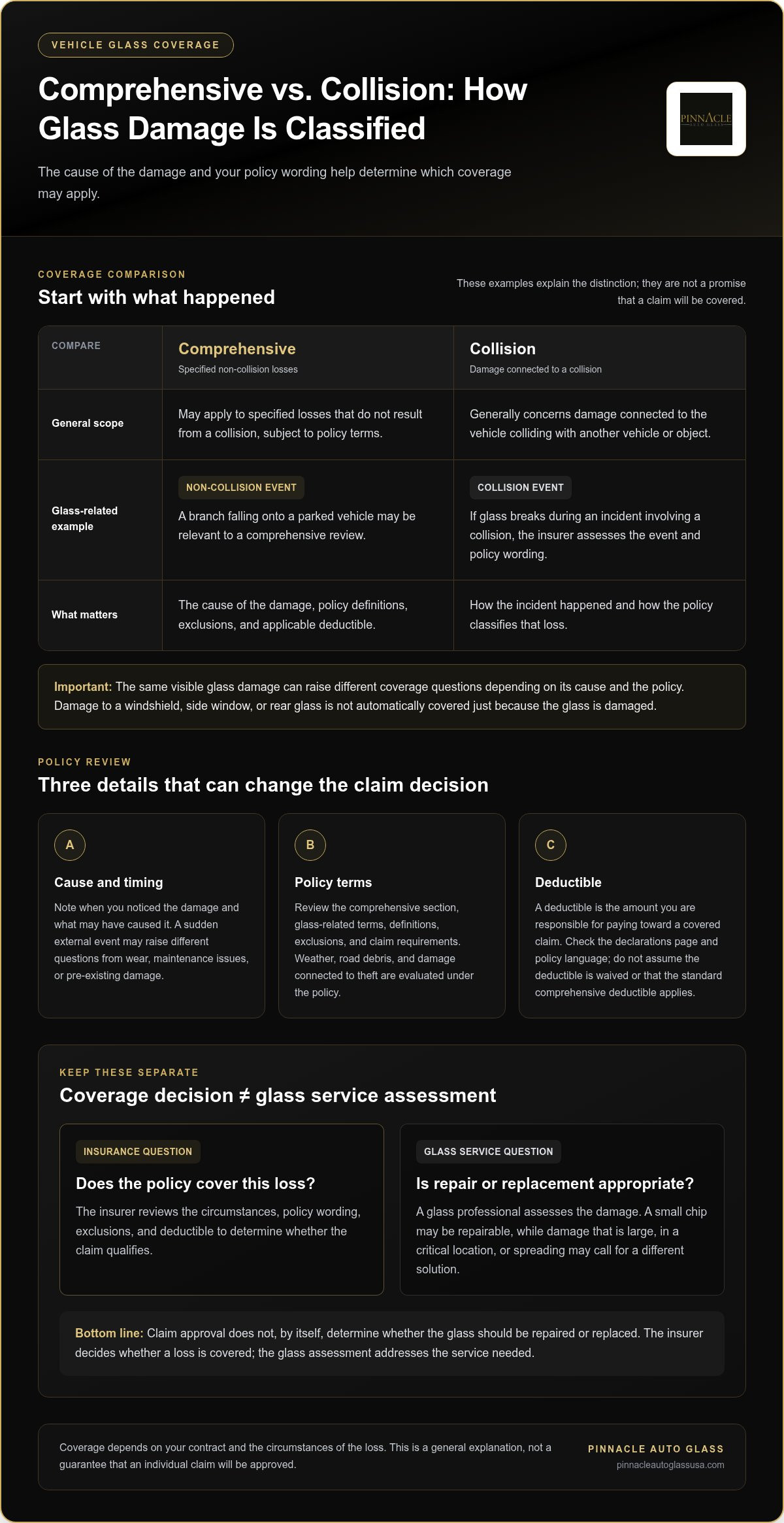
Comprehensive coverage generally applies to specified losses that don’t result from a collision, subject to your policy terms. It may be relevant when vehicle glass is damaged by an event such as a falling object or vandalism. But comprehensive insurance for glass damage doesn’t automatically cover every crack or broken window. The policy language, cause of damage, exclusions, and deductible all matter.
Comprehensive and collision are separate coverage categories within vehicle insurance. A general overview of these coverage types is available in Vehicle insurance. The insurer reviews the circumstances and policy wording to determine how a specific loss is classified. The same visible damage can raise different coverage questions depending on what caused it and what the policy says.
Keep two decisions separate: whether insurance applies and what service the glass needs. The insurer’s coverage review concerns the claim. A glass assessment considers the damage and whether repair or replacement is appropriate. Claim approval doesn’t, by itself, determine which service the vehicle needs.
How Is Comprehensive Coverage Different from Collision Coverage?
Collision coverage generally concerns damage connected to the vehicle colliding with another vehicle or object. Comprehensive coverage generally concerns specified non-collision events, such as a branch falling onto a parked vehicle. These examples illustrate the distinction, not a promise of coverage. If glass breaks during an incident involving a collision, the insurer will assess the event and policy wording to classify the loss.
What Vehicle Glass May Be Involved?
Damage may affect the windshield, a side window, or the rear glass. Don’t assume every glass component receives the same treatment under your policy. The damage location and condition can also affect whether repair is an option or replacement is needed. A small windshield chip, for example, presents a different repair question from shattered side or rear glass.
Review your policy’s definitions, exclusions, and glass-related terms. When discussing a claim, describe the cause and location of the damage accurately. Coverage depends on the contract and circumstances, not just on the fact that vehicle glass is damaged. This is a general explanation of coverage, not a guarantee that any individual claim will be approved.
When Might Comprehensive Insurance Cover Vehicle Glass Damage?
Some glass damage follows a sudden event, while other damage develops over time. A stone striking the windshield, hail, or damage discovered after a theft may be reasons to review your comprehensive policy. These are examples to investigate, not automatic qualifying events. The insurer considers what happened, how the policy defines covered losses, and whether an exclusion applies.
Both the damage event and the policy wording matter. Comprehensive insurance for glass damage depends on the details of the loss and the terms of your contract, not simply on the presence of cracked or broken glass. A sudden impact may be treated differently from deterioration that develops over time.
Which Damage Events Should Drivers Review Against Their Policy?
Start with the facts: when you noticed the damage, what may have caused it, and whether there’s evidence of a sudden external event. Compare those details with the comprehensive section of your policy. Weather, road debris, and damage connected to theft are handled according to the policy’s definitions and exclusions, so don’t assume any one cause guarantees coverage. Forbes offers a general overview of how insurance covers windshield damage.
Wear, maintenance issues, and pre-existing damage raise different questions from a newly occurring incident. If the glass was already damaged or weakened, explain that accurately when reporting the loss. The insurer reviews the circumstances and policy language to determine whether the damage qualifies.
Can a Small Chip Be Treated Differently from a Broken Windshield?
Yes, but keep the service assessment separate from the coverage decision. A glass professional evaluates whether repair is suitable; the insurer determines whether the loss is covered under your policy. A small chip may be repairable, while damage that is large, in a critical location, or spreading may call for a different solution. The visible size alone doesn’t establish repair suitability or insurance approval.
Have the damage assessed before assuming repair or replacement is the right step. For more detail on repair considerations, see this professional windshield repair guide. If the assessment points to windshield repair or replacement, Pinnacle Auto Glass can help with vehicle glass service. Coverage decisions remain subject to your policy and insurer.
How Do Deductibles and Policy Terms Affect a Glass Claim?
A deductible is the amount you’re responsible for paying toward a covered claim, as described in your policy. If glass damage qualifies for comprehensive coverage, the applicable deductible can affect whether filing a claim makes sense. Don’t assume the standard comprehensive deductible applies or that it will be waived. Review the terms for your vehicle and loss.
Start with the declarations page for a summary of your coverages and deductibles, then read the relevant policy language for conditions and exclusions. For a general overview of the coverage category, see Experian’s guide to What is comprehensive insurance. A general explanation can help orient you, but your policy and insurer determine how a particular glass claim is handled.
Does Comprehensive Coverage Always Have a Separate Glass Deductible?
No. A policy may include glass-specific terms, such as a separate deductible or a waiver for certain glass claims, but that provision isn’t universal. State rules and insurer practices can also vary and may change. Check the declarations page and policy wording for your coverage, then ask your insurer how current rules apply to your claim. Another driver’s experience isn’t a substitute for your policy terms.
What Should You Compare Before Filing a Claim?
First, find out whether the insurer considers the event covered. Then identify the deductible or glass provision that applies. Compare your potential out-of-pocket responsibility with the insurer’s coverage decision, rather than relying on an assumed repair or replacement estimate. Coverage approval and repair suitability are separate questions.
Before proceeding, review the policy or insurer’s claim instructions for required documentation, authorization, or specific steps. Keep records of the damage and claim communications, and follow the insurer’s directions before arranging work. If replacement is being considered, the windshield replacement cost guide explains factors that can affect the job without determining what your policy will pay.
Once you understand the claim requirements and the glass service needed, Pinnacle Auto Glass provides windshield repair and replacement for personal and commercial vehicles. Insurance coverage remains subject to your policy and insurer. Explore vehicle glass services as you plan the next step.
What Should You Do After Glass Damage Before Making a Claim?
Use a clear sequence: document the damage, review your policy, contact your insurer, then arrange the appropriate glass service. This helps you share accurate details and follow the claim process. Don’t assume comprehensive insurance for glass damage will cover the loss before the insurer reviews it.
What Information Helps When Reporting Glass Damage?
Record what you know while the details are fresh. Note when you noticed the damage and how it may have happened. If the cause or timing is uncertain, say so rather than guessing. Take clear photos of the affected glass, including close-ups of the damage. Have basic vehicle details ready for the claim discussion.
Before changing or repairing the damaged area, follow your insurer’s guidance. The insurer may provide specific instructions about documentation, assessment, or next steps. Keep copies of your photos and claim-related messages for reference.
How Can Drivers Keep the Claim and Service Steps Clear?
After documenting the damage, check your policy and contact your insurer. Ask what information is needed, whether authorization is required, and which claim steps to follow. Record the instructions and the insurer’s coverage decision. Then arrange a glass assessment and service appropriate to the damage.
These are separate assessments. The insurer decides whether the loss qualifies under your policy. A glass technician evaluates the condition of the glass and whether repair or replacement is appropriate. Don’t treat an initial claim discussion as approval, or assume the insurer’s decision determines the technical repair option.
Pay attention to visibility and vehicle safety. If damage interferes with your view or raises a safety concern, seek guidance about safe next steps. The appropriate timing depends on the damage and any instructions from your insurer or glass professional.
If replacement is needed, installation details matter, especially for vehicles with driver-assistance systems. Review the complete windshield replacement safety guide for more on safety and technology considerations. When you’re ready to arrange glass service, schedule vehicle glass repair or replacement with Pinnacle Auto Glass.
How Pinnacle Auto Glass Helps After a Covered Glass Loss
After discussing the claim with your insurer, determine what service the damaged glass needs. Pinnacle Auto Glass provides vehicle glass repair and replacement for personal and commercial vehicles. The right option depends on the glass condition, damage location, and whether the damage affects visibility or the glass’s safe function.
Insurance coverage and glass service are separate decisions. Your insurer determines whether a loss qualifies under your policy and what the policy may pay. A glass assessment helps determine whether repair is suitable or replacement is needed. Comprehensive insurance for glass damage doesn’t guarantee claim approval or a particular service outcome.
When Is Professional Repair or Replacement the Next Step?
A glass assessment considers the damage’s size, location, and condition, along with its effect on visibility. Repair may be an option for some damage. If repair can’t restore the glass safely, replacement may be appropriate. Follow any insurer instructions about authorization and claim steps as you arrange service. For more on vehicle systems involved in glass work, see the ADAS calibration reference guide.
Why Can ADAS Recalibration Matter After Windshield Replacement?
Some vehicles have cameras or sensors positioned at or associated with the windshield. Replacing the windshield can affect their alignment. When the vehicle’s systems call for it, ADAS recalibration helps restore the alignment of applicable driver-assistance systems after installation. It’s an important part of the glass service process for vehicles that require it, not a coverage determination.
Pinnacle Auto Glass provides windshield replacement and associated ADAS recalibration, along with windshield repair and glass services for commercial vehicles. Your insurer determines whether comprehensive insurance applies, based on your policy and the claim circumstances. Review the insurer’s decision and instructions, then arrange the glass service needed for your vehicle.
Explore Pinnacle Auto Glass services for professional vehicle glass support.
Take the Next Step With Confidence
Comprehensive insurance for glass damage depends on your policy, the circumstances of the loss, and any applicable deductible. Review your coverage and claim instructions, document the damage, and speak with your insurer before assuming a claim will be approved. Then arrange a glass assessment to determine whether repair or replacement is appropriate.
Pinnacle Auto Glass provides windshield repair and replacement for personal and commercial vehicles. When a windshield is replaced on a vehicle with driver-assistance systems, ADAS recalibration may also be needed. Insurance decisions remain with your insurer, but understanding the claim and service steps can help you move forward.
Explore Pinnacle Auto Glass repair and replacement services to arrange vehicle glass service.
Frequently Asked Questions
Does comprehensive insurance cover glass damage?
Comprehensive insurance may cover vehicle glass damage caused by a qualifying non-collision event, subject to your policy. The cause of the damage, exclusions, and applicable deductible can affect the outcome. For example, sudden damage from an external event may be treated differently from wear or pre-existing damage. Review your policy and report the circumstances accurately. Your insurer decides whether a specific claim qualifies.
Is windshield damage covered by comprehensive insurance or collision coverage?
It depends on how the windshield was damaged and how your policy defines the loss. Comprehensive coverage generally applies to specified non-collision events, while collision coverage generally relates to a crash involving your vehicle and another vehicle or object. These are broad distinctions, not guarantees. Describe what happened to your insurer, then follow its guidance on how the claim will be classified under your policy.
Can I make a comprehensive insurance claim for a small windshield chip?
You can ask your insurer whether a small chip qualifies under your policy, but coverage isn’t automatic. The insurer considers the cause of the damage, policy terms, exclusions, and any applicable deductible. Separately, a glass professional can assess whether the chip’s size, location, and spread make repair suitable. Review the claim requirements and repair assessment before deciding how to proceed.
Does comprehensive insurance cover side windows and rear glass?
Coverage may apply to damage involving side windows or rear glass, but don’t assume every glass component is treated the same way. Policy definitions, exclusions, damage circumstances, and glass-specific terms can affect a claim. Report which window is damaged and explain what happened as accurately as you can. Your insurer determines how the contract applies to that specific loss.
Will I have to pay a deductible for a glass damage claim?
You may have to pay a deductible, depending on your policy and the claim circumstances. Some policies include glass-specific provisions, but a separate deductible or waiver isn’t part of every policy. Check your declarations page and the relevant policy wording for the amount and terms that apply. State rules and insurer practices can vary, so ask your insurer how they apply to your claim.
What should I do before filing an auto glass insurance claim?
Photograph the damage and note when and how it occurred, if you know. Review your policy, then contact your insurer to ask what information and claim steps are required. Follow its instructions and don’t assume coverage is approved before the claim is assessed. After understanding any authorization requirements, arrange a glass assessment to determine whether repair or replacement is appropriate.
Can windshield replacement affect my vehicle's ADAS cameras?
Yes. Some vehicles have driver-assistance cameras or sensors positioned at or associated with the windshield, and replacement can affect their alignment. When the vehicle’s systems require it, ADAS recalibration after installation helps restore the applicable system alignment. Include recalibration in the glass service plan for your vehicle, and follow the vehicle manufacturer’s and service provider’s guidance for the affected systems.


