A single three-quarter-inch crack in a driver's line of sight can sideline an entire tractor-trailer during a routine DOT inspection. For fleet managers, a damaged windshield is more than a cosmetic issue. It's a direct threat to uptime and regulatory compliance. Managing a commercial truck windshield replacement requires balancing speed with technical precision, especially as modern trucks integrate complex safety sensors. You already know that every hour a vehicle sits idle is an hour of lost revenue.
This guide helps you master the technical and logistical requirements of glass service to minimize downtime and ensure your fleet meets FMCSA standards. We'll explore the critical role of ADAS recalibration in restoring safety system functionality and how to navigate state-specific laws like those in New York and Arizona. You'll learn how to streamline insurance handling and choose a service partner that understands the high stakes of heavy-duty operations. By the end of this article, you'll have a clear roadmap for maintaining a safe, compliant, and efficient fleet.
Key Takeaways
- Understand how windshield integrity provides critical structural support for cab roofs during rollover events.
- Learn why professional camera recalibration is an essential component of a compliant commercial truck windshield replacement.
- Identify the specific damage limits and visibility zones that dictate whether a windshield can be repaired or must be replaced.
- Discover how high-viscosity adhesives ensure the long-term durability and safety of heavy-duty glass installations.
- Master the logistical steps required to minimize fleet downtime while maintaining strict DOT safety compliance.
Understanding the Critical Role of Commercial Windshield Integrity
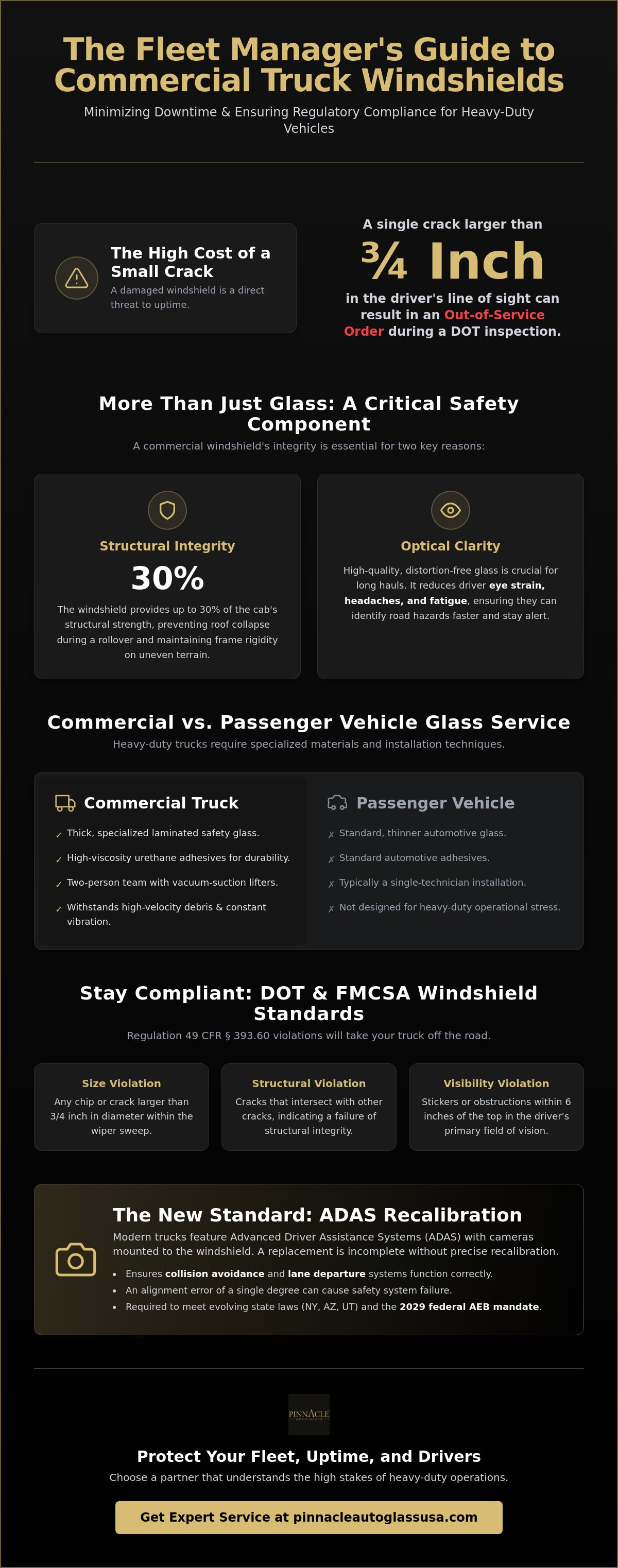
A commercial windshield isn't just a piece of glass. It's a structural pillar. In both cab-over and conventional truck designs, the windshield maintains the rigidity of the entire cab. It prevents the frame from twisting when the vehicle operates on uneven surfaces. During a rollover event, the windshield provides up to 30% of the cab's structural strength. It acts as a vertical support that prevents the roof from collapsing on the driver. If the glass is cracked or the adhesive bond is weak, this safety net vanishes. Without this support, the survival space inside the cab is significantly compromised.
Optical clarity directly affects driver endurance and long-haul performance. Lower-quality glass often contains minor waves or distortions that aren't immediately obvious. These imperfections force a driver's eyes to constantly readjust over an 11-hour shift. This leads to eye strain, headaches, and premature fatigue. High-quality glass keeps a driver's vision sharp and clear. It's a proactive strategy to reduce accidents by ensuring drivers can identify road hazards at highway speeds much faster. Maintaining glass integrity is about more than compliance. It's about keeping your drivers alert and your equipment in peak condition.
Commercial vs. Passenger Vehicle Glass
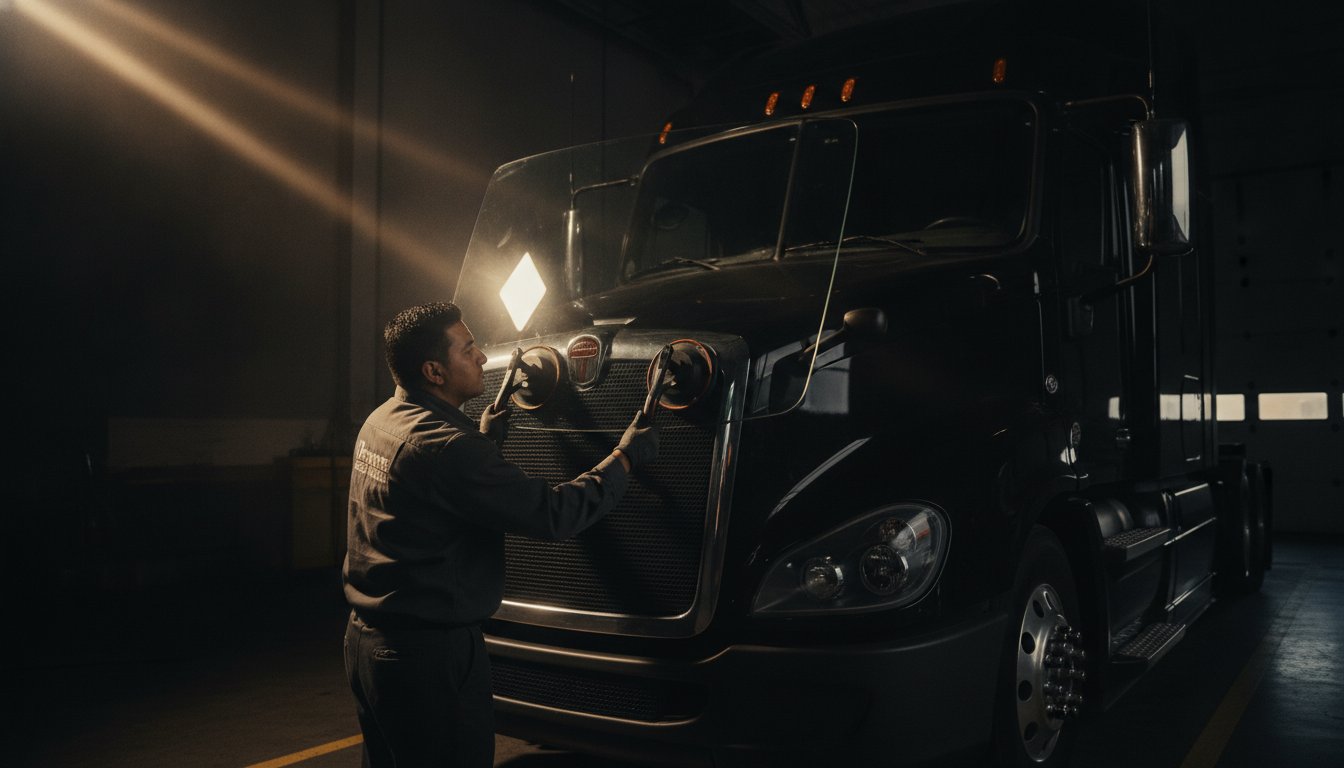
You can't treat a commercial truck windshield replacement like a standard car repair. The materials and techniques are entirely different. Heavy-duty trucks require specialized laminated safety glass that is much thicker than what you find in a passenger vehicle. This thickness is necessary to withstand high-velocity road debris and constant engine vibration. Installation requires specialized vacuum-suction lifters and a two-person team to handle the massive weight of the glass. Standard automotive adhesives also fail in this environment. We use high-viscosity urethanes specifically engineered to support heavy glass while absorbing the shock of the road.
Regulatory Compliance and DOT Standards
Federal regulations leave no room for error. FMCSA regulation 49 CFR § 393.60 outlines strict requirements for windshield condition to ensure safe operation.
- Any chip or crack larger than 3/4 inch in diameter within the wiper sweep is a violation.
- Cracks that intersect with other cracks are considered a failure of structural integrity.
- Obstructions like stickers can't be within 6 inches of the top in the driver's field of vision.
Evaluating Glass Quality and ADAS Requirements for Modern Trucks
Modern Class 7 and 8 trucks are sophisticated mobile data centers. Most new models feature Advanced Driver Assistance Systems (ADAS) that rely on cameras and sensors mounted directly behind the windshield. Because these systems are extremely sensitive, a commercial truck windshield replacement is now a high-tech calibration event. Installing the glass is only half the job. If the camera is off by even a single degree, the truck's safety systems may fail to react correctly in an emergency. This precision is what keeps your drivers safe during long-haul routes.
The legal landscape is catching up to this technology. A New York law enacted in 2025 requires glass shops to inform fleet operators if their vehicle requires ADAS recalibration. Similar transparency laws exist in Arizona and Utah. These regulations support the broader FMCSA safety standards that govern commercial vehicle maintenance. NHTSA has also finalized a mandate requiring Automatic Emergency Braking (AEB) on new vehicles by September 2029. Proper calibration ensures you stay ahead of these evolving federal requirements while protecting your equipment.
ADAS Recalibration: The New Standard for Fleet Safety
Collision avoidance and lane departure warnings require perfect alignment to function. There are two primary types of recalibration for heavy-duty trucks. Static recalibration uses physical targets in a controlled shop environment. Dynamic recalibration requires the truck to be driven at specific speeds on clear roads to "teach" the sensors. Recalibration is mandatory after every commercial glass replacement because even a millimeter of misalignment can cause safety system failure. If you have questions about your specific fleet technology, you can contact our experts for a fleet assessment.
Selecting High-Quality Commercial Glass
Choosing between OEM and aftermarket glass is a strategic decision. While high-quality aftermarket glass meets all safety standards, it must provide the same optical clarity as the original. Substandard glass often has "waves" or distortions. These imperfections can confuse ADAS cameras and cause "ghost" braking or false lane alerts. Beyond technology, the glass must withstand extreme conditions. Commercial trucks face massive temperature swings and constant road debris. High-quality glass offers better durability and precise fitment. A poor fit leads to wind noise and water leaks, which can damage the sensitive electronics housed in the cab's headliner. Stick to glass that meets or exceeds manufacturer specifications to ensure your safety systems remain functional.
Strategic Decision-Making: Repairing vs. Replacing Commercial Glass
Fleet management is a calculation of margins. Choosing between a quick fix and a full commercial truck windshield replacement often comes down to the clock. While the price of the glass matters, the cost of a truck being off the road is the real metric. A vehicle sitting in a service bay isn't generating revenue. Proactive fleet glass management identifies small chips before they spider into expensive, time-consuming problems. By addressing damage early, you maintain high vehicle utilization and keep your drivers moving.
The "Repair-First" philosophy is effective only when it aligns with safety standards. You must consider the visibility zones and the 2-inch rule. Any damage larger than two inches, or any chip located directly in the driver's line of sight, usually dictates a full replacement. These aren't just shop recommendations; they are hard limits for maintaining DOT compliance. Ignoring these boundaries can lead to failed inspections and safety risks that far outweigh the savings of a repair.
When to Choose Professional Repair
Professional repair is a viable long-term solution for small bullseyes and star breaks. It stops the spread of damage and preserves the factory seal of the original glass.
- Repairs typically take less than 30 minutes, getting the truck back on the road immediately.
- Meeting DOT safety standards requires chips to be outside the primary viewing area and smaller than 3/4 inch.
- Timely repairs prevent moisture from penetrating the laminate layer, which causes delamination.
The Necessity of Full Replacement
Certain types of damage make a commercial truck windshield replacement non-negotiable. Edge cracks are particularly dangerous. Because the edges of the glass are under the most stress, a small crack here will inevitably spread across the entire surface. If damage penetrates multiple layers of the glass, the structural integrity is compromised. You should also consult our Professional Windshield Repair: A Comprehensive 2026 Guide for detailed safety data regarding repair limits.
Every installation must adhere to the Auto Glass Replacement Safety Standard (AGRSS). This standard ensures that the replacement process meets rigorous safety benchmarks, from technician training to adhesive quality. If you find internal glass damage or "crater" chips that have removed a significant chunk of the outer layer, replace the glass immediately. Safety systems like ADAS also require a pristine surface to function. Compromising on glass quality or attempting to repair unrepairable damage creates a liability that no fleet manager should accept.
Logistics and Safety Standards for Heavy-Duty Glass Installation
Successful installation starts long before the glass touches the frame. For a commercial truck windshield replacement, site preparation is essential. Mobile technicians require level ground to prevent the truck frame from twisting during the adhesive set. Weather protection is also mandatory if work is performed outdoors. Rain or extreme humidity can compromise the chemical bond of the adhesive, leading to premature failure. Before the technician arrives, ensure the dashboard is clear of all electronics and personal items to allow for an unobstructed workspace.
Adhesive choice is the most technical aspect of the installation. Heavy-duty glass requires high-viscosity urethane. This specialized material is much thicker than standard auto glass glue. It supports the massive weight of the windshield without sagging while it cures. Managing Safe Drive-Away Time (SDAT) is the most critical logistical hurdle for fleet managers. While a passenger car might be ready in 60 minutes, a commercial truck often requires longer cure times due to the increased weight of the glass and internal cab pressure. Moving the vehicle too early can cause the seal to fail or the glass to shift, resulting in a DOT violation.
The Installation Process for Large Vehicles
Technicians begin by stripping the old glass and meticulously cleaning the pinchweld. Any leftover old urethane or debris must be removed to create a leak-proof seal. Because of the sheer size and weight of semi-truck glass, a two-person team is a technical requirement. This ensures the glass is placed precisely without compromising the adhesive bead. Once the glass is set, technicians perform a post-installation inspection. This includes checking wiper clearance and verifying that all ADAS sensors are reconnected and ready for the recalibration process. If you need to schedule service at your location, book your mobile fleet glass service today to ensure a professional installation.
Managing Downtime with Mobile Services
Moving a Class 8 truck to a repair shop is a logistical burden that costs time and fuel. Mobile dispatching eliminates this hurdle by bringing the service directly to your yard or terminal. By bringing the technician to the vehicle, you can integrate the commercial truck windshield replacement into existing maintenance windows. This strategy maximizes uptime by ensuring the truck is ready for its next haul without a separate trip to a service center. For more tips on optimizing your maintenance schedule, read our guide on Reducing Fleet Downtime with Mobile Glass Repair. Coordination between your dispatch team and the glass provider is the key to maintaining a high vehicle utilization rate.
Optimizing Fleet Performance with Pinnacle Auto Glass Solutions
Pinnacle Auto Glass acts as a dependable partner for logistics companies across the country. We provide consistent glass quality and technical expertise regardless of your vehicle's location. Our teams understand the unique demands of specialized commercial vehicles. Whether you manage a fleet of Class 8 semis, local box trucks, or high-utilization delivery vans, we have the inventory and equipment ready. A professional commercial truck windshield replacement requires more than just glass. It requires a partner that simplifies the entire process and prioritizes your bottom line.
We handle the administrative burden so you don't have to. Our team manages streamlined insurance billing and fleet account management. This reduces the paperwork for your dispatchers and accounting departments. We also maintain a commitment to ADAS recalibration excellence. Modern safety systems are non-negotiable for fleet safety. We ensure every camera and sensor functions exactly as the manufacturer intended before the truck returns to service. This holistic approach prevents the "ghost" alerts and system failures that often follow substandard installations.
Comprehensive Fleet Glass Management
Large-scale logistics operations need customized service schedules. We work around your terminal's peak hours to perform maintenance when it's most convenient for your routes. Working with certified auto glass technicians is a critical step in liability reduction. Certified labor ensures that every installation follows the highest safety protocols and industry standards. We also provide centralized reporting. This documentation gives you a clear maintenance record for every vehicle in your fleet. These records are invaluable during safety audits and help track the long-term performance of your equipment.
Next Steps for Fleet Operators
Setting up a commercial account provides your business with priority support and nationwide glass coverage. This infrastructure ensures that a driver in a different state receives the same high standard of service as one at your home terminal. You can request a quote for bulk fleet glass replacement or immediate emergency service to address urgent safety violations. Our goal is to keep your drivers safe and your trucks moving without unnecessary delays. Contact Pinnacle Auto Glass for professional commercial fleet solutions to begin optimizing your fleet's safety and uptime today.
Securing Your Fleet’s Future on the Road
Maintaining a safe and compliant fleet requires a proactive approach to glass maintenance. You now understand that windshield integrity is foundational to cab strength and that modern safety systems demand precise technical care. A high-quality commercial truck windshield replacement is only the beginning. Ensuring your vehicles meet DOT standards and ADAS requirements protects your drivers and your bottom line. By prioritizing professional installation and timely repairs, you eliminate the risk of unexpected downtime and costly inspection failures.
Pinnacle Auto Glass provides the specialized support your operations need. Our Certified ADAS Recalibration Specialists ensure your safety technology functions perfectly. We offer Nationwide Mobile Fleet Support and possess deep expertise in all commercial vehicle classes from 1 to 8. We're ready to act as your dependable guide in keeping your equipment in peak condition. Schedule your commercial truck glass service with Pinnacle Auto Glass today. Stay focused on your deliveries while we handle the technical details of your fleet's safety.
Frequently Asked Questions
How long does a commercial truck windshield replacement take?
A standard installation typically takes between one and three hours. This timeframe depends on the truck's configuration and whether the windshield is a gasket-set or glue-in style. If your vehicle requires ADAS recalibration, you should budget additional time for the technical setup and testing. Our goal is to complete the work efficiently so your equipment returns to service as quickly as possible.
Is mobile glass replacement safe for heavy-duty semi-trucks?
Mobile service is a safe and industry-standard option for heavy-duty trucks. Our technicians use the same high-viscosity adhesives and specialized tools found in a traditional service bay. To ensure a safe bond, the vehicle must be parked on level ground. Weather protection is also necessary to prevent moisture from interfering with the chemical curing process of the urethane.
Does insurance cover commercial truck windshield replacement?
Most commercial insurance policies include coverage for glass damage under the comprehensive section. Deductible amounts vary based on your specific fleet policy. We simplify this process by handling the documentation and billing directly with your insurance carrier. This reduces the administrative workload for your fleet managers and ensures that claims are processed accurately and quickly.
What is the "Safe Drive-Away Time" for a commercial vehicle?
Safe Drive-Away Time (SDAT) is the minimum period required for the adhesive to cure before the vehicle can be operated safely. For most commercial installations, this ranges from one to two hours. This wait is critical for safety. It ensures the windshield remains bonded to the frame in the event of an accident or rollover. Never move the truck before the technician confirms the SDAT has passed.
Why is ADAS recalibration necessary for new commercial trucks?
Recalibration is vital because cameras and sensors are often mounted directly to the glass. A commercial truck windshield replacement can shift these components by fractions of a millimeter. This misalignment can lead to "ghost" braking or failed lane-keep assistance. Professional recalibration resets these systems to the original manufacturer's specifications. It guarantees that your safety technology performs exactly as intended on the highway.
Can a cracked semi-truck windshield fail a DOT inspection?
A cracked windshield is a common reason for failing a DOT roadside inspection. Regulations permit no cracks larger than 3/4 inch in diameter within the area swept by the wipers. Any damage that intersects with another crack is also a violation. Inspectors prioritize these issues because they compromise structural integrity. A violation can lead to costly fines or an immediate Out-of-Service order for the vehicle.
What is the difference between OEM and aftermarket commercial glass?
OEM glass is manufactured by the same company that provided the original factory windshield. High-quality aftermarket glass is produced by other manufacturers but must meet identical federal safety standards. While both options provide structural integrity, OEM glass is often preferred for newer trucks with complex ADAS brackets. This ensures a perfect fit for cameras and sensors without the need for custom modifications during installation.
How can I prevent rock chips from spreading on my fleet vehicles?
The best way to prevent chips from spreading is to schedule a professional repair immediately. Vibrations from the engine and changes in cabin temperature exert pressure on the glass, causing small chips to expand into long cracks. Avoiding high-pressure truck washes and extreme defroster settings can provide a temporary delay. However, only a timely repair or a full commercial truck windshield replacement can permanently resolve the safety risk.


