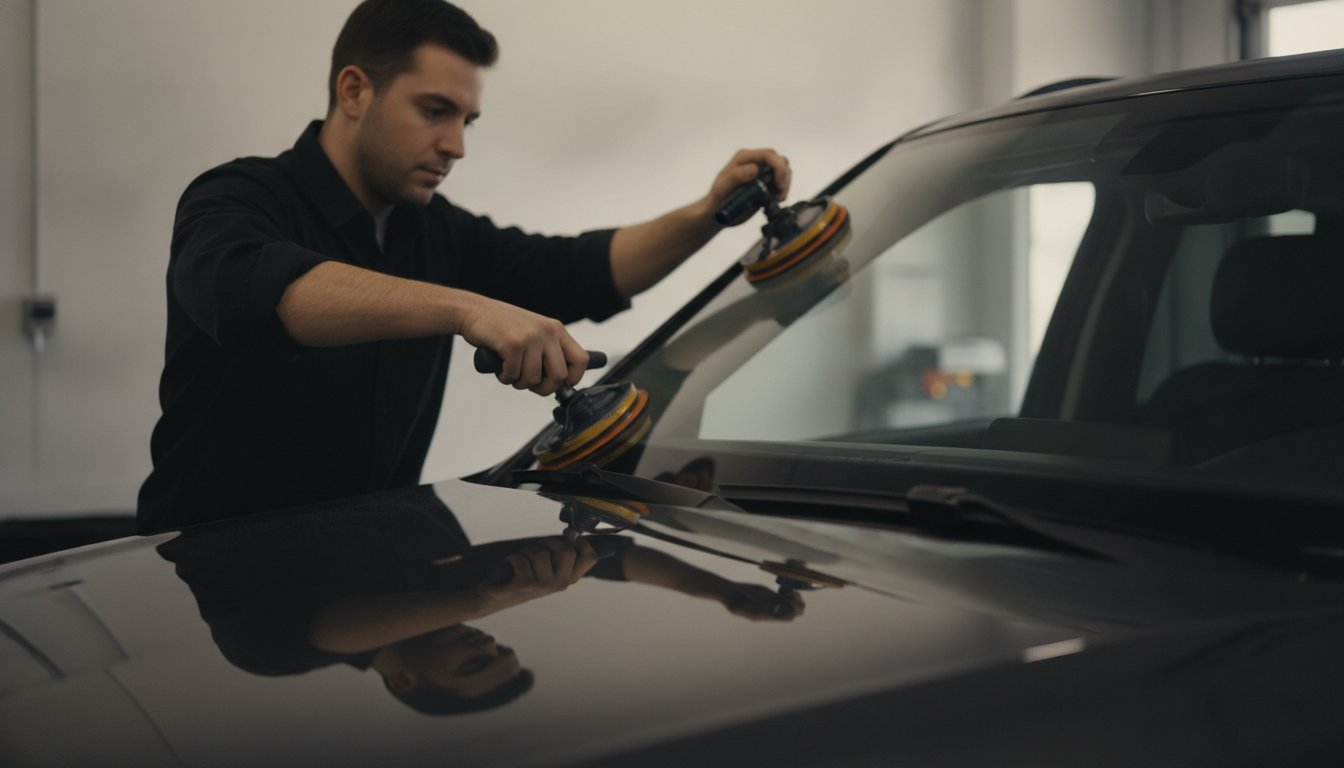
A windshield replacement warranty is more than just a receipt; it's a safety certification for one of your vehicle's most critical structural components. Many drivers worry that a new installation might lead to persistent wind noise, water leaks, or malfunctioning safety sensors. These concerns are valid, especially as vehicle technology becomes more complex. If the installation isn't handled with precision, your car's structural integrity and driver-assist features could be at risk.
We understand that you need total peace of mind when it comes to your vehicle's glass. You deserve to know that your investment is protected against both workmanship errors and material defects. This guide explains exactly what a professional guarantee covers and how to identify hidden exclusions that could cost you later. We'll walk you through the claim process, explain the necessity of ADAS recalibration, and show you why a lifetime guarantee is the standard for quality in 2026.
Key Takeaways
- Distinguish between manufacturer defects and installation errors to ensure your vehicle's structural safety is never compromised.
- Learn why a lifetime windshield replacement warranty is the industry standard for protecting against leaks, wind noise, and adhesive failure.
- Identify common fine-print exclusions, such as non-transferable ownership, that can impact your long-term coverage.
- Understand the difference between a service warranty, optional protection plans, and your standard comprehensive insurance policy.
- Verify that your safety guarantee includes professional ADAS recalibration to keep your vehicle's advanced driver-assist systems functioning correctly.
What is a Windshield Replacement Warranty and Why Does It Matter?
A windshield replacement warranty is a legal and professional commitment that guarantees the quality of your auto glass installation. It serves as your primary protection against errors that occur during the replacement process or defects in the glass itself. When you receive this guarantee, you are getting more than a promise of a job well done. You are receiving a safety certification for your vehicle.
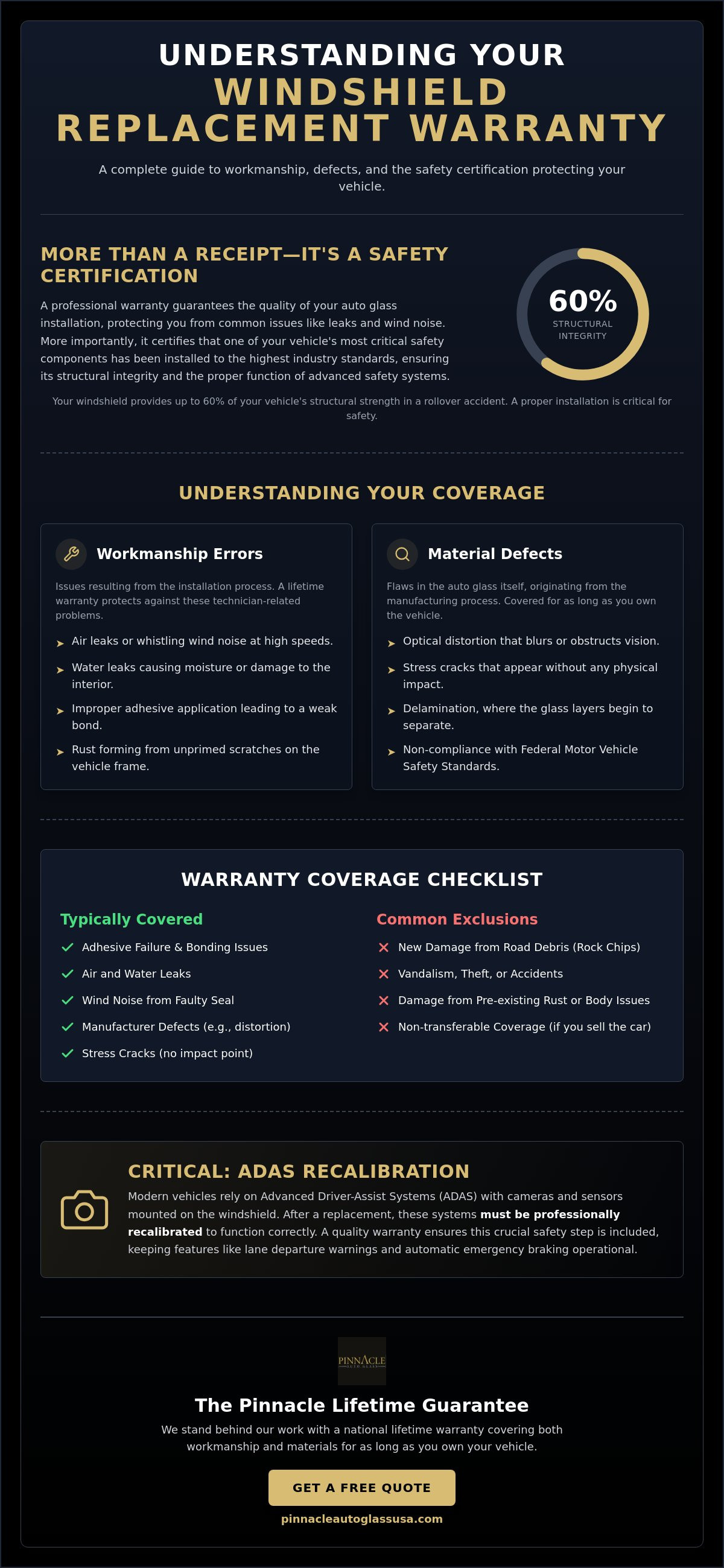
Safety is the most critical reason this document matters. Your windshield provides up to 60% of your vehicle's structural integrity during a rollover accident. It also acts as the backstop for passenger-side airbag deployment. If the glass isn't installed to the Auto Glass Replacement Safety Standard (AGRSS), it could fail during an impact. A comprehensive windshield replacement warranty proves that the installer stands behind the technical precision required to keep you safe.
The Core Components of a Professional Guarantee
A reputable guarantee addresses the most common issues that can arise after a technician leaves. These include air leaks, water leaks, and wind noise. If you hear whistling at highway speeds or see moisture inside the glass after rain, the warranty ensures a free correction. These problems often stem from improper adhesive application or failing to clean the pinchweld correctly before the new glass is set.
Because modern windshields are made of laminated safety glass, they must meet strict Federal Motor Vehicle Safety Standards (FMVSS 205). A warranty protects you if the glass shows manufacturing issues like optical distortion, stress cracks, or delamination. For the duration of the coverage, most professional shops offer a "lifetime" term. This means the protection lasts for as long as you own or lease the vehicle, providing long-term financial security.
Manufacturer vs. Workmanship Warranties
It helps to distinguish between the physical product and the service provided. Original Equipment Manufacturer (OEM) glass providers back their products against physical flaws. However, the technician's skill is the most important factor in a successful replacement. Most claims arise from workmanship errors rather than glass failure. The way the glass is bonded to the frame determines your safety and the longevity of the repair.
Professional installers use high-quality urethane adhesives that require specific temperature and humidity conditions to cure. A workmanship warranty guarantees that the technician followed these protocols. Choosing a warrantied service prevents the long-term costs of interior water damage or electrical shorts caused by improper sealing. It ensures the job is done right the first time. This approach saves you from the frustration of repeated shop visits and keeps your vehicle's safety systems functioning as intended.
The principles of high-performance material sourcing and expert distribution are universal; for instance, in the building industry, Hawaii Architectural Sales represents elite architectural systems that demand the same level of precision and quality assurance as automotive safety glass.
Workmanship vs. Material Defects: Understanding Your Coverage
A comprehensive windshield replacement warranty is not a blanket insurance policy. It specifically addresses two distinct areas: the quality of the glass and the precision of the installation. Understanding the difference between a workmanship error and a material defect is essential for any vehicle owner. This distinction determines whether a future issue is covered by your provider or if it requires a new insurance claim.
Workmanship errors occur during the installation process. Common examples include improper bonding, where the adhesive fails to create a permanent seal, or scratched pinchwelds. If a technician fails to prime a scratch on the metal frame, rust can develop hidden beneath the glass. Professional shops adhere to the Auto Glass Replacement Safety Standard (AGRSS) to prevent these failures. Material defects involve the physical glass itself. Issues like delamination, where the plastic interlayer separates from the glass, or optical distortion that blurs your vision, fall into this category.
One common point of confusion is the stress crack. Unlike a rock chip, a stress crack occurs without any physical impact. It usually results from manufacturing flaws or extreme temperature changes. A standard windshield replacement warranty covers these cracks. However, road hazards like flying debris, gravel, or vandalism are typically excluded. If a stone hits your new glass on the highway, that is a new incident rather than a warranty claim. If you suspect your current installation is failing, you can reach out to Pinnacle Auto Glass for a technical review.
Identifying Installation Errors
Whistling or rushing wind noise at high speeds is the most frequent sign of a poor seal. This usually indicates a gap in the urethane bead. Water leaks are another red flag. If you notice damp carpets or droplets on the interior of the glass after a car wash, the seal is compromised. These errors are dangerous. A leaking windshield can lead to electrical shorts in the dashboard or advanced corrosion of the vehicle frame. A reputable shop should guarantee a leak-free installation for as long as you own the vehicle.
ADAS Recalibration: The New Frontier of Warranty
Modern vehicles rely on cameras and sensors mounted directly to the glass. These Advanced Driver Assistance Systems (ADAS) govern features like automatic emergency braking and lane-keep assist. If these systems are not perfectly aligned after a glass swap, they may fail to function or provide false warnings. This makes professional ADAS recalibration after windshield replacement a non-negotiable part of your safety guarantee. Your warranty should specifically state that the recalibration is successful and that no system error codes remain. If your safety tech malfunctions after a replacement, it is often a calibration error that the installer must resolve under their workmanship guarantee.
Warranty vs. Protection Plans vs. Insurance: A Comparison
Choosing the right coverage for your auto glass involves understanding three distinct products: the service warranty, the protection plan, and your insurance policy. Each serves a specific purpose. Confusing them can lead to unnecessary out-of-pocket expenses or avoidable insurance claims. A windshield replacement warranty is a standard inclusion in any professional installation. It's a guarantee that the work was performed correctly and that the materials used are free from defects.
Protection plans differ because they are optional, paid extensions. While a warranty covers what the installer did, a protection plan covers what happens to the glass after you leave the shop. These plans often include coverage for road hazards, such as rock chips or cracks caused by road debris. Finally, comprehensive auto insurance is your primary defense against major damage. Insurance claims usually require you to pay a deductible unless you live in a state with specific zero-deductible glass laws.
For most vehicle owners, the best ROI comes from a robust installation guarantee. You shouldn't have to pay extra to ensure your windshield doesn't leak or whistle. If the shop provides high-quality service, a third-party protection plan may be redundant. Focus on finding a provider that includes a lifetime windshield replacement warranty as part of their standard service package.
When to Use Your Warranty vs. Filing an Insurance Claim
Determining which path to take depends on the cause of the damage. If the issue is a result of the installation or a manufacturing flaw, always use the warranty. This process involves no deductible and won't affect your insurance standing. For accidental damage, you'll need to weigh the cost of the deductible against the repair price.
- Warranty Claims: Use this for stress cracks, wind noise, or water leaks. There's no cost to you. It won't increase your insurance premiums.
- Insurance Claims: Use this for accidental damage like a falling tree limb or a large rock hit. Check how windshield replacement insurance claims interact with your specific policy before filing.
- Out-of-Pocket Repairs: For minor rock chips, paying for a simple repair is often cheaper than meeting a high insurance deductible.
Evaluating Third-Party Protection Plans
Third-party plans often market themselves as "glass breakage" insurance. They charge a monthly or one-time fee to cover future chips and cracks. Before signing up, read the fine print. Many plans limit the number of replacements you can receive per year. Others exclude specialized glass or ADAS recalibration costs. If you already have a lifetime workmanship guarantee, these plans may offer very little additional value. A rock-solid installation warranty is the most important protection you can have. It ensures the structural integrity of your vehicle without hidden monthly fees.
Reading the Fine Print: Common Exclusions and Red Flags
A windshield replacement warranty is only as strong as the company that stands behind it. Many drivers worry that a provider will find a loophole to avoid honoring a claim if a problem arises. This skepticism is often justified when dealing with "tailgate" warranties. These are informal promises made by fly-by-night operations that effectively disappear once the technician drives away. If you cannot reach the company to report a leak or a whistle a month later, the guarantee is worthless. Professionalism is defined by accessibility and a clear, written record of the terms.
Most professional guarantees include an "Ownership Requirement." This means the coverage is valid only for as long as you own or lease the vehicle. It does not transfer to the next buyer if you sell the car. Additionally, pre-existing rust or structural damage to the vehicle's metal frame can void a warranty. If the pinchweld is corroded or bent, the adhesive cannot form a safe, permanent bond. A reputable shop will document these issues and inform you before starting the work. To ensure you are working with a company that prioritizes long-term reliability, schedule your service with Pinnacle Auto Glass.
Hidden Clauses to Watch For
Watch out for strict reporting windows buried in the fine print. Some national chains require you to report a defect within 30 days of discovering it. If you wait until your next oil change to mention a small leak, they may deny the claim. Always keep your original receipt in your glove box or digital files. While many shops keep digital records, having your own copy ensures you can prove the service date and location without delay. Consider geographic limitations as well. If a local shop lacks a national network, your windshield replacement warranty may not be serviceable if you move to a different state.
The 'Road Hazard' Exclusion Explained
It is a common misconception that a standard warranty covers any future damage to the glass. No installation guarantee covers road hazards like stones, gravel, or debris hitting the windshield on the highway. These incidents are considered new damage rather than a failure of the workmanship or material. You must be able to identify the difference between a manufacturing flaw and an impact. A stress crack is a fracture originating from the glass edge without a clear point of impact. If there is a small pit or a "star" at the center of the crack, it is an impact crack caused by external force. These new chips and cracks are typically handled through insurance rather than a warranty claim.
Why Pinnacle Auto Glass Provides the Ultimate National Guarantee
Pinnacle Auto Glass sets the industry standard by treating every installation as a critical safety procedure. We don't just provide a piece of glass; we provide a comprehensive safety system. Our windshield replacement warranty reflects this commitment by covering both the physical product and the technical execution. By prioritizing high-grade urethane adhesives and OEM-quality glass, we ensure that your vehicle's structural integrity remains uncompromised. We believe that a guarantee is only as good as the work it covers, which is why we invest heavily in technician training and premium materials.
Our "Right the First Time" philosophy is designed to minimize the need for future claims. We understand that your time is valuable. By using precision tools and following strict curing protocols, we eliminate the common causes of leaks and wind noise before they ever start. This proactive approach to quality control means you can drive away with confidence, knowing that your new windshield meets or exceeds all original manufacturer specifications. If an issue does arise, our national presence ensures that you have access to professional support regardless of your location.
Our National Service Standards
We maintain consistent quality across all service regions. Every technician we employ is trained to exceed the Auto Glass Replacement Safety Standards (AGRSS). This rigorous adherence to safety protocols is why we are a trusted partner for both individual drivers and commercial fleets. When we perform a professional windshield replacement, we verify every step of the process. This includes everything from the initial pinchweld inspection to the final adhesive bead. This attention to detail ensures long-term durability and safety for every client we serve. We also integrate ADAS recalibration into our standard service guarantee to ensure your vehicle's safety tech functions perfectly.
The Pinnacle Claims Process
If you suspect a defect or an installation error, our windshield replacement warranty claim process is straightforward and transparent. We prioritize your safety above all else and act quickly to resolve any concerns. Our goal is to get you back on the road with total peace of mind. To initiate a claim, follow these simple steps:
- Contact our service center immediately to report the specific issue, such as a leak or wind noise.
- Schedule a no-hassle inspection at a time and location that works for you.
- Receive priority scheduling for any necessary adjustments or glass replacements.
- Verify that all safety systems, including ADAS cameras, are re-tested after the correction is made.
We stand by our work because we invest in the best materials and training. Your safety and satisfaction are our primary objectives. We handle the technical details so you can focus on the road ahead.
Secure Your Vehicle's Structural Safety and Value
A professional windshield replacement warranty is your final safeguard against installation errors and material flaws. It ensures your vehicle remains structurally sound and that your advanced safety systems function exactly as intended. By understanding the distinction between workmanship guarantees and insurance coverage, you can avoid unnecessary costs and maintain your car's long-term value. You now have the knowledge to spot hidden exclusions and choose a provider that stands behind their work without compromise.
Don't settle for informal promises that offer no real protection after the technician leaves your driveway. Pinnacle Auto Glass provides a Lifetime Workmanship Guarantee and employs Certified ADAS Recalibration Specialists to ensure every job meets our national service excellence standards. We prioritize your safety and the structural integrity of your vehicle above all else. Our goal is to provide a seamless experience that restores your confidence on the road. We handle the technical complexities so you can focus on driving safely.
Schedule your warrantied windshield replacement with Pinnacle Auto Glass today. Our team is ready to provide the reliable, high-quality service you deserve.
Frequently Asked Questions
Is a windshield warranty the same as auto insurance?
No, a windshield warranty is not the same as auto insurance. Your insurance policy typically covers accidental damage from external events like road hazards, falling objects, or vandalism. In contrast, a warranty specifically guarantees the quality of the installation and the materials used. If the glass leaks or the adhesive fails, the warranty covers the repair. If a rock hits your car on the highway, you'll need to file an insurance claim.
Does a lifetime warranty cover a rock chip from road debris?
No, a standard lifetime warranty does not cover rock chips caused by road debris. These incidents are considered new damage rather than a failure of the workmanship or material. Warranties protect you against defects like stress cracks, optical distortion, or air leaks. To cover future rock chips, you would typically need an optional protection plan or a comprehensive insurance policy with glass coverage.
What happens to my warranty if I sell my car?
Most windshield warranties are non-transferable and apply only to the original customer who purchased the service. This "Ownership Requirement" means the coverage ends once the vehicle is sold or the lease is terminated. Always check the specific terms of your provider before selling. If you transfer ownership, the new owner will likely be responsible for any future glass issues out of pocket.
Can a poorly installed windshield cause my ADAS cameras to fail?
Yes, a poorly installed windshield can lead to ADAS camera failure or inaccurate safety readings. If the glass is not positioned exactly to manufacturer specifications, the cameras mounted behind it may lose their alignment. This can cause systems like lane-keep assist or automatic braking to malfunction. A professional windshield replacement warranty should include a guarantee that all safety systems are recalibrated and functioning correctly.
How do I know if a crack is a manufacturer defect or from an impact?
You can identify the difference by looking closely for a point of impact. A manufacturer defect, such as a stress crack, typically originates from the edge of the glass without any visible pit or "star" mark. If you see a small indentation or crushed glass where the crack began, it was caused by an external object. Stress cracks are covered under warranty, while impact damage is not.
Will my warranty be void if I don't use OEM glass?
No, using high-quality aftermarket glass, often called Original Equipment Equivalent (OEE), does not void your installation warranty. As long as the glass meets Federal Motor Vehicle Safety Standards, a professional shop will stand behind their workmanship. While OEM glass is often preferred for specific fitment, reputable OEE glass is a safe and warrantied alternative. The most important factor remains the skill of the technician.
What should I do if I hear a whistling sound after my windshield is replaced?
Contact your service provider immediately if you hear a whistling or rushing wind sound. This noise usually indicates an air leak caused by a gap in the urethane adhesive seal. It is a workmanship error that should be corrected under your windshield replacement warranty at no cost to you. Do not ignore this sound, as it often precedes water leaks that can damage your vehicle's electrical systems.
Does the warranty cover the rain sensors and heating elements in the glass?
Yes, a comprehensive warranty covers the functionality of integrated components like rain sensors and heating elements. If these features fail to work because of a manufacturing defect in the glass or a connection error during installation, the provider must resolve the issue. Ensure your technician tests these systems before you leave the shop to verify they are operating as intended after the replacement is finished.


