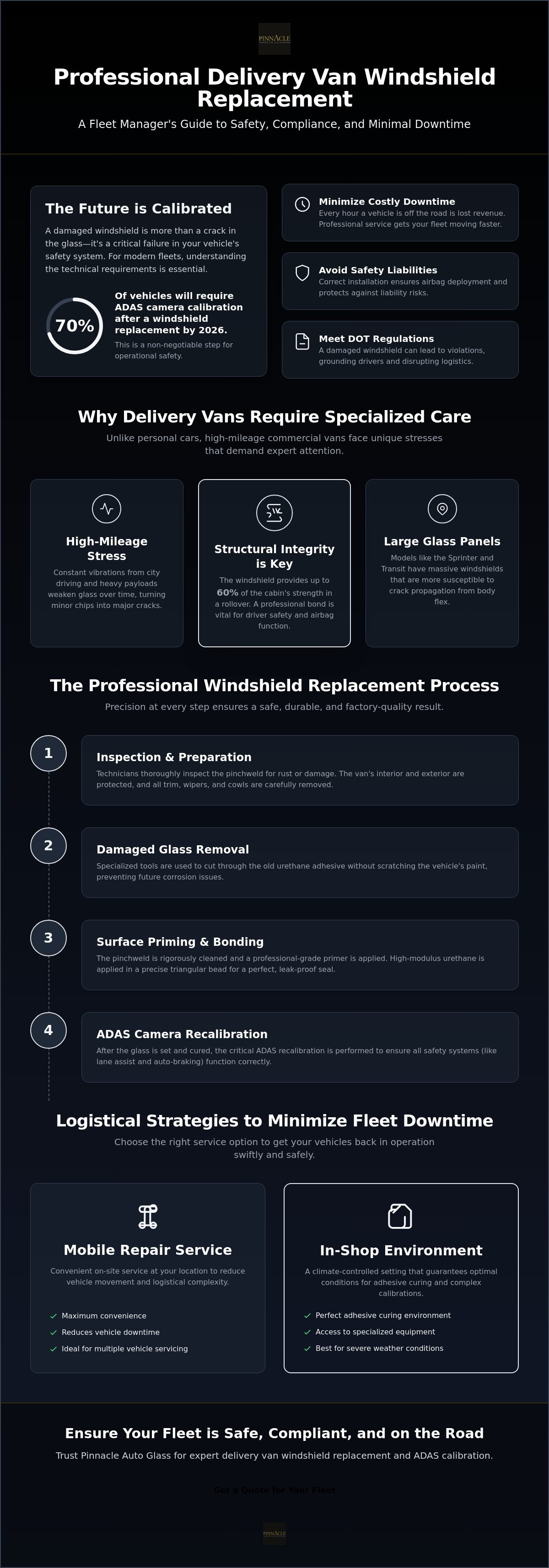
Did you know that as of 2026, approximately 70% of vehicles require ADAS camera calibration after a windshield replacement? For fleet managers, a professional delivery van windshield replacement is more than a simple repair. It's a critical technical procedure that impacts your entire operation. You know that every hour a vehicle sits idle is an hour of lost revenue. A damaged windshield isn't just an eyesore. It's a safety liability and a potential DOT violation that can ground your drivers and disrupt your logistics chain.
We agree that minimizing downtime is your top priority. This guide provides the essential steps for professional delivery van windshield replacement to ensure driver safety and operational efficiency. You'll learn how to manage the complexities of safety camera recalibration and meet strict federal visibility standards. We'll preview the technical requirements and the logistical strategies needed to get your vehicles back on the road quickly with correctly calibrated systems.
Key Takeaways
- Understand how high-mileage delivery vans face unique structural stresses that require specialized glass installation techniques.
- Follow a professional process for delivery van windshield replacement that prioritizes thorough pinchweld inspection and precision glass removal.
- Learn why ADAS recalibration is a non-negotiable step for modern fleets to ensure safety systems function correctly after a glass change.
- Identify the best logistical strategies to minimize downtime by choosing between mobile repairs and controlled in-shop environments.
- Ensure your vehicles remain compliant with DOT regulations by maintaining clear driver visibility and structural cabin strength.
The Importance of Professional Delivery Van Windshield Replacement
Delivery vans are the backbone of modern logistics. Unlike personal vehicles, these vans operate under extreme conditions every day. High-mileage routes and heavy payloads create constant structural stress on the vehicle's frame. This pressure transfers directly to the glass. A professional delivery van windshield replacement isn't just about clear vision. It's about maintaining the vehicle's structural skeleton. Professional installation ensures the vehicle remains a safe environment for your drivers and a reliable asset for your business.
Consider the Ford Transit or Mercedes-Benz Sprinter. These models feature massive windshield surface areas. Larger panes of glass are more susceptible to crack propagation. A small stone chip that might stay stable on a sedan can quickly spiderweb across a van's windshield due to increased surface tension and body flex. When the glass fails, it compromises the entire front end of the vehicle. This is why immediate action is necessary to prevent a minor issue from becoming a major fleet disruption.
Your windshield does more than block wind. In a rollover accident, the glass provides up to 60% of the cabin's structural strength. Professional installation ensures that the glass stays bonded to the frame during an impact. This bond allows the roof to support the vehicle's weight and ensures proper airbag deployment. Just as you would ensure the structural integrity of your facility with professional services from ALG Roofing Limited, using a certified auto glass service helps you maintain the vehicle's factory safety rating and protects your company from liability risks.
High-Mileage Stress and Glass Durability
City driving involves constant vibrations from potholes, curbs, and stop-and-go traffic. These micro-vibrations gradually weaken compromised laminated safety glass. Temperature fluctuations also play a role. When a driver blasts the air conditioning on a 90-degree day, the thermal shock can cause existing chips to fail instantly. Stopping small chips before they spread is ideal. However, once the damage reaches a certain threshold, a full delivery van windshield replacement is the only way to restore the glass's original durability.
Safety Standards for Commercial Van Glass
Commercial vehicles must adhere to strict Federal Motor Vehicle Safety Standards (FMVSS). Meeting these standards requires the use of high-modulus urethane. This specialized adhesive provides the necessary stiffness to handle the weight and height of high-roof and extended-wheelbase models. Proper bonding ensures the driver has an unobstructed view, which is critical for maneuvering large vehicles in tight urban environments. Professional technicians verify that every replacement meets these factory protocols to keep your fleet compliant and your drivers safe on the road.
How-To: The Step-by-Step Van Glass Replacement Process
Professional delivery van windshield replacement is a technical workflow that demands precision at every stage. The process begins with a detailed inspection of the pinchweld and the surrounding body. Technicians look for existing corrosion or structural deformities. If rust is present, the new adhesive cannot form a secure bond. This foundation is critical for the long-term safety of the vehicle and the integrity of the glass.
Removing the damaged glass requires specialized cutting tools. The goal is to separate the old urethane without scratching the vehicle's paint. Even minor scratches can lead to rapid oxidation in fleet vehicles exposed to harsh environments. Once the glass is out, technicians apply professional-grade primers to the frame. These primers prevent rust and prepare the surface for a leak-proof seal. All materials must meet the Federal Motor Vehicle Safety Standards to ensure the vehicle remains compliant with national safety regulations.
Preparation and Vehicle Protection
Technicians protect the van's interior by covering the dashboard and seats. This prevents glass shards or adhesive from damaging sensitive electronics and upholstery. We carefully remove wipers, cowls, and external trim pieces. These parts must be handled with care to avoid breaking the plastic clips. After removal, the bonding surface undergoes a rigorous cleaning process. Removing dirt and oils is the only way to ensure maximum adhesive tack for a permanent bond.
Installation and Sealing Techniques
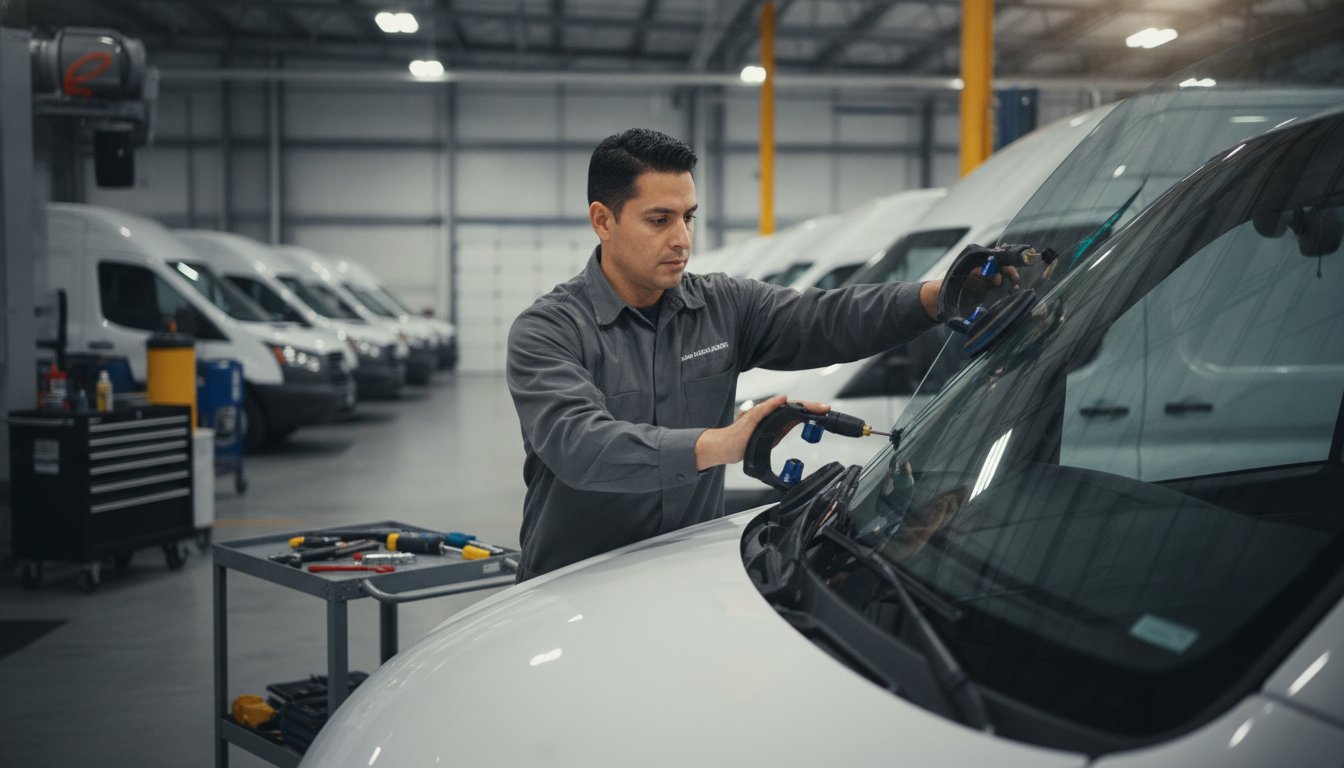
Applying the adhesive bead is a high-precision task. We use a specific triangular bead profile to ensure even compression when the glass is pressed into place. This is especially important for the large glass panels found in Mercedes Sprinters and other high-roof vans. Perfect alignment is achieved using specialized suction tools and mechanical glass setters. These tools allow for a controlled placement that manual lifting cannot match.
After the glass is set, it requires a specific curing time. The adhesive must reach a certain hardness before the vehicle is safe to drive. We verify the seal integrity through post-installation testing before releasing the van back into service. For companies looking to streamline this technical process, our fleet glass services offer a professional solution that keeps your vans on the road safely.
ADAS Recalibration: A Critical Step for Modern Delivery Fleets
Modern delivery vans are sophisticated machines equipped with cameras and sensors mounted directly behind the glass. When you schedule a delivery van windshield replacement, these components are often detached or disturbed. Even a microscopic shift in the camera's angle can lead to significant errors in safety system calculations. If a camera is misaligned by just one degree, it may misinterpret the distance to a lead vehicle by several feet. This error renders systems like Forward Collision Warning and Automatic Emergency Braking unreliable. Accuracy is the only way to ensure these safety features perform as intended during an emergency.
Following a professional ADAS recalibration checklist ensures that every sensor is precisely aligned with the manufacturer's original specifications. For delivery drivers operating in high-traffic urban zones, these systems are vital. They provide a second set of eyes that helps prevent rear-end collisions and lane-departure incidents during long, fatiguing shifts. Precision recalibration isn't an optional luxury; it's a fundamental part of the repair process that protects your drivers and your company's bottom line. Skipping this step can lead to system failures that put your personnel at risk.
Types of Recalibration for Vans
Recalibration methods vary depending on the vehicle's make and model. Static calibration takes place in a controlled shop environment. Technicians use specialized targets and laser levels to reset the camera's field of vision. This is the standard for many Ford and Mercedes-Benz models. Dynamic calibration requires the technician to drive the van at specific speeds on well-marked roads while the onboard computer learns the environment. Some vehicles, like certain models of the RAM ProMaster, may require both static and dynamic procedures to ensure full system functionality. We identify the specific requirements for your fleet vehicles to ensure the job is done correctly.
Liability and Fleet Safety Systems
Managing a modern fleet involves handling significant liability. If a driver is involved in an accident and the ADAS was improperly calibrated, the fleet owner may face legal repercussions. Ensuring your safety tech is compliant with current standards reduces the risk of expensive accidents and insurance claims. It's essential to partner with auto glass professionals who understand the intersection of physical glass installation and digital sensor programming. This comprehensive approach to delivery van windshield replacement keeps your safety systems active and your drivers protected from preventable road hazards.
Strategies to Minimize Fleet Downtime During Repair
Every hour a delivery vehicle sits idle is an hour of lost revenue. In the logistics industry, time is the most valuable asset. Managing a delivery van windshield replacement requires a strategy that balances speed with technical precision. You don't just need the glass replaced; you need the vehicle back in the rotation without compromising safety. A standard mobile replacement can typically be completed in about two hours. However, the logistical choice between on-site repair and in-shop service depends on your specific fleet requirements and the age of your vehicles.
Scheduling repairs during off-peak hours is a proven method for reducing operational friction. Many fleet managers coordinate service during driver rest periods or at the end of a shift. This ensures the van is ready for the next morning's route. Establishing a long-term partnership with a professional glass provider also streamlines the process. Priority scheduling and pre-arranged billing allow your team to bypass administrative delays. A dedicated partner understands your fleet's specific needs and keeps the necessary parts in stock for your most common vehicle models, which is essential for specialized service providers like Axent Shutters Blinds & Shades LLC who must maintain strict delivery schedules.
Mobile Service vs. In-Shop Replacement
Mobile service is the ideal choice for route-based businesses. It eliminates the need for a driver to transport the van to a shop, saving both labor costs and fuel. This is highly effective for simple replacements or minor chip repairs that don't involve complex sensor arrays. Understanding the benefits of reducing fleet downtime with mobile glass repair helps you maintain a lean operation.
In-shop service is often recommended for modern vans requiring complex ADAS recalibration. These systems often need a controlled environment with level floors and specific lighting to ensure the safety cameras are perfectly aligned. While this requires more logistics, it prevents the safety system failures that can lead to costly accidents. We help you evaluate each situation to choose the fastest path back to the road.
Emergency Fleet Management Tips
Preparation prevents delays. Keep a detailed record of glass specifications for every van in your fleet. Note whether a vehicle has rain sensors, heated glass, or specific camera mounts. This allows your service provider to arrive with the correct glass the first time. Pre-authorizing repairs for your drivers also speeds up the timeline significantly. When a technician doesn't have to wait for corporate approval, they can start the installation immediately. Managing insurance claims efficiently is another key factor. Many commercial policies offer specialized coverage that simplifies the billing process. If you want to optimize your repair timeline, our fleet glass services provide the professional support needed to keep your business moving.
Why Pinnacle Auto Glass is the Preferred Choice for Van Fleets
Pinnacle Auto Glass understands the unique demands of the logistics sector. We treat your vehicles as essential business assets, not just another service ticket. Our team specializes in professional delivery van windshield replacement for high-volume fleets. We combine technical skill with a deep understanding of operational logistics. This ensures your vans spend less time in the shop and more time on their routes. We use high-quality glass and adhesives that meet or exceed OEM standards to restore your vehicle's structural integrity.
Our technicians are the foundation of our service. Every member of our team is certified and trained in the latest ADAS recalibration protocols. As safety systems become more integrated in 2026, having a partner who understands the digital side of glass repair is vital. We don't just install a pane of glass. We ensure the cameras, sensors, and safety features are fully functional before the vehicle leaves our care. This comprehensive approach reduces your liability and keeps your drivers protected.
Comprehensive Fleet Solutions
We provide a single point of contact for all your glass needs. Our expertise extends beyond standard vans to include specialized care for semi truck windshield replacement and other heavy-duty vehicles. This versatility makes us a valuable partner for diverse logistics operations. Our services are fully scalable. We support small local businesses with three vans just as effectively as national carriers with hundreds of units. To simplify your operations, we offer streamlined billing and direct insurance processing for all commercial accounts. This eliminates paperwork for your managers and speeds up the repair timeline.
Commitment to Vehicle Safety and Tech
Automotive glass technology is evolving rapidly. We stay ahead of 2026 trends by investing in the latest diagnostic tools and calibration equipment. Our commitment to safety is visible in our rigorous quality control process. Every delivery van windshield replacement undergoes a multi-point inspection to verify the seal, alignment, and sensor functionality. We don't cut corners because we know the safety of your drivers depends on our work. Our goal is to be a dependable guide that simplifies complex technical tasks for fleet owners. Contact us today for a professional assessment of your fleet glass needs and experience a service built on reliability and results.
Secure Your Fleet's Operational Efficiency
Maintaining a commercial fleet requires a proactive approach to vehicle maintenance. A professional glass installation is more than a cosmetic fix. It's a vital safety restoration that protects your drivers and your bottom line. By prioritizing high-modulus urethane standards and precise ADAS recalibration, you ensure that your vehicles remain structurally sound and technically compliant. These technical steps prevent long-term liability issues and keep your safety systems functioning exactly as the manufacturer intended.
Partnering with commercial fleet specialists allows you to manage repairs without disrupting your logistics chain. Our certified ADAS technicians provide the expertise needed to handle complex sensors and camera alignments correctly the first time. This level of professional service reduces downtime and maintains the highest standards of driver safety across your entire operation. We understand the urgency of your delivery schedules and provide the reliability you need to keep your business moving forward.
Schedule your delivery van windshield replacement with Pinnacle Auto Glass today to experience expert service tailored for modern fleets. We're ready to assist you with a professional assessment and a seamless repair process.
Frequently Asked Questions
How long does a delivery van windshield replacement take?
A standard delivery van windshield replacement typically takes between 60 and 90 minutes to complete. However, you must also account for the adhesive cure time, which usually requires at least one additional hour before the vehicle is safe to drive. If your van requires ADAS recalibration, the total service time may extend to three hours. We prioritize efficiency to ensure your driver returns to their route as quickly as possible.
Can you replace the windshield on a high-roof van at my location?
Yes, we provide mobile services for high-roof delivery vans at your warehouse, office, or job site. Our technicians use specialized equipment to handle the increased height and larger glass panels of models like the Ford Transit or Mercedes Sprinter. While most replacements are mobile-friendly, we may recommend in-shop service if the vehicle requires complex static ADAS recalibration that needs a controlled, level environment.
Is ADAS recalibration mandatory after replacing a van windshield?
Recalibration is mandatory if your van is equipped with Advanced Driver Assistance Systems like lane-keep assist or collision warning cameras. These sensors are mounted directly to the glass, and even a microscopic misalignment during installation can cause system failure. Skipping this step can lead to safety liabilities and non-compliance with manufacturer standards. We perform these calibrations to ensure your fleet's safety tech remains fully operational.
Does insurance cover the cost of commercial van glass replacement?
Most commercial insurance policies cover glass replacement, often with specific provisions for fleet vehicles. Coverage depends on your specific policy and whether you have comprehensive insurance. Some states mandate zero-deductible glass replacement for safety reasons. We work directly with major commercial insurance carriers to streamline the claims process and reduce administrative burdens for your fleet managers.
What is the difference between OEM and aftermarket glass for delivery vans?
OEM glass is manufactured by the same company that provided the original factory glass, ensuring an identical fit and finish. Aftermarket glass is produced by third-party manufacturers but still meets all federal safety standards. For a delivery van windshield replacement, we use high-quality glass that meets or exceeds original specifications. This ensures structural integrity and clear visibility, which are critical for high-mileage commercial use.
Can a small chip in a van windshield be repaired instead of replaced?
We can often perform a windshield repair if the chip is smaller than a quarter and is not in the driver's direct line of sight. Repairing chips early prevents them from spreading into large cracks that require a full replacement. However, if the damage is larger than three-quarters of an inch or is located within the wiper sweep area, DOT regulations may require a full replacement to maintain compliance.
Do you provide glass services for other commercial vehicles like box trucks?
Yes, we offer comprehensive fleet glass services for a wide range of commercial vehicles, including box trucks and regional delivery vehicles. Our technicians are trained to handle the larger, heavy-duty glass panels used in commercial transport. Whether you manage a local delivery fleet or a large logistics operation, we provide the specialized tools and materials needed to service your entire inventory of vehicles.
What happens if I drive my van before the adhesive is fully cured?
Driving before the adhesive is cured can cause the windshield to shift, leading to wind noise, water leaks, or structural failure. The windshield is a critical safety component that supports the roof during a rollover and ensures proper airbag deployment. If the bond isn't set, the glass may not stay in place during a collision. We always provide a specific safe drive-away time to ensure your van meets all safety requirements.


