Did you know that 85% of new vehicles sold in 2026 are equipped with advanced safety features that depend entirely on your glass? A modern car windshield replacement is no longer just about clear visibility; it's a precision technical procedure. If your glass is compromised, your vehicle's structural integrity and its automated safety systems are at risk. Even a minor misalignment can cause your emergency braking or lane-keep assist to malfunction.
It's natural to feel overwhelmed by the technical requirements of ADAS recalibration or the complexities of insurance paperwork. You want your car back on the road without worrying if your safety technology will fail when you need it most. This guide provides a clear roadmap to restoring your vehicle to factory standards. It's designed to simplify the technical jargon and provide a direct path toward a safe resolution.
You'll learn how to distinguish between a simple repair and a necessary replacement while ensuring your safety sensors remain perfectly aligned. We'll also cover the latest 2026 regulations and how to manage the insurance process with confidence. By the end, you'll have the knowledge required to keep your vehicle safe, compliant, and road-ready.
Key Takeaways
- Identify when damage in the critical vision area makes a professional car windshield replacement mandatory for your safety.
- Understand why ADAS recalibration is essential for maintaining the functionality of your vehicle’s lane-keep assist and emergency braking systems.
- Compare the differences between OEM and aftermarket glass to ensure your vehicle maintains its structural integrity and HUD clarity.
- Learn the detailed steps of a professional installation, including precision adhesive removal and thorough interior protection.
- Evaluate the benefits of mobile versus in-shop service to find the most efficient solution for your personal or commercial vehicle.
When is Car Windshield Replacement Mandatory?
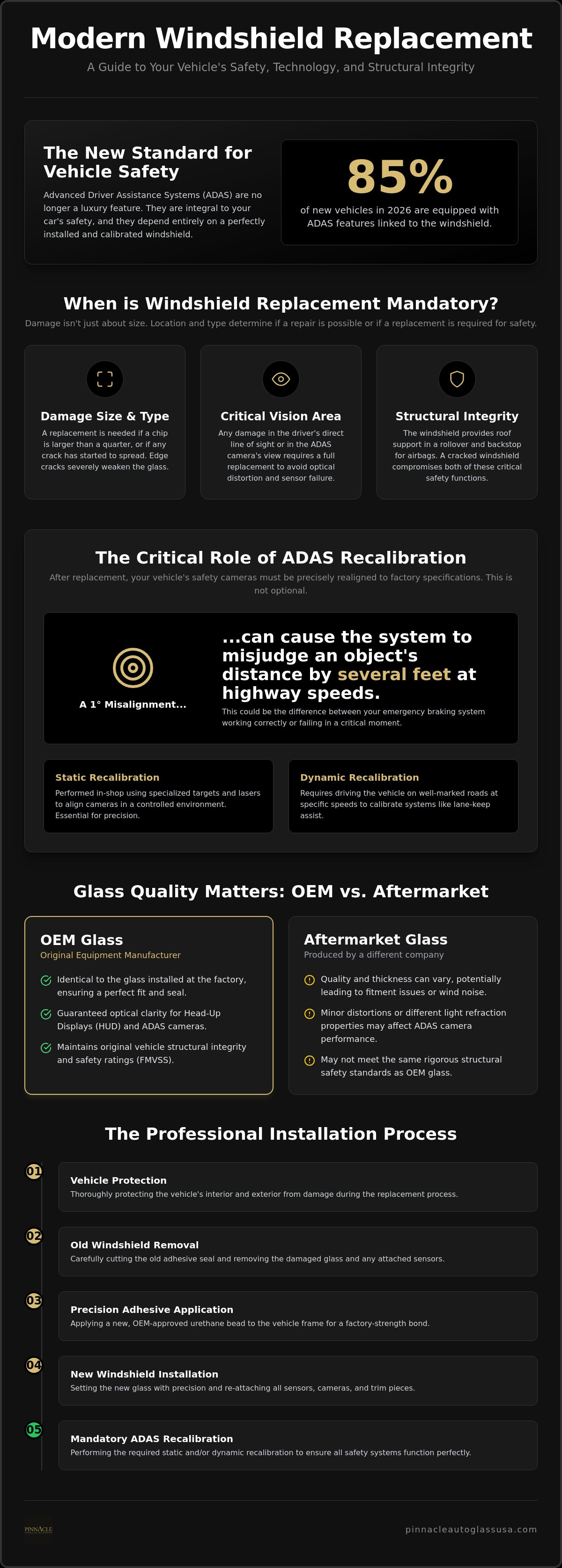
Determining whether you need a repair or a full replacement depends on more than just the size of the damage. Modern windshields are generally made of laminated safety glass, which is engineered to provide essential structural support for your vehicle. When this glass is cracked, its ability to protect you during an accident decreases significantly. A professional car windshield replacement is mandatory when the damage compromises the vehicle's safety systems or the driver's line of sight.
Safety standards like FMVSS 212 and 216 dictate how a windshield must perform during a crash. The glass provides a substantial portion of the roof's strength during a rollover, preventing the cabin from crushing inward. Additionally, the windshield acts as a critical backstop for the passenger side airbag. If the glass is already weakened by a crack, the force of an inflating airbag can cause the windshield to fail or detach entirely. This failure leaves the passenger without the necessary protection during an impact.
The Size and Location Rule for 2026 Vehicles
As vehicle technology advances, the tolerances for glass damage have become much tighter. Generally, any chip or crack larger than a quarter requires a full car windshield replacement. However, location is just as important as size. Any damage located directly in the driver's "critical vision area" is an automatic grounds for replacement. This zone is roughly the width of the windshield wipers directly in front of the steering wheel. Repairs in this area can cause optical distortion that distracts the driver and obscures road hazards.
The camera window is the specific area of glass where ADAS sensors view the road; any distortion or damage within this zone makes the glass irreparable because it interferes with critical safety algorithms. Cracks that reach the edge of the glass frame are also high-risk. These edge cracks compromise the adhesive seal between the glass and the vehicle body. This makes the windshield more likely to pop out during a collision, failing to support the vehicle's structural cage as intended.
Environmental Impacts on Glass Integrity
Environmental factors can rapidly turn a minor chip into a major safety hazard. Extreme temperature fluctuations cause the glass to expand and contract. This movement puts immense pressure on a chip, often leading to spiderweb cracks that spread across the entire surface in a matter of hours. Road vibrations and minor bumps also contribute to this degradation. Delaying a replacement doesn't just make the damage worse; it increases the risk of total glass failure while you're driving. Once a crack begins to spread, the structural integrity of the glass is lost, and immediate action is required to restore your vehicle's safety.
The Critical Role of ADAS Recalibration in Glass Services
Modern vehicles are no longer just mechanical machines; they are sophisticated computers on wheels. In 2026, approximately 85% of new vehicles are equipped with at least one Advanced Driver Assistance System (ADAS) feature. These systems rely on cameras and sensors typically mounted directly to the interior of the glass. When you undergo a car windshield replacement, these sensors are physically removed and reattached to the new glass. Even a microscopic shift in their position changes how the vehicle perceives the road environment.
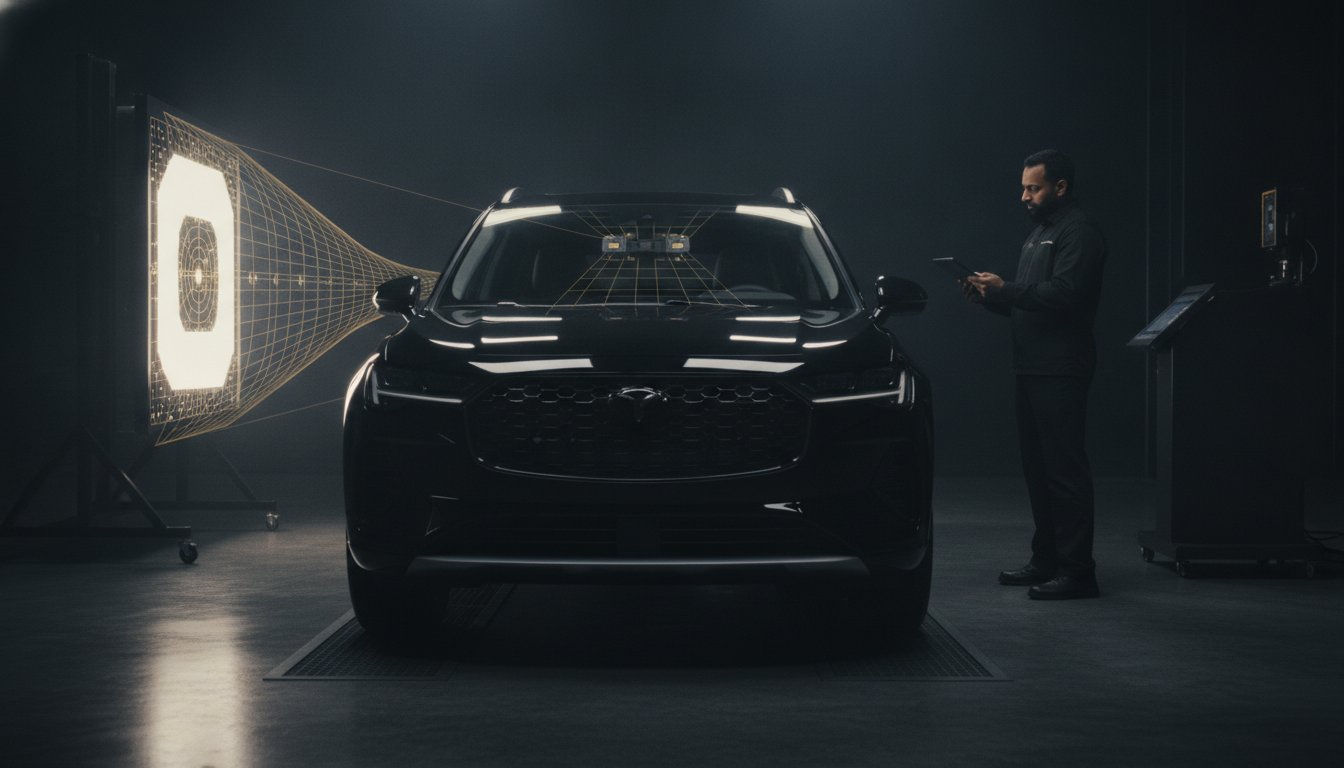
Recalibration is the technical process of resetting these sensors to factory specifications. There are two primary methods used by specialists. Static recalibration occurs in a controlled shop environment using specific targets and laser levels to align the cameras. Dynamic recalibration requires a technician to drive the vehicle at specific speeds on roads with clear markings. Many 2026 models require a dual process, using both methods to ensure lane departure and forward collision systems function correctly after the installation is complete.
Why Your Safety Sensors Require Precision
Precision is the most critical factor in modern glass service. A 1-degree misalignment in a camera mount can result in the system miscalculating the distance to an object by several feet at highway speeds. This error could be the difference between an emergency brake engaging on time or failing to stop. The optical clarity and thickness of the glass also play a major role in sensor accuracy. You can find more detail on these technical requirements in our ADAS Calibration and Auto Glass: The Complete 2026 Reference Guide.
Certified Technician Standards for Modern Tech
Not all glass shops are equipped to handle these technical requirements. A shop that only installs glass without recalibration tools leaves your vehicle in a compromised state. Over 65% of all collision repairs now require ADAS recalibration, making it a standard part of the repair process rather than an optional add-on. Every piece of replacement glass must meet Federal Motor Vehicle Safety Standard No. 205 to ensure it provides the necessary clarity for safety sensors.
Technicians must use specialized diagnostic software to verify that every sensor is fully functional before the vehicle returns to the road. This verification process typically checks the following systems:
- Adaptive Cruise Control
- Lane Keep Assist
- Automatic Emergency Braking
- Pedestrian Detection
A car windshield replacement is only half the job if the sensors aren't verified and tested. If you need a team that handles both the glass and the integrated technology, consider professional windshield services that prioritize comprehensive safety and technical accuracy.
Comparing OEM and Aftermarket Windshield Quality
When you schedule a car windshield replacement, you'll likely choose between Original Equipment Manufacturer (OEM) and Original Equipment Equivalent (OEE) glass. OEM glass is produced by the same manufacturer that provided the factory glass for your vehicle. It matches the original specifications for thickness, color, and fit exactly. OEE, or aftermarket glass, is manufactured by different companies. While aftermarket glass must legally meet Consumer Reports' crash tests and federal safety standards, it may not always replicate the secondary features of the original part.
Modern windshields are integrated technology components. Many 2026 models feature Head-Up Displays (HUD) that project speed and navigation data directly onto the glass. This requires a specific "wedged" interlayer within the glass to prevent "ghosting" or double images. Similarly, acoustic glass uses specialized sound-dampening interlayers to reduce cabin noise. High-quality glass ensures these features function as intended, maintaining the premium feel and technical utility of your vehicle.
Optical Clarity and Distortions
Optical clarity is paramount for both the driver and the vehicle's onboard computers. Low-quality glass often contains subtle "waves" or distortions that are invisible to the naked eye but highly disruptive to ADAS cameras. These cameras rely on a clear, undistorted view to calculate distances and recognize lane markings. If the glass curvature isn't perfect, the camera may struggle to focus, leading to system errors or false collision warnings. OEM glass is the gold standard for luxury vehicles because it guarantees the precise optical specifications required for high-end safety sensors and display systems.
Durability and Safety Standards
The structural integrity of your glass is defined by its lamination strength. Premium glass provides superior resistance to impacts and environmental stress. Choosing the right material ensures the longevity of your vehicle's safety systems. You can explore a deeper breakdown of these differences in our guide on OEM vs Aftermarket Windshields: Which One Is Best?
Glass quality also impacts your daily maintenance. Premium glass has a smoother surface finish, which reduces friction for your windshield wipers. This prevents premature wear on the wiper blades and ensures a streak-free clear view during heavy rain. Furthermore, the mounting brackets for ADAS sensors must match factory specifications exactly. Even a slight variation in the bracket's position on an aftermarket windshield can make recalibration impossible, necessitating another car windshield replacement to fix the error. Stick with verified, high-quality glass to protect your investment and your safety.
Navigating the Professional Replacement Process
A professional car windshield replacement follows a strict technical protocol to ensure your vehicle remains safe and road-ready. This process is not just about swapping glass; it is a multi-step restoration of your vehicle's structural integrity. Every technician follows a standardized sequence to ensure the bond meets federal safety requirements. The entire procedure typically takes between one and three hours, depending on the complexity of your vehicle's technology.
The standard replacement process consists of five essential phases:
- Thorough Inspection: Technicians check for pre-existing damage and apply protective coverings to your seats, dashboard, and floor to prevent debris or adhesive contamination.
- Precision Removal: Specialists use specialized cutting tools to remove the damaged glass and the old urethane bead. This step requires extreme care to avoid scratching the pinchweld, which could lead to future corrosion.
- Surface Preparation: The technician cleans the frame and applies an advanced primer. They then apply a bead of high-viscosity urethane, which acts as the primary structural adhesive.
- Installation and Recalibration: The new windshield is set into place with precision. The team then performs the ADAS recalibration required for your safety sensors to function correctly.
- Quality Check: A final inspection verifies the seal and confirms the safe drive-away time (SDAT) for the specific adhesive used.
Safe Drive-Away Time (SDAT) Explained
Adhesive curing time is a non-negotiable safety requirement. The urethane must reach a specific chemical strength to hold the windshield in place during a collision or airbag deployment. Environmental factors like humidity and temperature significantly affect this process. High humidity generally accelerates the cure, while extreme cold can slow it down. You must wait for the technician's official clearance before driving. For the first 24 hours after a car windshield replacement, avoid high-pressure car washes and keep a window cracked slightly when closing doors to prevent air pressure spikes from compromising the fresh seal.
Insurance and Claim Handling
Navigating insurance is often the most stressful part of glass damage. Many comprehensive policies include "Full Glass" coverage, which may allow for a replacement with no out-of-pocket deductible. Working with a provider that handles direct billing simplifies the process by managing the paperwork on your behalf. You can find detailed information on budgeting and coverage in our How Much Does Windshield Replacement Cost? 2026 Price & Buying Guide.
If you are dealing with a cracked windshield, don't wait for the damage to spread. Reach out to our team for professional windshield replacement and restore your vehicle to factory safety standards today.
Selecting an Expert Specialist for Your Vehicle
Choosing a technician for your car windshield replacement requires more than a price comparison. You need a specialist who understands the deep integration between automotive glass and digital safety systems. Verify that your chosen provider employs certified ADAS recalibration specialists. These professionals have the training and diagnostic tools to ensure your vehicle's cameras and sensors are perfectly aligned after the install. A quality provider will offer both mobile and in-shop service options. While some complex recalibrations require a controlled shop environment, mobile service provides the convenience busy drivers need for standard repairs and replacements.
Certifications from industry-recognized bodies serve as a benchmark for quality. Don't hesitate to ask about the specific training your technician has received regarding your vehicle's make and model. In 2026, the complexity of sensor mounting and glass thickness means that general knowledge is no longer enough. Your specialist must be an authority on integrated glass services to ensure your vehicle remains safe and road-ready.
Commercial and Fleet Considerations
Managing glass safety for a diverse vehicle fleet presents unique logistical challenges. Logistics and delivery companies can't afford extended downtime. Professional services should offer a balance of mobile and in-shop solutions to keep your vans and trucks moving. You can find more strategies for your business in our guide on Reducing Fleet Downtime with Mobile Glass Repair: A Strategic Guide for 2026. Standardizing your glass safety protocols across all commercial assets reduces liability and protects your drivers. Expert technicians should be familiar with the specific requirements of heavy-duty commercial truck glass, ensuring that your largest vehicles remain compliant with federal safety standards.
The Pinnacle Advantage: Precision and Reliability
Pinnacle Auto Glass operates as a seasoned professional that prioritizes efficiency and customer needs. We act as a dependable guide through the complexities of modern automotive technology. Our team focuses on results and organization, ensuring every car windshield replacement meets or exceeds factory standards. We maintain the expertise required for both personal vehicles and heavy-duty commercial truck glass. Our nationwide entity maintains the focused attention of a localized service provider, giving you the best of both worlds. We are no-nonsense and dedicated to providing immediate answers to your urgent glass problems.
If you want a partner that simplifies technical tasks and restores your vehicle's structural integrity, contact us for a professional glass consultation. Learn more about our commitment to quality in Pinnacle Auto Glass: Professional Solutions for Modern Vehicle Safety. We are ready to assist you in making your vehicle safe, compliant, and road-ready today.
Securing Your Vehicle's Future Safety
Maintaining your vehicle's safety in 2026 requires a high-tech approach to glass service. You now understand that a modern car windshield replacement is a complex calibration of sensors and structural components. Choosing the right glass quality and ensuring precise ADAS recalibration are the most critical steps in restoring your vehicle's original safety standards. These procedures protect your car's structural integrity and keep your automated safety systems functioning correctly on the road.
Pinnacle Auto Glass is ready to guide you through this technical process with efficiency and expertise. Our team consists of certified ADAS recalibration experts who specialize in both personal vehicles and large-scale fleet and commercial glass management. We simplify the administrative burden by providing direct insurance billing for a seamless and stress-free experience. Our goal is to provide a reliable solution that respects your time and prioritizes your safety.
Get Your Professional Windshield Replacement Quote from Pinnacle Auto Glass and ensure your vehicle remains road-ready for every mile ahead. We look forward to assisting you with our professional, quality-driven glass solutions.
Frequently Asked Questions
How long does a professional car windshield replacement take?
A professional car windshield replacement typically takes between one and three hours to complete. This timeframe includes the removal of the old glass, surface preparation, and the installation of the new unit. If your vehicle requires ADAS recalibration, the technician will need additional time to perform the necessary digital resets and road tests. We recommend scheduling a half-day window to ensure all safety systems are fully verified before you resume driving.
Can I drive my car immediately after the windshield is replaced?
You cannot drive your car immediately because the structural adhesive requires time to reach its initial cure strength. This is known as the Safe Drive-Away Time (SDAT), which typically ranges from 30 to 60 minutes after the glass is set. Driving too early can cause the windshield to shift or fail during an accident. Always follow the specific wait time provided by your technician to ensure the adhesive bond is secure and the vehicle's structural integrity is intact.
Will my insurance rates go up if I file a windshield claim?
Filing a claim for a car windshield replacement usually does not result in higher insurance premiums. Most insurers categorize glass damage under comprehensive coverage as a no-fault claim. In several states, including Florida and South Carolina, laws require insurers to offer zero-deductible glass replacement. However, you should review your specific policy details or speak with your agent to confirm how your provider handles glass-only claims and any potential impact on your standing.
Do I really need recalibration if my car seems to drive fine?
You absolutely need recalibration even if the car feels normal during standard driving. ADAS cameras and sensors are calibrated to microscopic tolerances. A shift of even one degree can cause your emergency braking or lane-keep assist to miscalculate distances at highway speeds. Skipping this step means your vehicle’s most critical safety features might not activate correctly when a collision is imminent, putting you and your passengers at unnecessary risk.
What is the difference between a chip and a crack in terms of replacement?
A chip is a small point of impact that can often be filled, while a crack is a structural break that usually necessitates a full car windshield replacement. We generally follow the quarter rule where damage larger than a coin requires new glass. If a crack is located near the edge of the frame or within the ADAS camera window, replacement is mandatory regardless of size to maintain the vehicle's structural integrity and sensor accuracy.
Is mobile windshield replacement as safe as in-shop service?
Mobile service is perfectly safe for the physical installation of the glass, provided the weather conditions are clear and dry. However, many 2026 vehicle models require static recalibration, which must be performed on a perfectly level floor in a controlled shop environment. While we offer mobile options for many repairs, we may recommend an in-shop appointment if your vehicle’s safety technology requires specific lighting or target distances for accurate sensor alignment.
What happens if my windshield is installed without ADAS recalibration?
If you install a windshield without recalibration, your vehicle's Advanced Driver Assistance Systems may provide false warnings or fail to respond entirely. The camera might see the road incorrectly, leading to unexpected steering corrections or the disabling of automatic braking. In many cases, the vehicle will display a system error light on the dashboard. This leaves you without the safety protections you rely on, creating a significant hazard during emergency driving situations.
How do I know if my windshield is OEM or aftermarket?
You can identify the glass type by checking the bug or permanent stamp in the lower corner of the windshield. OEM glass features the vehicle manufacturer’s logo, such as Ford, Toyota, or BMW, alongside the glass manufacturer’s information. Aftermarket glass, or OEE, is produced by the same manufacturers but will not display the vehicle brand's logo. Both types must meet federal safety standards, but only OEM glass is guaranteed to match factory specifications for HUD clarity and sensor bracket precision.


