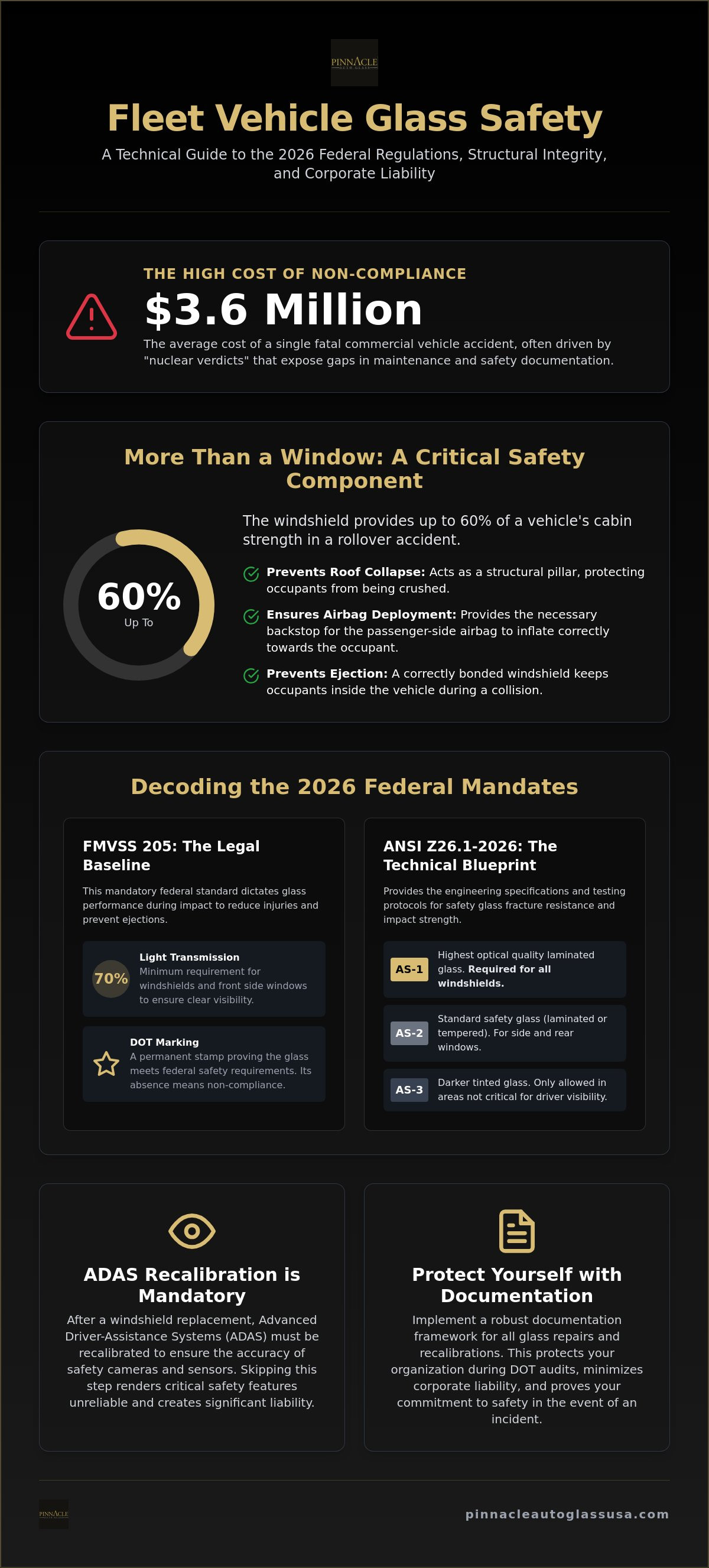
A single fatal commercial vehicle accident now averages $3.6 million in costs, often fueled by "nuclear verdicts" that expose gaps in maintenance documentation. Staying current with fleet vehicle glass safety standards isn't just about passing inspections. It's a fundamental requirement for protecting your drivers and your bottom line. Your windshield is a critical structural component, providing up to 60% of cabin strength during a rollover. Ignoring a small crack or a calibration error can have devastating legal and physical consequences.
We understand that navigating DOT penalties and the technical demands of ADAS recalibration can feel overwhelming. You need clear answers to keep your vehicles on the road without risking liability. This guide simplifies the 2026 federal regulations and provides a technical roadmap for your fleet operation. You'll master the latest compliance requirements to ensure every vehicle meets rigorous safety benchmarks.
We'll break down the recent removal of FMVSS 205(a) and the updated ANSI Z26.1-2026 standards. You will also find a framework for choosing a national glass partner that understands the high stakes of commercial safety. This information helps you reduce vehicle downtime and ensures your safety systems function exactly as intended.
Key Takeaways
- Learn how to navigate the 2026 federal regulations for fleet vehicle glass safety standards, including the updated FMVSS 205 and ANSI Z26.1 requirements.
- Understand why the windshield provides up to 60% of a vehicle's structural integrity during a rollover and how installation affects airbag deployment.
- Discover the technical requirements for ADAS recalibration that are now mandatory to ensure the accuracy of safety cameras and sensors.
- Implement a documentation framework for glass repairs that protects your organization during DOT audits and minimizes corporate liability.
- Identify the key factors for choosing a national glass partner that specializes in commercial truck glass and consistent safety protocols.
Understanding FMVSS 205 and ANSI Z26.1 for Fleet Operations
Every commercial vehicle on the road must meet specific Federal Motor Vehicle Safety Standards (FMVSS) to ensure driver protection. For fleet managers, the most critical regulation is FMVSS 205. This standard sets the legal baseline for all vehicle glazing. It isn't a suggestion. It's a mandatory requirement that dictates how glass must perform during an impact. Maintaining high fleet vehicle glass safety standards starts with a clear understanding of these federal rules and how they apply to your daily operations.
The Legal Role of FMVSS 205
FMVSS 205 exists to reduce injuries from impact and prevent occupant ejection during collisions. As of July 6, 2026, the federal government removed the obsolete FMVSS 205(a) standard to streamline these regulations. The focus is now entirely on current safety technology. One of the most important rules for commercial trucks is the 70% light transmission requirement. This rule ensures that windshields and front side windows allow enough light for clear visibility. If your glass is too dark, you'll fail a DOT inspection and face potential fines. Always look for the DOT marking on the corner of the glass. This permanent stamp proves the manufacturer met federal requirements. Without it, your vehicle is technically non-compliant.
ANSI Z26.1 Technical Specifications
While FMVSS 205 is the law, ANSI Z26.1 provides the technical blueprint for the glass itself. The latest version, ANSI Z26.1-2026, was published on April 16, 2026. It includes updated testing protocols for fracture resistance and impact strength. Fleet vehicles typically use two types of safety glass. Laminated glass is required for windshields because it stays in one piece when broken. Tempered glass is often used for side and rear windows because it shatters into small, blunt pieces. Understanding these materials is vital when managing fleet vehicle glass safety standards across a diverse range of vehicles.
You'll see "AS" markings on every piece of compliant glass. These codes tell you exactly where the glass can be installed:
- AS-1: The highest quality laminated glass. It's required for windshields and must have at least 70% light transmission.
- AS-2: Standard safety glass for side and rear windows. It doesn't meet the stricter impact requirements for windshields.
- AS-3: Darker tinted glass. It's only allowed in specific areas, such as the rear windows of a van or the upper portion of a windshield above the AS-1 line.
Using aftermarket glass that doesn't match these specs is a significant liability risk. Your replacement glass must meet or exceed original equipment manufacturer (OEM) standards. This ensures the vehicle's structural integrity remains intact during a crash. Don't settle for glass that just fits the opening. It must also fit the safety profile of the vehicle.
The Structural Integrity of Commercial Fleet Glass
A windshield is far more than a clear view of the road. It is a critical safety component that works as a structural pillar for the entire vehicle. In the event of a rollover accident, the windshield provides up to 60% of the cabin's structural integrity. This support prevents the roof from collapsing and protects the driver from being crushed. Maintaining high fleet vehicle glass safety standards is not just a regulatory hurdle. It is an engineering necessity that keeps your operators safe during catastrophic failures.
Commercial vehicles face much higher stress loads than standard passenger cars. They spend more time on the road, encounter more vibration, and carry heavier weights. These factors place immense pressure on the bond between the glass and the vehicle frame. The safety of the glazing material is governed by FMVSS 205 and ANSI Z26.1, which ensure that the glass can withstand specific impact forces. However, even the strongest glass is useless if it isn't bonded correctly to the vehicle.
Windshields as Structural Support
The strength of a windshield comes from its lamination and the adhesive used to secure it. Professional installers use high-modulus adhesives that create a rigid bond between the glass and the frame. This bond allows the glass to absorb energy during a collision. If an installer uses low-quality glue or fails to prep the surface, the structural bond fails. An improper installation essentially voids the safety engineering of a commercial truck. This leaves the driver vulnerable to roof crush or ejection. If you're managing a large inventory, partnering with a specialist for fleet glass services ensures every installation meets these critical engineering requirements.
Airbag Deployment and Glass Resistance
The windshield also plays a vital role in the proper deployment of the passenger-side airbag. When an airbag triggers, it deploys upward and bounces off the interior of the windshield to reach the passenger. The glass acts as a backstop. If the windshield bond is weak, the force of the expanding airbag can actually blow the glass out of the frame. This causes the airbag to deploy out of the vehicle instead of protecting the occupant. This failure can lead to severe injuries and massive liability for the fleet owner. Adhering to fleet vehicle glass safety standards ensures that your safety systems function as the manufacturer intended. Proper glass resistance is a key factor in achieving high fleet safety ratings and reducing the risk of expensive "nuclear verdicts" in court.
ADAS Recalibration: The New Standard in Fleet Safety
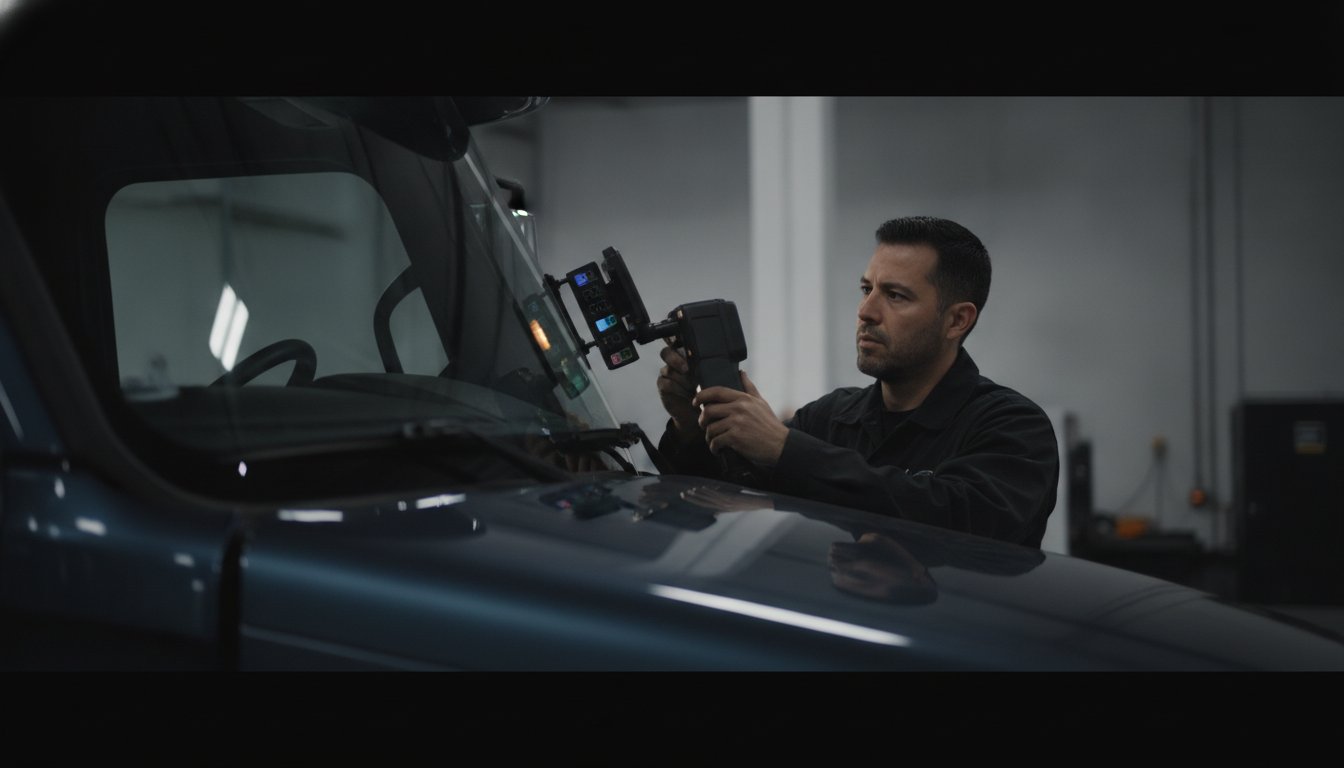
Modern fleet vehicles are essentially computers on wheels. Advanced Driver Assistance Systems (ADAS) use cameras and sensors typically mounted right behind the windshield. Because these systems "see" through the glass, any change to the windshield, even a minor repair or a full replacement, can disrupt their precision. Maintaining fleet vehicle glass safety standards in 2026 requires more than just high-quality glazing. It demands that every safety system is perfectly aligned after a glass service. It's about ensuring the Federal Motor Vehicle Safety Standard 205 is upheld through both physical and digital compliance.
Recalibration is the process of resetting these camera "eyes" to factory specifications. Depending on the vehicle, this involves static recalibration, using specialized targets in a controlled shop environment, or dynamic recalibration, which involves driving the vehicle at specific speeds. Some complex fleet vehicles require both. Ignoring this step is no longer an option for professional operators. It's a technical mandate that directly impacts driver safety.
Why Recalibration is Non-Negotiable
Precision is everything. A camera tilt of just one degree might seem insignificant, but at highway speeds, it can cause a collision warning system to miscalculate distance by twenty feet or more. This misalignment leads to phantom braking or a total failure to detect lane departures. From a legal standpoint, operating a vehicle with an uncalibrated camera is a massive liability. If an accident occurs and the safety system was known to be out of sync, the fleet owner faces significant exposure. For a deep dive into these requirements, consult our ADAS calibration auto glass reference guide.
Managing Tech for Commercial Trucks and Vans
Commercial trucks and delivery vans present unique challenges. Their height and vibration levels can affect how cameras stay seated. High-roof vans or box trucks often have specific mounting heights that require specialized calibration targets. You can't rely on a one-size-fits-all approach. Your glass provider must have the specific diagnostic tools and software for your entire fleet's makes and models. This ensures that every vehicle remains compliant with fleet vehicle glass safety standards.
This technical complexity is why hiring certified auto glass technicians is a business necessity. These professionals understand the intersection of physical glass installation and digital sensor alignment. They ensure your vehicles are safe before they return to service. This proactive approach reduces the risk of tech-related accidents and keeps your insurance premiums manageable. It's the most efficient way to protect your drivers and your bottom line.
Fleet Compliance Management and Documentation
Compliance is more than just a physical repair. It is a rigorous administrative process that protects your business during DOT audits and legal disputes. Maintaining strict fleet vehicle glass safety standards requires a digital paper trail for every vehicle in your inventory. In 2026, digital record-keeping is the industry standard. It ensures that if a vehicle is involved in an incident, you can prove it was maintained according to federal safety mandates. This documentation acts as your primary defense against negligence claims and rising insurance premiums.
The Audit Trail: Proving Safety Compliance
Every glass service must generate a comprehensive report. This isn't just a receipt. It's a technical log that should include the vehicle's VIN, the specific glass type installed, and the adhesive batch number used for the bond. You must also keep records of the technician's certifications and, most importantly, the ADAS recalibration certificate. This certificate proves the safety systems were tested and functional before the vehicle returned to the road. Using professional fleet glass services ensures these records are standardized across your entire operation.
Efficiency matters as much as accuracy. Logistics managers often struggle with the balance between safety and productivity. By reducing fleet downtime with mobile glass repair, you can maintain these high standards without pulling vehicles off their routes for days. Mobile technicians provide on-site service that includes both the physical installation and the necessary digital calibrations. This approach keeps your fleet moving while ensuring every repair is fully documented for your compliance files.
Standardizing Your Fleet Inspection Protocol
Safety starts with the driver. You should train your operators to identify glass damage that violates DOT standards before a vehicle leaves the yard. The "Driver's View Area" rules are particularly strict. Generally, any crack or chip larger than 3/4 of an inch, or multiple cracks that intersect, are prohibited in the area directly above the steering wheel. Establishing a clear policy for windshield repair versus replacement helps drivers make quick, informed decisions. Catching a small chip early prevents it from spreading and compromising the vehicle's structural integrity.
- Daily Pre-Trip Inspections: Drivers should check for chips, cracks, and pitting that obscure vision.
- Quarterly Professional Audits: A glass expert should review the fleet to identify subtle ADAS misalignments or seal degradation.
- National Account Management: Centralizing your glass needs through one partner ensures consistent fleet vehicle glass safety standards across all regions.
Consistent inspections reduce the risk of roadside out-of-service orders. They also help you manage costs by prioritizing repairs over more expensive replacements. When you standardize these protocols, you create a culture of safety that permeates the entire organization. This proactive stance, which includes maintaining critical components with mobile automotive service providers like Partner Tires, is the best way to minimize liability and keep your insurance renewal rates stable.
Beyond vehicle maintenance, managing your physical business assets is equally vital for long-term growth. If you are looking to expand your operations in Brampton or the Greater Toronto Area, Pinnacle Realty offers specialized commercial and residential real estate services to help you find the ideal property.
Choosing a National Fleet Glass Partner for Safety
Managing a nationwide fleet with fragmented local vendors creates dangerous safety gaps. One branch might follow strict protocols; another might cut corners on adhesive cure times. A single-source national provider eliminates this inconsistency. It ensures every vehicle meets the same high fleet vehicle glass safety standards regardless of where the service occurs. This centralized approach simplifies your administrative burden and provides a uniform audit trail for DOT compliance.
Technical expertise is the most important factor when selecting a partner. You must evaluate their ADAS equipment and technician certifications. With ADAS-related repairs adding up to 37% of total collision costs in 2026, precision is a financial necessity. Your partner should also be well-versed in regional laws. For example, the Texas OEM glass law (SB 1429) took effect on January 1, 2026. It requires insurance providers to authorize Original Equipment Manufacturer parts for vehicles 36 months old or newer. A professional partner ensures your windshield replacement always meets these evolving legal and safety requirements.
Pinnacle Auto Glass streamlines this process by acting as a dependable guide for fleet managers. We provide national service coverage with a specific focus on commercial truck glass and ADAS recalibration. Our systems are organized to prioritize your results and keep your documentation audit-ready at all times.
Expert Solutions for Commercial Truck Glass
Commercial trucks and logistics fleets require specialized handling. Semi-trucks and delivery vans face higher vibration levels and more frequent road debris impacts than passenger vehicles. We use heavy-duty materials designed for these high-stress applications. We also understand that a vehicle out of service costs your business between $400 and $800 per day in lost revenue. Our mobile services are designed to minimize this downtime while maintaining the structural integrity required by the ANSI Z26.1-2026 standards published in April 2026.
Next Steps for Fleet Managers
Your first step is to review your current glass safety and recalibration protocols. Many fleets still operate with outdated documentation that leaves them vulnerable to liability. Request a professional safety audit to identify hidden risks in your current inventory, such as improper ADAS alignment or degraded seals. This proactive stance is the most effective way to protect your drivers and reduce long-term operational costs. Contact Pinnacle Auto Glass for professional fleet services to secure your fleet's compliance and safety for the year ahead.
Secure Your Fleet with Proactive Safety Management
Maintaining high fleet vehicle glass safety standards is a continuous commitment to driver protection and corporate stability. You now understand that a windshield is a structural pillar that supports roof strength and airbag timing. Precise ADAS recalibration is the only way to ensure your safety technology functions as intended. These technical requirements, combined with rigorous documentation, form a shield against DOT penalties and legal liability.
Don't leave your compliance to chance with fragmented local vendors. You need a partner that understands the high stakes of commercial logistics. Pinnacle Auto Glass serves as your national guide, offering specialized expertise in commercial truck glass and professional ADAS recalibration. Our nationwide service coverage ensures every vehicle in your fleet receives consistent, high-quality care that meets all federal mandates. We simplify the complex technical tasks so you can focus on your operations.
Partner with Pinnacle Auto Glass for National Fleet Safety today. We're ready to help you streamline your maintenance and protect your bottom line. Your fleet's safety is our priority, and we're here to support your success on every mile of the road.
Frequently Asked Questions
What are the DOT requirements for commercial vehicle windshields?
The Department of Transportation (DOT) requires all commercial windshields to be made of laminated safety glass that meets FMVSS 205. The glass must be free from any damage that obscures the driver's view of the road. Specifically, the 70% light transmission rule ensures adequate visibility during night driving and poor weather conditions. Any tinting or damage that reduces light below this threshold is a violation of federal safety standards.
Can a fleet vehicle pass inspection with a chipped windshield?
A fleet vehicle can pass inspection with a chip if the damage is smaller than 3/4 inch and located outside the driver's critical field of vision. However, any crack that intersects with another crack or damage that is directly in the path of the windshield wipers is a failure. It's best to repair chips immediately to prevent them from spreading into larger, non-compliant cracks that require a full replacement.
Is ADAS recalibration legally required after a fleet windshield replacement?
ADAS recalibration is a technical mandate required by vehicle manufacturers to ensure safety systems like lane departure warnings work correctly. While not yet a specific federal statute, failing to recalibrate after a glass replacement is considered a failure to maintain the vehicle's safety equipment. This negligence can lead to significant liability if an uncalibrated system contributes to a collision or fails to prevent an avoidable accident.
What is the difference between OEM and aftermarket glass for fleets?
OEM glass is produced by the vehicle's original manufacturer, while aftermarket glass is created by third-party companies. OEM glass is generally preferred for fleets because it guarantees the exact thickness and curvature required for camera sensors. Using OEM parts helps maintain fleet vehicle glass safety standards by ensuring that ADAS cameras align perfectly without the optical distortion sometimes found in lower-quality aftermarket alternatives.
How does FMVSS 205 affect commercial truck glass replacement?
FMVSS 205 serves as the legal baseline for the strength and transparency of all commercial glazing materials. It ensures that replacement glass can withstand specific impact forces and won't shatter into dangerous shards during an accident. Every piece of glass used in your commercial trucks must have a permanent DOT marking to prove it complies with these federal performance requirements before it's installed on your vehicle.
Why is structural integrity important in fleet glass safety?
Structural integrity is vital because the windshield acts as a support beam for the vehicle's roof. In a rollover, the glass helps prevent the cabin from crushing the occupants. Additionally, the windshield provides the necessary resistance for the passenger-side airbag to deploy correctly. Without a high-quality bond and intact glass, the vehicle's entire safety cage is compromised, increasing the risk of serious injury to your drivers.
How often should fleet vehicle glass be inspected for safety compliance?
Fleet vehicle glass should be inspected daily as part of the driver's pre-trip safety check. These quick visual scans catch small chips before they become structural threats. You should also schedule professional audits every quarter to check for seal degradation or sensor misalignments. Regular inspections are the most effective way to maintain fleet vehicle glass safety standards across a large inventory of vehicles and prevent unexpected downtime.
What documentation should a fleet manager keep for glass repairs?
Fleet managers must maintain detailed logs including the VIN, the type of glass installed, and the technician's credentials. You should also file the adhesive batch information and the specific ADAS recalibration completion certificate. These documents serve as your primary defense during a DOT audit. They provide clear evidence that your fleet was maintained according to the highest industry safety protocols and manufacturer requirements.


