
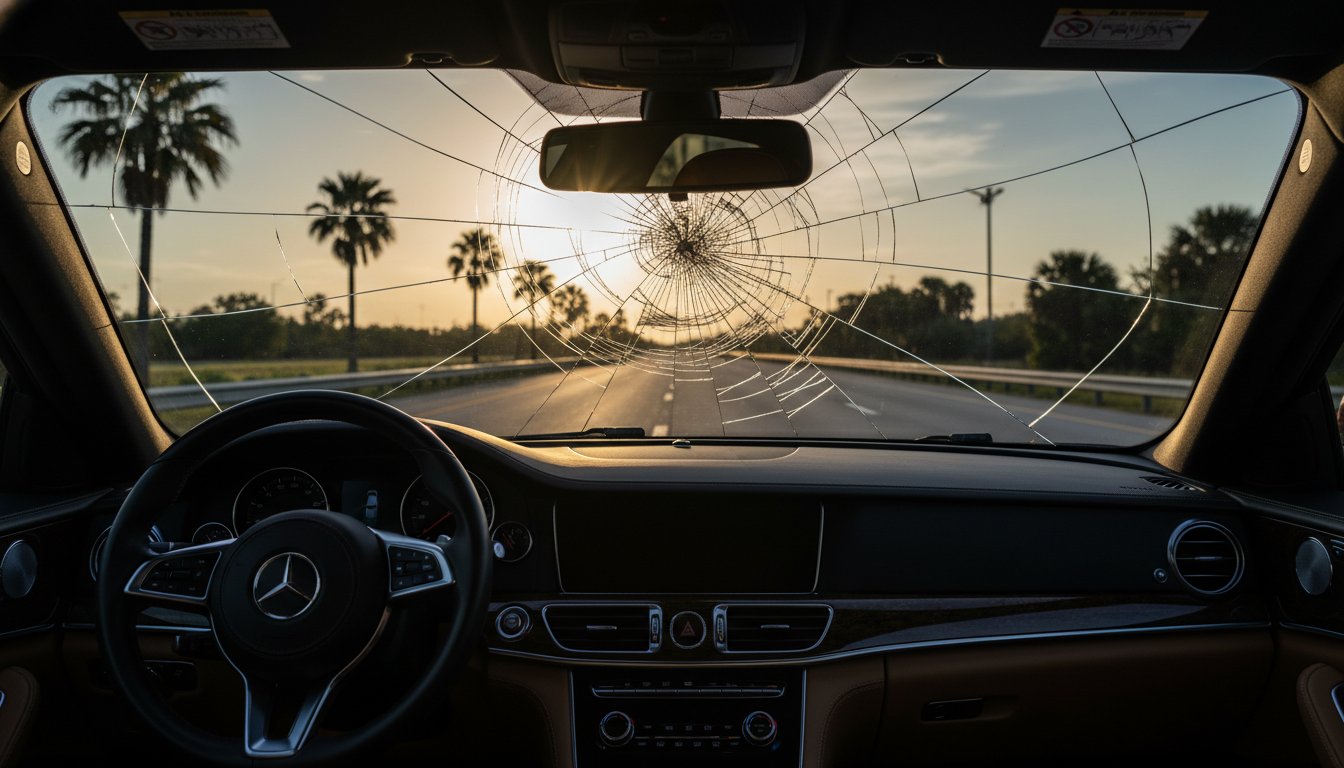
Did you know that the "free windshield" you've heard about for years in Florida might actually cost you a deductible in 2026? Most Sunshine State drivers assume that Florida Statute §627.7288 still guarantees a zero-cost replacement, but recent legislative shifts have significantly changed the landscape. It's stressful to see a spiderweb crack spreading across your glass while worrying about highway safety and unexpected insurance bills. Understanding the updated cracked windshield law Florida is now essential for every vehicle owner.
We know you want to resolve glass damage quickly without falling into legal or financial traps. This guide clarifies exactly how current statutes affect your coverage and your vehicle's safety systems. We will break down the 2026 insurance requirements, explain the mandatory ADAS recalibration standards, and show you how to stay compliant with state safety regulations. You'll also learn about the prohibition of repair incentives and the importance of choosing a certified technician. This information ensures you can navigate the claims process with total confidence while keeping your vehicle safe for the road.
Key Takeaways
- Clarify how 2026 updates to the cracked windshield law Florida impact your deductible and comprehensive insurance coverage.
- Identify the legal "critical area" of a windshield and understand when a crack becomes a safety violation according to Florida statutes.
- Verify how ADAS recalibration is integrated into your glass replacement claim to ensure your vehicle's safety sensors function correctly.
- Review specific glass maintenance and safety standards required for commercial fleets and heavy-duty transport vehicles.
- Follow a streamlined process for documenting damage and filing a windshield claim to maximize your policy benefits.
Florida Windshield Law: Understanding Statute §627.7288
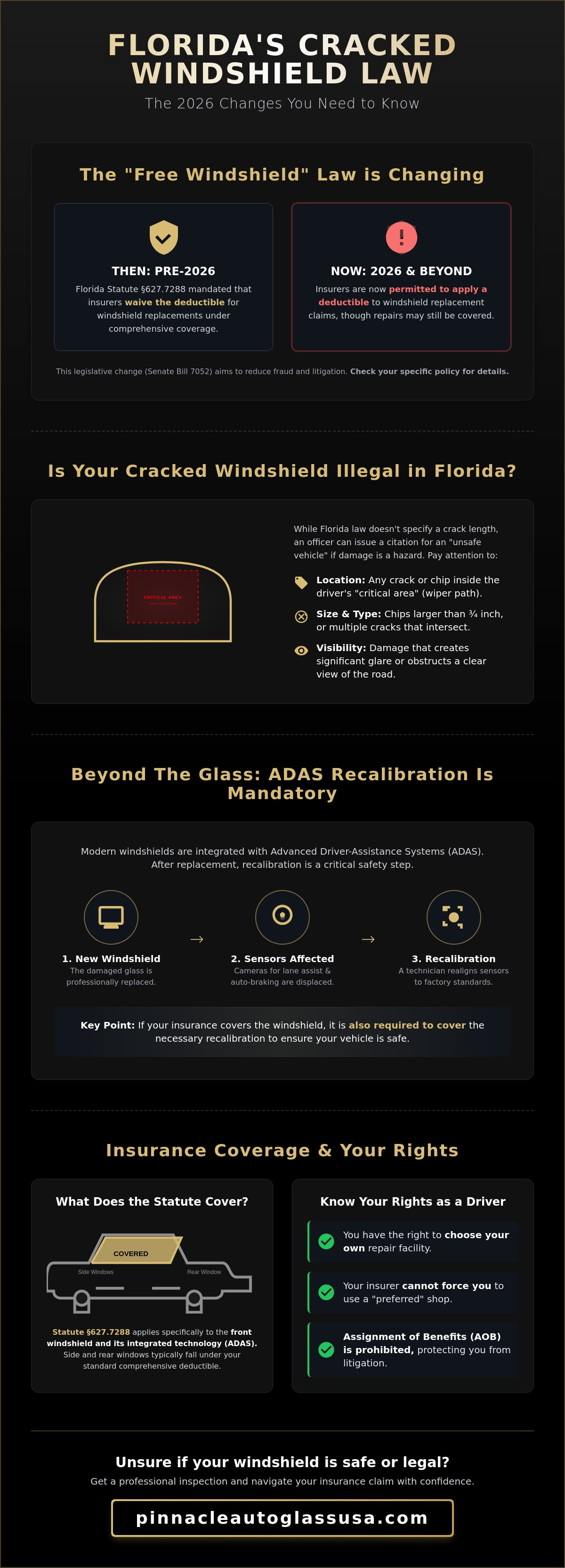
Florida Statute §627.7288 has historically served as a vital safety net for drivers. For over twenty years, this law mandated that insurance providers waive deductibles for windshield damage. This created the famous "free windshield" reputation Florida enjoyed. However, as of 2026, the cracked windshield law Florida has evolved. Following the passage of Senate Bill 7052 in 2023, the mandatory waiver is no longer absolute. Insurers are now permitted to apply a comprehensive deductible to replacement claims. This change was designed to reduce litigation and fraud, though it requires drivers to be much more diligent when reviewing their coverage.
Despite these changes, the core intent of the statute remains. It encourages drivers to seek immediate repairs before a small chip becomes a major hazard. The law applies specifically to those with comprehensive insurance or combined additional coverage. Importantly, the statute protects your right to choose your own repair facility. Your insurance company cannot legally force you to use a specific "preferred" shop. You should also know that Senate Bill 1002 now prohibits the Assignment of Benefits (AOB). You can't sign your insurance rights over to a shop, which helps protect you from potential litigation and keeps the claim process transparent.
Who Qualifies for Zero-Deductible Replacement?
Qualification depends entirely on your insurance tier. If you only carry basic liability, you'll be responsible for all glass costs out of pocket. For those with comprehensive coverage, the "zero-deductible" benefit is now often a policy-specific feature rather than a state-wide mandate for replacements. Most Florida insurers still waive the deductible for minor chip repairs to prevent more expensive full-glass claims later. Before you book a service, confirm whether your carrier has adopted the deductible allowances permitted by the 2023 legislative updates. Because these are typically "no-fault" claims, they generally won't impact your future premiums.
The Scope of the Florida Glass Statute
It's a common misconception that the glass statute covers every window on your vehicle. In reality, §627.7288 focuses almost exclusively on the windshield because of its role in structural integrity and visibility. Side and rear windows usually fall under your standard comprehensive deductible. However, the law does extend to the complex technology tied to your glass. This includes the Advanced Driver-Assistance Systems (ADAS) that power your safety alerts and automated braking. If your insurance covers the windshield replacement, they're also required to cover the necessary recalibration of these sensors to ensure the vehicle remains safe for the road.
Is it Illegal to Drive with a Cracked Windshield in Florida?
Driving with a crack might seem like a minor annoyance, but it can quickly lead to a traffic citation. Florida law does not specify an exact crack length that triggers a ticket. Instead, law enforcement officers rely on broad "unsafe vehicle" statutes. If a crack obstructs your clear view of the road, an officer can cite you under the cracked windshield law Florida drivers must follow. This discretion means that even a small chip can be problematic if it sits directly in your line of sight.
The "critical area" is the space directly in front of the driver, usually defined by the path of the windshield wipers. Any damage here is considered a primary safety hazard. Officers typically look for several factors during a stop:
- Cracks that intersect with other cracks, which compromises the glass's strength.
- Damage that causes significant glare from the sun or headlights.
- Star chips or bullseyes that create blind spots in the driver's field of vision.
While Florida Statute §627.7288 handles the financial aspect of repairs for many, the safety mandate is what keeps you street-legal. Ignoring a crack can result in a non-moving violation fine. If you are unsure if your damage meets these legal standards, you can request a professional inspection to avoid a potential citation.
Visibility Standards and the Driver's Line of Sight
Federal Department of Transportation (DOT) standards serve as the baseline for Florida inspections. These guidelines state that cracks or chips cannot be larger than 3/4 of an inch in diameter. Additionally, damage cannot be within 3 inches of another crack. If your glass fails these metrics, it's legally considered a visibility obstruction. Sun glare hitting a crack can momentarily blind you, making even small chips dangerous during Florida's bright afternoons. These visibility failures are the most common reason for glass-related citations in the state.
Structural Integrity and Passenger Safety
Your windshield is a critical safety component that does more than block the wind. It provides up to 60% of the cabin's structural strength in a rollover accident. It also acts as the necessary backstop for your passenger-side airbag. If the glass is compromised, the airbag may not deploy correctly, or the roof could collapse more easily during an impact. Understanding the cracked windshield law Florida requires looking beyond the ticket and focusing on these life-saving functions. For a deeper look at these requirements, see our Professional Windshield Replacement: The Complete Safety and Technology Guide. Maintaining a perfect windshield is a legal necessity and a fundamental part of your vehicle's safety system.
Beyond the Glass: ADAS Recalibration and Legal Safety Standards
Modern vehicles are essentially rolling computers. In 2026, your windshield serves as the primary mounting point for critical cameras and sensors. When you address a claim under the cracked windshield law Florida, you're doing more than just fixing a piece of glass. You're restoring the "eyes" of your vehicle's safety suite. Even a tiny misalignment during glass installation can cause your collision avoidance systems to malfunction. This makes technology restoration a legal and safety priority.
The legal framework supports this technical requirement. According to Florida Statute §627.7288, the goal of a glass claim is to return the vehicle to its original, safe operating condition. This mandate includes the full cost of ADAS recalibration. Insurance providers are required to cover these services as part of the restoration process. If a shop ignores this step, they're providing an incomplete service that leaves the driver in a precarious legal position. Operating a vehicle with known sensor errors could potentially shift liability to the driver in the event of an accident.
Mandatory Calibration for Modern Safety Features
Systems like Automatic Emergency Braking (AEB) and Lane Keep Assist rely on a perfect view through the glass. If the camera is tilted by just one degree, the car might detect an obstacle in the wrong lane or fail to see a pedestrian. This precision is why recalibration isn't optional. It's a technical necessity for any vehicle manufactured in the last decade. Drivers must ensure their service technician performs a formal calibration to maintain the vehicle's legal safety rating and protect against system failures on the highway.
The Cost of Compliance vs. The Cost of Failure
Professional shops handle the complex insurance billing for ADAS technology directly. This ensures that the high-tech labor required for a safety scan is fully covered by your policy. When you choose a Pinnacle Auto Glass service, a comprehensive safety check is standard procedure. Avoid "cheap" shops that claim calibration is unnecessary. Skipping this step is a direct violation of modern safety standards and can lead to expensive electronic repairs later. Proper recalibration is the only way to ensure your vehicle remains compliant with both Florida law and manufacturer safety specifications.
Commercial Fleet Requirements Under Florida Glass Laws
Commercial fleet managers must balance insurance costs with strict federal safety mandates. While Statute §627.7288 provides the framework for insurance coverage, the cracked windshield law Florida for commercial operators is heavily influenced by Department of Transportation (DOT) standards. In 2026, fleet insurance policies often have specific glass riders that account for the high frequency of highway debris damage. Logistics companies must ensure their vehicles pass Commercial Vehicle Safety Alliance (CVSA) inspections to avoid costly "Out of Service" orders. A grounded truck doesn't just stop a single delivery. It disrupts the entire supply chain and can lead to significant financial penalties for the carrier. Additionally, Senate Bill 1002 prohibits the Assignment of Benefits (AOB) for glass claims. This means fleet accounts must manage claims directly with their insurers, preventing third-party shops from controlling the litigation process.
DOT Windshield Standards for Commercial Trucks
The driver's line of sight in a commercial vehicle is protected by rigid federal regulations. Any crack larger than 3/4 of an inch in the area swept by the windshield wipers is a violation. Additionally, the "no-crack" zone extends to the housing of safety sensors. Because semi-trucks rely on advanced cameras for adaptive cruise control and emergency braking, the glass integrity is non-negotiable. If an inspector finds a crack that intersects with another, or any damage within the critical viewing area, the vehicle will likely be sidelined. This "Out of Service" status remains until a professional replacement is verified. These inspections are frequent at Florida weigh stations, making proactive glass maintenance an operational necessity.
Reducing Downtime with Professional Fleet Services
Managing a multi-vehicle operation requires a partner that understands the value of time. Professional fleet glass services focus on mobile, on-site replacements that occur while the truck is at a logistics hub or distribution center. This prevents drivers from losing hours on the road. High-quality installation is especially critical for heavy-duty vehicles. The constant vibration of long-haul driving can cause inferior seals to fail, leading to leaks or sensor errors. By streamlining insurance claims through a dedicated corporate account, fleet managers can ensure every vehicle remains compliant with both the cracked windshield law Florida and federal safety standards. This proactive approach reduces the risk of liability in the event of an accident. To keep your logistics operation running smoothly, you can schedule professional fleet glass services today.
How to File a No-Cost Windshield Claim in 2026
Once you spot a crack, the first step is to document the damage immediately. Take clear photos from several angles to show the extent and location of the chip or crack. This evidence is helpful when your glass provider communicates with your insurance carrier. You will need to gather your current insurance card and your vehicle identification number (VIN) before calling a specialist. Most professional shops now utilize direct billing systems. They handle the paperwork and coordinate with your insurance company on your behalf. Under the current 2026 standards for the cracked windshield law Florida drivers follow, the shop will verify your policy coverage to confirm if your deductible is waived before any work begins. This step ensures you have total clarity on costs before the technician removes the damaged glass.
Choosing the Right Auto Glass Specialist
Selecting a service provider requires looking beyond the glass itself. In 2026, you must choose a shop that has the specialized equipment to handle both glass installation and ADAS recalibration. As previously noted, your vehicle's safety sensors are technically and legally tied to the integrity of the windshield. Look for providers that employ certified technicians and offer national warranties. This ensures that your replacement is covered even if you travel out of state. You should also be cautious of "parking lot" solicitations or individuals offering cash or gift cards for your claim. Senate Bill 1002 specifically banned these incentives to prevent insurance fraud. Stick with established professionals who prioritize technical precision over high-pressure sales tactics.
What to Expect During the Replacement Process
A professional windshield replacement typically takes between 60 and 90 minutes to complete. However, you cannot drive the vehicle immediately after the glass is set. You must wait for the "safe drive-away time," which is the period required for the industrial adhesive to cure. In Florida's warm and humid climate, this usually takes about one hour. If your vehicle features modern safety technology, the technician will also perform a static or dynamic recalibration of your sensors. Once finished, the shop should provide you with a formal calibration report. This document confirms that your safety systems are restored to factory specifications. By following this structured process, you can ensure your vehicle remains compliant with the cracked windshield law Florida while avoiding any out-of-pocket expenses.
Protect Your Vehicle and Your Safety Today
Maintaining a clear windshield is a fundamental responsibility for every driver. You now understand how the cracked windshield law Florida governs your insurance claims and your vehicle's safety requirements. From ensuring your ADAS sensors are perfectly calibrated to avoiding costly traffic citations, timely glass restoration is essential. Don't let a small chip compromise your car's structural integrity or your visibility on the highway. Proactive maintenance keeps you compliant with 2026 standards and protects everyone on the road.
Our team provides the expertise you need for reliable results. We are certified ADAS recalibration experts who utilize direct insurance billing for zero-deductible claims. We also offer comprehensive glass services for commercial fleets to ensure your business vehicles remain street-legal and safe. Trust our professional technicians to restore your vehicle to factory specifications with efficiency and precision. We handle the technical details so you can focus on the drive ahead.
Take the first step toward a safer drive. Get Your Professional Windshield Replacement Quote and experience the peace of mind that comes with expert restoration. We are ready to help you get back on the road with confidence.
Frequently Asked Questions
Does Florida law really provide free windshield replacement?
No, the concept of a universally "free" windshield has changed due to recent legislative updates. While Florida Statute §627.7288 historically mandated zero-deductible replacements, Senate Bill 7052 now allows insurance companies to apply your standard comprehensive deductible to replacement claims. Most insurers still waive the deductible for minor chip repairs because fixing a small crack is more cost-effective than a full replacement. You should review your specific 2026 policy language to confirm your current out-of-pocket responsibilities.
Will my insurance rates go up if I get a new windshield in Florida?
Insurance premiums generally do not increase after a windshield claim in Florida. These are classified as "no-fault" claims because the damage is typically caused by road debris or environmental factors rather than driver negligence. Because the cracked windshield law Florida encourages drivers to maintain clear visibility for safety, insurers are restricted from penalizing policyholders for making these essential safety repairs. However, filing an excessive number of claims in a single year could lead to a broader policy review.
Can I get a ticket for a cracked windshield in Florida?
Yes, law enforcement officers can issue a citation if they determine your vehicle is in an unsafe condition. Florida law requires a clear, unobstructed view of the road at all times. If a crack is located in the driver's direct line of sight or if the damage is severe enough to cause significant glare, you may receive a non-moving violation. Officers use federal DOT standards as a guide, which often consider any crack larger than 3/4 of an inch a safety hazard.
What if I only have liability insurance in Florida?
You will be responsible for the full cost of the repair or replacement if you only carry basic liability insurance. The Florida glass statute only applies to motorists who have purchased comprehensive coverage or combined additional coverage. Liability insurance is designed to cover damage you cause to other people or property; it does not protect your own vehicle from glass damage. If you don't have comprehensive coverage, you must pay your service provider directly at the time of installation.
Does the zero-deductible law cover side or back windows?
No, the zero-deductible provisions of the cracked windshield law Florida apply exclusively to the front windshield. Side windows, vent glass, and rear windows are not included in the mandatory deductible waiver protections. If your side or back glass is damaged by debris or theft, you will be required to pay your standard comprehensive deductible before your insurance coverage kicks in. The law prioritizes the windshield due to its critical role in driver visibility and structural safety.
How many times can I use the Florida windshield law?
There is no specific legal limit on how many times you can utilize your glass coverage under Florida law. As long as the damage is legitimate and caused by a covered peril, you can file a claim for each occurrence. However, insurance companies monitor claim frequency closely. While they cannot raise your rates for a single no-fault claim, a high volume of glass claims over a short period may result in increased scrutiny or changes to your policy's eligibility at renewal time.
Is ADAS recalibration covered by the Florida windshield statute?
Yes, ADAS recalibration is legally covered whenever a windshield replacement is authorized by your insurance policy. Florida law requires that your vehicle be restored to its original safety standards, which includes the precise alignment of cameras and sensors mounted to the glass. Repair shops are required to provide written notice if recalibration is necessary. Because these systems are vital for features like emergency braking, insurance carriers must approve the recalibration as a necessary safety expense during the claim process.
Can I choose my own glass company under Florida law?
Yes, you have the absolute legal right to choose your preferred auto glass provider in Florida. Insurance companies are prohibited by law from "steering" you to a specific shop or requiring you to use their preferred network. While an adjuster might suggest a particular facility, the final decision rests with the policyholder. This allows you to select a specialist who utilizes certified technicians and provides the specific technical services, such as ADAS recalibration, that your modern vehicle requires for safety.


