

A fleet policy that sits in a handbook won’t guide a driver after a crash. Creating a fleet glass safety policy means setting clear steps for reporting damage, documenting incidents, notifying the right manager, and arranging follow-up. Drivers need to know what to do, while managers should investigate incidents and look for ways to prevent them from happening again.
Putting the policy into practice takes more than distributing a document. Train drivers on crash and traffic violation procedures, explain how to report safety concerns, and review incident patterns and driver feedback regularly. This article explains how to establish reporting and investigation steps, respond consistently to crashes and violations, and keep the policy current as fleet needs change. The goal is a practical process that drivers can follow and managers can use to strengthen safety over time.
Key Takeaways
- Set a clear accident-reporting process that tells drivers who to notify, what details to record, and when to submit a report.
- Give drivers practical steps for responding to crashes and traffic violations, then use incidents to guide follow-up training.
- Review the policy regularly using incident findings, driver feedback, and changing fleet needs to keep procedures relevant.
- Make windshield condition and visibility part of fleet safety planning, and consider repair, replacement, or ADAS recalibration when glass damage affects a vehicle.
1. Accident reporting and investigation
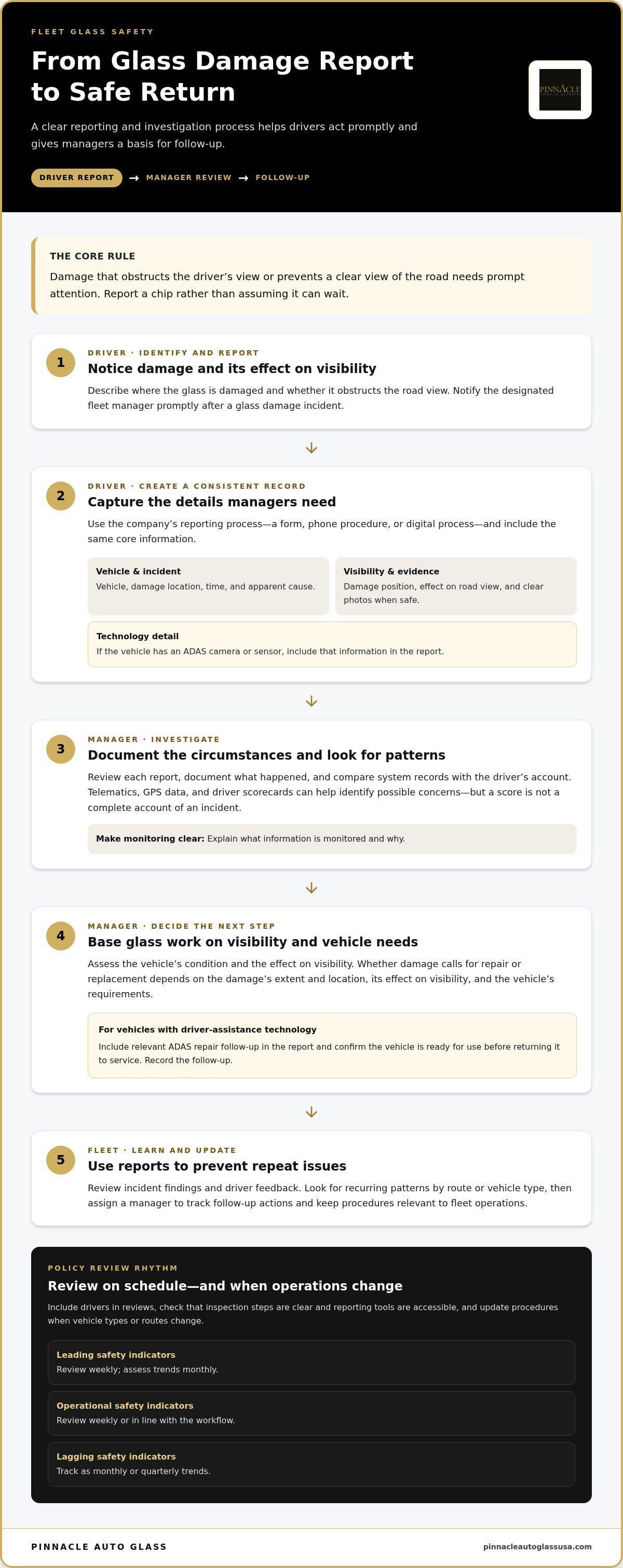
Set a clear reporting chain before a vehicle leaves the lot. Require drivers to notify the fleet manager promptly after a crash or glass damage incident. The written procedure should say who receives the report, what details drivers must provide, and when to submit it. A standard form helps keep reports consistent across vehicles and departments.
For glass damage, drivers should record the vehicle, location, time, and apparent cause. They should describe where the damage is and whether it obstructs the road view, then take clear photos when it is safe. What windshield damage makes a vehicle unsafe to operate? Damage that obstructs the driver’s view or prevents a clear view of the road needs prompt attention. The manager should decide the next step based on visibility and the vehicle’s condition.
Damaged glass can obstruct a driver’s view and make hazards harder to see. A small chip can also change or spread, so drivers should report it rather than assume it can wait. Managers should investigate each report, document the circumstances, and look for patterns that could help prevent similar incidents.
Choose a reporting system that suits fleet operations. A form, phone procedure, or digital process can capture the same core details. Telematics, GPS data, and driver scorecards can help managers spot possible safety concerns, but explain what information is monitored and why. Compare system records with driver reports instead of treating a score as a complete account of an incident.
How should fleet drivers report and document glass damage? They should notify the designated manager promptly, describe the damage and its effect on visibility, and submit photos and vehicle details through the company process. If the windshield has an ADAS camera or sensor, include that information in the report. For vehicles with driver-assistance technology, include relevant repair follow-up in the report and confirm the vehicle is ready for use before returning it to service. Record this step as part of the repair follow-up.
2. Crash and traffic violation procedures
Write a response sequence drivers can follow under pressure. After a crash, they should move to a safe location if possible, address immediate hazards, and follow the company’s emergency instructions. Explain how to report the event, preserve relevant details, and notify the manager responsible for the vehicle. Include separate guidance for breakdowns and hazardous weather, since each situation creates different risks.
Set clear expectations for safe driving before an incident occurs. Require drivers to obey posted speed limits, wear seat belts, limit cell phone use, maintain safe following distances, and follow traffic laws. Explain how employees may use company vehicles. These rules give managers a consistent basis for discussing conduct after a crash or traffic violation.
When a violation is reported, record the date, vehicle, driver, circumstances, and available supporting information. Give the driver a chance to explain what happened, then assess whether the event points to a training need, a policy gap, or repeated unsafe behavior. Apply the same review process across departments. Consistency helps drivers understand expectations and keeps decisions grounded in documented events.
Use targeted retraining when a driver shows poor judgment, repeatedly violates rules, or is involved in an incident. Training can revisit defensive driving, vehicle handling, and emergency procedures through coaching, online modules, or both. Schedule refresher sessions and keep completion records. For example, after a preventable backing incident, coaching can focus on vehicle handling and the company’s safe-operation procedures.
Managers should also review crash and violation patterns, not just individual cases. Several reports involving harsh braking or distracted driving may signal a need to clarify expectations or adjust training. Telematics and driver scorecards can support that review, provided drivers understand the monitoring criteria and purpose. Use the findings to improve procedures and follow-up, rather than relying on a single data point. For glass-related incidents, a clear fleet glass response plan can help managers define the next step after damage is reported.
3. Regular fleet safety policy reviews
Review the policy on a planned schedule and after operational changes, such as adding vehicle types or changing routes. Include drivers in the review. Ask which inspection steps are confusing and whether reporting tools are easy to access. A fleet glass safety policy should reflect how employees actually use fleet vehicles, not just how procedures read on paper.
Use safety indicators to guide updates. Review leading safety indicators weekly and their trends monthly. Review operational safety indicators weekly or in line with the workflow. Track lagging safety indicators as monthly or quarterly trends. Compare the records with incident findings and driver feedback, then assign a manager to track follow-up actions.
Choose a glass repair and replacement provider based on its ability to handle your fleet’s vehicle types, document completed work, and account for ADAS cameras and sensors. Whether damage needs repair or replacement depends on its extent and location, its effect on visibility, and the vehicle’s requirements. These factors also affect cost and downtime, so document the decision criteria in your procedure instead of relying on a fixed assumption.
Build practical glass checks into scheduled reviews. Before driving, employees can inspect the windshield and other windows for damage or visibility issues. During use, they should stop safely and report newly noticed damage that interferes with their view. Managers can compare inspection records over time to identify recurring patterns, such as repeated reports from a route or vehicle type.
Set a written process for insurance, deductibles, and emergency glass repairs. Keep the company’s coverage terms, approval responsibilities, and required documentation together, then revise them when coverage or operations change. Regular reviews help keep your fleet glass safety policy aligned with actual procedures and needs.
Reviews should check driver eligibility. Employers should set minimum standards for employees driving company vehicles, including a valid license, motor vehicle record review, and driving experience relevant to the vehicle and work. For regulated driving roles, verify that the driver has the correct commercial driver’s license class, required endorsements, and a valid medical examiner’s certificate before driving.
Policies should include driver training, regular recertification, and testing. Cover defensive driving, vehicle handling, and emergency procedures, and provide refresher courses regularly. Keep completed training records to help demonstrate due diligence if an incident is reviewed.
4. What are the legal requirements for vehicle windshield condition and visibility in the United States?
Build a compliance process around the places your fleet operates instead of relying on one assumed nationwide chip-size rule. Assign a fleet compliance lead to maintain a state-by-state reference for windshield condition, driver visibility, and inspection procedures. Record the authority consulted, the review date, and the vehicles or routes covered. This creates a traceable basis for applying current requirements to fleet operations.
Separate legal requirements from company safety standards. A policy can set a cautious internal threshold for reporting damage even when a particular defect has not been assessed against a legal rule. For example, require drivers to report a crack that enters their direct sightline, then have the fleet manager document the assessment and next action. A driver’s visual check is not a legal determination.
Use a repeatable review process whenever vehicles begin operating in a new jurisdiction or a compliance reference changes. The fleet lead should identify affected vehicles, update written instructions, and brief drivers before applying the revised procedure. Keep the previous version, update date, and employee acknowledgment together. For a truck assigned to routes across state lines, record each relevant jurisdiction rather than applying an unverified rule from elsewhere.
For each glass report, document the damage location, visibility impact, vehicle identification, and decision to continue operating, repair, or replace the windshield. Preserve the assessment and completed work record with the vehicle’s maintenance file. When assessing a damaged windshield, base the next step on the damage and its effect on the driver’s view. Schedule windshield repair or replacement when fleet glass needs service.
Requirements depend on where a vehicle operates, so fleets should verify the applicable rules for windshield condition, driver visibility, and inspections in each jurisdiction. Assess damage based on its effect on the driver’s view, and record the decision and any repair or replacement.
A fleet safety policy should cover less traditional fleet vehicles, including all-terrain utility vehicles, riding lawn mowers, and self-propelled snow blowers.
Pinnacle Auto Glass: Windshield Replacement
Pinnacle Auto Glass helps fleet operators address damaged windshields through repair or replacement. Its Fleet Glass Services support fleets that need glass work as part of their safety process. Commercial Truck Glass is available for commercial vehicles, too.
Include the glass service step in your policy: document the damage, arrange the appropriate repair or replacement, and record the completed work. For vehicles with ADAS, Pinnacle Auto Glass recalibrates the system after windshield replacement to ensure all safety features function properly. Connecting this work to incident records helps managers track glass-related follow-up across the fleet.
For windshield damage that needs professional attention, contact Pinnacle Auto Glass to arrange repair or replacement.
Put Your Policy Into Practice
A written policy becomes useful when someone owns its upkeep and drivers can apply it in their daily work. Assign a manager to keep procedures aligned with fleet operations, gather driver feedback, and coordinate updates when routes, vehicles, or business needs change. Make policy review part of routine fleet management rather than waiting for another incident to reveal a gap.
As you develop a fleet glass safety policy, identify the first practical action your team can take. Assign someone to review current procedures or schedule a discussion with drivers about barriers to reporting damage. A clear owner and next step help turn the policy from a document into daily practice.
For fleet glass needs, contact Pinnacle Auto Glass to discuss how its services may fit your process. Contact Pinnacle Auto Glass to take the next step toward a policy your team can put to work.
Frequently Asked Questions
How Will This Policy Be Implemented?
Implement the policy with a named owner, leadership approval, and a rollout drivers can follow. Introduce it during onboarding, collect driver acknowledgments, and walk through a sample glass-damage report together. Show drivers where forms are stored and whom to notify if instructions are unclear. Set a refresher schedule, record completed training, and give employees a way to suggest practical updates.
What should a fleet vehicle glass safety policy include?
Define who and what the policy covers, such as employees driving company, rented, or personal vehicles for work. Explain how drivers inspect glass, report damage, and alert a manager when visibility is affected. Specify who decides whether a vehicle can continue operating and who records repair follow-up. Include ADAS camera considerations so windshield replacement on an equipped vehicle includes recalibration.


