

Glass damage becomes harder to manage when small chips go unnoticed. To learn how to reduce fleet vehicle glass breakage, set a daily windshield check for drivers and a monthly glass review for the fleet. Make immediate reporting and prompt professional repair part of the process.
Fleet glass is exposed to road debris, rough surfaces, weather, and temperature changes. A chip can spread, obstruct visibility, or require more extensive work if ignored. Prevention depends on consistent habits, not just reacting after damage occurs.
This guide covers practical ways to reduce risk: driver training and safe following distances, route and road exposure, pre-route and post-route visual inspections, and timely attention to chips and cracks. You’ll learn what drivers should look for and how a clear reporting process can help keep vehicles safer and reduce avoidable downtime.
Key Takeaways
- Set a clear process for drivers to report chips and cracks promptly, so minor damage can be assessed before it spreads.
- Train drivers to leave at least a three-second gap and adjust speed and distance for rough roads and construction zones.
- Reduce debris exposure by choosing safer routes where practical and taking care around loose cargo, large vehicles, and standing water.
- Build glass checks into pre-route and post-route routines, looking inside and outside the windshield and paying close attention to its lower corners.
1. Prompt repair of chips and cracks
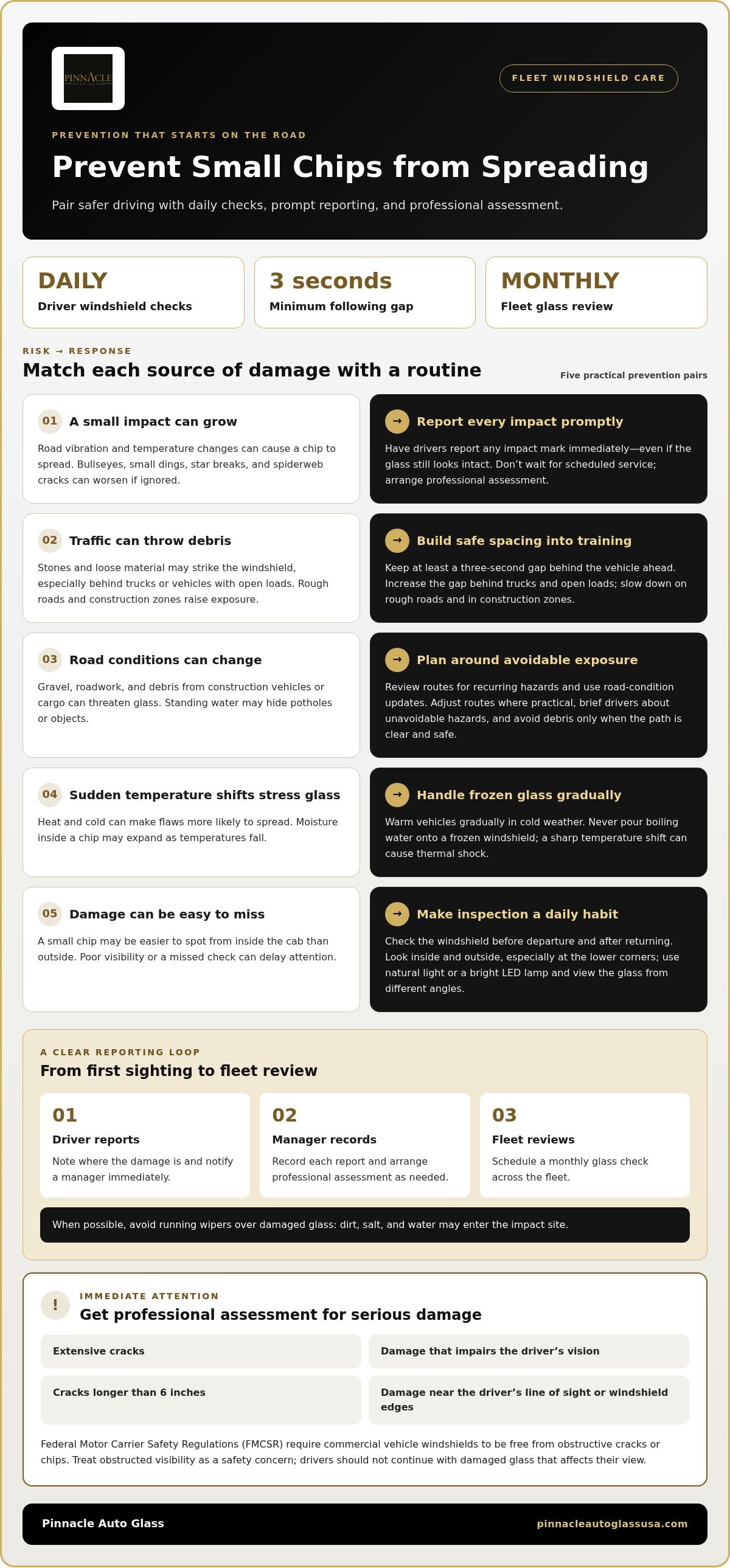
Small windshield chips can spread into cracks under road vibration or temperature changes. A stone strike may leave a bullseye, a small ding, or a star-shaped break. Because star breaks and spiderweb cracks can expand, drivers should report any impact mark rather than waiting for scheduled service. Prompt assessment can help limit damage and avoid more extensive repairs.
Make reporting part of the fleet’s daily routine. Drivers should inspect the windshield daily, note the damage location, and notify a manager immediately. Managers should record each report and arrange a monthly glass check across the fleet. During inspection, use natural light or a bright LED lamp, and view the glass from different angles. A small chip can be easier to spot from inside the cab than from outside.
Which fleet vehicle glass breakage prevention measures are most effective? Daily driver checks, prompt damage reporting, and professional assessment help catch flaws before they spread. Drivers should avoid running wipers over damaged glass when possible, since dirt, salt, and water may enter the impact site.
When should fleet managers repair a chip versus replace the windshield? A professional assessment can determine whether damage is suitable for windshield repair or whether replacement is necessary. Extensive cracks, damage that impairs the driver’s vision, cracks longer than 6 inches, and damage near the driver’s line of sight or windshield edges need immediate attention.
Are there state laws or safety requirements for fleet windshield damage and repairs? Federal Motor Carrier Safety Regulations (FMCSR) require commercial vehicle windshields to be free from obstructive cracks or chips. Treat obstructed visibility as a safety concern, and don’t ask drivers to continue with damaged glass that affects their view.
2. Driver education and safe following distances
Road habits affect how much debris reaches fleet windshields. Train drivers to leave at least a three-second gap behind the vehicle ahead. This provides more time to react and can reduce exposure to stones thrown up by traffic. Increase the gap behind trucks or open loads, where loose material may strike the glass. A prevention plan should make safe spacing routine, not an occasional reminder.
Drivers can reduce impact risk by slowing down on rough roads and increasing following distance in construction zones. In rain, snow, or sleet, reduce speed and leave more room to respond. Avoid sudden maneuvers around debris unless the path is clear and safe. Report suspected impacts promptly, even if the glass appears intact.
Route planning affects exposure, too. A longer gap can limit time spent in gravel spray, while road-condition updates can help managers identify hazardous routes. If construction or rough surfaces are unavoidable, include them in route briefings so drivers can adjust speed and spacing before reaching those areas.
Training should explain how to spot glass damage, report it, and respond to changing conditions. Drivers should check the windshield before departure and after returning, especially after storms or debris strikes. Maintain wiper blades so they can clear the windshield in adverse weather. For managers assessing how to reduce fleet vehicle glass breakage, pair these lessons with routine inspections and a consistent reporting process.
Impact-resistant glass is designed to be stronger and less likely to shatter, but it doesn’t replace safe driving habits. For glass issues that need professional attention, fleet glass services can support the maintenance process.
Training can reinforce a consistent response to changing road conditions. Drivers should maintain at least a three-second gap behind the vehicle ahead, allowing time to react and reducing exposure to debris. On rough roads, they should slow down to limit the chance of stones striking the glass. In construction zones, reduced speed and greater following distance provide more time to respond.
Rain, snow, or sleet also call for reduced speed and increased following distance. Driver training should cover how to spot early signs of glass damage and what to do when damage is found. Regular fleet inspections can help keep vehicles roadworthy and ensure compliance with safety regulations, complementing driver awareness with routine attention to vehicle condition.
3. Fleet vehicle exposure to road debris and temperature changes
Fleet routes expose windshields to loose gravel, weather, and road vibration. Vibration can put stress on an existing chip, while heat and cold may make flaws more likely to spread. Managers can reduce exposure by reviewing routes for rough surfaces and recurring debris hazards, then adjusting plans where practical.
Watch for specific road hazards. Construction vehicles may carry loose material that falls onto the roadway, while open cargo can release debris. Standing water can hide potholes or objects that may strike a vehicle. Drivers should stay alert around large trucks, exposed loads, and roadwork, and avoid debris only when it is safe to do so.
Speed and vehicle condition also contribute to damage. Reduce speed on loose surfaces to limit tire spin and the force of stones kicked toward the windshield. Keep tires properly inflated to support handling and reduce blowout risk. Use current road-condition updates to avoid hazardous routes when possible, rather than relying on familiarity with a route that may have changed.
Temperature changes call for careful handling. In cold weather, warm vehicles gradually instead of applying sudden heat to frozen glass. Never pour boiling water onto a frozen windshield; the sharp temperature shift can cause thermal shock. Moisture inside a chip may also expand as temperatures fall, pushing surrounding glass layers apart and compromising structural integrity.
Protective films made from durable polymer can be applied to windshields and other auto glass. They are designed to absorb impacts and resist shattering, helping shield glass from road debris and severe weather. Fleet managers can weigh this option against their vehicles’ routes and exposure. Early attention to damage and fewer repeated impacts can also help limit replacement needs and keep vehicles in service.
4. Pre-route and post-route visual inspections
Make glass checks a defined fleet management step, not an informal glance. Drivers should inspect auto glass before routes and after each trip, then record new damage before vehicle handoff. During a walk-around, check the windshield from both outside and inside the cab. Look closely at the lower corners, where damage can be easy to miss from the driver’s seat. Good lighting helps reveal small flaws that could affect driving.
Use a monthly inspection to review every fleet vehicle’s glass condition and maintenance records. Look for chips, cracks, changes in windshield shape, and signs of movement. Unusual movement when the windshield is lightly tapped can indicate structural impact. Don’t treat a change in shape as cosmetic. Record the vehicle, location, damage type, and inspection date, then escalate concerns through the fleet’s repair process.
How do insurance deductibles and comprehensive coverage apply to fleet glass claims? The fleet’s policy determines the applicable coverage and deductible. Review its terms with the insurance provider before arranging repairs or replacement, and document the damage and vehicle details for the claim.
How can fleet managers track glass breakage rates and evaluate prevention programs? Keep a log of incidents, repair outcomes, vehicle downtime, routes, and distance traveled. Compare patterns across vehicles and review them after driver training or route changes. This can show whether incidents cluster around particular roads or operating conditions, and whether prevention steps are helping.
Consistent inspections help managers address damage before it disrupts vehicle use. For fleet glass assessments and repair needs, explore fleet glass services as a practical next step.
Fleet managers should conduct visual inspections after each trip. Make the check part of the vehicle handoff so damage noticed at the end of one journey can be distinguished from issues found later. Ask drivers to note the affected glass area and describe visible changes plainly, then pass the information to the person responsible for maintenance. Keep concerns visible in the vehicle’s record until they have been reviewed. A repeatable process helps teams act on observations rather than relying on memory or informal reports.
Pinnacle Auto Glass: Windshield Replacement
Pinnacle Auto Glass helps fleet operators address windshield damage with windshield repair, windshield replacement, and Fleet Glass Services. Windshield repair is an option for damage that can be professionally assessed and repaired. An extensive crack or damage that affects the driver’s vision may require replacement. For vehicles with ADAS, we recalibrate the system after a windshield replacement to ensure all safety features function properly.
Arranging glass work is part of keeping fleet vehicles safe and reducing disruption. Share the vehicle’s damage details to help identify the appropriate glass service for your fleet. Pinnacle Auto Glass also provides Commercial Truck Glass for commercial vehicles.
Contact Pinnacle Auto Glass to discuss fleet glass needs, or visit pinnacleautoglassusa.com.
Make Glass Care Part of Fleet Planning
A practical plan to reduce fleet vehicle glass breakage should continue beyond individual repairs. Assign someone to review incident records and turn recurring patterns into operational changes. If damage repeatedly appears on the same routes or vehicle types, use that information to revisit dispatch choices, driver guidance, and maintenance planning.
Keep the process easy for drivers to follow. Clear inspection expectations and reporting steps make it easier to address damage before it becomes a larger fleet concern. Over time, consistent records can help managers decide where prevention efforts are most needed.
When a vehicle needs professional glass work, Pinnacle Auto Glass can support your fleet’s next step. Discuss your fleet’s glass needs with Pinnacle Auto Glass and keep your maintenance plan moving forward.
Frequently Asked Questions
What are the most common causes of fleet vehicle glass breakage?
Road debris, especially gravel and stones, is a common cause of chips and impact damage. Open cargo, construction areas, and loose materials can also expose vehicles to flying objects. Weather, temperature changes, and rough-road vibration may worsen existing flaws. For example, a small impact mark after driving behind a gravel truck deserves attention before the vehicle returns to regular service.
Which windshield and side-window glass types are most resistant to breakage?
Impact-resistant automotive glass is designed to be stronger and less likely to shatter than traditional glass. Windshields commonly use laminated construction: two glass sheets bonded by a flexible, clear resin interlayer. For side windows, choose impact-resistant glass suited to the vehicle and its intended use. Glass selection should also meet the vehicle’s fit and safety requirements, not focus on impact resistance alone.


