
The fastest option isn’t always mobile service. Choosing mobile vs in-shop glass service for fleets depends on the damage, site conditions, and whether the work requires a controlled setting, such as static ADAS recalibration. Mobile service brings a technician to the vehicle, but rain, extreme heat, freezing cold, or high humidity can make outdoor work unsuitable.
It makes sense to want to avoid moving a vehicle off its route and adding downtime. The right choice still needs to support a sound repair and safe return to service. This guide explains what mobile auto glass service involves and how damage, work conditions, repair needs, and fleet urgency shape the decision. You’ll also see where in-shop service has an advantage, what to weigh when comparing the two, and how to choose the practical next step for a damaged fleet vehicle.
Key Takeaways
- Consider mobile service for a small chip when the vehicle is accessible and outdoor conditions support the repair. Many mobile chip repairs take 30 minutes or less.
- Plan mobile windshield replacement around vehicle availability. Most replacements take one to two hours, and the technician will advise when the vehicle can be driven.
- For heavy equipment, extensive damage, multiple cracks, or a panel that needs replacement points toward in-shop service.
- Factor ADAS recalibration into the decision: static calibration needs a controlled environment and specific targets, while mobile calibration needs suitable space and weather.
Q: Is mobile windshield replacement as good as in-shop?
Mobile windshield replacement can deliver a suitable repair when the vehicle, damage, and work conditions fit the job. Mobile auto glass service brings a technician to a customer’s home, workplace, or equipment work site, avoiding a trip to a shop. Most mobile windshield replacements take one to two hours, but time alone doesn’t determine whether on-site work is the right choice.
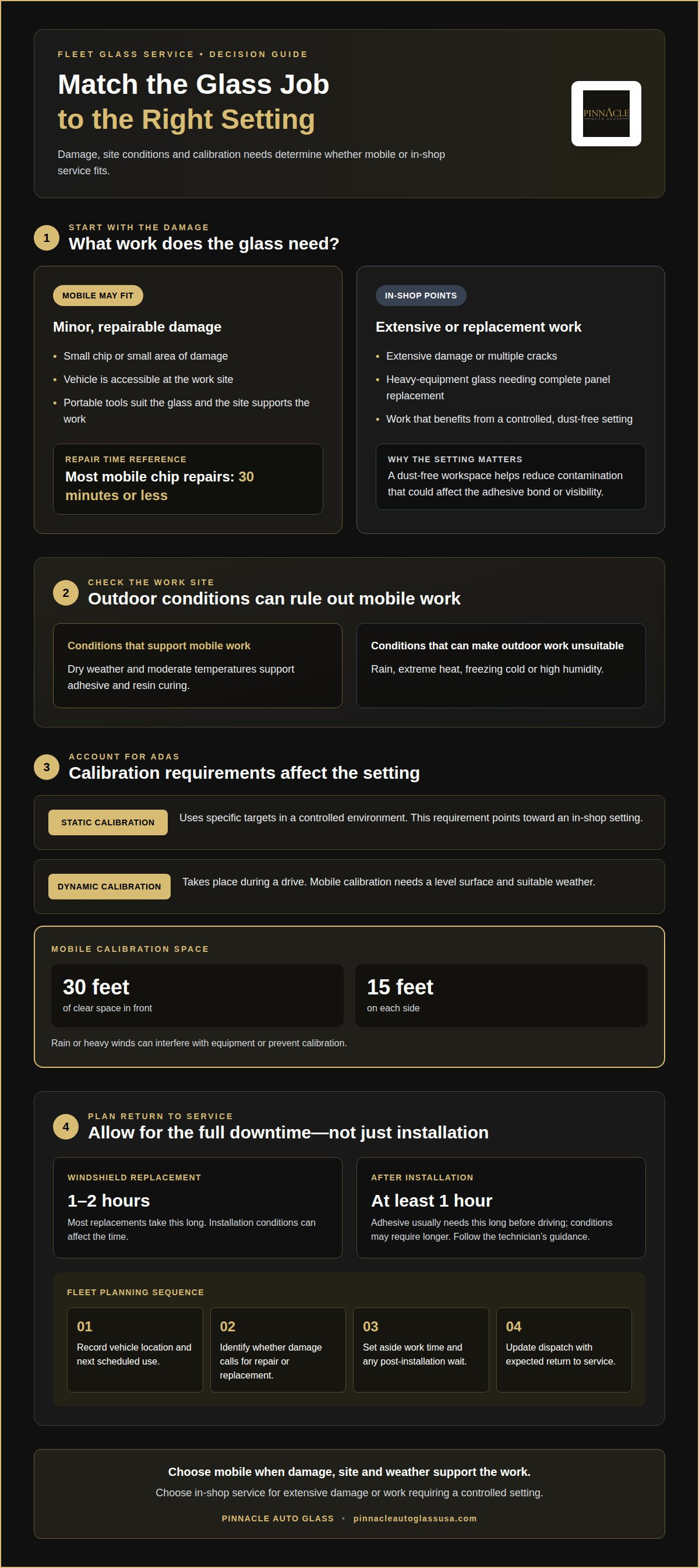
For a small chip, mobile windshield repair may be practical. Most mobile chip repairs take 30 minutes or less. A technician first assesses the damage and checks whether an on-site repair is feasible. For heavy equipment, mobile work is best suited to minor chips or small damage that doesn’t require complete panel replacement. Portable tools must suit the equipment’s glass, and technicians should use industry-approved, high-quality adhesives and repair resins.
Conditions matter at the work site. Dry weather and moderate temperatures support adhesive and resin curing during mobile heavy-equipment repairs. Rain, extreme heat, freezing cold, or high humidity can make outdoor work unsuitable. In-shop service provides a controlled setting; heavy-equipment repairs should take place in a dust-free environment to reduce contamination that could affect the adhesive bond or visibility.
Windshield replacement may also require ADAS recalibration. Static calibration uses specific targets in a controlled environment. Dynamic calibration takes place during a drive. Mobile calibration typically needs a level surface, 30 feet of clear space in front, and 15 feet on each side. Rain or heavy winds can interfere with equipment or prevent calibration.
| Option | Best fit | Key condition |
|---|---|---|
| Mobile | Small chips or suitable on-site replacement | Feasible damage, compatible tools, suitable weather |
| In-shop | Extensive damage or work needing a controlled setting | Dust-free workspace and calibration targets when needed |
Choose mobile when the assessment, site, and weather support the repair; choose in-shop service for extensive damage or controlled calibration needs.
Choosing mobile or in-shop service based on damage
The decision about mobile vs in-shop glass service for fleets starts with the damaged glass and the work required. A small windshield chip may be repairable at the vehicle’s location. Larger damage, several cracks, or a windshield that needs replacement changes the job. Assess the damage before choosing the service setting rather than assuming every vehicle can be serviced on-site.
What types of fleet vehicle glass damage can be repaired on-site? Minor chips and small areas of damage may be suitable when they don’t require complete panel replacement. Extensive damage, multiple cracks, or a panel replacement point toward in-shop service, particularly for heavy equipment.
A useful assessment records the vehicle, the damaged glass, and the visible damage pattern. Note whether the issue is an isolated chip or includes several cracks. Then determine whether the windshield may be repairable or needs replacement. A clear record helps the fleet team plan service and coordinate the vehicle’s schedule.
For heavy equipment, the work site and available equipment also matter. Mobile work requires portable tools compatible with the glass, along with suitable repair materials. If the damage requires full panel replacement, the job is better suited to a shop. A dust-free shop environment helps reduce contamination that could affect the adhesive bond or visibility.
Use the mobile vs in-shop glass service for fleets comparison to match the setting to the repair, not simply the vehicle’s location. Consider the extent of damage, whether replacement is needed, the work area, and operational urgency together. A vehicle at its usual site may still need a different setting if conditions are unsuitable. A minor chip may be repairable where the vehicle is parked when the site and tools are appropriate.
For a next step, compare fleet glass service options with the damage assessment.
Fleet downtime and operational urgency
Fleet downtime includes more than the technician’s working time. Dispatch planning also needs to account for vehicle access, the type of repair, adhesive curing, and the next scheduled route. Mobile service can be performed where the vehicle is parked, avoiding a trip to a shop and helping keep it near its usual operating location while service is arranged.
For windshield replacement, build the adhesive cure period into the return-to-service plan. The adhesive usually needs at least one hour before the vehicle should be driven, and installation conditions can require longer. A technician advises how long to wait based on those conditions. Keep the vehicle out of dispatch until that guidance allows it to return.
Use a short planning sequence for each affected vehicle:
- Record the unit’s location and its next scheduled use.
- Identify whether the damage calls for a repair or replacement.
- Set aside time for the work and any required post-installation wait.
- Update dispatch with the vehicle’s expected return to service.
Compare mobile and in-shop service by operational impact, not just appointment convenience. A vehicle parked between scheduled runs may be available for on-site work. If a vehicle is needed for a route, replacement and post-installation guidance may affect when it can return to service. In-shop service also requires planning for the trip to and from the service location.
For a fleet with several affected vehicles, log each unit separately. Record the damage, vehicle location, route priority, chosen service setting, and guidance on when it can return to service. This gives dispatch a clear basis for sequencing work and helps maintenance teams track which vehicles are awaiting repair, being serviced, or ready to operate.
In-shop auto glass service
An in-shop appointment can provide a controlled work environment and access to specialized equipment. That setup may suit extensive glass damage or a windshield replacement that requires a controlled calibration process. For fleet managers, the trade-off is arranging the vehicle’s trip to the service location rather than having work performed where it is parked.
Controlled conditions matter during glass installation. A clean workspace helps limit contamination that could affect the adhesive bond or visibility. Technicians also need to remove damaged glass without harming the frame or sealing surfaces, then fit the replacement correctly. Proper installation is important on commercial vehicles, where a poor fit can affect sealing and visibility.
Some replacement jobs also involve vehicle technology. Static ADAS recalibration requires a controlled environment and specific targets. In-shop service can provide the setting for that process when the vehicle requires static calibration. Dynamic recalibration happens during a drive, so the calibration method affects the service plan.
What warranties and insurance coverage do fleet glass service providers offer? Warranty terms are defined by the service agreement, while insurance coverage depends on the fleet’s policy and claim terms. Review those documents for the conditions that apply to a repair or replacement.
Before scheduling, match the shop setting to the work involved. Extensive damage, replacement needs, or static ADAS calibration can make an in-shop appointment the practical choice. Large glass pieces or multiple panels may require more than one technician, so the work scope also affects planning. After installation, follow the technician’s guidance on when the vehicle can return to service and any care instructions.
For fleet glass work that needs a controlled shop setting, arrange fleet glass service.
Pinnacle Auto Glass: Windshield Replacement
Pinnacle Auto Glass helps fleet operators with windshield repair and replacement. For vehicles with ADAS, we recalibrate the system after a windshield replacement to ensure all safety features function properly. Whether service is mobile or in-shop, the plan depends on the damage, site conditions, and calibration needs.
Turn to Pinnacle Auto Glass when a fleet vehicle needs glass service. Fleet Glass Services address fleet glass needs, while Commercial Truck Glass supports commercial truck glass work. We also serve RVs. Matching the service to the vehicle and damage helps keep the repair plan clear.
Contact Pinnacle Auto Glass to arrange windshield service for your fleet.
Prepare Your Fleet for the Next Glass Issue
A fleet-ready glass plan starts before a vehicle is sidelined. Decide who records damage, who updates dispatch, and how maintenance teams track each unit’s status. Clear ownership helps prevent repair decisions from getting lost between operations and maintenance. It also gives your team a consistent way to coordinate service around vehicle needs.
Use the next glass issue to refine that process. Capture the damage details, vehicle location, and operational priority in one place, then use them to guide the service arrangement. A practical approach to mobile vs in-shop glass service for fleets connects the repair setting to both the vehicle’s needs and your workflow.
For help with a fleet windshield concern, contact Pinnacle Auto Glass. A clear plan can help your team move forward with confidence.
Frequently Asked Questions
What Is Mobile Auto Glass Service?
Mobile auto glass service brings a technician and suitable tools to a vehicle’s location, such as a fleet yard or workplace. A fleet manager can identify the vehicle, arrange access, and provide a safe place to work. The technician assesses the glass and determines whether the required repair or replacement can be completed on-site. Poor weather or unsuitable conditions can shift the plan to in-shop service.
How does mobile fleet glass repair compare with in-shop service?
Mobile and in-shop service can both address fleet glass damage; the key difference is where the vehicle is serviced. Mobile work avoids moving a vehicle to a shop, while an in-shop setting offers controlled conditions and access to specialized equipment. Compare the damage, site conditions, and any ADAS recalibration needs. The service location alone doesn’t determine repair quality.
What fleet vehicle glass repairs require an in-shop visit?
Extensive damage, multiple cracks, or glass that needs complete panel replacement can call for in-shop work, especially on heavy equipment. A controlled shop environment is also suited to static ADAS recalibration, which uses specific targets. For large or multiple glass panels, the job may need more than one technician. The deciding factors are the damage, equipment, and work required.
How do mobile and in-shop glass service response times compare for fleet vehicles?
Neither service setting guarantees a shorter appointment wait. Mobile service avoids arranging a vehicle transfer, but scheduling depends on technician availability, location, and job requirements. In-shop service adds the time needed to move the vehicle, and scheduling depends on capacity. Separate appointment wait time from repair and adhesive setting time when planning dispatch.
What are the safety and quality risks of mobile fleet glass replacement?
Unsuitable weather can affect outdoor work, while dust can contaminate an adhesive bond and affect visibility. ADAS calibration also needs the correct setting, space, and conditions. After replacement, adhesive needs time to cure before driving. Reduce risk by using a suitable work site, following the technician’s drive-after guidance, and completing any required recalibration before returning the vehicle to service.
How can fleet managers schedule mobile glass service to minimize vehicle downtime?
Start by matching the appointment to a vehicle’s dispatch schedule. Give the technician the unit’s location, glass damage details, and access instructions. Choose a level, accessible work area with enough room for the vehicle and any calibration equipment. Account for weather and the post-installation wait before assigning the vehicle to a route. Update dispatch when service timing is clear.


