

A fixed calendar alone won’t keep fleet glass checks on track. Effective preventative maintenance for fleet vehicle glass ties inspections to each vehicle’s mileage, operating conditions, and manufacturer-recommended service schedule. Include the windshield, side and rear glass, mirrors, wipers, and washer system in routine checks, and ask drivers to report damage promptly.
Fleet managers know that maintenance timing affects vehicle availability. The challenge is making glass and mirrors part of a repeatable process instead of waiting for a chip, crack, or visibility issue to disrupt a route. This article explains how vehicle use shapes maintenance intervals, why preventive care matters, and how to build glass checks into driver inspections and fleet checklists. It also covers when damage calls for professional service rather than continued monitoring.
Key Takeaways
- Build service timing around each vehicle’s mileage, operating conditions, and manufacturer recommendations rather than relying on a single calendar schedule.
- Add glass, mirrors, wipers, and washer fluid to routine fleet checks so damage and visibility issues are easier to spot early.
- Give drivers a clear way to report chips, cracks, and other defects, then record findings to identify vehicles that need closer attention.
- Use professional glass repair or replacement when damage needs attention, and include ADAS recalibration when it applies to the windshield work.
1. Preventive maintenance schedules based on vehicle use
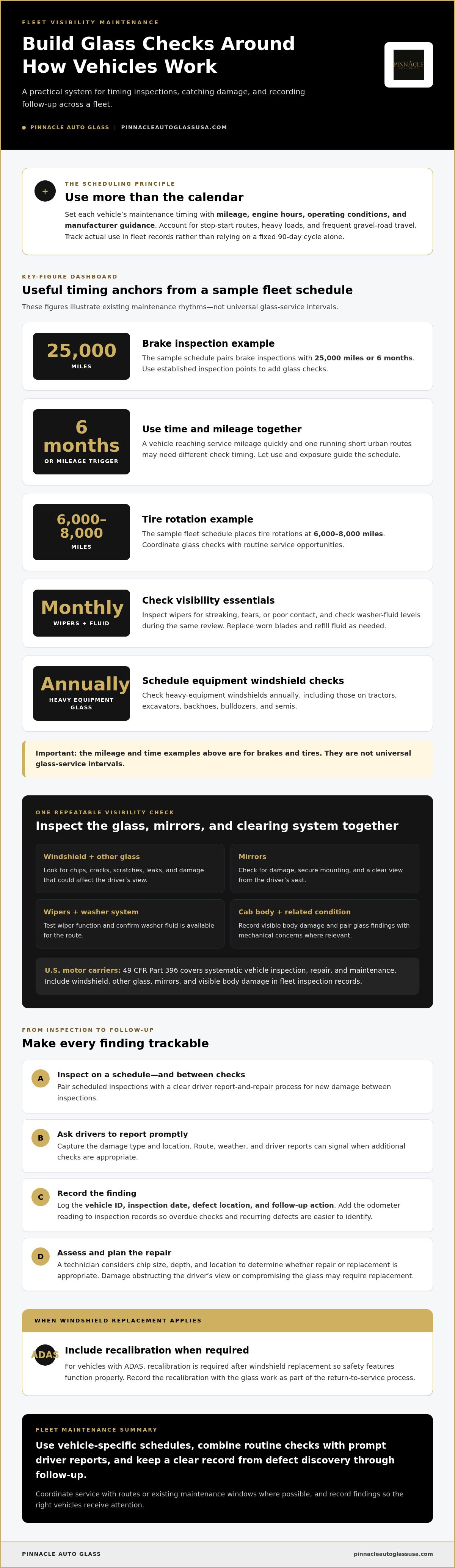
Build each vehicle’s schedule around mileage, engine hours, operating conditions, and manufacturer guidance. Start with the owner’s manual, then account for stop-start routes, heavy loads, and frequent gravel-road travel. A delivery van covering short urban routes may need closer calendar-based checks than a highway vehicle reaching service mileage quickly. Track actual use in fleet management records, not a fixed 90-day cycle alone. This makes preventative maintenance for fleet vehicle glass part of the vehicle’s real operating routine.
Use mileage triggers and time windows together. For example, a sample fleet schedule places brake inspections every 25,000 miles or 6 months, and tire rotations every 6,000-8,000 miles. These are examples, not universal glass service intervals. Set glass checks alongside existing inspections, then add checks when routes, weather, or driver reports point to increased exposure. Record each inspection date and odometer reading so maintenance teams can spot overdue checks through tracking.
Fleet glass programs can use scheduled inspections, a report-and-repair workflow, or both. Scheduled checks create regular opportunities to find chips, cracks, or mirror damage; report-based workflows address problems between inspections. Choose an approach that fits route frequency, vehicle use, and the fleet’s capacity to track reports. Combining the two gives drivers regular inspection points and a clear way to flag new damage promptly.
Make the schedule actionable: assign a driver check, a reporting channel, a maintenance owner, and a follow-up record. Ask drivers to report the location and type of glass damage promptly, then arrange an assessment and plan based on the vehicle’s needs. Coordinate service around routes or existing maintenance windows to reduce downtime. If a vehicle cannot continue its planned work, fleet management can adjust dispatch while arranging the next step. Timely follow-up helps keep a minor issue from becoming a larger interruption.
2. Why Should Fleet Managers be Concerned with Preventive Maintenance?
For U.S. motor carriers, 49 CFR Part 396 covers systematic vehicle inspection, repair, and maintenance. Include windshield, other glass, mirrors, and visible body damage on the fleet checklist. Record each finding beside routine items such as oil changes, then use fleet management software to track repairs and recurring defects. Clear records help teams identify vehicles needing follow-up instead of letting a small visibility problem disappear between service appointments.
A technician assesses a windshield chip by its size, depth, and location to determine whether repair or replacement is appropriate. Damage that obstructs the driver’s view or compromises the glass may require replacement. For vehicles with ADAS, recalibration is required after windshield replacement to ensure safety features function properly. Record the recalibration along with the glass work so the return-to-service process accounts for both.
Road debris, gravel, loose cargo, and branches can strike fleet glass; repeated vibration and sudden temperature changes can also worsen existing damage. Drivers can reduce exposure by leaving space behind vehicles carrying loose material, avoiding debris where safe, and reporting new chips promptly. Check heavy-equipment windshields annually, including those on tractors, excavators, backhoes, bulldozers, and semis. An annual check gives maintenance teams a scheduled opportunity to document damage and plan repairs.
Inspect wipers monthly for streaking, tears, or poor contact, and check washer-fluid levels during the same review. Replace worn blades and refill fluid so drivers can clear road spray and dirt. Add windshield, side glass, mirrors, body condition, and wiper function to one checklist, then record defects against the vehicle and date. For fleet glass repair needs, use fleet glass support as a next step.
Keeping these items together supports consistent attention across the fleet. Refill or change windshield washer fluid and replace wipers as needed. Include windshield integrity and wiper blade condition in fleet maintenance checks, and inspect glass for chips, cracks, leaks, or other damage.
Treat windshield wipers as a vehicle safety item. Check and refill washer fluid monthly, and monitor wipers for streaking or damage. Drivers should also check the vehicle’s body condition, including glass, and report problems to fleet management so defects can be addressed through maintenance.
3. Including glass and mirrors in fleet preventive maintenance checklists
A maintenance program works best when one checklist covers visibility and mechanical condition. For each truck, inspect the windshield, side and rear glass, exterior mirrors, and cab body. Note chips, cracks, loose mirror housings, leaks, or damage that could affect the driver’s view. Check the glass inside and out, then record the vehicle ID, inspection date, defect location, and follow-up action. Consistent records help fleet management track repeat damage and plan work before it interrupts a route.
Pair glass checks with inspections of the truck’s engine, transmission, and brakes. During a pre-trip review, drivers can report warning lights, unusual shifting, fluid leaks, or changes in braking. The maintenance team can route each report to the appropriate inspection or repair task. Keeping glass and mechanical findings together gives staff a clearer picture of vehicle condition and service history.
- Inspect glass for chips, cracks, scratches, and signs of leaks.
- Check mirrors for damage, secure mounting, and a clear view from the driver’s seat.
- Test wipers and confirm washer fluid is available for the route.
- Record engine, transmission, and brake concerns alongside glass defects.
For example, a driver reports a windshield crack and a loose side mirror before dispatch. The checklist should capture both issues, identify who reviews them, and note whether the truck can continue its planned work. This shared process helps maintenance teams prioritize safety-related findings and avoid unnecessary downtime.
Review checklist records during fleet maintenance planning. Look for repeat glass impacts on vehicles using the same route, or mirror damage linked to a particular loading area. Use these patterns to consider route or parking adjustments. Track repairs and replacements in each vehicle’s maintenance history, then use the records to refine future checks. A practical checklist complements scheduled engine or brake service by connecting it with glass inspections in one maintenance program.
4. Preventive fleet maintenance intervals
Inspect windshields and windows during the driver’s pre-trip or post-trip check on every trip. Drivers should note chips, cracks, leaks, and visibility problems, then report defects promptly. This routine can catch new damage between scheduled maintenance visits. Set additional inspections according to each vehicle’s mileage, engine hours, operating conditions, and manufacturer schedule. A truck on rough routes may need closer attention than one used mainly on highways.
Use both time-based and mileage-based intervals. Check windshield wipers monthly for streaking or damage, and check washer fluid at the same time. Monthly checks provide a recurring baseline, while trip inspections can identify problems sooner. Keep intervals consistent with the fleet’s maintenance plan, and adjust them when there is a reason, such as a change in route, operating conditions, or reported damage.
For preventative maintenance for fleet vehicle glass, set inspection intervals according to vehicle use and findings. Track each vehicle’s inspection dates, mileage, glass defects, and completed repairs. If a driver reports fresh damage after a trip, arrange an assessment promptly rather than waiting for the next monthly wiper check. Technicians can use the recorded defect and location to determine the next step. This keeps planned inspections distinct from prompt follow-up on new damage.
Review the schedule when records show repeated damage, changing routes, or recurring wiper problems. For example, frequent reports from one route may justify adding a glass review to its existing service window. Don’t set a universal glass replacement interval: inspections and condition determine whether repair or replacement is needed. Keep the schedule practical by pairing checks with established service visits and assigning a person to review outstanding defects. For help addressing fleet glass damage, arrange a fleet glass assessment.
For Chevrolet Silverado and Silverado HD trucks, follow the manufacturer's service intervals. Perform fleet maintenance according to the established schedule, without shortening or extending intervals without reason. Reported glass defects can still be assessed promptly between scheduled services.
Pinnacle Auto Glass: Windshield Replacement
Pinnacle Auto Glass supports fleet operators with windshield repair, windshield replacement, and Fleet Glass Services. Arrange service when inspections identify a chip, crack, or other damage that needs professional attention. For vehicles with ADAS, Pinnacle recalibrates the system after windshield replacement to ensure safety features function properly.
For fleet managers, the next step is to report the vehicle’s glass concern and arrange the appropriate service. Clear reporting connects inspection findings to the repair or replacement needed and keeps glass issues within the fleet’s maintenance process.
Contact Pinnacle Auto Glass to arrange fleet glass service for your vehicles.
Make the Next Glass Check Part of Your Fleet Plan
Turn inspections into a working routine by assigning responsibility for every reported glass defect. A clear next step helps drivers and maintenance staff act on findings before they are overlooked in a service record. Review the process as routes and vehicle needs change, so preventative maintenance for fleet vehicle glass stays relevant to how your fleet operates.
When damage needs professional attention, Pinnacle Auto Glass provides windshield repair and replacement, along with ADAS recalibration. These services support your response when an inspection identifies glass damage or a need for windshield replacement.
Use your fleet’s maintenance process to flag the affected vehicle and share the reported concern. Contact Pinnacle Auto Glass to discuss glass service for your fleet. A consistent plan starts with the next inspection, and each timely report helps keep the process moving.
Frequently Asked Questions
Why Should Fleet Managers be Concerned with Preventive Maintenance?
Preventive maintenance gives fleet managers a clearer basis for deciding which vehicles need attention first. Compare inspection records across vehicles and routes to identify repeated defects, then adjust priorities around those patterns. For example, recurring glass damage on one vehicle may point to route exposure worth reviewing. A consistent process also connects driver reports with completed work, reducing the chance that unresolved issues go unnoticed.
What should a fleet vehicle glass preventive maintenance checklist include?
Document each finding rather than relying only on a pass-or-fail box. Ask drivers to note the affected window or mirror, the damage location, and whether it interferes with their view. Include fields for the vehicle identifier, report date, and assigned follow-up. For example, “passenger-side windshield, lower edge, reported before dispatch” gives the maintenance team a useful starting point for prioritizing review.


