

Rain doesn’t automatically rule out windshield replacement. Can a windshield be replaced in the rain? Yes, if the bonding area stays dry while the glass is installed. If heavy, continuous rain makes that impossible and there’s no covered workspace, the job should be rescheduled.
It’s reasonable to worry that rain could weaken the seal or cause leaks. Water on the bonding surfaces can interfere with adhesion, and the adhesive needs time to set before the new windshield is exposed to significant moisture. This guide explains how weather affects curing, why the pinchweld must be dry, and what to watch for after replacement, so you can tell when rain is manageable and when waiting is safer.
Key Takeaways
- Rain doesn’t automatically prevent replacement, but the bonding area must remain dry; continuous rain without shelter can make rescheduling the safer choice.
- Follow the installer’s safe drive-away instructions, and protect fresh adhesive from significant moisture while it cures.
- Learn which signs, such as damp trim or wind noise, can point to a seal problem that needs prompt attention.
- Limit stress on the new installation: avoid automatic car washes for at least 48 hours and use the wipers sparingly at first.
1. Can a windshield adhesive cure properly in rainy weather?
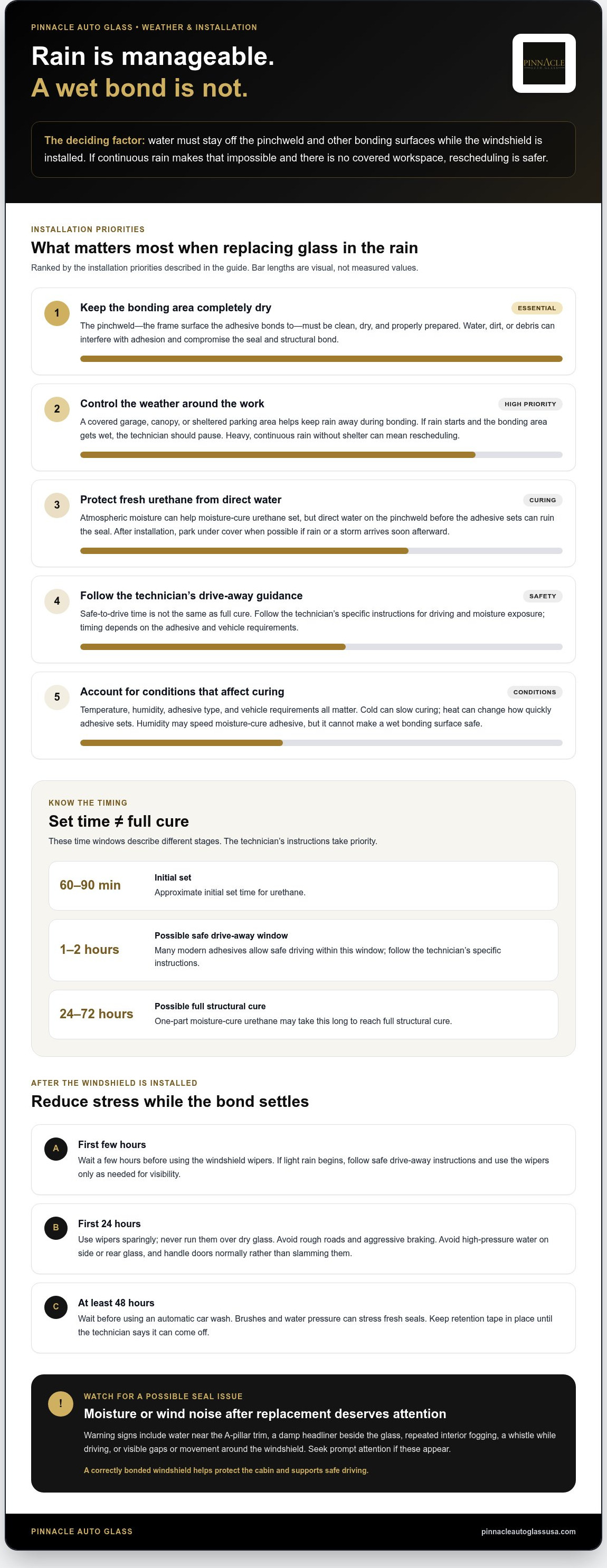
Whether a windshield can be replaced in the rain depends on keeping water off the bonding surfaces. Rain on uncured urethane can compromise its bond to the vehicle frame. Atmospheric moisture can help moisture-cure urethane set, but direct water on the pinchweld before the adhesive sets can ruin the seal. A covered workspace helps control that risk during installation.
Urethane has an initial set time of about 60 to 90 minutes. Many modern adhesives allow safe driving within one to two hours, but safe drive-away time is not the same as full cure. One-part moisture-cure urethane may take 24 to 72 hours to reach full structural cure. Drivers should follow the technician’s specific drive-away instructions.
Temperature, humidity, adhesive type, and vehicle requirements all affect curing. Cold weather can slow the process, while heat may change how quickly the adhesive sets. High humidity can speed the curing of moisture-cure adhesive, but it cannot make a wet bonding surface safe. Urethane also helps retain the windshield and support airbag deployment in a collision, so proper bonding matters for more than preventing leaks.
Rain-related rescheduling shifts the appointment to a dry or covered work window. Replacement pricing depends on the vehicle and glass requirements and is provided after a quote request; weather affects timing, not the work required.
Auto insurance coverage depends on the policy’s glass and claim terms. A weather-related appointment change alone doesn’t determine whether replacement is covered; the policy governs coverage for the glass work.
If rain starts during installation, the technician should keep water away from the bonding area and pause if it becomes wet. If rain begins soon after installation, park under cover when possible and follow the technician’s moisture and driving instructions. Significant moisture exposure may need to wait 24 hours, while light rain guidance depends on the adhesive and conditions.
2. Water intrusion, leaks, and corrosion
Water inside the vehicle after windshield installation can signal a compromised seal. Rain may enter through a deep or edge-cracked windshield, while a poor bond can let moisture seep around replacement glass. Over time, water intrusion can weaken the windshield bond and cause corrosion around the frame. Leaks can also damage upholstery, interior trim, or vehicle electronics.
Check the cabin and windshield perimeter for warning signs. Look for water dripping near the A-pillar trim, a damp headliner beside the glass, or repeated fogging inside the windshield. Listen for a whistle while driving, and look for visible gaps or movement around the glass. If these symptoms appear after installation, seek prompt attention rather than waiting for the next rainstorm.
After 24 to 48 hours, a gentle hose test can help reveal leaks around the windshield perimeter. Use a controlled, light flow, not a pressure washer. Have someone inside the vehicle watch the glass edges, dashboard, headliner, and trim as water runs over the exterior. Stop if water appears inside, then dry the area and document where it entered.
Temperature changes can complicate existing damage. Rainwater entering a cracked windshield may weaken nearby glass and reduce the effectiveness of repair resin. Water trapped between laminated glass layers can also cause fogging, especially in humid conditions. If a crack reaches the edge or blocks the driver’s view, prompt professional assessment can determine whether repair or replacement is appropriate.
Keep records if you find a leak. Photograph damp trim, visible gaps, or water marks, and note when they appeared. For issues found within the first 30 days, document the problem and contact the installer promptly. Don’t ignore recurring moisture: corrosion can spread around the frame, and a wet interior can affect electronics. A correctly sealed windshield helps protect the cabin and supports safe driving.
3. Avoiding car washes and other stress during curing
The adhesive continues curing after the vehicle is safe to drive. For the first 24 hours, avoid rough roads and aggressive braking, which can add vibration or stress around the newly installed glass. Choose a smooth route and drive gently. This gives the bond time to settle without unnecessary jolts.
Wait at least 48 hours before using an automatic car wash. Its brushes and water pressure can put stress on fresh seals. Avoid high-pressure water on side or rear glass for 24 hours after replacement. A hand wash can also disturb the installation if water is directed forcefully at the windshield edge, so follow the technician’s care instructions.
After installation, wait a few hours before using the windshield wipers. During the first 24 hours, use them sparingly and never run them over dry glass. If light rain begins, follow the safe drive-away instructions and use the wipers only as needed to maintain visibility. Don’t pull off retention tape early; leave it in place until the technician says it can come off.
Temperature and humidity affect curing, but you should still limit physical stress on a fresh installation. Park in a sheltered place if heavy rain or a storm arrives soon after replacement. Avoid slamming doors, which can create pressure inside the cabin while the seal is fresh. Ordinary entry and exit are fine; simply handle the doors normally.
Vehicles with cameras or safety sensors may need ADAS recalibration after windshield replacement. Rain may delay the work, but recalibration must not be skipped. If windshield repair is being considered instead, trapped moisture in a crack can prevent repair resin from bonding properly. The damaged glass should be dry before repair begins.
4. Keeping the pinchweld dry during bonding
The pinchweld is the frame surface where the windshield adhesive bonds. It must be clean, dry, and properly prepared before the replacement glass is positioned. Moisture, dirt, or debris can prevent urethane from attaching correctly. That can compromise the seal and the windshield’s structural bond, not just cause a cabin leak.
Technicians can work in the rain inside a covered garage, canopy, or sheltered parking structure. A mobile service tent can provide a dry workspace if it shields the opening and bonding area throughout the job. The key is controlling moisture at the vehicle frame, not merely keeping rain off the technician or the outside of the glass.
Before bonding, the installer cleans, dries, and primes the windshield opening. Primer needs about 10 minutes to flash before the replacement glass is set. If heavy rain reaches the pinchweld after primer application, the technician should dry and re-prime the surface instead of bonding over possible contamination. Continuing on a wet surface risks an improper seal.
During placement, the glass must meet the prepared adhesive evenly. Rushing this step can affect the bond around the perimeter. Urethane also contributes structural strength and supports airbag deployment, so bonding is part of vehicle safety. A properly controlled work area helps protect both the seal and that structural function.
Vehicles with cameras or other safety sensors may need ADAS calibration after windshield replacement. Weather delays should postpone required calibration, not lead to skipping it. If rain prevents a dry work area, rescheduling is the sensible step. For a replacement performed with attention to the bonding process, request windshield replacement service.
Pinnacle Auto Glass: Windshield Replacement
Pinnacle Auto Glass provides windshield replacement when damage calls for new glass, including when a crack reaches the edge or obstructs the driver’s view. If the damage is limited and suitable for repair, windshield repair may be the better option. For vehicles with ADAS, we recalibrate the system after a windshield replacement to ensure all safety features function properly.
For commercial operators, Fleet Glass Services can help address windshield needs across fleet vehicles. The next step depends on the damage and vehicle requirements. When you contact Pinnacle Auto Glass, describe what you’re seeing, such as a spreading crack, a leak, or sensor equipment behind the glass.
Contact Pinnacle Auto Glass to discuss your windshield needs.
Plan Your Next Step With Confidence
Let the weather inform your plan, but don’t leave a damaged windshield unattended. Share the location and extent of the damage, along with any cameras or safety sensors near the glass. These details help clarify whether your vehicle needs replacement, repair, or recalibration.
If you’re deciding whether a windshield can be replaced in the rain, focus on keeping the bonding area dry and ensuring there’s a safe installation plan. Pinnacle Auto Glass offers windshield replacement, windshield repair, and ADAS recalibration for different glass and sensor needs.
Take the next step with the details you have. Contact Pinnacle Auto Glass to discuss your windshield needs and move forward with clarity.
Frequently Asked Questions
Can rain during installation ruin the job?
Rain can compromise an installation if water reaches the surfaces where the adhesive must bond. If water is found on the bonding area, pause the work until the surface is dry and properly prepared again. A brief break in the rain doesn’t guarantee that the pinchweld is dry. A sheltered workspace helps prevent runoff or splashes from reaching it.
Can a windshield adhesive cure properly in rainy weather?
Yes, windshield adhesive can cure during rainy weather if direct water stays off the bonding surface and conditions suit the product. Moisture-cure urethane uses atmospheric humidity as part of its curing process, but droplets on the bond can interfere with adhesion. The safe drive-away time depends on the adhesive and conditions; it doesn’t mean curing is fully complete.
Does cold weather affect installation?
Yes. Cold temperatures can slow adhesive curing, so the technician must account for conditions when setting the glass and determining when the vehicle can be driven. For example, a vehicle parked outside on a cold day may need a different wait than one worked on in warmer conditions. Follow the specific safe drive-away instructions rather than relying on a standard estimate.
How Soon Can a New Windshield Get Wet?
Follow the installer’s instructions before exposing new glass to significant moisture. Light rain may be acceptable after the adhesive’s initial set, but use extra caution if heavy rain is expected soon after installation. If a storm begins, park under cover when possible and contact the installer for guidance specific to the adhesive and conditions. Don’t use a car wash to test the seal.
Can a windshield be replaced outdoors in the rain?
Outdoor replacement is possible only if the work area keeps rain away from the glass opening and bonding surfaces. An exposed driveway during steady rainfall makes that difficult, while a suitable canopy may provide shelter. If wind drives rain beneath the cover or water reaches the prepared surface, pause the installation until conditions allow a dry, controlled workspace.
How do rain and moisture affect windshield adhesive curing and bonding?
Humidity in the air can help moisture-cure urethane set, but liquid water on the prepared frame can disrupt its contact with the vehicle. The distinction matters: damp weather isn’t the same as a wet bonding surface. If water enters the opening during preparation, dry and prepare the affected area again before positioning the replacement glass.


