

Can a blazing summer day affect your new windshield bond? Yes. The hot weather effects on windshield adhesive can include a shorter working time for the installer, but heat alone doesn’t mean the bond will fail. Correct installation and careful aftercare still matter in hot conditions.
It’s reasonable to wonder when your vehicle is safe to drive and whether summer temperatures change the usual wait. This guide explains how heat and humidity can affect adhesive handling and curing, why safe drive-away guidance depends on installation conditions, and what you can do to protect the bond afterward.
You’ll also learn what to expect after replacement, including the required 24-hour wait before washing your car. If your vehicle has ADAS, recalibration after replacement is part of restoring the system’s proper function. Knowing the difference between adhesive working time, safe drive-away time, and aftercare can help you plan your next steps.
Key Takeaways
- The hot weather effects on windshield adhesive can shorten installation working time, but heat doesn’t automatically make replacement unsafe.
- Urethane surface skinning and full bond development are different stages, so there isn’t one cure time for every installation.
- Follow your installer’s safe drive-away guidance and post-installation instructions rather than relying on the outdoor temperature alone.
- Wait at least 24 hours before washing your car to allow the adhesive to fully set. After that, you can wash it normally.
- For vehicles with ADAS, we recalibrate the system after a windshield replacement to ensure all safety features function properly.
How Hot Weather Affects Windshield Adhesive During Installation
Heat can affect windshield adhesive handling and curing, but it doesn’t automatically prevent a safe installation. The installer needs to manage the conditions at the vehicle and follow the instructions for the adhesive being used. The hot weather effects on windshield adhesive matter most while the glass is being positioned: high temperatures can shorten the time available to place and align it correctly.
Windshield urethane bonds the glass to the vehicle structure. Because it forms a structural connection, installation involves more than setting a pane into an opening. The installer must work within the adhesive’s handling requirements and account for the temperatures of the materials at the vehicle.
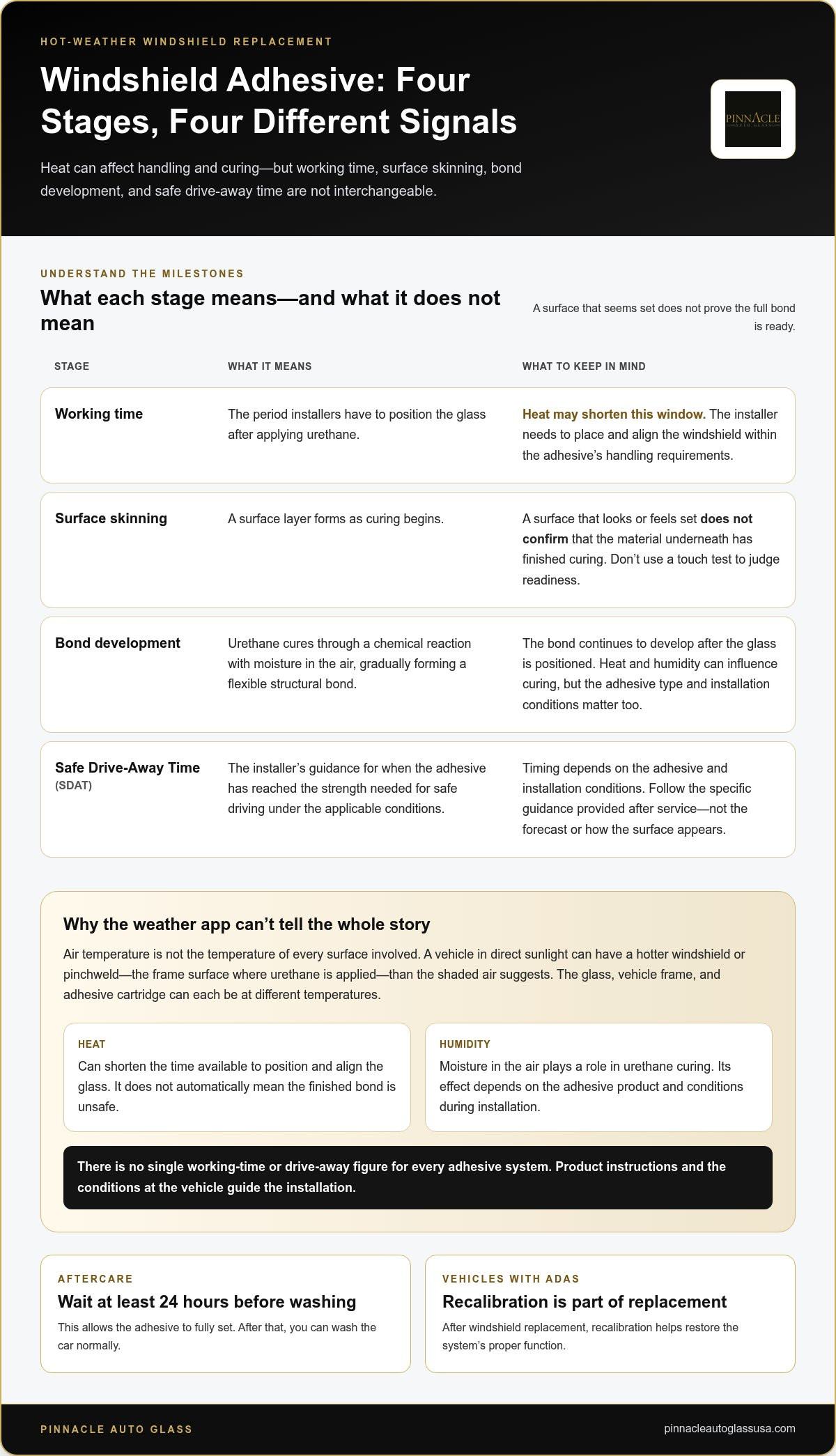
A weather app reports air temperature, not the temperature of every surface involved in the job. A vehicle that has been sitting in direct sunlight can have a hotter bonding surface than the shaded air suggests. The windshield, adhesive cartridge, and vehicle frame may each be at different temperatures.
Why the car’s surface can be hotter than the air
Sunlight can heat a vehicle’s exterior and glass beyond the reported ambient temperature. For example, a dark vehicle parked in direct sun may have a warmer metal frame around the windshield than a vehicle kept in shade. The frame surface where the urethane is applied is often called the pinchweld.
The glass and adhesive cartridge also have their own temperatures. Their condition can depend on storage and exposure, so an air-temperature reading alone doesn’t describe the full installation environment. Adhesive products have specific instructions for use, rather than one temperature rule that applies to every system.
What adhesive working time means for drivers
Adhesive working time is the period installers have to position the glass after applying the urethane. In hot conditions, that window may become shorter, leaving less time to align and set the windshield before the adhesive’s handling properties change. Different adhesive systems behave differently, so there isn’t one universal working-time figure.
This is an installation-stage concern, not a sign that the bond has fully developed as soon as the glass is in place. Positioning the windshield is one step; the adhesive bond continues to develop afterward.
That distinction is useful when assessing hot-weather advice. A shorter installation window doesn’t by itself mean the finished bond is unsafe. It means the installer needs to manage the sequence carefully and follow the product-specific instructions for the conditions present.
For drivers, outdoor temperature can’t tell the whole story about how an installation is handled or when the vehicle is safe to drive. Safe drive-away guidance is based on the adhesive system and installation conditions, not simply the forecast. Follow the instructions provided after service, and treat working time and bond development as separate stages.
How Heat, Humidity, and Urethane Curing Work Together
Windshield urethane doesn’t simply dry like paint. It cures through a chemical reaction with moisture in the air, gradually changing from a paste into a flexible, structural bond. Heat and humidity can influence this process, but they don’t tell the whole story. The adhesive type and conditions during installation matter too.
That’s why the hot weather effects on windshield adhesive are best understood in stages. A shorter working window, a surface that begins to skin over, and the time needed for the bond to develop are related, but they are not interchangeable measures of readiness.
Working time, skinning, and bond development are different
Working time is the period available to position the glass after the adhesive is applied. Skinning describes the formation of a surface layer as curing begins. Bond development is the broader process in which the adhesive gains strength through its depth.
These stages can overlap, but one doesn’t confirm that another is complete. A surface may look or feel set while the material beneath it continues curing. Don’t use a touch test or the outdoor temperature to decide whether the full bond is ready. The Auto Glass Safety Council discusses hot-weather installation considerations, including adhesive skinning, in its Hot Weather Auto Glass Safety Tips.
Humidity is another factor because moisture in the air plays a role in how urethane cures. Its effect depends on the product and the conditions at the time of installation. A forecast or general rule about summer weather can’t show exactly how a specific adhesive is progressing. Product instructions account for the adhesive system and relevant environmental conditions.
Why Safe Drive-Away Time is not one fixed number
Safe Drive-Away Time (SDAT) is the installer’s guidance for when the vehicle may be driven after replacement. It refers to the point when the adhesive has reached the strength needed for safe driving under the applicable conditions. It is not the same as full cure, which describes the bond continuing to develop.
Safe drive-away timing depends on the adhesive and installation conditions. The adhesive manufacturer’s instructions provide applicable guidance, taking conditions such as temperature and humidity into account. As conditions change, the appropriate timing may change too. A time quoted for one adhesive or installation shouldn’t be treated as a universal promise for every vehicle.
Follow the specific drive-away instructions provided after your replacement, even if the day feels hot or the adhesive surface appears set. Pinnacle Auto Glass provides windshield replacement at a convenient location, along with guidance on what to expect after installation.
Hot-Weather Windshield Replacement: Myths Versus Practical Reality
Summer heat can make windshield installation more demanding, but it doesn’t automatically make replacement unsafe. The hot weather effects on windshield adhesive are a reason to manage installation conditions carefully, not a reason to assume every hot-weather replacement will fail. What matters is how the actual conditions and adhesive instructions are handled.
Weather matters, but it doesn’t replace product-specific installation and drive-away guidance.
| Myth | Practical reality |
|---|---|
| Summer heat makes every windshield installation unsafe. | Heat changes handling conditions. It does not, by itself, establish that an installation is unsafe. |
| High temperatures make adhesive instantly ready for driving. | A surface that seems set does not confirm that the vehicle has reached its safe drive-away time. |
| The forecast tells me whether the bond is safe. | The forecast describes general outdoor conditions, not the full installation or adhesive requirements. |
Myth: summer heat makes every installation unsafe
Heat can affect how the adhesive behaves during installation, so the conditions at the vehicle and the adhesive manufacturer’s instructions matter. But a hot forecast alone doesn’t prove that a replacement is unsafe or unsuitable. Conditions can vary between locations, and the process needs to suit the circumstances present.
For drivers, the practical takeaway is not to treat “hot day” as a safety verdict. Installation depends on the materials and conditions, not a blanket seasonal rule. Likewise, don’t assume that every location or weather condition is suitable for every installation.
Myth: faster curing means the car is ready sooner
Heat may speed some surface effects, but that doesn’t establish that the full adhesive bond is ready for driving. Adhesive at the visible edge may seem firm while the bond is still developing. The sun can’t serve as a timer, and touch alone can’t verify safe drive-away readiness.
Elapsed time only helps when interpreted according to the applicable product guidance and installation conditions. Don’t calculate your own departure time from the temperature, adhesive appearance, or a time you heard applied to another vehicle. Follow the instructions provided after your replacement, including when the vehicle may be driven.
This distinction keeps seasonal advice practical rather than alarming. Heat is a condition to manage, not proof of failure or instant readiness. Use the installer’s vehicle-specific guidance as your reference, and distinguish between completing the installation and the adhesive reaching the required safe drive-away point.
What to Do After Windshield Replacement in Hot Weather
After a windshield replacement, use the instructions provided for your vehicle rather than guessing based on the temperature outside. The hot weather effects on windshield adhesive don’t create one universal aftercare rule. Your installer’s safe drive-away guidance and any vehicle-specific directions are the right references. Keep the instructions handy if you need to plan a trip or wash the car soon after service.
Use this simple sequence:
- Confirm when the vehicle may be driven. Follow the safe drive-away time provided for your installation. Don’t substitute a generic online estimate or assume the adhesive is ready because it feels firm.
- Complete required ADAS recalibration. For vehicles with ADAS, we recalibrate the system after a windshield replacement to ensure all safety features function properly. Don’t treat the vehicle as ready to drive before required recalibration is complete.
- Wait before washing. Wait at least 24 hours before washing your car to allow the adhesive to fully set. After that, you can wash it normally.
- Follow any additional instructions. Use the post-installation directions supplied for your vehicle. Avoid adding your own rules based on general advice that may not apply to your installation.
Follow the installer’s drive-away instructions
Safe drive-away timing is specific to the adhesive and installation conditions. A time quoted for another vehicle, adhesive, or weather situation may not apply to yours. Use the guidance provided after service, and don’t estimate readiness from sunshine, a surface touch, or elapsed time alone.
ADAS matters too. Windshield replacement can affect the position of systems that rely on sensors around the glass. For vehicles with ADAS, we recalibrate the system after a windshield replacement to ensure all safety features function properly. Complete this required step before driving, and follow the instructions given for your vehicle.
Protect the new installation during the first day
The clearest aftercare step is the washing wait: wait at least 24 hours before washing your car to allow the adhesive to fully set. After that, you can wash it normally. Hot weather doesn’t remove the need to follow this instruction, and a dry-looking windshield isn’t a reason to wash it sooner.
Keep your installer’s other directions in view during the first day. Don’t rely on blanket advice about parking, windows, doors, or tape unless it was provided for your specific installation. Pinnacle Auto Glass provides windshield replacement and aftercare guidance for your service.
How Professional Windshield Service Addresses Heat and Safety Concerns
Hot weather can raise questions about adhesive handling, drive-away timing, and what happens after installation. Professional windshield replacement connects those concerns to the actual vehicle and installation, rather than relying on broad assumptions about summer conditions. Pinnacle Auto Glass provides windshield replacement and mobile auto-glass service at your home, office, or another convenient location.
That gives drivers a clear service path while keeping the safety steps in view. The adhesive instructions and installer’s guidance determine how to handle the replacement and when the vehicle may be driven. For vehicles with ADAS, recalibration is required after replacement, not an optional extra.
What Pinnacle Auto Glass provides after windshield replacement
We provide a warranty on both the glass and our installation. Any service-related issues will be repaired at no additional cost.
For vehicles with ADAS, we recalibrate the system after a windshield replacement to ensure all safety features function properly. We offer a detailed 5-point sensor check that evaluates the alignment and function of all critical sensors in your vehicle’s ADAS system. These steps matter because windshield work can affect the positioning and operation of systems associated with the glass.
Heat doesn’t replace these safety considerations. Follow the safe drive-away guidance provided for your installation, and don’t treat a vehicle with ADAS as ready to drive before required recalibration is complete. After service, follow the specific instructions supplied for your vehicle, including the required wait before washing.
Mobile service and a clear next step
We bring expert auto glass repair and replacement to your doorstep, home, office, or anywhere convenient, fully equipped to get the job done. You don’t need to be present as long as we can access your car, though having someone available to answer questions can be helpful.
Mobile service makes arranging replacement more practical without changing the steps that protect the installation. Plan around the drive-away guidance, required ADAS recalibration, and aftercare instructions provided for your vehicle. Wait at least 24 hours before washing your car to allow the adhesive to fully set. After that, you can wash it normally.
Understanding the hot weather effects on windshield adhesive helps set realistic expectations, but it can’t replace installation-specific advice. Pinnacle Auto Glass provides windshield replacement with mobile service, warranty coverage on the glass and installation, and ADAS recalibration for equipped vehicles. Explore windshield replacement service and take the next step toward addressing your damaged windshield.
Take the Next Step With Confidence
Don’t let summer temperatures turn a windshield concern into a guessing game. The hot weather effects on windshield adhesive are manageable when installation and follow-up are guided by the conditions and the vehicle’s needs. Arrange service, make time to follow the instructions you receive, and don’t rely on general advice that may not fit your situation.
A clear plan helps you focus on what matters: a properly installed windshield and knowing what to expect afterward. If damage is affecting your view or you’re ready to replace the glass, Pinnacle Auto Glass provides professional windshield replacement, mobile service, and ADAS recalibration for vehicles equipped with these systems.
Explore windshield replacement service and take the next step with confidence. Follow the drive-away and aftercare guidance supplied for your installation.
Frequently Asked Questions
Can a windshield be replaced safely in hot weather?
Yes, hot weather does not automatically make windshield replacement unsafe. The hot weather effects on windshield adhesive can include quicker surface skinning and less time to position the glass, so installation conditions and the adhesive instructions matter. A hot forecast alone can’t tell you whether a specific installation was handled safely. After service, follow the safe drive-away guidance provided for your vehicle.
Does heat make windshield adhesive cure faster?
Higher temperatures can affect adhesive curing and may shorten the time available to position the glass, but that doesn’t mean the entire bond is ready immediately. For example, adhesive at the visible edge may seem firm while the bond is still developing. Surface appearance, driving readiness, and full cure aren’t the same thing. Follow the instructions supplied after your installation rather than estimating readiness from the weather.
Can humidity affect windshield adhesive in hot weather?
Yes, humidity can influence how urethane adhesive cures, so hot and humid conditions may affect installation timing. The effect varies with the adhesive and conditions during the job, which is why one humidity threshold can’t predict readiness for every vehicle. Don’t use how muggy the weather feels or a weather-app reading to decide when to drive. Follow the installation-specific instructions provided after service.
How long should I wait before washing my car after windshield replacement?
Don’t shorten the wait just because the day is hot or the glass looks dry. If your installer gives you additional aftercare instructions for your vehicle, follow those as well. For example, plan a routine wash for the following day rather than immediately after replacement.
Can sunlight damage windshield adhesive after it has cured?
Ordinary sunlight shouldn’t be assumed to damage a fully cured windshield bond. Heat concerns mainly relate to adhesive handling and conditions during installation, not a general rule that sunlight undoes a completed bond. If you notice a leak, glass movement, or another issue after service, contact Pinnacle Auto Glass for help. We provide a warranty on both the glass and our installation. Any service-related issues will be repaired at no additional cost.
Can I drive immediately after a hot-weather windshield replacement?
Don’t assume you can drive immediately based on the heat, the time that has passed, or adhesive that feels dry. Follow the safe drive-away guidance provided for your installation. The vehicle should not be treated as ready to drive before required recalibration is complete. Review your service instructions before setting off.


