

Acoustic glass can make a drive quieter, but it won’t silence every road or cabin noise. The acoustic glass windshield benefits are most relevant when the glass helps reduce sounds such as wind noise. The difference you notice depends on your vehicle and driving conditions, so advertised noise reduction isn’t a guarantee of a dramatically quieter ride.
If you’re considering a replacement, it helps to know what sets acoustic glass apart from standard laminated glass and how its sound-dampening layer works. This guide explains which benefits are realistic, what affects the results, and why matching replacement glass to your vehicle matters. It also covers fitment and ADAS recalibration when applicable, so you can make an informed choice about professional windshield replacement.
Key Takeaways
- Acoustic windshields use a sound-damping interlayer to reduce some noise passing through the glass.
- The acoustic glass windshield benefits can improve cabin comfort, but the difference depends on the vehicle and driving conditions.
- Both acoustic and standard windshields can be laminated safety glass, though their sound performance differs.
- Use your vehicle’s specifications, existing glass, and manufacturer requirements to guide glass selection.
- During replacement, correct fitment matters, and camera-equipped vehicles may need ADAS recalibration.
What Is an Acoustic Glass Windshield?
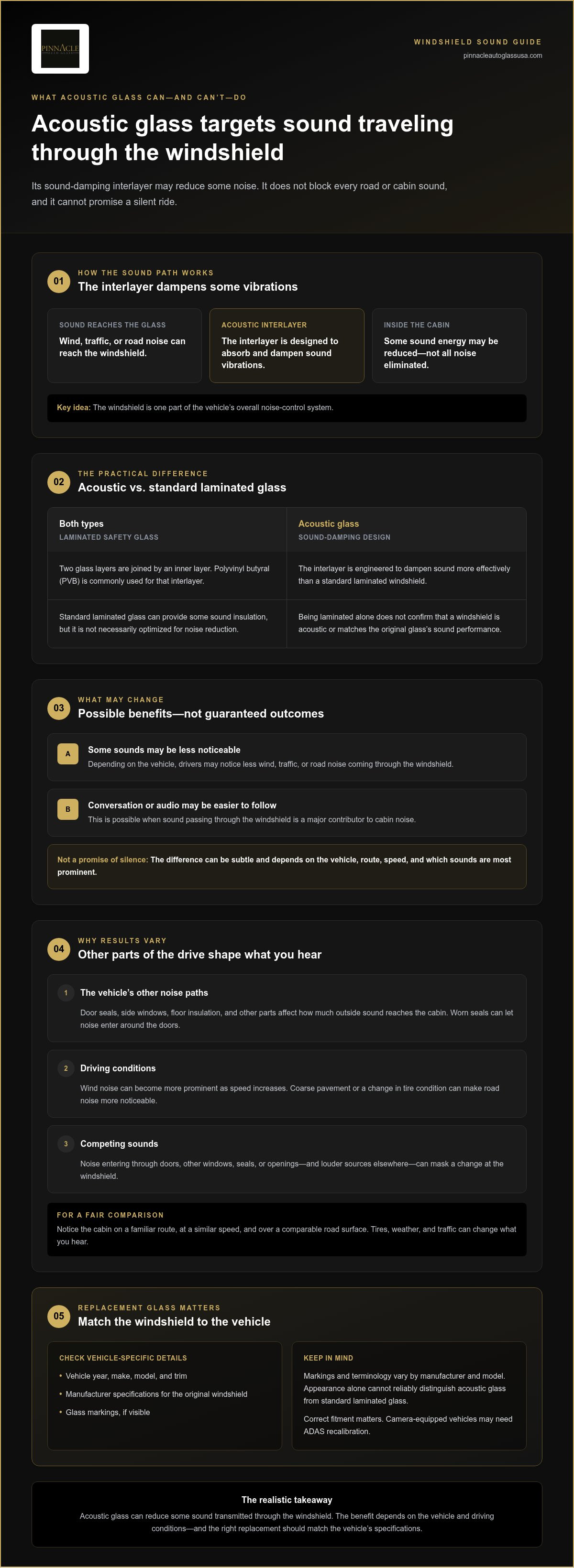
An acoustic glass windshield is laminated glass designed with a sound-damping interlayer to reduce some noise transmitted through the glass. It serves as a safety windshield, while its interlayer is engineered to absorb and dampen sound vibrations. The acoustic glass windshield benefits depend on the vehicle and its design, so the term describes a type of glass construction, not a promise of a silent cabin.
In short, acoustic windshield glass is laminated safety glass with an interlayer designed to dampen sound more effectively than a standard laminated windshield. Both types have layers of glass joined by an inner layer, but that shared construction doesn’t mean they perform the same acoustically. Laminated glass is the broader category; acoustic glass is designed with sound reduction in mind.
What makes windshield glass acoustic?
A laminated windshield has two glass layers bonded around an inner plastic layer. Polyvinyl butyral, or PVB, is commonly used for this interlayer. In acoustic glass, the interlayer is designed to dampen vibrations as sound reaches the windshield, reducing some of the sound energy that could otherwise pass into the cabin. The glass and interlayer work together as a unit.
How does it differ from ordinary laminated safety glass?
Lamination describes how the windshield is constructed. Acoustic performance depends on the interlayer’s properties, not simply on the presence of two glass layers with plastic between them. Standard laminated glass can provide some sound insulation, but it isn’t necessarily optimized for noise reduction. Seeing that a windshield is laminated doesn’t establish that it’s acoustic glass or that it matches the original glass’s sound performance.
How can you identify an acoustic windshield?
Start with vehicle-specific information rather than appearance. Look in the owner’s manual or manufacturer specifications for details about the windshield or glazing. You can also check the glass markings for an acoustic indicator, but markings and terminology vary by manufacturer and model. A label alone may not explain the exact construction, so use it alongside the vehicle documentation.
- Identify the vehicle’s year, make, model, and trim.
- Review the manufacturer’s specifications for the original windshield.
- Compare those details with the windshield markings, if visible.
Don’t rely on a visual inspection to distinguish acoustic glass from standard laminated glass. The layers and interlayer aren’t always identifiable from outside the vehicle. If the windshield needs replacement, matching the vehicle’s specified glass helps preserve its intended fit and features. Professional windshield replacement accounts for vehicle-specific glass requirements, including camera-based systems where ADAS recalibration may apply.
How Acoustic Windshield Glass Can Reduce Cabin Noise
An acoustic windshield’s interlayer can dampen some sound energy as vibrations travel through the glass. This may make certain outside sounds less noticeable inside the cabin, but it doesn’t block all noise or guarantee a quiet ride. The SAE International technical paper on acoustic windshields examines how windshield design relates to cabin noise, offering technical context beyond broad claims of “noise reduction.”
Results vary with the glass design and the vehicle’s construction, because the windshield is only one part of the cabin’s overall noise-control system. Door seals, side windows, floor insulation, and other parts of the vehicle affect how much outside sound reaches the cabin. The acoustic glass windshield benefits are best understood as a possible reduction in sound transmitted through one area, not a whole-vehicle soundproofing solution.
Which sounds may be less noticeable inside the cabin?
Depending on the vehicle, drivers may notice less wind, traffic, or road noise coming through the windshield. The difference can be subtle. A windshield can influence only sound that reaches the cabin through the glass. Noise can also enter through doors, other windows, seals, or openings, and a louder source elsewhere may mask any change at the windshield.
Driving conditions matter, too. Wind noise can become more prominent as speed increases, while coarse pavement or a change in tire condition can make road noise more noticeable. A vehicle with worn seals may have more noise entering around the doors than through the windshield. These competing sources help explain why the same glass may seem effective in one car and less noticeable in another.
What comfort improvements might drivers notice?
If sound passing through the windshield is a major contributor to cabin noise, reducing some of it may make conversation or audio easier to follow. Those are possible comfort gains, not guaranteed outcomes. Your perception depends on the vehicle, route, speed, and the sounds that are most prominent during the drive. Acoustic glass won’t eliminate the need to adjust audio or speak up in every situation.
For a fair comparison, notice the cabin under similar conditions: a familiar route, similar speed, and comparable road surface. Changes in tires, weather, or traffic can affect what you hear, so a single drive may not tell the full story. Treat claims about a quieter cabin as possibilities, not promises of silence or health benefits. The practical question is whether the glass suits your vehicle and whether the noise it can address is noticeable in your usual driving.
If windshield damage means replacement is needed, professional windshield replacement can help ensure the glass is matched to your vehicle. That matters because acoustic performance is only one consideration; the replacement also needs to suit the vehicle’s design.
Acoustic vs. Standard Windshields: What Benefits Are Realistic?
Both acoustic and standard windshields can be laminated safety glass. The distinction is in the interlayer’s sound-damping design, not whether the glass is laminated. An acoustic windshield may reduce some sound transmitted through the glass, but the size of that benefit depends on the vehicle and conditions. Compare the glass type and fitment requirements rather than assuming every acoustic windshield delivers the same result.
| Feature | Acoustic windshield | Standard windshield |
|---|---|---|
| Construction | Laminated glass with an interlayer designed to dampen sound. | May also be laminated safety glass, but its interlayer isn’t necessarily optimized for sound reduction. |
| Intended sound performance | Designed to reduce some sound transmitted through the windshield. | Provides the standard construction’s sound insulation, without the same acoustic design intent. |
| Vehicle fitment | Must match the vehicle’s specifications and required features. | Also needs to match vehicle-specific specifications and features. |
What acoustic glass may improve, and what it cannot guarantee
The realistic potential benefit is a quieter impression when noise entering through the windshield is a noticeable source of cabin sound. That’s different from eliminating noise. Engine sounds, tire noise, and vibration through the vehicle’s structure can still be heard, and sound may enter through doors, other windows, or worn seals.
Treat numerical claims cautiously. A reduction measured in a particular test doesn’t automatically predict what you’ll hear in your vehicle. Results depend on the glass design, the vehicle as a whole, installation quality, speed, road surface, tires, and other conditions. Market listings of leading automotive glass manufacturers offer industry context, but they aren’t vehicle-specific evidence of acoustic performance.
Do acoustic windshields improve safety or fuel economy?
Acoustic performance and safety are separate considerations. Laminated construction is relevant to the windshield’s basic safety role; an acoustic interlayer is intended to address sound, not to prove that the glass is safer than a correctly specified standard laminated windshield. During replacement, the glass still needs to match the vehicle’s requirements and be properly installed.
Be cautious with claims that acoustic glass improves fuel economy, prevents break-ins, protects hearing, or reduces driver fatigue. Those outcomes don’t follow automatically from a sound-damping interlayer. A quieter cabin may make conversation or audio easier to follow for some drivers, but that isn’t the same as hearing protection or a health benefit. The acoustic glass windshield benefits are most credible when framed as a possible comfort improvement, not a promise of broader safety or performance gains.
For replacement decisions, prioritize correct fitment and the vehicle’s specified glass. Professional windshield replacement helps address those requirements, while vehicles with camera-based safety systems may also need ADAS recalibration after installation.
How to Decide Whether Acoustic Glass Fits Your Vehicle
Acoustic glass isn’t a universal upgrade. The right choice depends on your vehicle’s specifications, the glass already installed, and the kind of driving you do. Use this sequence to make a practical decision:
- Identify your vehicle. Note its year, make, model, and trim.
- Check its glass specifications. Use the owner’s manual or vehicle-specific manufacturer information to learn what windshield construction and features are specified.
- Consider your driving conditions. Think about whether highway wind noise or frequent long drives make cabin comfort a priority, while keeping other noise sources in mind.
This process helps you assess the potential acoustic glass windshield benefits without assuming that one glass type suits every vehicle. Fitment matters as much as the feature itself.
Check your vehicle’s glass specifications first
Start with the owner’s manual, manufacturer specifications, or other vehicle-specific glass information. Model year and trim can affect windshield requirements, even within the same model line. Check the existing glass markings as a useful clue, but interpret them alongside the vehicle documentation because marking systems differ. Don’t assume acoustic glass from one vehicle is interchangeable with another.
Existing glass can also inform the decision. If the original windshield is identified as acoustic, pay close attention to the specified replacement type. A previous replacement may not match the original construction, so markings alone aren’t always a complete record. Use the vehicle’s specifications as the reference point, especially if the windshield includes features or sits in front of camera-based safety equipment.
Match the decision to your driving experience
Consider when cabin noise bothers you most. If you regularly drive at highway speeds or spend long periods on the road, reduced sound through the windshield may be a welcome comfort improvement, particularly if wind noise seems to come from the front glass. If most of your driving is at lower speeds, or noise mainly comes from tires, doors, or the vehicle’s structure, acoustic glass may have less noticeable impact.
Set a realistic expectation. Acoustic glass can address only some sound transmitted through the windshield. It won’t remove noise from the engine, tires, other windows, or worn seals. Driving speed, pavement, weather, and vehicle condition can also change what you hear from one trip to another.
Use your routine, not a broad advertising claim, to decide what matters. If you’re replacing a damaged windshield, professional installation keeps vehicle-specific fitment in focus. For professional windshield replacement, consider the vehicle’s specifications alongside the features of its existing glass. This grounds the decision in your car and driving needs, not a one-size-fits-all promise.
Replacing a Windshield? Protect Fitment and Vehicle Safety
A windshield replacement involves more than choosing glass that looks similar to the original. The replacement needs to suit the vehicle’s specifications, features, and mounting points. If your vehicle originally had acoustic glass, selecting glass with the correct construction can help preserve its intended cabin-noise performance. The acoustic glass windshield benefits depend on matching the right glass to the vehicle and installing it correctly.
Professional installation matters because the windshield must fit and function as part of the vehicle’s design. A mismatch or poor fit can affect how it sits in the frame and may interfere with systems connected to the glass. For more context on replacement considerations, see this professional windshield replacement safety guide.
What to consider when replacing acoustic windshield glass
Use the vehicle’s year, make, model, trim, and manufacturer specifications to guide glass selection. Existing windshield markings can offer clues, but vehicle-specific information is the better reference for confirming construction and required features. Don’t assume glass made for a similar vehicle will fit or perform the same way.
Correct installation supports the windshield’s intended fit and function. It also helps ensure the glass is positioned as designed, including where vehicle systems rely on cameras or sensors mounted near it. Professional installation brings these fitment details into the replacement process. For more on the role of technician expertise, read the certified auto glass technician guide.
When windshield replacement involves ADAS recalibration
Some vehicles use windshield-mounted cameras for advanced driver-assistance systems (ADAS). Replacing the glass can affect the camera’s position or view, so recalibration may be needed after installation to help the system interpret its surroundings as intended. Whether recalibration applies depends on the vehicle and its equipment. It’s an important part of planning a replacement for a camera-equipped vehicle, not a detail to overlook.
ADAS recalibration addresses the vehicle’s camera-based safety systems; acoustic glass addresses sound transmission. They are separate considerations, but both can matter during the same replacement. Pinnacle Auto Glass provides windshield replacement and ADAS recalibration when applicable. For a closer look at the technology, see the ADAS calibration reference guide.
Keep the decision practical: match the replacement glass to vehicle-specific requirements, plan for professional installation, and account for recalibration if the vehicle’s systems call for it. If your windshield needs attention, Pinnacle Auto Glass provides windshield replacement with fitment and vehicle safety in mind.
Make Your Next Windshield Decision With Confidence
Before your next replacement, note when cabin noise is most noticeable and what you hope a different windshield will change. Keep your vehicle’s year, make, model, and trim details handy. These specifics can guide a practical conversation about glass fitment and realistic expectations, rather than relying on a broad promise of a quieter ride.
The acoustic glass windshield benefits matter most when the glass is matched to your vehicle and the improvement you’re looking for is achievable. If your windshield is damaged or due for replacement, Pinnacle Auto Glass provides professional windshield repair and replacement for personal and commercial vehicles. ADAS recalibration is also available after glass installation when applicable.
For professional windshield repair or replacement, contact Pinnacle Auto Glass to take the next step with a plan focused on your vehicle’s glass and fitment needs.
Frequently Asked Questions
Can you tell the difference between an acoustic windshield and a standard windshield?
Usually, not by looking at the glass alone. Acoustic markings may appear on the windshield, but their wording and symbols vary by manufacturer. Check the owner’s manual or vehicle-specific glass details, then compare them with the markings on your windshield. If you’re assessing a used vehicle, don’t treat a quiet cabin or a particular label as conclusive proof; verify the glass specification for that exact model and trim.
Is acoustic glass used in every vehicle windshield?
No. Windshield specifications vary by vehicle, model year, and trim, and acoustic glass isn’t universal. Some vehicles use it as original equipment, while others use standard laminated glass. If you’re replacing a windshield, look up the specification for your particular vehicle instead of assuming an acoustic option will fit or is required. The vehicle’s original equipment details provide a more reliable guide than general claims about a make or model.
Can an acoustic windshield be repaired if it gets a chip?
Possibly. A chip in acoustic glass may be repairable, but the damage’s size, depth, location, and condition affect whether repair is appropriate. A chip near the driver’s line of sight or one that has spread may call for a different solution. Have the damage assessed rather than relying on the glass type alone. A professional windshield repair assessment can help determine whether repair is suitable or replacement is needed.
Does acoustic windshield glass affect visibility?
Acoustic construction is designed to dampen sound, not reduce visibility. If the windshield is the correct specification and is in good condition, the interlayer is within the laminated glass and shouldn’t be treated like a separate film on the surface. Chips, cracks, haze, or an incorrect replacement can affect what the driver sees. Address visible damage promptly and make sure replacement glass matches the vehicle’s requirements.
What happens if an acoustic windshield is replaced with standard glass?
The vehicle may lose some of the noise-dampening performance designed into its original windshield, so sounds transmitted through the glass could become more noticeable. Whether that difference is apparent depends on the vehicle and other sources of cabin noise. A standard windshield may also differ from the manufacturer’s specified glass. Check the vehicle’s original glass requirements before replacement, particularly if the windshield includes features tied to cameras or sensors.
Can acoustic glass reduce noise from the tires and road?
It may reduce some road sound that reaches the cabin through the windshield, but it can’t address every path noise takes. Tire and pavement sounds can also travel through the wheels, suspension, floor, and other parts of the vehicle. For example, a rough road may remain loud even with acoustic glass. If tire noise is the main concern, windshield glass alone may not make a noticeable difference.
Does a windshield with acoustic glass need ADAS recalibration after replacement?
Acoustic glass itself doesn’t determine whether recalibration is needed. The key question is whether the vehicle has windshield-mounted cameras or other driver-assistance equipment affected by the glass installation. Requirements vary by vehicle and system, so use the manufacturer’s guidance for your specific model. If recalibration applies, include it in the replacement plan. Pinnacle Auto Glass provides ADAS recalibration after glass installation when applicable.


