
Could an aftermarket windshield be a safe fit for your vehicle without matching the original glass exactly? It depends on more than the label. Aftermarket windshield quality issues can involve fit, optical clarity, distortion, or compatibility with cameras and other driver-assistance systems. Those concerns deserve attention, but they don’t mean every aftermarket windshield is unsuitable.
It’s reasonable to want clear visibility, a precise fit, and confidence that your vehicle’s safety technology will work as intended after replacement. To make an informed decision, consider the specific glass and the replacement process together rather than relying on broad claims about aftermarket or original equipment glass.
This article explains what can affect windshield quality, which signs may warrant professional attention, and how vehicle fit and ADAS compatibility factor into a replacement. You’ll also learn why proper installation and, when required, ADAS recalibration matter. Use these points to assess concerns and plan your windshield replacement.
Key Takeaways
- Aftermarket describes where a windshield comes from, not a guaranteed quality level. Assess the glass by its fit, optical performance, and compatibility with your vehicle.
- Learn which aftermarket windshield quality issues can affect visibility or installation, and which signs deserve professional attention.
- Use a practical checklist to review vehicle requirements, glass appearance, seating, visibility, and system behavior after replacement.
- Professional replacement addresses fit and installation concerns. ADAS recalibration may also be needed, depending on your vehicle’s systems.
Aftermarket Windshield Quality Issues: What Does Quality Really Mean?
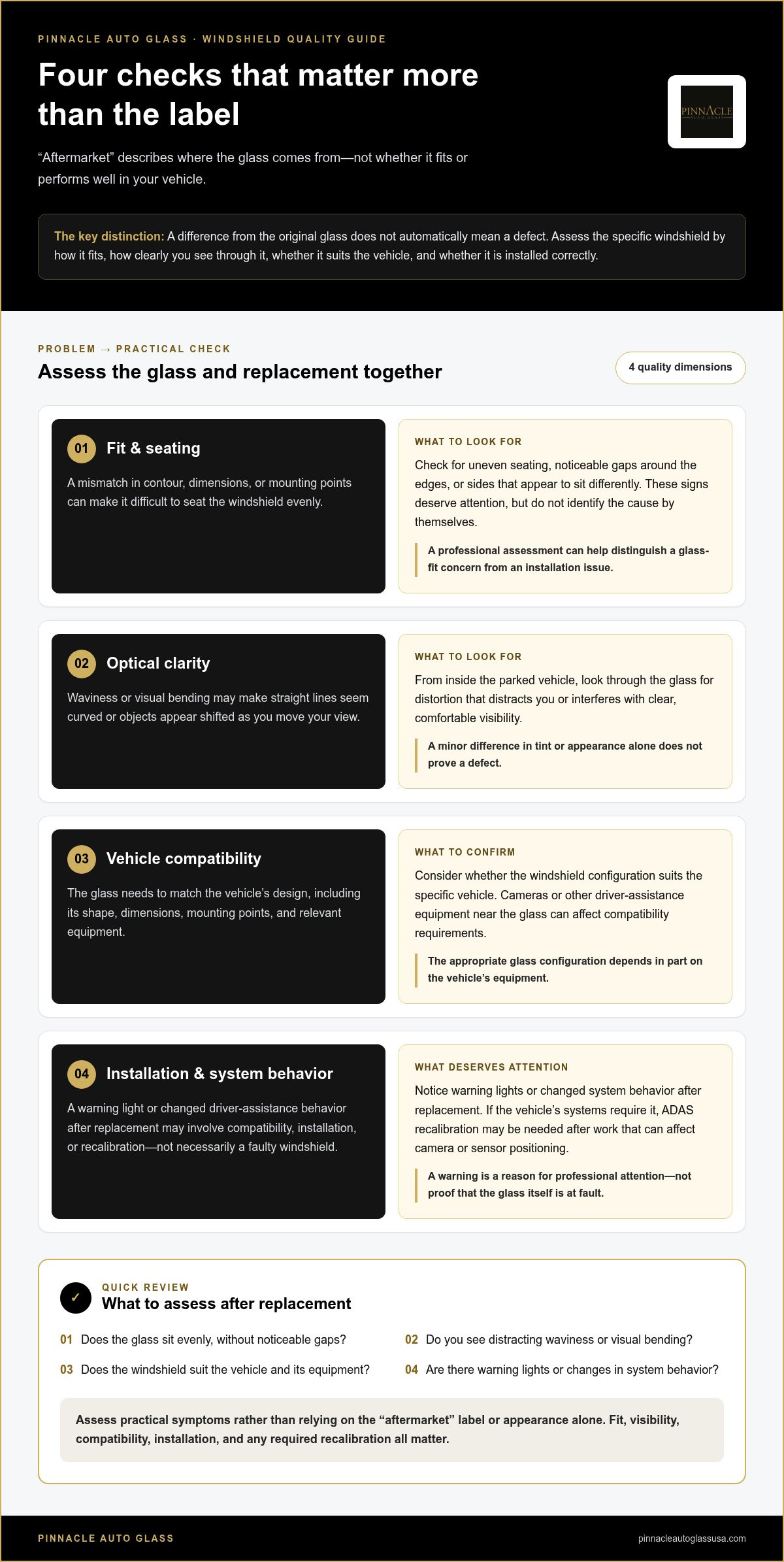
Windshield quality depends on four factors: fit, optical performance, vehicle compatibility, and correct installation. “Aftermarket” describes the glass’s source, not a guaranteed quality level. A replacement may look different from the original without being defective. By contrast, a poor fit, distracting distortion, or installation concern deserves attention. The label alone can’t determine quality. What matters is how the specific glass fits and performs in your vehicle.
What does aftermarket windshield mean?
Aftermarket glass is replacement glass made outside the vehicle manufacturer’s original supply arrangement. The term describes who made or supplied it, not whether it suits a particular vehicle. Replacement glass needs to correspond to the vehicle’s design, including its shape, dimensions, mounting points, and relevant features. Windshields also serve as part of a vehicle’s safety structure, as outlined in this general Windshield overview.
Aftermarket windshields aren’t all made from identical materials or to identical specifications. Don’t assume they’re automatically inferior, or that every option is interchangeable. Suitability depends on whether the glass is intended for your vehicle and can be installed correctly.
Which quality dimensions matter most?
Assess quality by considering specific factors rather than relying on one general impression. Fit is how the glass aligns with the vehicle opening and mounting areas. Optical clarity is how clearly and consistently you can see through it. Surface consistency means the viewing area has no distracting irregularities. Compatibility means the windshield suits the vehicle and any equipment that interacts with it.
- Fit: A mismatch in contour or dimensions can make it difficult to seat the glass correctly. Mounting points also need to align with the vehicle’s design.
- Optical performance: Look for waviness, visual bending, or distortion that distracts you or makes objects appear shifted as you look through the glass.
- Surface consistency: A change in tint or appearance may be noticeable, but that difference alone doesn’t prove a defect. Consider whether it interferes with clear, comfortable visibility.
- Compatibility: The windshield needs to suit the vehicle. If cameras or other driver-assistance equipment are mounted near the glass, compatibility and any required recalibration also matter.
These factors can overlap. For example, a camera-related warning after replacement doesn’t, by itself, prove the glass is faulty. The cause could involve compatibility, installation, or a system that needs recalibration. Likewise, a difference in appearance isn’t automatically a safety problem. Focus on practical symptoms, such as persistent visual distortion or glass that doesn’t sit evenly. A professional assessment can help identify what needs attention without relying on a visual guess.
That distinction is central to understanding aftermarket windshield quality issues. Possible variation is a reason to assess the actual glass and replacement, not evidence that every aftermarket option has a confirmed defect. Quality depends on how well the selected windshield fits, supports clear visibility, suits the vehicle, and is installed correctly.
How Aftermarket Windshield Fit, Clarity, and Compatibility Affect Quality
A windshield can look right at a glance and still raise concerns if its shape, edges, or mounting points don’t align with the vehicle. A mismatch may make it difficult to seat the glass evenly. Poor seating can leave visible gaps or uneven edges and may affect how the windshield is secured. These signs deserve attention, but they don’t identify the cause on their own. A professional assessment can help distinguish a glass-fit concern from an installation issue.
How can poor fit or optical distortion show up?
After replacement, look at the glass from inside and outside the parked vehicle. Check for uneven seating, noticeable gaps around the edges, or areas that appear to sit differently from one side to the other. Then look through the glass for waviness or visual bending that makes straight lines seem curved or objects appear to shift as you move your view. Distortion that distracts you while driving is a practical reason to seek an assessment.
A minor difference in color or appearance doesn’t automatically mean the windshield is defective or unsafe. What matters is whether the concern affects fit, clear visibility, or vehicle function. Don’t try to diagnose the cause by appearance alone. A professional can assess the glass and installation together.
Why vehicle-specific compatibility matters
Windshield shape and attachment need to suit the specific vehicle design. Contour refers to the glass’s curve and outline; mounting points are areas where components or equipment align with it. If either differs from what the vehicle requires, installation or component alignment may be affected. A vehicle may also have a camera or sensor near the windshield. These features vary by vehicle, so the appropriate glass configuration depends in part on the vehicle’s equipment.
For vehicles with driver-assistance equipment, replacement may also involve recalibration if the vehicle’s systems require it. Recalibration helps align a system after work that may affect camera or sensor positioning. A warning light or changed system behavior after replacement deserves professional attention, but doesn’t prove the glass itself is at fault. The ADAS calibration and auto glass guide explains this relationship in more detail.
Safety requirements are another part of the picture. The Federal Motor Vehicle Safety Standards (FMVSS) No. 205 addresses performance requirements for motor-vehicle glazing. Meeting a glazing standard doesn’t, by itself, establish that a particular windshield fits a particular vehicle or was installed correctly. Fit, clarity, compatibility, and installation each matter.
Windshield quality comes down to fit, optical clarity, vehicle compatibility, and correct installation. If you’re arranging a replacement, professional windshield replacement addresses fit and installation as part of the process.
Aftermarket Windshield Quality Issues: Concerns, Myths, and Warning Signs
Aftermarket windshield quality issues call for a careful, symptom-based assessment, not a verdict based on the word “aftermarket.” That label alone doesn’t prove a windshield is poor quality, just as a particular source doesn’t establish that every part will suit every vehicle. Glass can vary by manufacturer, vehicle application, and specification. Base your assessment on what you can observe and how the windshield performs after installation.
Is every aftermarket windshield lower quality than OEM glass?
No. The aftermarket label identifies a source, not a universal level of quality or performance. Individual products can differ, and suitability depends on the vehicle and the windshield’s specifications. Consider OEM and aftermarket options in context rather than ranking them by label alone. For a broader overview of the distinctions, see this OEM versus aftermarket windshield comparison.
| Common assumption | Careful interpretation |
|---|---|
| “Aftermarket glass is always poor quality.” | The source label doesn’t establish quality. Assess the specific glass, vehicle fit, visibility, and installation. |
| “A visible difference proves the windshield is defective.” | A difference in appearance may be cosmetic. Persistent distortion or an issue that affects visibility deserves assessment. |
| “Wind noise means the glass itself is bad.” | Unusual noise can have more than one possible cause, including how the glass is seated. An inspection is needed to identify the source. |
| “A system warning proves the replacement glass is incompatible.” | A warning indicates a system concern, not its cause. A vehicle-specific assessment can determine whether glass, installation, or recalibration is involved. |
Read claims about vehicle safety standards precisely. Requirements have a defined scope, and a general reference doesn’t diagnose the quality or suitability of one windshield. The National Highway Traffic Safety Administration (NHTSA) provides broader vehicle-safety information, but a specific fit or performance concern still calls for a professional inspection.
Which symptoms deserve a professional assessment?
Pay attention to what happens during normal use. Persistent visual distortion, uneven seating, visible gaps, unusual wind noise after replacement, or changes in driver-assistance system behavior are reasons to seek an assessment. These are warning signs, not a definitive diagnosis. For example, wind noise may relate to how the windshield was installed rather than a manufacturing defect in the glass.
Note when a symptom occurs and where you notice it. Don’t try to identify the cause by comparing labels or relying on assumptions. If visibility seems affected, avoid guessing and arrange a professional assessment. Do the same if a vehicle system behaves differently after glass replacement. An inspection can consider both the glass and installation, then determine whether further work is needed.
How to Assess an Aftermarket Windshield Before and After Replacement
A short, consistent review can help you spot concerns without trying to diagnose the glass or vehicle systems yourself. Start with accurate vehicle details, then observe the windshield after installation under ordinary conditions. Record what you notice and arrange a professional evaluation if a concern persists or affects visibility or system operation.
What should drivers review before replacement?
Start with the vehicle’s identifying details and equipment. The right glass depends on the vehicle application, not just a broad label or a low price. Windshield-mounted cameras, sensors, or other features can affect which configuration is appropriate. A professional windshield replacement safety guide can help explain why replacement involves more than choosing a piece of glass.
What should drivers observe after installation?
Use this checklist in order. It focuses on observations you can make, not technical tests or a diagnosis.
- Confirm vehicle-specific requirements. Make sure the vehicle year, make, and model are identified accurately. Note relevant windshield features or technology so glass selection accounts for the vehicle’s application.
- Review the glass in ordinary light. Look for visible damage or an obvious irregularity. A cosmetic difference alone doesn’t establish a defect, so focus on anything that distracts you or interferes with a clear view.
- Look at the edges and seating. From a safe position, check whether the windshield appears evenly seated. Note visible gaps or edges that seem noticeably uneven. Don’t press on the glass or attempt to adjust it.
- Check your sightlines. From the driver’s seat, observe whether the view through the glass is clear during normal use. Persistent waviness or distortion that makes objects appear shifted is worth documenting.
- Pay attention to changes while driving. Notice unusual wind noise or a change in visibility. If a dashboard alert appears, or a driver-assistance feature behaves differently after replacement, record what happened without trying to determine the cause.
- Document unresolved concerns. Write down when and where a symptom occurs. If it’s safe to do so, take a photo of visible gaps or irregularities while the vehicle is parked. Share these observations during a professional assessment.
These steps can help clarify aftermarket windshield quality issues, but they can’t confirm whether the glass, installation, or vehicle system is responsible. A symptom is useful information, not a diagnosis. If poor seating, visual distortion, or unexpected system behavior continues, arrange a qualified assessment instead of relying on guesswork. If visibility is affected, avoid driving until you can do so safely.
For replacement that accounts for vehicle-specific fit and installation, schedule professional windshield replacement.
How Professional Windshield Replacement Addresses Quality Concerns
Glass selection is only one part of windshield replacement. Correct installation matters too. A suitable windshield must be positioned and secured to match the vehicle, and uneven seating can’t be assessed by judging the glass label alone. Professional replacement focuses on vehicle-specific fit and installation, without assuming that one type of glass is right for every vehicle.
Why installation is part of windshield quality
Even glass intended for a vehicle can present problems if it isn’t installed correctly. The work involves preparing the opening, positioning the windshield, and securing it so it sits as intended. Inaccurate alignment can contribute to visible gaps, uneven edges, or fit concerns. These signs don’t prove what went wrong, but they show why installation should be assessed alongside the glass itself. This guide to auto glass technician safety explains why professional handling matters during replacement.
A professional process takes the vehicle’s specific glass requirements and installation into account. That means considering how the replacement sits in the vehicle, rather than treating the job as a simple swap. If you notice persistent gaps, uneven seating, or visibility concerns after replacement, a professional evaluation can help determine what needs attention. It’s a practical next step, not a reason to assume the glass is defective.
When replacement may involve ADAS recalibration
Some vehicles have cameras or sensors mounted on or near the windshield. Since glass replacement can affect the position or view of this equipment, certain vehicles may require ADAS recalibration as part of the replacement process. The need depends on the vehicle and the systems affected. A warning light or changed driver-assistance behavior deserves attention, but doesn’t identify the cause by itself.
ADAS recalibration helps align affected systems according to the vehicle’s requirements. It isn’t automatically needed for every windshield replacement, so vehicle-specific procedures matter. Pinnacle Auto Glass provides windshield replacement and ADAS recalibration for personal and commercial vehicles, bringing glass work and related vehicle technology into the same service context.
- Fit: The replacement needs to match the vehicle’s design and sit correctly.
- Installation: Proper positioning and securing are part of the outcome, not an afterthought.
- Technology: Cameras or sensors may make recalibration relevant, depending on the vehicle.
These steps address potential aftermarket windshield quality issues without treating every concern as a confirmed defect or promising a particular result. If you need a replacement that accounts for fit, installation, and vehicle technology, schedule professional windshield replacement with Pinnacle Auto Glass.
Make Your Next Windshield Decision With Confidence
Don’t let the aftermarket label make the decision for you. Focus on whether the replacement suits your vehicle and whether concerns are addressed through a professional process. If you’ve noticed a persistent issue, clear observations can help guide the next step without assuming its cause. That turns uncertainty about aftermarket windshield quality issues into a practical plan.
Pinnacle Auto Glass provides windshield replacement and repair for personal and commercial vehicles, with ADAS recalibration as part of its auto glass services. This allows you to address glass needs alongside vehicle technology considerations that may apply to your replacement.
Schedule professional windshield replacement with Pinnacle Auto Glass for a replacement focused on your vehicle’s needs.
Frequently Asked Questions
Is an aftermarket windshield safe for my vehicle?
An aftermarket windshield may be suitable if it’s selected for your vehicle and installed correctly. The label alone can’t determine safety. Give the replacement professional accurate vehicle details, including the year, make, model, and any windshield-mounted features. If your vehicle’s owner information specifies requirements for replacement glass or driver-assistance systems, include those details in the discussion. Don’t treat a general claim about aftermarket glass as proof that a particular windshield is right for your vehicle.
Can an aftermarket windshield cause blurry or distorted vision?
Yes, a windshield can create distracting distortion, though a blurry view can also come from residue or smudges on the glass. Clean the inside and outside surfaces before judging whether the problem persists. Notice whether straight road markings or nearby objects appear warped through a particular area. If vision remains unclear, especially in the driver’s direct sightline, don’t guess at the cause. Arrange a professional assessment before relying on the vehicle.
How can I tell if my replacement windshield fits correctly?
A visual check can identify concerns, but it can’t technically confirm the installation. From outside the parked vehicle, look for trim that appears displaced, an edge that sits noticeably unevenly, or a gap that wasn’t present before replacement. Inside, check that the glass doesn’t obstruct your normal view. Take clear photos of anything concerning and note when you first noticed it. Have unresolved fit concerns professionally assessed rather than pressing or adjusting the glass yourself.
What happens if an aftermarket windshield causes wind noise?
Unusual wind noise after replacement deserves attention, but it doesn’t prove the glass itself is defective. The sound may relate to how the windshield or surrounding trim is seated, among other possible causes. Note when the noise occurs, such as during ordinary highway driving, and whether it seems to come from one side. Share those observations during an inspection. Don’t try to seal gaps or alter trim yourself, since that won’t establish the source.
Can aftermarket glass affect my vehicle’s cameras or driver-assistance systems?
It can matter if your vehicle has a camera or sensor positioned at or near the windshield. Depending on the vehicle design, the replacement glass and its fit may affect the equipment’s view or alignment. If a system warning appears or a feature behaves differently after replacement, record the alert and the affected function. Don’t assume the glass is the cause or rely on the system as usual until the concern has been professionally assessed.
Does every windshield replacement require ADAS recalibration?
No. Recalibration needs depend on the vehicle and the driver-assistance systems affected by the replacement. A vehicle without relevant windshield-associated equipment may not need the same procedure as one with a forward-facing camera. Vehicle-specific service information helps determine what applies. If your vehicle has ADAS, share that information during replacement planning and report any warning or change in system behavior afterward. A professional can assess whether recalibration is required for that vehicle.
Is aftermarket windshield quality the same across all manufacturers?
No. Quality can vary between manufacturers and vehicle applications, so “aftermarket” isn’t a uniform quality grade. Compare the glass intended for your specific vehicle rather than assuming all replacement options perform alike. If you’re weighing an option, focus on whether its application matches your vehicle and whether it supports clear visibility and proper installation. This is a more useful basis for assessing aftermarket windshield quality issues than relying on broad claims about an entire category.


