
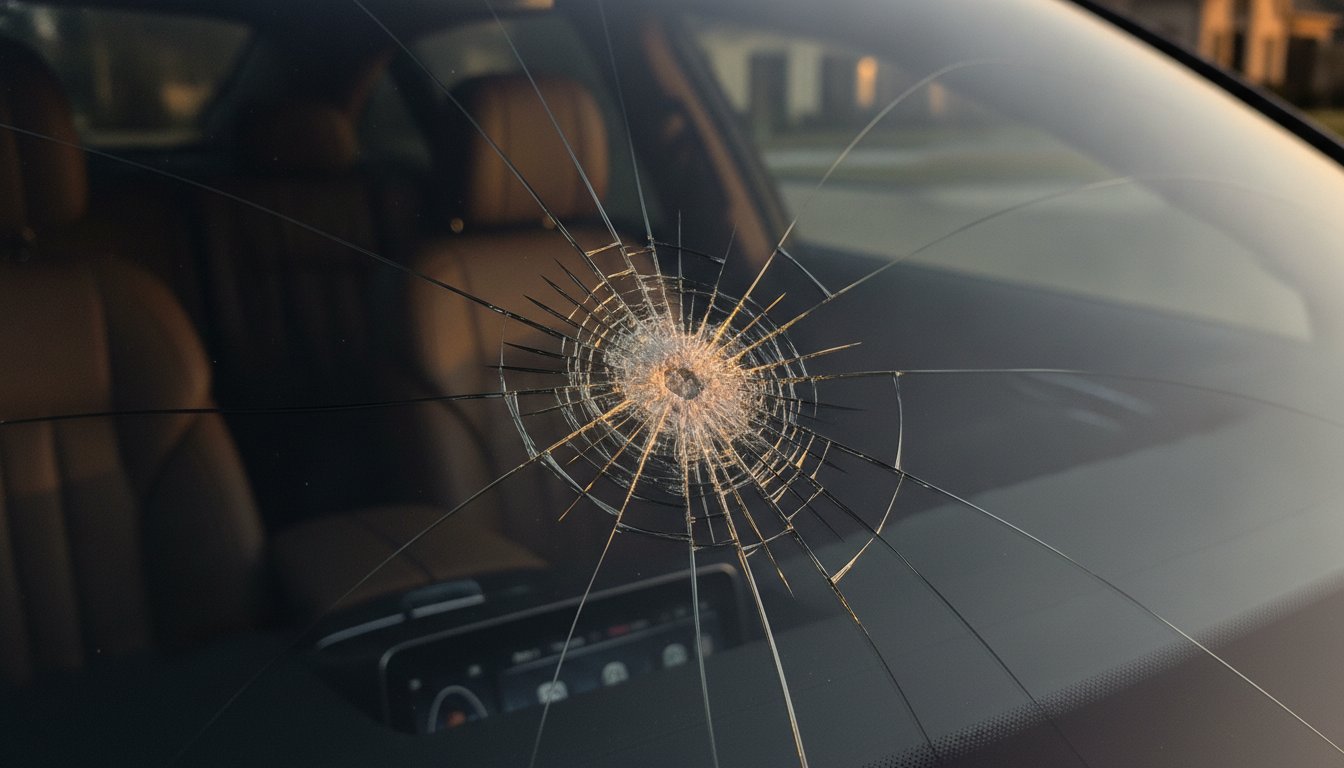
That tiny chip on your glass isn't just a cosmetic flaw; it's a structural compromise to a safety system that provides up to 60% of your vehicle's cabin strength during a rollover. Most drivers feel a surge of anxiety when they see a new mark, fearing the moment it might spiderweb across their line of sight while driving. It's common to feel uncertain about whether insurance will cover the cost or if you're looking at a total replacement. Understanding the different types of windshield damage is the first step in maintaining your vehicle's safety and value.
We'll help you identify exactly what's on your glass and clarify when a professional repair is a safe option versus when a full replacement is mandatory. This guide breaks down industry standards like the ROLAGS 002-2022 to ensure you know the safety risks involved with every crack and chip. You'll get a clear look at how damage affects modern safety sensors and what the logical next steps are for a reliable fix. We'll move quickly through the technical details so you can restore your car's structural integrity and get back on the road with total confidence.
Key Takeaways
- Learn the difference between laminated and tempered glass to understand why windshields require specific repair techniques.
- Identify various types of windshield damage, including bullseyes and star breaks, to assess the immediate risk to your vehicle.
- Understand why cracks near the perimeter or those caused by temperature changes are more likely to compromise structural integrity.
- Discover how glass damage affects ADAS technology and why recalibration is essential for maintaining safety features.
- Use the "3-stack rule" to determine if your glass damage is eligible for a quick repair or if a full replacement is necessary.
Understanding Automotive Glass Anatomy and Damage Categories
Your vehicle's windshield is a sophisticated piece of safety equipment. Unlike side windows, which typically use tempered glass designed to shatter into small chunks, a windshield is made of laminated safety glass. This construction involves a "sandwich" of two glass sheets bonded together by a clear plastic interlayer. This design ensures that if the glass breaks, the pieces remain adhered to the plastic rather than flying into the cabin. Most types of windshield damage originate from the failure of the outer glass layer while the inner layer and plastic core remain intact.
Laminated Glass: Your Vehicles Structural Backbone
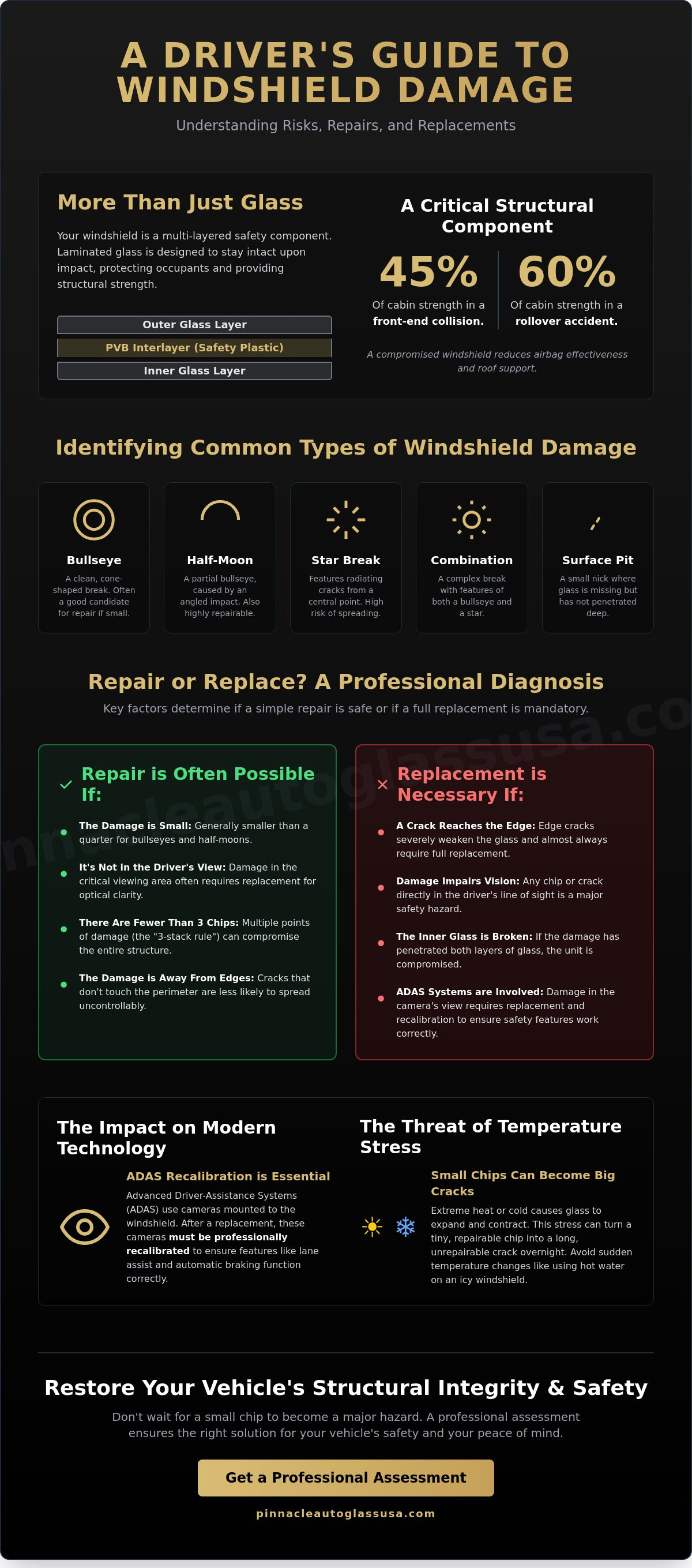
The windshield does more than block wind and debris. It serves as a critical safety component, providing up to 45% of the vehicle's structural integrity in a front-end collision. In a rollover accident, this contribution can reach 60%. The Polyvinyl Butyral (PVB) interlayer acts as a tough, flexible adhesive that absorbs energy during an impact and prevents the glass from shattering into dangerous shards. When one layer of the glass is damaged, it compromises the strength of the entire unit. This weakness reduces the effectiveness of the roof support and can even affect how airbags deploy during an accident.
The Mechanics of a Windshield Break
Glass damage is physics. When a stone strikes the glass, it creates a high-pressure compression zone at the point of impact. Simultaneously, a tension zone forms on the underside of the outer glass layer. If the force is strong enough, the glass snaps at the tension point, creating a void or crack. Understanding the distinction between surface issues and structural threats is vital for driver safety.
- Surface Pits: These are small nicks where a tiny piece of glass is missing but the laminate layer isn't reached.
- Impact Chips: These breaks penetrate the outer layer, creating air pockets or visible "legs" that can spread.
- Stress Cracks: These breaks occur without an impact, often appearing at the edges due to extreme temperature fluctuations.
Temperature changes everything. Glass expands in the heat and contracts in the cold. These microscopic movements put immense pressure on existing types of windshield damage, often causing a small chip to "run" into a long crack across the entire surface. Rapid changes, like blasting the AC on a hot day or using boiling water to de-ice a frozen shield, are common catalysts for glass failure. Professional assessment is the only way to determine if the tension in the glass has reached a critical breaking point.
Common Types of Windshield Chips and Impact Breaks
Impact damage occurs when a hard object strikes the outer layer of glass. This force creates a void between the glass and the plastic interlayer. Understanding the specific types of windshield damage on your vehicle helps determine if a repair is possible. Most impact breaks fall into five distinct categories:
- Bullseye: A circular, cone-shaped break with a dark outer ring and a clear center.
- Half-Moon: Similar to a bullseye but only forms a partial circle due to an angled impact.
- Star Break: A series of small cracks radiating from a central impact point.
- Combination Break: A complex area featuring both a bullseye and star-like legs.
- Surface Pit: A small nick where a piece of glass is missing but the laminate layer is not breached.
While some drivers ignore surface pits, they shouldn't be overlooked. These pits can trap dirt and wiper fluid, which eventually weakens the glass or obscures your view. Identifying these breaks early prevents them from evolving into more expensive problems.
Identifying the Bullseye and Half-Moon
The bullseye is the most recognizable form of glass damage. It appears as a dark, circular ring with a clear center where the impact occurred. This type of break is generally clean and contained. A half-moon is its close relative, typically caused by a rock hitting the glass at a steep angle. Both types are often excellent candidates for a professional windshield repair if they are caught quickly. Technicians use the "quarter-size" rule to assess these breaks. If the damage is smaller than a standard quarter and doesn't sit directly in the driver's line of sight, it can usually be filled with resin to restore clarity and strength.
The Volatile Nature of Star Breaks
Star breaks are far more unstable than bullseyes. They consist of a central impact point with several "legs" or tiny cracks branching outward. These legs are highly sensitive to road vibration and pressure. Every time you hit a pothole or drive over a speed bump, the energy travels through the glass and puts stress on those points. This often causes the legs to grow into long, unrepairable cracks within days or even hours. While some small chips are manageable, the Federal Motor Vehicle Safety Standards dictate strict limits on damage size and location to ensure driver visibility and structural safety. To prevent a star break from expanding, avoid slamming your car doors and keep the vehicle out of direct, intense sunlight until a technician can stabilize the break.
Combination breaks are the most difficult to treat. Because they involve multiple types of windshield damage in one spot, the resin must penetrate several different layers of fractured glass. If the damage is deeper than the outer layer or shows signs of crushing, a full replacement is usually the only safe path forward. Acting fast is the best way to keep a small chip from becoming a total loss.
Windshield Cracks: Stress, Edges, and Spreading
Cracks are significantly more volatile than simple chips. While a chip represents a localized break, a crack indicates that the structural tension of the glass has been compromised across a larger area. Understanding the different types of windshield damage involving cracks is vital because their location often dictates whether a repair is even possible. Most cracks fall into three categories: edge cracks, floater cracks, and stress cracks. Each presents unique risks to the driver and the vehicle's safety systems.
One common way to gauge the severity of a crack is the "dollar bill test." If a crack is shorter than a standard dollar bill, it might be a candidate for repair, provided it isn't in a critical area. However, if the crack is longer than six inches, the structural integrity of the laminate is usually too far gone to be safely restored. At this stage, the glass can no longer effectively support the roof or the passenger-side airbag deployment.
Why Edge Cracks Demand Immediate Replacement
Edge cracks are any fractures that start within two inches of the windshield's perimeter or touch the edge of the glass. This area is the most vulnerable part of the windshield because it's where the glass is bonded to the vehicle's frame. According to the Repair of Laminated Auto Glass Standard (ROLAGS), damage in this "tension zone" is rarely suitable for repair. A crack at the edge quickly compromises the airtight seal of the cabin and creates a weak point that can cause the glass to fail entirely during a collision. Most professional safety standards require an immediate windshield replacement for any edge damage to ensure the vehicle remains structurally sound.
Stress Cracks and Temperature Extremes
Unlike other types of windshield damage, a stress crack doesn't require an impact from a rock or debris. You can identify a stress crack by the lack of a visible "pit" or impact point. These cracks usually start at the edge of the glass and are caused by sudden, extreme temperature changes. This phenomenon, known as thermal shock, happens when the glass expands or contracts too quickly for the material to handle.
- Hot Water on Ice: Pouring hot water on a frozen windshield causes the glass to expand rapidly, leading to an immediate snap.
- AC Blasting: Turning the air conditioning to its lowest setting on a 100-degree day creates intense internal tension between the hot exterior and cold interior glass layers.
- Defroster Use: High heat directed at a freezing windshield in the winter can trigger a crack along the bottom edge of the glass.
Floater cracks, by contrast, begin in the middle of the windshield. While they are easier to monitor than edge cracks, they still pose a major risk. Any crack that enters the driver's primary field of vision or the "camera window" used by safety sensors requires professional attention to prevent a total safety system failure.
The Safety and Technology Impact of Glass Damage
Modern vehicles are mobile computer systems. The glass is no longer just a transparent shield; it's a mounting platform for cameras, rain sensors, and head-up displays (HUD). Identifying the specific types of windshield damage on your car is critical because even a tiny chip can disable advanced safety features. When a crack or chip sits in the "camera window" at the top center of the glass, it creates a blind spot for your vehicle's Advanced Driver Assistance Systems (ADAS).
Light refraction is a significant danger with damaged glass. Cracks act like prisms, bending light as it passes through the laminate. This distortion can trick lane-keeping cameras into seeing phantom road markings or cause automatic braking systems to misidentify obstacles. If your vehicle features a head-up display, a simple resin repair may not be sufficient. HUD systems require a specialized interlayer to prevent "ghosting" or double images. A standard repair often disrupts this clarity, making it difficult to read your speed or navigation data safely.
ADAS Recalibration: A Non-Negotiable Safety Step
Any windshield replacement on a modern vehicle must be followed by a system reset. Cameras and sensors are calibrated to the specific thickness and refractive index of the glass. A camera tilt of just one degree can cause your automatic braking system to miscalculate stopping distances by twenty feet or more. This misalignment compromises forward collision warnings and adaptive cruise control. Professional recalibration ensures these digital "eyes" see the road exactly as the manufacturer intended. Ensure your safety systems are functioning correctly by scheduling a professional ADAS recalibration today.
Airbags and Structural Support
The windshield serves as a critical structural component during an accident. It acts as a backstop for the passenger-side airbag. When the airbag deploys, it strikes the glass first before expanding toward the passenger. If the glass is weakened by various types of windshield damage, it may "pop out" or shatter under the pressure of the inflating bag. This failure prevents the airbag from staying in the correct position to protect the occupant.
Structural integrity is equally vital during a rollover. As noted previously, the windshield provides up to 60% of the cabin's strength. A cracked windshield lacks the tension required to support the weight of the vehicle if it turns over. This significantly increases the risk of a roof collapse. Maintaining a pristine windshield is about more than just a clear view; it's about ensuring every safety layer in your car works as a cohesive unit during a crisis.
Professional Diagnosis: When to Repair vs. Replace
Deciding between a quick repair and a full replacement depends on the "3-stack rule." This professional evaluation looks at the size, location, and depth of the fracture. Identifying the specific types of windshield damage is only the first step; you must also determine if the structural tension of the glass is still manageable. While many drivers attempt to use DIY kits from retail stores, these solutions often fail to stabilize the glass. They cannot replicate the vacuum pressure used by professional equipment to remove air and moisture from the tension zone. Once a DIY resin cures incorrectly, it's impossible to redo the fix, often forcing a replacement that could have been avoided.
Delaying a repair is a costly mistake. A small chip can be addressed quickly, but once it spreads into a long crack, the price of the fix increases significantly. If your vehicle is newer, you should also consider insurance regulations. For example, as of 2026, some states like Texas require insurers to authorize OEM glass for vehicles 36 months old or newer. Choosing an expert ensures you receive high-quality materials and that your vehicle remains compliant with the latest safety standards.
The Repairability Checklist
Use this checklist to evaluate your glass. If you answer "no" to any of these points, a full replacement is likely necessary to maintain your safety.
- Size: Is the chip smaller than a standard quarter? Is the crack shorter than six inches?
- Location: Is the damage away from the driver's primary line of sight? Is it at least two inches away from the edge of the glass?
- Depth: Is the damage limited to the outer layer of glass? If you can feel the crack on the inside of the vehicle, the laminate is fully breached.
Next Steps for Your Vehicle
If you discover damage, act quickly to protect the glass. Place a small piece of clear tape over the chip to keep out dirt, moisture, and wiper fluid. This prevents contaminants from clouding the resin during the repair process. Avoid using the defroster or heater on high settings, as sudden temperature shifts can cause the damage to spread instantly.
When scheduling service, consider the technology in your car. While mobile service is convenient for simple chips, an in-shop visit is often better for replacements. Modern calibration requirements for ADAS cameras need the controlled lighting and level surfaces found in a professional facility. For a reliable evaluation, contact Pinnacle Auto Glass for a professional assessment. Addressing various types of windshield damage early is the most effective way to protect your passengers and your investment.
Restore Your Vehicle's Structural Integrity
Windshields are sophisticated safety systems rather than simple glass panels. Throughout this guide, we have explored how specific types of windshield damage compromise structural strength and interfere with critical ADAS sensors. You now understand the essential criteria for the 3-stack rule and the high risks associated with edge cracks or thermal stress. Maintaining these components is vital for the proper deployment of airbags and the structural support of your vehicle's roof during an accident.
Pinnacle Auto Glass provides the technical expertise required to manage these complex safety concerns. We include expert ADAS recalibration with our services to ensure your driver assistance features remain accurate and reliable. Our team offers flexible mobile and in-shop service options to meet your specific needs. As commercial and fleet specialists, we prioritize efficiency and quality for every individual and business client. Don't let a minor chip escalate into a structural failure that puts your passengers at risk.
Take proactive steps to secure your vehicle today. Get a Professional Quote from Pinnacle Auto Glass and receive the reliable service you deserve. Our team is ready to restore your clear view and ensure your safety systems are fully operational for the road ahead.
Frequently Asked Questions
Can I drive with a cracked windshield?
It's unsafe and often illegal to drive with a cracked windshield. In states like California, vehicle codes prohibit operating a car with damage that impairs the driver's vision. Beyond visibility, the glass provides essential structural support for the cabin. Driving with a crack increases the risk of the windshield failing during a collision or rollover. Get a professional assessment immediately to ensure your vehicle remains road-legal and safe for all passengers.
How big of a windshield crack can be repaired?
Most professional technicians can repair chips smaller than a quarter and cracks shorter than six inches. This is often called the "dollar bill test." If the damage is larger or sits directly in the driver's critical field of vision, a full replacement is usually required. Damage that penetrates the inner glass layer or touches the edge of the glass also falls outside the standard repair limits for safety reasons.
Will a small chip in my windshield always turn into a crack?
While not every chip spreads immediately, most will eventually turn into a crack due to constant road stress. Factors like road vibration, potholes, and temperature fluctuations put pressure on these weak points. Identifying different types of windshield damage early allows you to stabilize the glass with resin before the damage expands. Proactive repair is always more cost-effective than waiting for a small chip to spiderweb across the glass.
Does insurance cover all types of windshield damage?
Most comprehensive auto insurance policies cover windshield repair and replacement. Some states even mandate that insurers cover glass repair with no deductible. However, coverage for Original Equipment Manufacturer (OEM) glass or ADAS recalibration depends on your specific policy and local regulations. Always check your policy details or consult with a professional glass provider to understand how your insurance applies to various types of windshield damage.
Is it safe to use a DIY windshield repair kit?
DIY kits are not recommended for permanent structural repairs. These retail products lack the high-grade resins and professional vacuum equipment needed to remove air from the break. If the resin cures incorrectly, it leaves the crack visible and structurally weak. Most importantly, once a DIY attempt fails, a professional cannot redo the repair. This often results in an unnecessary and more expensive full windshield replacement.
How long does a professional windshield repair take?
A professional windshield repair typically takes between 30 and 60 minutes to complete. The process involves cleaning the site, injecting specialized resin, and curing it with UV light. Windshield replacement is a more involved process that usually takes one to two hours, plus additional time for the adhesive to cure safely. If your vehicle requires ADAS recalibration, you should plan for extra time to ensure all safety systems are reset correctly.
What is a stress crack and how do I identify it?
A stress crack is a fracture that occurs without any physical impact from a rock or debris. You can identify it by the lack of a visible "pit" or impact point at the start of the crack. These usually begin at the very edge of the windshield where the glass meets the frame. They are caused by extreme temperature changes that create intense internal tension within the laminated glass layers during thermal shock.
Why do cracks spread faster in the winter or summer?
Cracks spread faster during seasonal extremes because of thermal expansion and contraction. In the summer, intense heat causes the glass to expand while the AC cools the interior, creating tension. In the winter, the glass contracts in the cold. These rapid changes put immense pressure on existing cracks, causing them to "run" across the surface. Keeping your vehicle in a garage or shaded area can help slow this process until you get a fix.


