
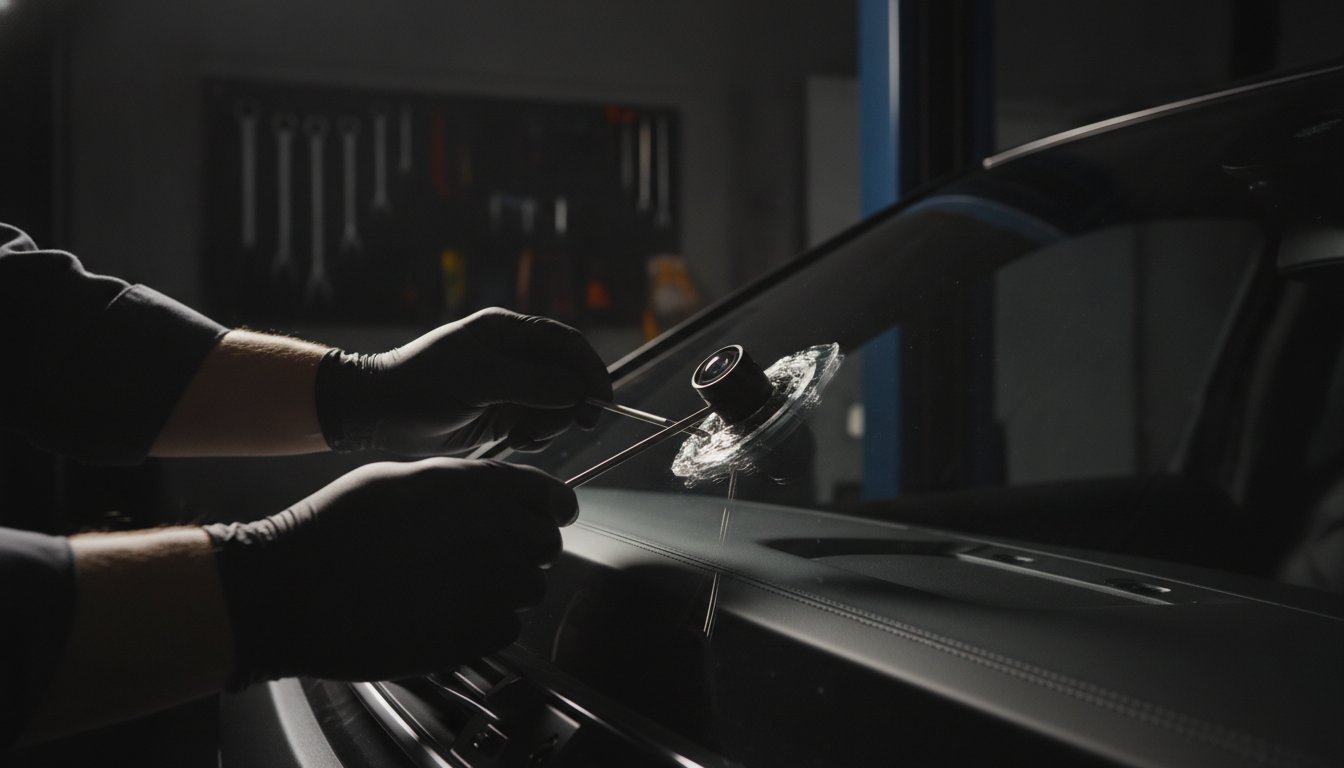
Did you know that as of 2026, an estimated 88% of vehicles requiring ADAS recalibration after a repair never actually receive it? When you need a windshield replacement with rain sensor, it isn't just about the glass anymore. It's about ensuring your vehicle's safety systems still communicate correctly. You likely worry about hidden part markups or whether your wipers will actually work when the next storm hits. We understand that modern tech can feel like a hurdle when you just want your car back on the road.
This guide explains how to manage your windshield replacement with rain sensor without overpaying for unnecessary extras. You'll learn the difference between static and dynamic calibration and why professional service is the only way to guarantee your safety tech functions as intended. We also cover recent regulations in states like New York and Arizona that protect you during the repair process. By the end, you'll have a clear path to a successful installation where every sensor works perfectly.
Key Takeaways
- Understand how infrared technology and pre-mounted brackets dictate the specific glass requirements for your vehicle.
- Save on unnecessary parts by learning why the sensor unit is often reusable while the sacrificial gel pad must always be replaced.
- Navigate a windshield replacement with rain sensor by following a professional diagnostic and cleaning process to ensure immediate functionality.
- Compare the specialized expertise and efficient pricing models of independent glass shops against traditional dealership service centers.
- Prioritize comprehensive ADAS recalibration to maintain the accuracy and reliability of your vehicle's automated safety features.
Windshield Replacement with Rain Sensors: What You Need to Know
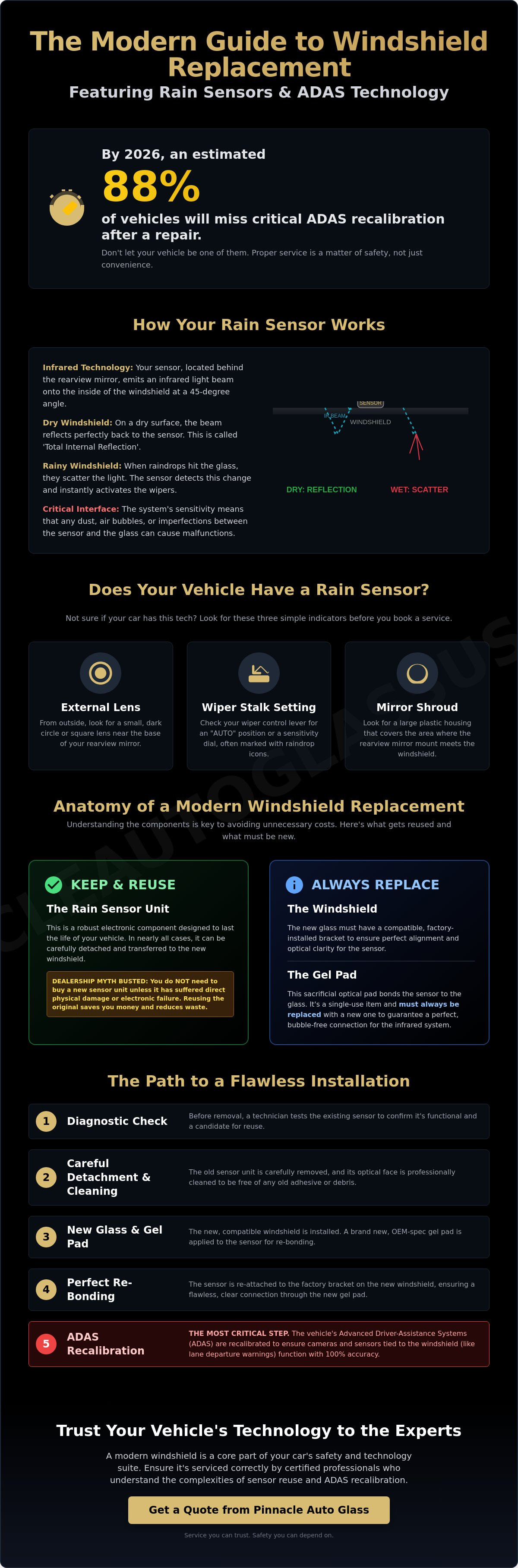
A rain sensor isn't just a simple convenience; it's a sophisticated piece of safety equipment. This infrared technology sits behind your rearview mirror, monitoring the glass surface for moisture. When you schedule a windshield replacement with rain sensor, the glass itself must be compatible with your vehicle's specific tech suite. Standard windshields lack the specialized infrastructure to support this hardware. Instead, you'll need glass featuring a pre-mounted bracket designed to hold the sensor unit securely against the interior surface.
While the sensor is a sophisticated electronic component, it isn't permanently built into the glass. It's a separate unit that bonds to the windshield using a specialized optical gel pad. During a windshield replacement with rain sensor, a technician must carefully detach the sensor from the old glass and prepare it for the new installation. The new windshield arrives with the mounting bracket already factory-installed to ensure the sensor aligns perfectly with the wiper path. This ensures the optics remain clear and the system responds accurately to changing weather conditions.
How Rain Sensors Work Behind the Glass
The system relies on a principle called total internal reflection. You can learn more about How Rain Sensors Work to understand the physics involved. Essentially, the sensor beams infrared light through the glass at a 45-degree angle. On a dry windshield, this light reflects back to the sensor. When raindrops hit the glass, the light scatters or refracts differently. The sensor detects this change and triggers the wiper motor. Because the system is so sensitive, even tiny air bubbles or dust particles in the bonding material can cause the wipers to malfunction. It requires a perfect, clear interface between the sensor and the glass to operate safely.
Identifying if Your Vehicle Has a Rain-Sensing System
It's easy to check for this technology yourself before you book a service. Many drivers aren't sure if their specific trim level includes these sensors. You can verify your equipment by looking for these three indicators:
- External Lens: Look at the top center of your windshield from the outside. You'll see a small, dark circle or square lens visible through the glass near the mirror base.
- Wiper Stalk Settings: Check the control lever on your steering column. If you see an "Auto" position or a sensitivity dial, often marked with raindrops, your car uses rain-sensing tech.
- Mirror Shroud: Examine the interior rearview mirror. Rain-sensing vehicles typically have a larger plastic housing or shroud that covers the wiring and the sensor unit where it meets the glass.
Does a New Windshield Require a New Rain Sensor?
Many drivers face a common dilemma when booking a windshield replacement with rain sensor. Dealership service departments often suggest that the sensor itself is a single-use component. This is a myth. In the vast majority of cases, the electronic sensor unit remains perfectly functional even after the glass is shattered. You don't need to replace the entire assembly unless the electronics have failed or the unit suffered physical damage during the impact. The hardware is robust and designed to last the life of the vehicle.
Reusing your existing hardware is a standard practice for specialized glass shops. It prevents unnecessary waste and keeps your repair costs manageable. However, successful reuse depends entirely on the condition of the sensor's optical face. If the surface is pitted or the internal circuits are compromised, a new unit becomes mandatory. A qualified technician will always test the system before removal to ensure it's worth transferring to the new glass. This diagnostic step is vital for a seamless transition.
Reusing Your Existing Sensor vs. Buying New
A successful transfer requires two things: functional electronics and a pristine optical surface. If your wipers were working correctly before the glass broke, your sensor is likely a candidate for reuse. Choosing to keep your original hardware is a key part of a professional windshield replacement service. It ensures your car's factory-calibrated electronics stay in place while refreshing the glass around them. This approach maintains the integrity of your safety systems without the high price tag of a brand-new sensor assembly.
Professional technicians prefer using OEM-spec attachment materials during this process. While the sensor unit stays, the bonding agent must be new. This ensures the connection is as strong as the original factory seal. If you aren't sure about the state of your tech, you can request a professional inspection to confirm which parts are salvageable before the work begins.
The Critical Role of the Rain Sensor Gel Pad
The real secret to a functional windshield replacement with rain sensor is the gel pad. This small, transparent disc sits between the sensor lens and the glass. Its only job is to eliminate the air gap. Air is the enemy of infrared light. If even a microscopic bubble exists between the sensor and the windshield, the light will refract incorrectly. This leads to wipers that won't stop, won't start, or move at erratic speeds.
You can't re-glue an old gel pad. Once the sensor is pulled away from the old windshield, the pad loses its optical clarity and structural shape. High-quality replacement glass often comes with a new gel pad pre-installed in the mounting bracket. If it doesn't, your technician must apply a fresh, dust-free pad. Using a new, high-quality interface is the only way to ensure your rain-sensing wipers behave exactly like they did the day you bought the car.
Professional Glass Shops vs. Dealership Quotes
Choosing between a dealership and a specialized glass shop is a critical decision for any vehicle owner. Dealerships often operate with high overhead costs and rigid parts-pricing models. When you book a windshield replacement with rain sensor at a dealer, you might pay a significant premium for the brand name. Independent specialists focus exclusively on automotive glass and integrated technology. This specialization allows for more competitive pricing. It also ensures that the technicians are experts in the specific nuances of sensor-to-glass bonding.
Quality glass is non-negotiable for rain sensor accuracy. We prioritize glass that meets or exceeds OEM standards to ensure the optics are perfectly clear. If the replacement glass has even minor distortions, the sensor's infrared beams will scatter. This leads to the system failure discussed in previous sections. Many independent specialists also provide the convenience of mobile service. This allows you to receive a professional windshield replacement with rain sensor at your home or office without sacrificing technical precision or safety.
Avoiding the Mandatory Replacement Markup
Always request a line-item breakdown before authorizing any work. Some dealerships include a mandatory fee for a brand-new sensor assembly as a standard policy. As established earlier, most sensors are reusable if the electronics are intact. A specialized shop prioritizes saving your existing hardware and only replacing the sacrificial gel pad. This transparency is a hallmark of a high-quality windshield replacement process. It prevents you from overpaying for expensive electronic components that your vehicle doesn't actually need. In states like New York and Arizona, legislation now requires shops to provide these itemized descriptions for ADAS-related work.
Why Expertise Matters More Than Brand Names
Technicians at specialized shops often possess more hands-on experience than general dealership mechanics. A glass specialist performs dozens of replacements in a single week. In contrast, a dealership technician might only handle a few glass jobs a month between oil changes and brake repairs. This high volume leads to a refined skill set. Handling delicate rain sensors and ADAS components requires a steady hand and specific certifications. Specialized shops invest in the same diagnostic tools and recalibration software used by manufacturers. Their primary focus remains the safety and precision of the glass installation. They prioritize the integrity of the safety system over the high-volume sales of general automotive parts.
How to Ensure a Successful Windshield Replacement with Tech
A successful windshield replacement with rain sensor requires more than just high-quality glass. It demands a methodical five-step process to ensure every safety feature remains functional. Technicians follow a specific workflow to avoid common pitfalls like sensor failure or system error codes. Skipping even one of these steps can lead to erratic wiper behavior or disabled safety systems. Precision is the priority throughout the entire installation.
The process begins with a pre-installation diagnostic to confirm the sensor works before any glass is moved. Next, the technician carefully removes the sensor unit and cleans the optical interface to remove any residue. The new glass must feature a factory-installed bracket that matches the sensor's footprint exactly. After applying a new optical gel pad or silicone coupling, the final phase involves post-installation testing and ADAS recalibration. This comprehensive approach guarantees that your vehicle's technology performs exactly as the manufacturer intended.
Pre-Installation Inspection and Sensor Testing
Technicians must test your wipers and rain sensors before removing the old glass. If the system has existing faults, moving it to a new windshield won't fix the problem. We check your vehicle's computer system for error codes that might indicate electronic issues. This step protects you from discovering a pre-existing failure only after the job is finished. We also verify that the mounting bracket on the new glass is identical to the original. Even a millimeter of misalignment can prevent the sensor from seating correctly, leading to air bubbles and system failure.
Post-Installation ADAS Recalibration Requirements
Your rain sensor and forward-facing camera often share the same housing behind the mirror. This means a professional windshield replacement service is never complete without a full system check. When the glass is replaced, the camera's angle changes slightly. This requires recalibration to ensure features like automatic emergency braking and lane-keeping assist work accurately. Depending on your vehicle's requirements, this may involve static calibration in a controlled shop environment or dynamic calibration while driving.
Static calibration typically requires specialized targets and level floors. Dynamic calibration involves driving the vehicle at specific speeds to let the sensors "learn" the road environment. Some vehicles even require dual calibration, combining both methods for maximum safety. Ignoring these requirements is dangerous. A misaligned sensor can cause your car to react incorrectly to road conditions. To ensure your vehicle's safety tech is handled by experts, you should book your tech-integrated glass service with a qualified specialist today.
Trusting Pinnacle Auto Glass for Tech-Integrated Windshields
Pinnacle Auto Glass prioritizes your safety through rigorous technical standards and specialized expertise. We understand that a windshield replacement with rain sensor is a high-stakes repair that affects your vehicle's core safety systems. Our team uses only high-quality glass that meets or exceeds original equipment standards. This ensures your sensors have the optical clarity they need to function without error. You can rely on our nationwide service network for consistent results and professional care.
We focus on customer education and transparency throughout the entire process. You'll always know exactly what your vehicle needs and why recalibration is necessary. Our goal is to simplify the complex technical requirements of modern glass for every driver. By maintaining a high standard for both materials and labor, we provide a reliable solution that keeps your vehicle road-ready. We treat every installation as a critical safety task rather than a simple parts replacement.
Seamless Integration of Glass and Safety Systems
Every rain sensor and camera requires perfect alignment to function safely. Pinnacle ensures that your tech is seated correctly in the factory-spec bracket. We use industry-leading diagnostic tools to verify system health before you leave our shop. This methodical approach protects your vehicle's warranty and keeps integrated safety features like automatic wipers and emergency braking intact. We don't guess; we verify every connection using professional software and hardware. This precision prevents the common system failures and error codes associated with low-quality installations.
Expert Solutions for Modern Vehicle Glass
Modern vehicle glass is more complex than ever before. Choosing certified auto glass specialists is essential for personal and fleet vehicles alike. We have the specific training required to handle tech-heavy windshields across all major makes and models. Whether you drive a luxury sedan or manage a commercial fleet, we provide the technical heavy lifting required for a successful repair. Our specialized focus on glass-integrated technology sets us apart from general repair shops that lack ADAS-specific tools.
Don't settle for a basic installation that leaves your safety tech at risk. Ensure your windshield replacement with rain sensor is handled by professionals who prioritize accuracy and reliability. We are ready to assist you with a solution-oriented approach that values your time and safety. Contact Pinnacle Auto Glass today for a professional consultation and an itemized quote for your vehicle's specific glass needs.
Secure Your Vehicle’s Safety with Professional Glass Integration
Managing a windshield replacement with rain sensor doesn't have to be a source of stress or hidden expenses. You now know that your existing sensor unit is likely reusable and that the secret to success lies in a fresh gel pad and precise recalibration. By choosing a specialized glass partner, you avoid unnecessary dealer markups while ensuring your vehicle's safety features are fully restored. We prioritize technical accuracy so your wipers and safety cameras work exactly as they did before the damage occurred.
Pinnacle Auto Glass provides the expertise needed for these complex, tech-heavy installations. As certified ADAS recalibration specialists with national service coverage, we handle everything from personal cars to extensive fleet and commercial vehicle glass needs. We focus on results and precision so you can drive with confidence in any weather. Our team is ready to simplify the process and ensure your technology remains a reliable safety asset.
Get a Professional Quote for Your Tech-Equipped Windshield Replacement today. We look forward to assisting you with quality service that puts your safety first.
Frequently Asked Questions
Do I need to replace my rain sensor when I get a new windshield?
You typically don't need to replace the entire sensor unit. The electronic component is designed to be reused and transferred to your new glass. Technicians only replace the sensor if it shows signs of electrical failure or if the optical lens is physically damaged. Most installations only require a new sacrificial gel pad to restore full functionality.
How much does a windshield with a rain sensor cost?
The cost depends on your vehicle's make, model, and the complexity of its integrated safety systems. Glass designed for these sensors is more expensive than standard windshields because it requires specialized mounting brackets and higher optical clarity. Because every vehicle has different technical requirements, we recommend requesting an itemized quote to understand your specific costs.
Can I drive my car if the rain sensor is not working after a replacement?
You can still drive your vehicle, but your wipers won't respond automatically to moisture. You'll have to switch to manual wiper controls to clear your view. If the sensor housing also contains a forward-facing camera, your automatic braking or lane-keep assist features might also be disabled. It's best to have the system checked immediately to ensure all safety features are active.
What is a rain sensor gel pad and why do I need a new one?
A gel pad is a transparent interface that bonds the sensor to the windshield. It's a critical part of a windshield replacement with rain sensor because it removes the air gap between the tech and the glass. Without a fresh pad, infrared light scatters and causes the wipers to act erratically. These pads are single-use and must be replaced every time the sensor is moved.
Will my rain-sensing wipers work with an aftermarket windshield?
Your wipers will work perfectly with aftermarket glass as long as the product meets OEM standards. High-quality glass ensures the infrared beams pass through the windshield without distortion. We prioritize glass that matches factory specifications to prevent the "ghost wiping" or delayed responses often seen with low-quality materials. Professional installation is the key to maintaining these factory standards.
How long does it take to replace a windshield with a rain sensor and recalibrate it?
The entire process usually takes between two and four hours. This window includes the physical glass installation, the adhesive curing time, and the necessary ADAS recalibration. Some vehicles require a test drive for dynamic calibration, while others are handled in the shop. We focus on doing the job right rather than rushing through these safety-critical steps.
Is rain sensor recalibration the same as camera recalibration?
They are separate procedures that often happen during the same service appointment. Rain sensor testing confirms the infrared light reflects correctly, while camera recalibration aligns the visual sensors for lane-departure warnings. A windshield replacement with rain sensor often involves a shared housing for both technologies. This makes a comprehensive system check necessary to ensure your vehicle's safety ecosystem is balanced.
Does insurance cover the cost of a new rain sensor if mine is damaged?
Most comprehensive insurance policies cover the glass and any attached safety technology damaged during a loss. This coverage usually extends to the recalibration fees and any necessary replacement parts like the sensor unit or gel pad. You should review your policy or speak with your agent to confirm if you have a deductible for glass-related claims.


