
A new windshield looks perfect to the naked eye, but if the camera behind it is off by just a single millimeter, your emergency braking system could fail when you need it most. You likely chose your modern vehicle for its advanced safety features, so it's frustrating when a simple glass chip leads to a complex, multi-step repair process. It's natural to feel concerned about the technical requirements involved in auto glass ADAS calibration. You want your car back on the road, but you also need to know that every sensor is functioning exactly as the manufacturer intended.
This guide explains why ADAS recalibration is a non-negotiable safety step after every windshield replacement and how it protects your vehicle's most vital systems. We'll break down the difference between static and dynamic processes, explore how new regulations are shaping safety standards, and show you how professional precision restores your peace of mind. You will gain a clear understanding of the calibration process and the confidence that your vehicle’s safety technology is fully restored and ready for the road.
Key Takeaways
- Understand why safety sensors require precise alignment to prevent system failures during critical driving moments.
- Learn why professional auto glass ADAS calibration is a mandatory step for restoring factory safety standards after a windshield replacement.
- Discover how the optical clarity of your replacement glass directly impacts the performance of your vehicle's cameras and sensors.
- Differentiate between static and dynamic calibration methods to understand the specific technical requirements for your vehicle make and model.
- Follow the step-by-step diagnostic and physical repair process that ensures your driver assistance systems are fully operational.
Defining ADAS Calibration in Modern Auto Glass Service
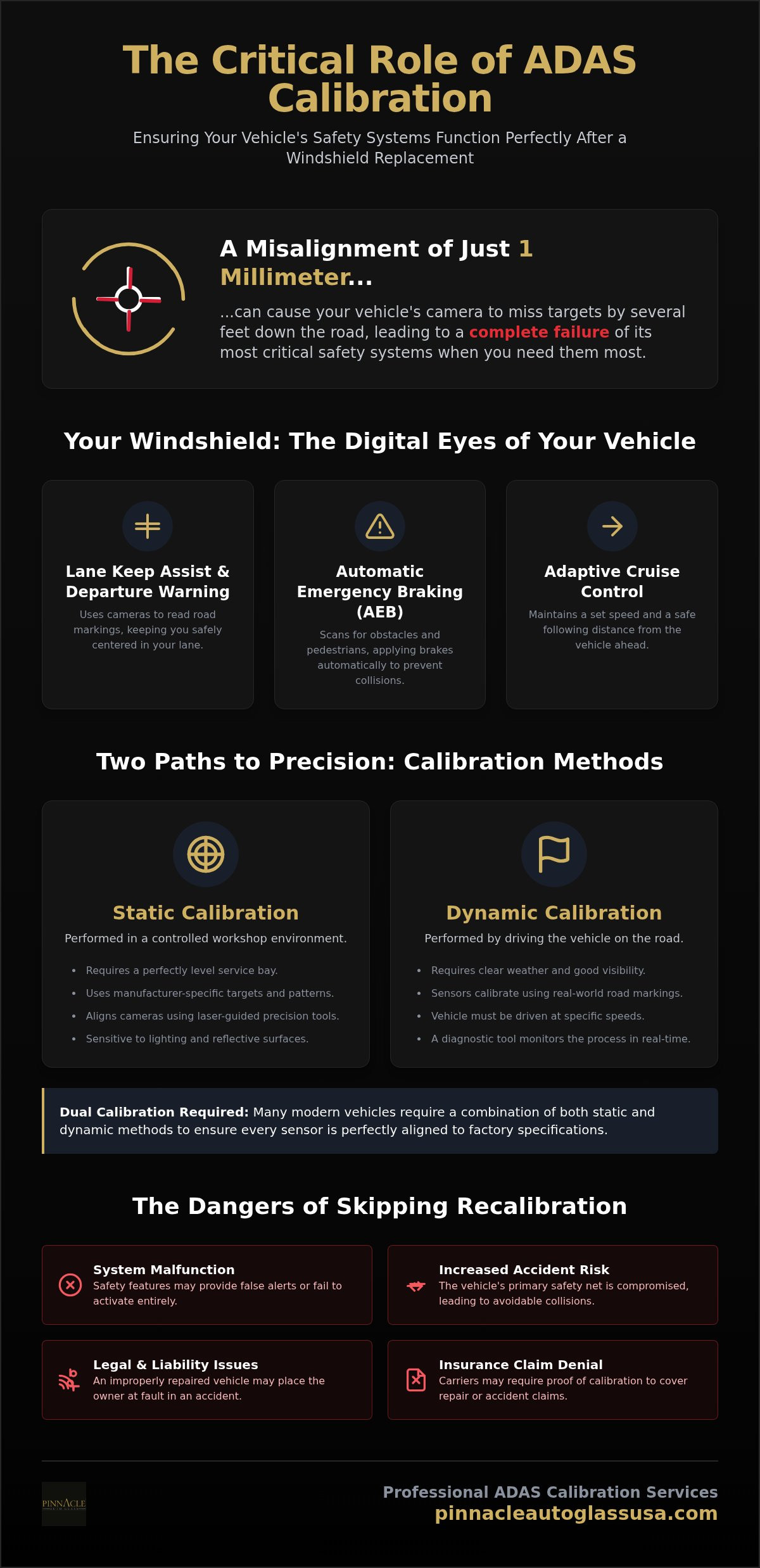
Modern windshields are no longer just a structural barrier against the elements. They serve as the sophisticated housing for Advanced Driver Assistance Systems (ADAS). These systems include vital safety features like lane keep assist, emergency braking, and adaptive cruise control. When a windshield is replaced, the cameras and sensors attached to the glass are physically disturbed. Auto glass ADAS calibration is the technical process of realigning these components to ensure they perceive the road environment with absolute accuracy. Think of ADAS as the 'digital eyes' of your vehicle that require perfect 20/20 vision after glass repair.
Precision is the most critical factor in this process. Even a microscopic shift in a sensor's mounting position can lead to total system failure or dangerous false alerts. If a forward-facing camera is tilted by just a fraction of a degree, its field of vision could be off by several feet once that view is projected 100 yards down the road. This geometric error means your vehicle might fail to detect a hazard or could react to an object that isn't in your path. Because these tolerances are so tight, standard mechanical tools are insufficient. Technicians must use specialized diagnostic software and electronic targeting systems to reset the sensors to factory specifications.
Common ADAS Features Relying on Your Windshield
Most drivers interact with ADAS every time they get behind the wheel. These systems rely on a clear, calibrated view through the glass to function. Common features include:
- Lane Departure Warning (LDW) and Lane Keep Assist (LKA): These systems use cameras to identify road markings. They provide alerts or steering corrections if the vehicle begins to drift without a signal.
- Forward Collision Warning (FCW) and Automatic Emergency Braking (AEB): These features scan the road for obstacles. They provide warnings or automatically apply the brakes to prevent a collision.
- Adaptive Cruise Control and Pedestrian Detection: These sensors maintain a safe following distance from other cars and identify vulnerable road users in your path.
The Risk of Skipping Recalibration
Choosing to skip auto glass ADAS calibration creates significant safety and financial risks. When sensors are misaligned, the vehicle's safety net is essentially broken. This can lead to avoidable accidents if the AEB fails to engage or if the LKA pulls the vehicle in the wrong direction. Beyond physical safety, there are serious liability concerns. If a vehicle is involved in a crash because a safety system was not properly calibrated after a repair, the owner may face legal challenges. Furthermore, insurance companies are increasingly scrutinizing these repairs. Many carriers now require documented proof of calibration to ensure the vehicle meets manufacturer safety standards before they will settle a claim.
Static vs. Dynamic Calibration: Understanding the Technical Requirements
Every vehicle manufacturer sets specific protocols for auto glass ADAS calibration. You can't use a one-size-fits-all approach. Some cars require a stationary setup in a specialized shop, while others need to be driven on the road to reset their sensors. A growing number of luxury and high-tech models actually require a dual calibration process. This combines both methods to ensure every safety feature is fully operational and compliant with factory standards.
The choice between these methods isn't up to the technician; it's dictated by the vehicle's make and model. If a shop attempts the wrong type of calibration, your safety systems might remain inactive or, worse, provide inaccurate data. Understanding these technical differences helps you see why specialized expertise is necessary. If you are unsure which method your vehicle requires, you can consult with a professional technician to ensure your safety systems are handled correctly.
How Static Calibration Works
Static calibration takes place in a highly controlled environment. Technicians use precision laser levels and physical targets mounted on stands to align the vehicle's cameras. This process is incredibly sensitive. The shop floor must be perfectly level, and the lighting must be consistent to prevent shadows from confusing the sensors. Even the patterns on the walls or the presence of reflective objects can interfere with the results.
During the service, the technician connects a diagnostic tool to the car's computer. They input specific measurements, such as ride height and the exact distance of the camera from the targets. The vehicle's software then uses these references to "zero out" its vision. Because of these strict environmental requirements, static calibration is often the most stable way to ensure factory-grade accuracy for systems like lane departure warnings.
The Dynamic Recalibration Process
Dynamic calibration involves a real-world road test. Instead of looking at fixed targets in a shop, the vehicle's software "learns" its surroundings while being driven. The technician must maintain specific speeds on roads with clear lane markings for a set period. This allows the system to identify patterns and calibrate its depth perception and lane-tracking capabilities in a live environment.
External factors play a huge role in the success of a dynamic recalibration. Poor weather, faded road lines, or heavy traffic can prevent the system from completing the "learning" phase. If the drive is interrupted or conditions aren't met, the process must start over. This method is common for many domestic and European brands that rely on motion-based data to verify sensor accuracy.
The Critical Link Between Windshield Quality and Sensor Accuracy
Most drivers assume all glass is created equal. However, for a vehicle equipped with advanced safety technology, the windshield acts as a precision lens. ADAS cameras are mounted directly to the interior surface and look through a specific section of the glass. If that glass contains even minor imperfections, the camera's vision becomes compromised. This makes high-quality materials a prerequisite for successful auto glass ADAS calibration. The windshield is no longer just a piece of glass; it is a vital component of your vehicle’s computer system.
The relationship between the glass and the sensors is incredibly sensitive. Any physical deviation can lead to system errors. Professional technicians focus on the structural integrity of the glass to ensure the cameras have a stable platform. Without a clear and stable foundation, your vehicle's safety features cannot operate at their full potential.
Optical Clarity and Sensor Performance
Cheap, inferior glass often contains subtle waves or microscopic bubbles. While these might be invisible to the human eye, they cause optical distortion for high-definition cameras. This distortion can lead to lane-keep assist errors or delayed emergency braking responses. Quality glass also features a properly designed black ceramic frit. These dots aren't just for looks. They protect the adhesives and sensors from excessive heat and UV degradation. When scheduling a windshield replacement, ensure the glass meets OEM standards to maintain these protective features.
Mounting and Alignment Standards
Stability is just as important as clarity. The camera bracket must be perfectly centered and bonded to the glass using high-grade adhesives. If the glass thickness is inconsistent, the bracket may not sit flush. This creates a risk of sensor vibration while the vehicle is in motion. Even a one-degree tilt or a slight tremor can cause the car's computer to detect a fault and shut down the entire safety system.
Professional installation prevents these issues by ensuring the bracket is positioned exactly where the manufacturer intended. A secure mount is the only way to prevent the "sensor drift" that often occurs with low-quality glass or hurried installations. Every millimeter matters when your car is making split-second decisions based on the data it sees through the glass. This is why auto glass ADAS calibration must always be paired with premium glass and expert mounting techniques.
The Recalibration Process: What to Expect During Your Service
A professional service begins before the old glass is even removed. The technician performs an initial diagnostic scan to identify any pre-existing fault codes in your vehicle's computer system. This ensures that any underlying issues are documented before the physical work starts. Once the baseline is established, the technician performs the windshield replacement using high-quality glass and specialized adhesives. This structural foundation is critical for the technical steps that follow.
After the glass is securely installed, the actual auto glass ADAS calibration takes place. Depending on your vehicle's requirements, this involves setting up static targets in a controlled shop environment or conducting a dynamic road test. In some cases, your car may require both. The technician uses specialized electronic equipment to communicate with your vehicle's onboard computer, resetting the cameras and sensors to their precise factory specifications. A final post-calibration test drive is performed to verify real-world performance, followed by a comprehensive system health report.
Timeline and Preparation for Your Appointment
You should plan for a combined replacement and calibration service to take approximately 2 to 4 hours. This duration ensures the adhesive has adequate time to bond and the technical alignment is performed without haste. To help the process go smoothly, please ensure your vehicle has a full tank of fuel. Accurate weight distribution is essential for sensor alignment. You should also remove any heavy cargo from the trunk or cabin to maintain the vehicle's standard ride height. If you are curious about the specifics of the installation phase, you can learn more about how long does it take to replace a windshield in our detailed guide.
Post-Service Documentation and Safety
Once the auto glass ADAS calibration is complete, you will receive a certificate of completion. This document is a vital record for your safety files and is often required by insurance companies to verify that the vehicle was restored to manufacturer standards. The recalibration data is digitally shared with your vehicle's computer, ensuring all safety systems are synchronized. Before you drive away, the technician will verify that all dashboard warning lights have been cleared. This gives you the confidence that your safety net is fully operational. To ensure your vehicle receives this level of technical precision, book your professional service with Pinnacle Auto Glass today.
Restoring Vehicle Safety with Pinnacle Auto Glass Professional Standards
At Pinnacle Auto Glass, we view every windshield replacement as a safety-critical mission. Modern vehicles are complex machines, and our team treats them with the technical respect they deserve. We prioritize safety by fully integrating auto glass ADAS calibration into our professional glass solutions. This seamless integration means you don't have to visit multiple shops or dealerships to get your car back to factory standards. Our technicians undergo rigorous training to stay current with the latest ADAS requirements for all makes and models. This expertise ensures your safety systems work precisely when you need them most.
Our commitment to quality extends to the materials we use and the methods we follow. We don't just focus on the physical glass; we focus on the entire ecosystem of your vehicle's safety technology. By choosing a specialist who understands the interplay between structural integrity and electronic performance, you protect the long-term value of your vehicle. We act as a dependable partner that simplifies complex technical tasks for every vehicle owner.
Professional Solutions for Personal and Fleet Vehicles
We provide comprehensive glass services for a wide range of clients nationwide. Whether you drive a personal sedan or manage a massive delivery fleet, our standards remain high. Our pinnacle auto glass solutions are specifically designed to handle the unique challenges of commercial truck glass and fleet glass services. For business owners, this integrated approach reduces vehicle downtime and ensures that every driver in your fleet is protected by fully functional safety technology. We manage the technical complexity so you can focus on your daily operations.
Commitment to National Safety Standards
Choosing a specialist is about more than just getting a clear view of the road. It's about liability protection and peace of mind. General repair shops often lack the specialized software or controlled environments required for accurate auto glass ADAS calibration. We strictly follow manufacturer-specific protocols for every service we perform. This adherence to OEM standards protects your investment and ensures your vehicle's safety features are fully restored. We act as your dependable guide through the complexities of automotive maintenance. Our results-oriented approach provides the reliability you expect from a premier service provider.
Our service model combines the reach of a nationwide entity with the focused attention of a local provider. We understand that your time is valuable. That's why we emphasize efficiency without ever compromising on quality. Every recalibration we perform includes a thorough verification process to ensure all sensors are communicating correctly with the vehicle's computer. This methodical flow moves you quickly from a damaged windshield to a fully restored, safe vehicle. Contact Pinnacle Auto Glass today for expert ADAS calibration and windshield service.
Secure Your Vehicle's Future Safety Standards
Modern driving relies on the seamless integration of hardware and software. You've seen how a windshield is now a high-tech component that houses your car's digital eyes. Skipping auto glass ADAS calibration isn't just a technical oversight; it's a direct compromise on your vehicle's safety net. Whether you manage a commercial fleet or drive a personal vehicle, ensuring your cameras and sensors are perfectly aligned is the only way to maintain factory-grade protection.
We bring specialized ADAS recalibration technology and national expertise to every service. Our professional glass solutions are tailored for both commercial and personal vehicles to ensure reliability on every mile of the road. Trusting a seasoned specialist ensures your safety systems work precisely when you need them most. Don't leave your technology to chance when precision is the standard for modern safety.
Schedule your professional ADAS calibration and windshield replacement with Pinnacle Auto Glass. Drive with the confidence that your safety technology is fully restored and ready to protect you.
Frequently Asked Questions
Is ADAS calibration really necessary after a windshield replacement?
ADAS calibration is a non-negotiable safety requirement after every windshield replacement. When a technician removes the old glass, the camera's mounting position is disturbed. Even a tiny misalignment can cause safety features like Automatic Emergency Braking to malfunction. Proper auto glass ADAS calibration ensures your vehicle's safety net is fully operational and aligned with the manufacturer's original specifications. It's the only way to guarantee your car's technology functions as intended.
How much does ADAS calibration typically cost?
The cost of this service depends on the specific technology in your vehicle and the method of calibration required. Static calibrations require specialized shop environments and targets, while dynamic calibrations involve real-world road testing. High-tech or luxury models requiring dual calibration involve more labor and specialized equipment time. Most professionals recommend checking with your service provider for a quote tailored to your vehicle's unique sensor suite and manufacturer requirements.
Can I drive my car before the ADAS is recalibrated?
Driving without a calibrated system is a significant safety risk and is not recommended. Your vehicle's cameras and sensors may provide inaccurate data or fail to engage during a critical moment. This could lead to a situation where your car fails to brake for a pedestrian or drifts out of its lane without warning. It's best to complete the recalibration immediately following the glass installation to ensure total system integrity and passenger safety.
What happens if I don't recalibrate my windshield camera?
Failing to recalibrate your windshield camera can lead to total system failure or dangerous false alerts. Your vehicle might apply the brakes unexpectedly or fail to detect a lane departure. Beyond physical safety, you may face legal liability if an accident occurs due to uncalibrated safety systems. Insurance companies often require proof of calibration to maintain your coverage and settle future claims related to these specific safety features and their performance.
How long does the ADAS calibration process take?
A standard auto glass ADAS calibration typically takes between one and three hours to complete. This timeframe includes the initial diagnostic scan, the physical alignment process, and a final verification test. The duration varies based on whether your car requires a static setup in a controlled environment or a dynamic drive on the road. We recommend planning for a multi-hour appointment to ensure all technical steps are handled with the necessary precision.
Does auto insurance cover the cost of ADAS recalibration?
Most comprehensive insurance policies cover the cost of recalibration when it is part of a windshield replacement claim. Since these systems are essential safety components, insurers recognize the technical necessity of restoring them to factory standards. You should confirm the details with your insurance provider, but professional glass shops usually handle the documentation required to verify that the safety systems were properly reset according to strict manufacturer protocols.
Can any glass shop perform ADAS calibration?
Only specialized shops with the correct diagnostic equipment and trained technicians can perform these services. Standard glass shops may lack the precision targets, laser levels, or software updates needed for modern vehicles. A static calibration requires a perfectly level floor and specific lighting conditions that general repair shops don't typically maintain. Choosing a dedicated specialist ensures your high-tech safety systems are handled by experts who understand the latest industry standards.
Will I get a warning light if my ADAS is not calibrated?
You cannot rely on dashboard warning lights to tell you if your system is misaligned. While some vehicles will trigger a fault code if a sensor is completely disconnected, many systems will continue to operate with incorrect data without alerting the driver. This silent failure is why professional verification is so important. A technician will perform a post-calibration scan to confirm that all systems are communicating correctly and that no hidden errors exist.


