

Did you know your windshield provides up to 60% of your vehicle's structural integrity during a rollover accident? It's far more than just a clear shield. It's a critical safety component that supports the roof and ensures proper airbag deployment. Many drivers find themselves asking, is it safe to drive with cracked windshield damage when the fracture seems minor or sits outside their direct line of sight. It's natural to feel that a small crack is just a cosmetic nuisance you can deal with later.
We understand the uncertainty that comes with a damaged windshield. You might worry about the crack spreading suddenly or wonder if you're breaking federal safety laws. This article explains the structural risks you face and provides a clear checklist to help you decide between a simple repair and a full replacement. You'll learn how a compromised windshield affects passenger safety, what the legal requirements are for your vehicle, and how to handle insurance to protect your vehicle's integrity without the stress.
Key Takeaways
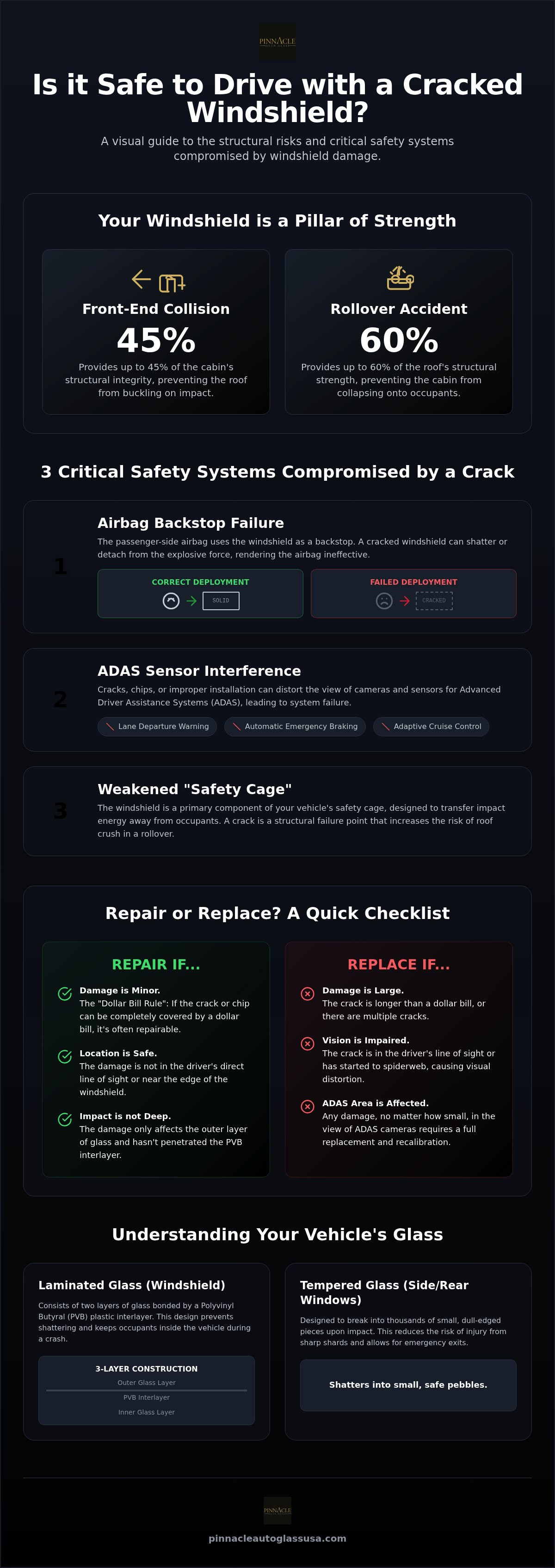
- Understand that your windshield provides up to 45% of the cabin's structural integrity in a front-end collision and up to 60% in a rollover.
- Learn why is it safe to drive with cracked windshield damage only if the fracture is minor and located away from the driver's line of sight or the glass edge.
- Discover the critical role of the windshield as a backstop for passenger-side airbags and how damage can cause safety system failure.
- Identify when modern safety features require professional ADAS recalibration to maintain the accuracy of lane departure and emergency braking systems.
- Master the "Dollar Bill" rule and the importance of Safe Drive-Away Time (SDAT) to ensure your vehicle is legally compliant and structurally sound.
The Structural Role of a Modern Vehicle Windshield
The windshield is a load-bearing safety component engineered to maintain the vehicle's structural stability during an accident. It's not just a transparent barrier; it's a rigid support system that works in tandem with the car's frame. In a front-end collision, the windshield provides up to 45% of the cabin's structural integrity by preventing the roof from buckling and helping the chassis absorb impact energy. These percentages highlight why any damage to the glass is a serious concern for vehicle owners.
During a rollover accident, the role of the glass becomes even more critical. It provides up to 60% of the roof's structural strength, acting as a pillar that prevents the cabin from collapsing onto the passengers. When drivers wonder, is it safe to drive with cracked windshield damage, they must consider that a single crack creates a weak point in this support system. A compromised windshield cannot effectively transfer crash forces, which increases the risk of the "safety cage" failing during a high-impact event.
Laminated Glass vs. Tempered Glass
Modern windshields utilize laminated safety glass to protect occupants. This specialized material consists of two layers of glass bonded together by a Polyvinyl Butyral (PVB) interlayer. This plastic middle layer ensures that if the glass breaks, the shards stay adhered to the plastic rather than shattering into the cabin. Side and rear windows typically use tempered glass, which is designed to break into small, dull pieces to allow for emergency exits.
The PVB interlayer is incredibly strong, but it relies on a perfect bond with the glass layers. Cracks allow moisture and dirt to enter the laminate, which can cause the layers to delaminate over time. Temperature changes also play a major role in damage expansion. Glass expands in the heat and contracts in the cold. These microscopic movements put immense pressure on a crack, often causing it to spread across the entire surface in a matter of hours.
The 'Safety Cage' Engineering Concept
Vehicle manufacturers design cars around a "safety cage" concept, which is a reinforced cabin area meant to remain intact during a crash. The windshield is a primary structural element of this cage. It helps direct the energy from a collision down through the vehicle's frame and away from the occupants. If the glass is cracked, it can't handle these heavy loads. This is why is it safe to drive with cracked windshield glass is a question with a structural "no" at its core; a crack is technically a failure of the safety cage's engineering. Without the full support of the glass, the risk of "roof crush" increases significantly, leaving passengers vulnerable if the vehicle flips.
Three Critical Safety Risks of Driving with a Crack
A crack in your windshield isn't just a visual distraction. It actively compromises the safety systems designed to save your life. Many drivers ask is it safe to drive with cracked windshield damage, but the answer often involves hidden risks. The integrity of your airbags and driver assistance sensors depends entirely on the condition of that glass. If the structural bond is broken, these systems cannot perform as intended during an emergency.
The Airbag Backstop Mechanism
In modern vehicles, the passenger-side airbag is designed to deploy upward. It hits the windshield and bounces back toward the passenger. This engineering relies on the glass acting as a rigid backstop. If the glass is cracked, the explosive force of the airbag can cause the windshield to shatter or detach from the frame. Instead of protecting the occupant, the airbag might deploy out the front of the vehicle. This leaves the passenger without any cushioning during an impact, turning a survivable accident into a tragedy. Deciding is it safe to drive with cracked windshield becomes a matter of life and death when you consider this airbag physics.
ADAS Recalibration and Sensor Interference
Most vehicles built after 2016 include Advanced Driver Assistance Systems (ADAS). These systems use cameras and sensors typically mounted in the "black box" area behind the rearview mirror. A crack or even a small chip in this zone can blind these safety features. It leads to errors in lane departure warnings, automatic emergency braking, and adaptive cruise control. If the camera's view is distorted by a fracture, the car might not "see" a hazard in time to react.
Professional ADAS calibration auto glass services are essential because even a microscopic shift in the glass position can throw off sensor alignment. If your cameras can't see the road clearly through the glass, they can't protect you. This makes immediate replacement a priority for any modern vehicle owner. A compromised sensor is a major liability on the road.
Beyond electronics, a crack creates a physical vulnerability. Wind pressure at highway speeds or hitting a pothole can cause a compromised windshield to fail. The glass loses its ability to resist external pressure, which can lead to a sudden, dangerous spider-web effect while you're driving. If you've noticed a new chip or crack, it's best to have an expert from Pinnacle Auto Glass inspect the damage before it escalates into a major safety failure.
Legal Consequences and Visibility Hazards
Beyond the structural risks discussed in previous sections, there are immediate legal and optical dangers to consider. Many drivers wonder is it safe to drive with cracked windshield glass if the damage seems small. From a law enforcement perspective, the answer is often no. Officers prioritize road safety, and a damaged windshield is a visible red flag that suggests a vehicle may be unfit for the road. Understanding the specific regulations can save you from unexpected fines and hazardous driving conditions.
Understanding Obstruction Laws
Federal safety regulations provide strict guidelines for vehicle glass to ensure driver clarity. According to federal law, you cannot legally drive if a crack or chip is larger than 3/4 inch in diameter. Furthermore, the law prohibits driving with two cracks located within three inches of each other or any intersecting cracks. If any damage sits directly in the driver's line of sight, it constitutes a clear violation. These rules exist because even a small fracture can distract the eye or hide a developing hazard.
State-level enforcement often mirrors these federal standards but can include additional specific criteria. Many jurisdictions empower officers to issue a citation if a crack is in the driver's direct line of sight. Law enforcement considers these issues safety violations rather than cosmetic flaws. A compromised windshield often leads to failed vehicle inspections and mandatory repair orders. Most regulations focus on the "critical area," which is the space covered by the sweep of the windshield wipers. Damage in this zone is almost always grounds for a ticket because it directly interferes with your primary field of vision.
Night Driving and Light Refraction
Visibility hazards become significantly worse after sunset. Driving at night with a crack introduces a dangerous prismatic effect. When light from oncoming headlights or streetlamps hits the fractured glass, it scatters in multiple directions. This creates a "starburst" effect that can momentarily blind the driver. These light refractions create a literal blind spot that can easily mask a pedestrian in a crosswalk or a vehicle in an adjacent lane. The crack acts as a prism, bending light in ways that obscure road signs and lane markings.
Rainy conditions exacerbate these optical issues. Water fills the crack and changes how light passes through the glass, which increases visual distortion. The combination of glare and physical obstruction makes it difficult to maintain a clear view of the road ahead. Is it safe to drive with cracked windshield damage during a storm? The answer is a definitive no, as the loss of optical clarity increases your reaction time. Professional windshield replacement is the only way to restore the perfect transparency required for safe navigation in all lighting and weather conditions.
Repair vs. Replacement: When Is It Too Late?
Determining if your vehicle is roadworthy requires a realistic assessment of the glass damage. While a tiny chip might seem harmless, its size and location dictate the correct course of action. Most technicians use the "Dollar Bill" rule as a baseline. If a crack is longer than six inches, which is roughly the length of a dollar bill, the structural bond is likely too compromised for a simple fix. Similarly, a chip with a diameter larger than a quarter typically necessitates a full replacement to ensure the glass can still withstand impact pressure.
Depth and contamination also play critical roles in the success of a restoration. If dirt, oil, or wiper fluid enters the fracture, it prevents the repair resin from bonding correctly to the PVB interlayer. This leaves a permanent visual blemish and a structural weak point. For this reason, professional technicians recommend addressing damage immediately before environmental debris ruins the chance of a successful repair. Is it safe to drive with cracked windshield glass that has been filled with road grime? Usually, the answer is no, as the repair will likely fail under stress.
The Limits of Professional Windshield Repair
A windshield repair is a fast, cost-effective way to stop damage from spreading. This process involves injecting a specialized resin into the chip to restore clarity and strength. It is a viable and safe option for small bullseyes or star breaks that haven't yet branched out. However, you should avoid DIY repair kits found in retail stores. These products often lack the professional vacuum pressure and high-grade resins required to restore structural integrity. A failed DIY attempt often results in a permanent mess that forces a total replacement.
Signs You Need a Full Replacement
Certain types of damage leave no room for repair. If you are questioning is it safe to drive with cracked windshield glass that reaches the outer edge, the structural answer is a firm no. Edge cracks compromise the seal between the glass and the vehicle frame, making the windshield prone to detaching during an accident. You need a full replacement if the following conditions are present:
- The damage penetrates both the inner and outer layers of the laminated glass.
- The crack has branched out into a "spider-web" or "starburst" pattern.
- The fracture is located directly over ADAS cameras or safety sensors.
- The damage is in the driver's direct line of sight, creating an illegal obstruction.
If your damage meets any of these criteria, continuing to drive is a significant safety risk. Contact Pinnacle Auto Glass today to schedule a professional replacement and ensure your vehicle meets all safety and structural standards.
Ensuring a Safe Professional Restoration
When structural damage occurs, a professional windshield replacement is the only way to restore your vehicle's safety cage. Many owners wonder is it safe to drive with cracked windshield damage after a quick mobile fix. The answer depends entirely on the quality of the materials and the precision of the installation. Using OEM-equivalent glass ensures the replacement matches the original manufacturer's specifications for thickness, strength, and curvature. High-grade adhesives are equally important, as they provide the bond that keeps the glass attached to the frame during a collision.
Safe Drive-Away Time (SDAT) is a critical safety standard that drivers must respect. Urethane adhesives require a specific curing period to reach their full strength. If you drive the vehicle before this bond is set, the windshield can shift or fail to support the roof in a rollover. Most professional installations require at least 60 minutes of stationary curing time. Ignoring this window compromises the entire restoration and puts passengers at risk. A quality service provider will always inform you of the exact time your vehicle is safe to operate.
The Role of Certified Technicians
Proper installation requires more than just placing glass into a frame. Certified auto glass technicians follow a methodical process to ensure a permanent bond. This includes thorough cleaning of the pinchweld and applying specialized primers to prevent rust and leaks. Improperly installed glass can lead to air whistles, water damage, and structural failure. A certified expert ensures that every component is handled with the precision required for modern safety standards, providing peace of mind that the glass won't fail when you need it most.
Post-Installation Safety Checklist
Modern vehicles require an additional layer of care after the glass is set. If your car is equipped with driver assistance features, ADAS recalibration is a mandatory step. This process aligns the cameras and sensors with the new glass to ensure features like lane-keep assist and emergency braking function accurately. A professional service provider will verify these systems before returning the vehicle to you.
Owners should also perform a quick visual and auditory check. Listen for "whistling" sounds at highway speeds, which indicate a gap in the seal. Dealing with insurance is the final step in the restoration process. Many comprehensive policies cover windshield replacement because it's considered a safety-critical repair. A reputable service provider simplifies this by coordinating with your insurer to ensure the vehicle is restored to factory standards. Pinnacle Auto Glass maintains these high standards by combining national expertise with a focus on safety-first installation, ensuring your vehicle remains a dependable safety cage on the road.
Restore Your Vehicle's Safety Standards Today
Your windshield is a sophisticated safety device that provides up to 60% of your cabin's structural strength during a rollover. It's the primary backstop for your airbags and the literal lens for your vehicle's driver assistance technology. When you consider is it safe to drive with cracked windshield, remember that even a minor fracture represents a failure in your car's protective safety cage. Prioritizing a professional restoration ensures that your visibility remains clear and your structural integrity stays intact.
Pinnacle Auto Glass is dedicated to maintaining the highest safety-first installation standards for every client. We offer expert ADAS recalibration to keep your sensors precise and provide comprehensive professional fleet and commercial services for businesses of all sizes. Our team is ready to help you navigate insurance claims and get you back on the road with confidence. Don't wait for a small crack to compromise your safety during an emergency.
Get a Professional Quote for Your Windshield Replacement and ensure your vehicle is ready for the road ahead. Your safety is our top priority.
Frequently Asked Questions
Can a cracked windshield shatter while I am driving?
A modern windshield won't shatter into sharp shards because of its laminated construction. The plastic interlayer holds the glass together even when it's severely damaged. However, a crack can spider-web or expand across your entire field of vision in seconds. Many drivers ask is it safe to drive with cracked windshield glass when the damage seems minor, but the risk of sudden expansion is real. Sudden temperature shifts or road vibrations can cause the glass to fail instantly.
Is it illegal to drive with a cracked windshield in most states?
Driving with significant glass damage is often illegal under both federal and state regulations. Federal law prohibits driving with a crack larger than 3/4 inch in diameter or multiple cracks within three inches of each other. Many states also issue citations if the damage is located in the critical area covered by windshield wipers. Law enforcement considers this a safety violation because it compromises the driver's ability to see hazards clearly.
Will a small crack in my windshield fail an inspection?
Yes, a crack will likely cause your vehicle to fail a safety inspection if it sits in the driver's line of sight. Inspectors check for any obstructions that could hinder your reaction time or hide pedestrians. Even small chips might fail if they are located in the wiper sweep area or exceed federal size limits. It's best to address these issues before your inspection date to avoid mandatory repair orders or fines from local authorities.
How much does it cost to replace a windshield without insurance?
The cost to replace a windshield varies significantly depending on your vehicle's make, model, and technology. Standard replacements for older cars are generally more affordable than modern vehicles equipped with Advanced Driver Assistance Systems (ADAS). Because these safety systems require professional recalibration after the glass is installed, the total expense reflects both the specialized glass and the technical labor required. Luxury vehicles with heads-up displays also fall into a higher price bracket for replacement services.
Can I use a DIY kit to fix a long crack in my windshield?
DIY kits are generally ineffective for long cracks and are only intended for minor chips the size of a quarter. These retail products lack the professional-grade resin and vacuum pressure equipment needed to fully bridge a fracture. Attempting a DIY fix on a long crack often leaves air pockets and structural weak points. This failure makes it impossible for a professional to repair the glass later, which forces you into a full replacement that could have been avoided.
What happens if I don't recalibrate my car's camera after a glass replacement?
Skipping recalibration after a glass replacement is a major safety risk for modern vehicles. Cameras mounted behind the windshield control features like lane departure warnings and automatic emergency braking. If these sensors are not precisely aligned with the new glass, they can provide false alerts or fail to trigger during a collision. Professional recalibration ensures these life-saving systems function exactly as the manufacturer intended, protecting you and your passengers from avoidable accidents on the road.
Will my car's insurance cover a cracked windshield replacement?
Most comprehensive insurance policies cover the cost of windshield repair or replacement because it is a critical safety component. Depending on your specific policy and state laws, you may be eligible for a zero-deductible replacement. Insurers often waive the deductible for repairs to encourage drivers to fix small chips before they turn into large cracks. It is always a good idea to check your coverage details with your agent before scheduling your professional glass service.
How long can I wait before a chip becomes a crack?
A small chip can turn into a major crack at any moment, often without warning. Factors like hitting a pothole, driving on a gravel road, or even using your car's defroster can cause the damage to spread instantly. Once dirt and moisture enter the chip, the glass becomes much harder to repair successfully. To avoid the question of is it safe to drive with cracked windshield, you should have chips repaired as soon as they occur.


