

A cracked windshield can turn an ordinary drive into a traffic stop. Yes, getting a ticket for a cracked windshield is possible, but the risk often depends on where the damage is and whether it interferes with the driver’s view. A small chip and a spreading crack across your sightline may be treated differently.
Windshield rules and enforcement vary by jurisdiction. A rule that applies in one place may not apply in another, so check current official motor vehicle or law enforcement guidance for the requirements that affect your vehicle and the roads where you’re driving.
This guide explains what can affect ticket risk, how to verify local rules, and what to do if an officer issues a citation. It also covers why damage that could obstruct your view or worsen deserves attention. A glass professional can assess whether repair or replacement may be appropriate for the damage and vehicle. If you receive a ticket, read its instructions and confirm any deadlines with the issuing agency or court. This article offers general information, not legal advice.
Key Takeaways
- Getting a ticket for a cracked windshield isn’t automatic. The damage’s location and effect on visibility can influence how it’s treated.
- Don’t use crack length alone to decide whether your windshield meets local requirements. Check current official guidance for the jurisdiction where you’re driving.
- If you receive a citation, photograph the damage, read the notice carefully, and confirm response steps and deadlines with the issuing agency or court.
- A glass professional can assess the damage and advise whether windshield repair or replacement may be appropriate for your vehicle.
Can You Get a Ticket for a Cracked Windshield? The General Answer
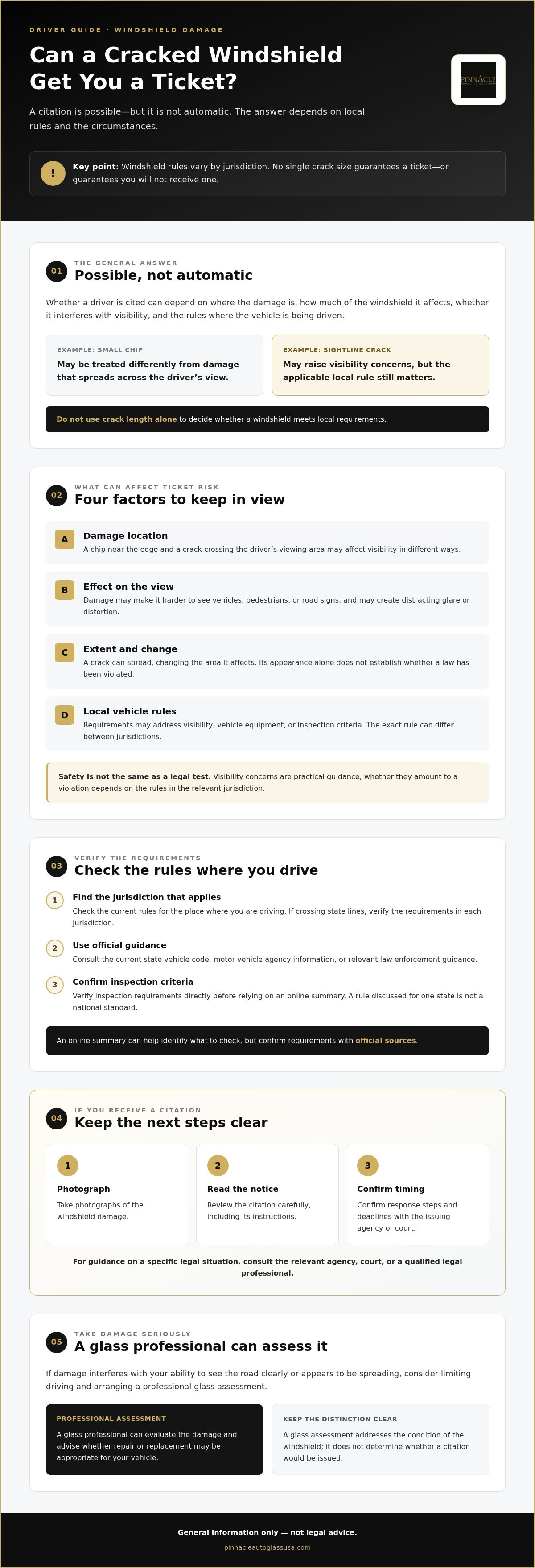
Yes, a citation is possible, but the rules depend on the jurisdiction. Getting a ticket for a cracked windshield isn’t automatic, and no single crack size guarantees that a driver will or won’t be cited everywhere. The damage’s location and extent, its effect on visibility, and the rules where you’re driving may all matter.
In short, a cracked windshield can lead to a ticket, but whether it does depends on local rules and the circumstances. This is general information, not a determination of your legal position. To understand how a rule applies to your situation, check current official guidance or consult a qualified legal professional.
There’s also a practical safety reason to take damage seriously. A windshield is typically made with laminated safety glass, but a crack can still interfere with a clear view of the road. If damage is in your sightline or appears to be spreading, don’t assume it’s harmless because it looks small.
Why there is no single nationwide yes-or-no rule
Jurisdictions can set different vehicle requirements and use different enforcement approaches. Some rules may focus on whether a driver’s view is obstructed, while others may address windshield condition or vehicle inspections. A rule discussed for one state shouldn’t be treated as a national standard.
Check the current state statute or motor vehicle agency guidance for the place where you’re driving. If you cross state lines, verify the rules that apply in each jurisdiction. Online summaries can help you identify what to look for, but confirm legal requirements with official sources.
What an officer may consider at a traffic stop
Visibility and obstruction may be relevant, but they aren’t guaranteed legal tests in every jurisdiction. An officer could assess where the damage sits, how much of the windshield it affects, and whether it appears to interfere with the driver’s view. The applicable rule and circumstances of the stop can affect that assessment.
Don’t assume a crack outside your direct sightline can never draw attention, or that a small chip will automatically result in a citation. If you’re stopped, stay calm and review any citation you receive. For the specific enforcement standard, consult the official rules for that jurisdiction and follow the notice’s instructions.
How Windshield Damage, Visibility, and State Rules Affect Ticket Risk
A crack’s impact can matter as much as its appearance. Damage in the driver’s viewing area may make it harder to see vehicles, pedestrians, or road signs. It can also create distracting glare or distort the view as lighting changes. These are practical safety concerns, but they don’t automatically establish a violation of a particular state law.
Visibility concerns are general safety guidance. Whether they amount to a legal violation depends on the rules in the relevant jurisdiction. That distinction matters when assessing the risk of getting a ticket for a cracked windshield. Crack length alone may not settle the question. Location, effect on visibility, and state-specific vehicle or inspection requirements may also be relevant.
Why crack location and visibility matter
A chip near the edge and a crack crossing the driver’s view can affect visibility in different ways. Sunlight, headlights, and changing light conditions may make damage more distracting at certain times. A crack can also spread, changing the area it affects. Notice whether the windshield provides a clear view during normal driving, but don’t treat your own observation as a legal determination.
If damage interferes with your ability to see the road clearly, consider limiting driving and arranging a professional glass assessment. A glass professional can evaluate the damage and advise whether repair or replacement may be appropriate for the vehicle. That assessment addresses the glass condition, not whether a citation would be issued.
How state and vehicle rules can differ
Legal standards aren’t necessarily the same from state to state. Requirements may address visibility, vehicle equipment, or inspection criteria, and the exact wording can matter. Don’t assume a rule you read about one state applies where you’re driving. Check the current state vehicle code and motor vehicle agency information for the jurisdiction involved.
Verify inspection requirements directly before relying on an online summary. A general article can explain factors that may affect ticket risk, but it can’t determine how a law applies to a specific driver, vehicle, or citation. For guidance about your legal situation, consult the relevant agency, court, or a qualified legal professional.
A professional assessment can help clarify whether windshield repair or replacement may address the damage. The appropriate option depends on the damage and vehicle, and it doesn’t determine the outcome of a traffic citation.
Cracked Windshield Ticket Myths: What Drivers Should Not Assume
Two assumptions can lead drivers astray: that any crack guarantees a ticket, or that a small crack can never attract attention. Neither is a reliable rule. The outcome depends on the jurisdiction and circumstances, so don’t use crack size alone to predict what an officer or agency may decide.
Does a small crack always mean a ticket?
No universal answer applies across jurisdictions. A small crack may still be relevant if its location or effect on visibility raises a concern. A larger crack may be assessed differently under local requirements. Check current official guidance for where you’re driving rather than relying on a general size threshold or another state’s rule.
Passing a vehicle inspection, where one applies, doesn’t necessarily settle every roadside enforcement question. Inspections and traffic stops may involve different procedures or circumstances. Confirm what the relevant state’s rules say, and don’t treat an inspection result as a guarantee that a citation can’t be issued.
Does fixing the windshield erase a citation?
No. Repairing or replacing the windshield may address the damage, but it doesn’t automatically cancel a citation or satisfy a court requirement. If you’re cited, read the notice carefully and follow its instructions. Confirm response procedures and deadlines directly with the issuing agency or court.
Keep these questions separate:
- Ticket risk: What do the applicable local rules and circumstances indicate?
- Repair urgency: Is the damage affecting visibility or getting worse?
- Legal response: What does the citation require, and what options are available under local procedures?
Addressing unsafe glass is a practical step, not a promise of dismissal, reduced penalties, or a successful defense. If you’re unsure how to respond to a citation, seek guidance from a qualified legal professional. A glass professional can separately assess the windshield and advise whether repair or replacement may be appropriate. Getting a ticket for a cracked windshield, and what happens afterward, depends on the rules and process involved.
What to Do About a Cracked Windshield Ticket
Getting a ticket for a cracked windshield can feel stressful, but a clear process can help you avoid missing important instructions. Keep the citation and related records together, then take these steps:
- Document the damage. If it’s safe, photograph the windshield from inside and outside. Capture the crack’s location and overall condition, and note when you took the photos.
- Review the citation. Identify the issuing authority, the stated violation, and the required response date. Read all instructions rather than relying on a general online summary.
- Check the official process. Use the contact details on the citation to confirm procedures and deadlines with the named court or agency. Consult current motor vehicle agency information for relevant vehicle rules.
- Act promptly. Follow the response steps and timeframe on the notice. Don’t ignore the citation or assume that repairing the windshield changes its status.
Deadlines and procedures can vary, so confirm requirements directly with the court or agency named on your citation. If you’re considering contesting it or have legal questions, speak with a qualified legal professional. A glass service provider can assess the damage, but can’t determine your legal options or promise a ticket outcome.
If the windshield damage affects your view
Prioritize safe driving. If the damage materially impairs your view, avoid continuing to drive until you can do so safely. Arrange a professional assessment to determine whether repair or replacement may be appropriate for the damage and vehicle. This addresses the glass condition separately from any citation.
For more context on glass assessment and repair, read Pinnacle’s Professional Windshield Repair: A Comprehensive 2026 Guide to Safety and Savings. Pinnacle Auto Glass provides windshield repair and replacement for personal and commercial vehicles. Explore windshield repair and replacement options.
When Professional Windshield Service Can Help Address the Damage
A glass assessment can help you understand the condition of a cracked windshield and what work may be appropriate. It won’t decide whether getting a ticket for a cracked windshield was justified or change a citation’s status. Keep those legal questions separate from the practical step of addressing damage that affects visibility or continues to spread.
When to seek a windshield assessment
Arrange an assessment promptly if a crack is spreading or interferes with your view of the road. A glass professional can examine the damage and consider its location and extent, along with your vehicle, before recommending repair or replacement. Don’t assume every chip can be repaired or every crack requires replacement. Suitability depends on the damage and vehicle-specific factors.
If you’re comparing the options, Pinnacle’s guide, When to Repair vs Replace Your Damaged Windshield, may help you understand what to discuss during an assessment. The decision is about the vehicle’s glass, not securing a particular outcome for a traffic citation.
What to ask an auto glass provider
Bring clear details about where the damage is and whether it has changed. Ask the provider:
- Does the damage appear suitable for repair, or may replacement be appropriate?
- Could the damage affect my visibility or continue to spread?
- Does my vehicle have ADAS features that require recalibration after this glass work?
ADAS recalibration may be needed for some vehicles after windshield installation. Ask the provider to confirm whether it applies to your vehicle and the work being considered. A glass assessment can guide repair or replacement decisions, but it can’t provide legal advice or guarantee that a ticket will be dismissed or prevented.
Pinnacle Auto Glass provides windshield repair and replacement for personal and commercial vehicles, with ADAS recalibration available when required after glass installation. Contact Pinnacle Auto Glass about windshield service.
Take the Next Step With Clear Information
Getting a ticket for a cracked windshield depends on the rules where you’re driving and the circumstances, including whether damage affects visibility. Don’t assume crack size alone settles the question. Check current official state guidance, and if you receive a citation, follow its instructions and confirm deadlines with the court or agency named on it.
Keep the legal response separate from addressing the glass. If the damage is spreading or interfering with your view, a professional assessment can help determine whether repair or replacement may be appropriate. Pinnacle Auto Glass provides windshield repair and replacement for personal and commercial vehicles. ADAS recalibration is available when required after glass installation.
Contact Pinnacle Auto Glass to discuss windshield repair, replacement, or ADAS recalibration.
Frequently Asked Questions
Can you get a ticket for a cracked windshield in any state?
A citation may be possible, but rules and enforcement can differ by jurisdiction. There isn’t one nationwide standard that determines every cracked-windshield ticket. Local requirements may consider visibility, damage location, or vehicle equipment. Check the current vehicle code or motor vehicle agency guidance for the state where you’re driving. If you’ve received a citation, use its instructions to confirm the relevant process with the issuing agency or court.
How big does a windshield crack have to be to get a ticket?
There’s no universal crack-size threshold that applies across the country. A crack’s location and effect on the driver’s view may matter, along with the rules in that jurisdiction. Don’t assume a small crack can’t attract attention or that a larger one automatically means a ticket. Check current official state guidance for any applicable standard, and seek qualified legal advice if you need help interpreting a rule.
Can you drive with a cracked windshield if it does not block your view?
Not blocking your view doesn’t automatically establish that driving is permitted under every local rule. Consider whether the damage could distract you, create glare, or spread and affect visibility. Check current requirements where you’re driving, especially if your vehicle is subject to an inspection rule. If the crack makes it harder to see the road clearly, avoid driving until you can address the safety concern.
What happens if an officer gives you a ticket for a cracked windshield?
Read the citation carefully and identify the alleged violation, issuing authority, and required response date. Follow the listed instructions, and contact the court or agency named on the notice if anything is unclear. Confirm deadlines and procedures directly with that authority. Keep photos or other records of the windshield condition. Don’t ignore the citation, and consult a qualified legal professional if you need advice about your options.
Can fixing a cracked windshield make a ticket go away?
Repairing the damage doesn’t automatically cancel a citation or satisfy a court requirement. The notice may explain what response is required, so follow its instructions and confirm questions with the issuing court or agency. Keep documentation of completed glass work, but don’t assume it guarantees dismissal or changes a deadline. For advice about contesting a citation or its possible outcome, speak with a qualified legal professional.
Is a cracked windshield considered a safety violation?
A crack can create a safety concern if it interferes with a clear view or worsens, but whether it qualifies as a violation depends on the applicable jurisdiction’s rules. Safety risk and legal status are related, but they’re not the same question. Check current official state guidance for relevant vehicle requirements. If damage affects visibility, arrange a professional assessment and avoid driving if you can’t see the road safely.
Should I repair or replace a windshield after receiving a citation?
Have a glass professional assess the damage and recommend repair or replacement based on its condition and your vehicle. A citation alone doesn’t determine which service is appropriate. Ask whether repair is suitable, whether replacement may be needed, and whether your vehicle’s ADAS features require recalibration after glass installation. Addressing the windshield is separate from responding to the ticket, so follow the citation’s instructions and deadlines as well.


