

What if your windshield helps protect you in a crash, not just helps you see the road? Understanding how a windshield contributes to vehicle safety means looking beyond visibility. Depending on the vehicle’s design and the quality of its installation, the glass can also contribute to the vehicle’s intended structural performance, help keep occupants inside the cabin, and play a role in passenger-airbag deployment.
It’s easy to focus on a chip or crack only when it obstructs your view. But damage, a weakened bond, or an installation issue may affect other safety functions too. If your vehicle has cameras or sensors mounted near the windshield, replacement may also require ADAS recalibration to help those systems work as intended.
This article explains the windshield’s roles in visibility, occupant protection, and driver-assistance technology. You’ll learn which damage and warning signs call for professional assessment, why installation quality matters, and when recalibration may apply. Use this guidance to decide when a windshield concern needs attention, while keeping in mind that requirements vary by vehicle.
Key Takeaways
- Learn how a windshield contributes to vehicle safety beyond providing a clear view, and why its role varies by vehicle design.
- Understand why cracks, chips, glare, or visual distortion deserve attention when they interfere with your view of the road.
- When damage appears, note its location, check whether it affects visibility, and seek qualified guidance if you have concerns.
- Find out how a professional assessment can help determine whether repair or replacement is appropriate and whether ADAS recalibration may apply.
- See why correct windshield installation matters to the vehicle’s intended design and safety functions.
How a Windshield Contributes to Vehicle Safety Beyond Clear Visibility
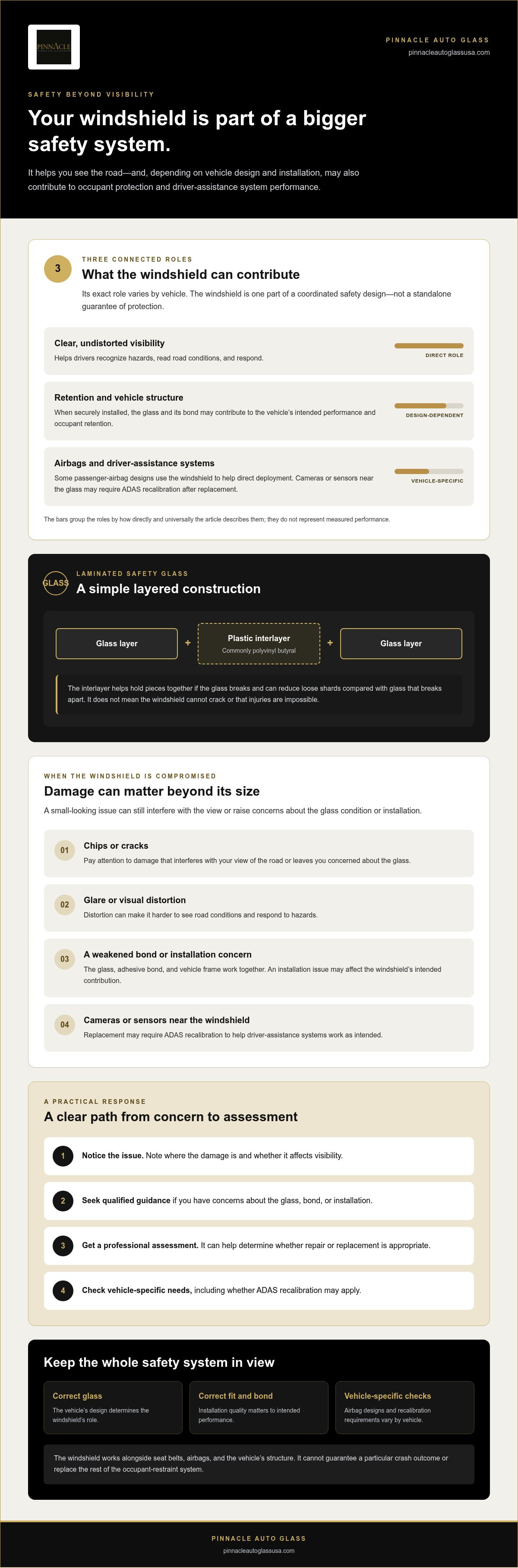
How a windshield contributes to vehicle safety: It gives the driver a clear view of the road and, depending on the vehicle’s design and correct installation, can contribute to the vehicle’s intended structural performance. The windshield is one part of a coordinated safety design, not a standalone guarantee of protection.
Why the windshield is more than a window
A clear, undistorted forward view helps drivers recognize hazards, read road conditions, and respond. Chips, cracks, or visual distortion can interfere with that view, even when the damage seems small. Visibility is the windshield’s most direct safety function, but it isn’t the only one.
The windshield is fitted to the vehicle body, and its bond with the frame can matter to how the vehicle performs in a collision. The exact contribution depends on the vehicle’s engineering and how the glass is installed. Avoid applying a single percentage or broad crash-protection claim to every make and model.
What laminated safety glass does
Most windshields use laminated safety glass: two layers of glass joined by a plastic interlayer, commonly polyvinyl butyral. The interlayer helps hold pieces together if the glass breaks. This construction can reduce the chance of loose shards compared with glass that breaks apart, but it doesn’t mean a windshield can’t crack or that injuries are impossible.
The windshield’s layered construction is a defining safety feature. For an overview of its materials and history, see this reference on laminated safety glass. Damage can still affect the driver’s view or the glass’s condition, so the interlayer isn’t a reason to ignore a chip or crack.
Which safety claims depend on the vehicle
Some explanations describe the windshield as supporting occupant retention or contributing to cabin structure. These roles depend on vehicle design, the condition of the glass, and how securely it’s installed. The windshield works as part of a larger system. It doesn’t independently prevent roof damage, keep every occupant inside, or ensure a particular crash outcome.
Be cautious with exact percentages or claims that apply universally unless they’re supported by reliable, vehicle-specific evidence. The practical point is straightforward: the windshield’s safety contribution relies on the right glass and a correct fit. If damage or a past installation raises concerns, a professional assessment can help clarify the next step.
How Windshield Glass Can Support Occupant Protection in a Collision
The windshield’s role in a crash depends on how the vehicle is engineered and how the glass is fitted. In some vehicle designs, properly retained windshield glass can contribute to the body’s intended performance and help limit the chance of occupants being ejected through the opening. It’s one part of a larger safety system, not a guarantee of occupant protection.
Windshield retention and vehicle structure
The glass, adhesive bond, and vehicle frame work together. If the windshield is securely installed, it may help the vehicle perform as designed during a collision. If it becomes detached, that contribution could be affected. The exact effect depends on the vehicle’s construction and the circumstances of a crash, so avoid universal claims about roof strength or rollover protection.
That’s why installation quality matters beyond appearance. A windshield that sits correctly and bonds as intended is part of the vehicle’s overall design. The glass alone can’t prevent a roof from deforming or keep every occupant inside the cabin.
The windshield and airbag performance
Passenger-side airbag designs vary. In some vehicles, the airbag deploys upward and uses the windshield as a surface to help direct it toward the occupant. Other designs may work differently. Check vehicle-specific service information rather than assuming the windshield has the same role in every car.
If a windshield is damaged or has been replaced, don’t infer airbag performance from appearance alone. A qualified glass professional can assess the glass and installation. Questions about a vehicle’s restraint-system design should be checked against information for that specific make and model.
Fact in brief: The windshield may contribute to glass retention, vehicle structure, and, in some designs, passenger-airbag deployment. Seat belts, airbags, and the vehicle’s structure work together as the complete occupant-restraint system.
These roles show how a windshield contributes to vehicle safety, but the glass isn’t a substitute for seat belts or other restraints. If you’re concerned about windshield damage or installation, consider a professional assessment. Pinnacle Auto Glass offers windshield repair and replacement as possible next steps when appropriate.
How Windshield Condition Affects Visibility and Driver-Assistance Systems
A clean, clear windshield helps you pick out vehicles, pedestrians, signs, and changes in the road ahead. Damage doesn’t affect every driver or vehicle in the same way. A small chip outside the driver’s sightline may pose a different visibility concern than a crack or distortion directly in the forward view. Location, lighting, and the driver’s perspective all matter.
Why a clear, undistorted view matters
Cracks and chips can draw attention away from the road or distort objects seen through the glass. Sunlight or headlights may create glare that makes an existing mark more distracting. Obstructions, including items placed in the driver’s view, can also make it harder to assess traffic or road conditions. These factors don’t mean every chip or crack creates the same level of risk.
Check the windshield from the driver’s seat. If damage crosses your usual sightline, creates distortion, or becomes harder to see around in changing light, seek professional guidance rather than judging it by size alone.
Windshields, cameras, and ADAS
Some vehicles have cameras mounted at or near the windshield. These cameras may support driver-assistance features, and their view can depend on the area of glass in front of them. Damage, visual distortion, or an obstruction in that area could affect what the camera sees. Requirements vary by vehicle, so don’t assume every system or windshield is configured the same way.
Windshield replacement can also affect camera positioning or system requirements on some models. Follow the vehicle manufacturer’s guidance and ask a qualified professional whether glass service or ADAS recalibration applies to your vehicle. For a deeper explanation, read the ADAS calibration and auto glass reference guide.
Consider both your view from the driver’s seat and any camera area when assessing windshield concerns. A clear view supports hazard recognition, while a camera’s view may matter to driver-assistance features. Both are part of how a windshield contributes to vehicle safety, but a warning light, or the absence of one, isn’t a complete diagnosis. If visibility is impaired or you’re unsure whether damage affects a camera, get vehicle-specific advice.
What to Do If Windshield Damage Could Affect Safety
A chip or crack doesn’t automatically mean the windshield must be replaced, but judging by size alone can miss important factors. Location, whether the damage is spreading, how it affects your view, and whether it sits near a camera can all matter. Start by noting where the damage is, checking your visibility, and seeking qualified guidance if you have concerns.
Which warning signs deserve prompt assessment?
Look at the windshield from the driver’s seat. Note whether damage crosses your normal field of view, creates visual distortion, or makes it harder to see in changing light. Also pay attention to cracks that appear to be spreading and damage near a windshield-mounted camera. These are reasons to get professional advice, not universal rules for whether a repair is possible.
If the damage interferes with your ability to see the road clearly, don’t rely on a quick visual guess about safety. Check your vehicle manual for instructions related to visibility, warning lights, or driver-assistance features. For more repair-specific information, see this professional windshield repair guide.
How to prepare for a professional assessment
A few details can help a glass professional understand the concern. Before contacting them:
- Take clear photos of the damage from outside and from the driver’s seat, if it’s safe to do so.
- Note when and where you first noticed it, and whether it has changed.
- Share the vehicle’s make, model, and year.
- Mention any visible ADAS alerts or changes in system behavior.
Don’t decide whether the damage is repairable based on a photo or size estimate alone. A professional can assess the glass and advise whether windshield repair or replacement is appropriate. If replacement is being considered, this professional windshield replacement safety guide explains relevant safety and technology considerations.
Because the windshield supports visibility and may interact with vehicle safety systems, getting specific guidance is a practical next step if damage affects your view or raises concerns. Contact Pinnacle Auto Glass about windshield damage to discuss repair or replacement options.
Restoring Windshield Safety: When Professional Glass Service Helps
A professional assessment can help determine whether damaged glass may be repaired or needs replacement. The decision depends on the damage and the vehicle, not just a quick look at the size of a chip or crack. If the windshield is replaced, correct installation matters because the glass and its bond to the vehicle are part of the vehicle’s intended design.
Why installation quality matters to safety
Replacement glass must be fitted using procedures appropriate for the vehicle. The glass, adhesive, and frame work together, so a poor fit or bond may not support the design as intended. Ask how the provider will address vehicle-specific installation requirements. For more guidance on choosing a technician, see this certified auto glass technician safety guide. The guide’s title refers to certification; it doesn’t establish any certification claim about a particular provider.
When repair, replacement, or recalibration may be considered
Repair may be an option for some damage, while other damage may call for replacement. A qualified professional can assess the glass and advise on the appropriate service for the vehicle. This assessment matters because the windshield’s contribution to safety depends on its condition, fit, and vehicle design.
Some vehicles also have driver-assistance cameras or sensors that may be affected by windshield work. ADAS recalibration may be needed after service, but the requirement depends on the vehicle and the work performed. Check the owner’s manual or ask a qualified glass professional to confirm what applies to your make and model. Don’t assume recalibration is always required or never needed.
Understanding how a windshield contributes to vehicle safety makes professional assessment a practical next step when damage or an installation concern could affect visibility or the vehicle’s safety systems. Pinnacle Auto Glass offers windshield repair, windshield replacement, and ADAS recalibration when applicable. Explore Pinnacle Auto Glass services.
Keep Your Windshield Ready to Do Its Job
Understanding how a windshield contributes to vehicle safety means looking beyond a clear view. It can play a role in the vehicle’s intended design, while its condition affects visibility and, on some vehicles, systems that rely on windshield-mounted cameras. These functions depend on vehicle-specific design and correct installation.
If you notice a crack, chip, distortion, or damage near a camera, check whether your view is affected and seek professional guidance. Don’t decide whether repair or replacement is needed based on size alone. A qualified assessment can help identify the appropriate glass service and whether ADAS recalibration applies to your vehicle.
Pinnacle Auto Glass provides windshield repair and replacement for personal and commercial vehicles, along with ADAS recalibration when applicable. Explore Pinnacle Auto Glass services to learn about potential next steps for your vehicle.
A clear view and properly assessed glass help you make informed decisions. With vehicle-specific guidance, you can address windshield concerns while keeping safety in focus.
Frequently Asked Questions
Does a windshield help protect you in a crash?
Yes. How a windshield contributes to vehicle safety depends on the vehicle’s design and the condition and installation of its glass. A properly installed windshield may contribute to the vehicle’s intended structural performance and, in some designs, interact with occupant-protection systems. It’s only one part of the safety design, though. Seat belts and airbags remain essential, and the windshield doesn’t guarantee a particular outcome in a collision.
Does a windshield help keep the roof from collapsing?
A windshield may contribute to a vehicle’s designed structural performance, but it isn’t the roof’s sole support and can’t guarantee that the roof won’t collapse. The vehicle’s structure, glass, bonding, and other components work together, and their roles vary by model. For information about a specific vehicle, consult the manufacturer’s guidance or ask a qualified auto glass professional. Avoid applying broad claims about roof strength to every vehicle.
Can a cracked windshield affect vehicle safety?
Yes, depending on the crack’s location, whether it’s spreading, and its effect on visibility or vehicle systems. For example, a crack that crosses your normal field of view may make it harder to see clearly, while damage near a windshield-mounted camera may warrant checking system requirements. Not every crack has the same effect. Don’t rely on a universal size rule to decide whether repair is possible. Seek a professional assessment if you’re concerned.
Does a windshield affect airbag deployment?
On some vehicles, the windshield may interact with passenger-side airbag deployment. Its specific role depends on the vehicle’s design and the glass’s condition and installation, so don’t assume it works the same way in every model. If the windshield is damaged or has been replaced, consult vehicle-specific guidance or ask a qualified professional whether any safety-system checks are appropriate. The windshield doesn’t replace the airbag or seat belt.
Can a windshield affect ADAS cameras?
Yes. On vehicles with cameras mounted at or near the windshield, glass damage or replacement may affect the camera’s view or alignment. Whether ADAS recalibration is required depends on the vehicle and the work performed. Check the owner’s manual and ask a qualified professional to confirm the applicable procedure. Camera locations and calibration requirements vary, so don’t assume another vehicle’s service needs apply to yours.
Is it safe to drive with a chipped windshield?
It depends on the chip’s location, whether it obstructs your view, and whether it’s spreading or causing visual distortion. A small chip isn’t automatically harmless, but damage doesn’t always require the same response. Avoid deciding whether repair is suitable based on size alone. If the chip affects your view or is near a camera or other relevant area, seek qualified guidance to assess the windshield and vehicle-specific needs.


