

Could a damaged windshield affect how an airbag protects you? In some vehicles, the windshield helps support passenger-side airbag deployment, so airbag deployment and windshield safety are connected. Its exact role depends on the vehicle’s design, but the glass does more than block wind and weather.
After a collision or airbag deployment, a chip, crack, or damaged seal can raise questions. Visible damage may signal a problem, but appearance alone can’t confirm whether the windshield or its installation is sound. Vehicle-specific guidance and a professional assessment can help clarify what needs attention.
This article explains how the windshield and airbag may work together, what damage can indicate, and which post-collision signs call for inspection. You’ll also find questions to ask about repair or replacement, and whether ADAS recalibration may be needed after glass work. Use this as general guidance, follow your vehicle manufacturer’s recommendations, and seek a professional glass assessment if the windshield may have been affected.
Key Takeaways
- Learn why the windshield can contribute to restraint-system performance, depending on your vehicle’s design.
- Understand what airbag deployment does and doesn’t reveal about windshield or restraint-system condition.
- Use a practical post-collision checklist to spot concerns and decide when to arrange an assessment.
- See how airbag deployment and windshield safety relate to glass inspection, replacement decisions, and possible ADAS recalibration.
- Know which concerns call for a qualified glass professional and which need service guided by your vehicle manufacturer.
How the Windshield and Airbag Work Together in a Crash
The windshield can contribute to restraint-system performance, depending on the vehicle’s design. In some vehicles, the passenger-side airbag uses the windshield as a support surface as it deploys. The glass is one part of a larger safety system that also includes airbags, seat belts, crash sensors, and the vehicle structure. The details vary by vehicle.
An airbag is a supplemental inflatable restraint, designed to work alongside seat belts rather than replace them. During a crash, sensors and the restraint control system determine whether to activate airbags and other restraints. Deployment behavior depends on the impact and the vehicle’s system design.
What role can the windshield play during passenger-airbag deployment?
Some passenger-airbag designs direct the bag upward or outward, using the windshield to help guide or support it as it inflates. This can make a properly positioned windshield relevant to how the restraint performs. Airbag design and windshield interaction vary across vehicles and model years, however. This general principle can’t confirm whether a particular windshield or airbag is functioning correctly. Consult the manufacturer’s guidance or a qualified service professional for vehicle-specific information.
Windshield retention means the windshield’s ability to remain attached within the vehicle’s frame or opening during a crash. Retention does not mean the glass is unbreakable or guarantee a particular airbag outcome. It describes whether the glazing stays in position as intended under crash forces.
Why laminated glass and secure installation matter
Windshields are generally made from laminated safety glass, with layers of glass bonded around an interlayer. Materials and construction depend on vehicle specifications. If the glass breaks, the interlayer helps hold fragments together. This supports occupant protection, but it does not make the windshield indestructible or remove the need to assess damage.
Fit and bonding matter too. The windshield needs to be installed and secured according to the vehicle’s requirements so it remains positioned as designed. Damage or installation problems may affect that fit, but appearance alone can’t confirm the condition of the bond. If replacement is needed, review this professional windshield replacement safety guide for factors to consider.
That’s the practical connection between airbag deployment and windshield safety: the windshield may contribute to restraint performance, but the exact relationship depends on the vehicle. A professional glass assessment can help evaluate visible damage and fit. It does not replace inspection of airbags or other restraint components by qualified service personnel.
What Happens to Windshield Safety When an Airbag Deploys?
During a collision, sensors detect forces and send information to the vehicle’s restraint system. Depending on the impact and vehicle design, the system may activate airbags and other restraints to help protect occupants. Seat belts remain a key part of that protection. The IIHS airbag safety information explains the role airbags play in occupant protection.
Airbag timing and behavior depend on the vehicle and the crash. An airbag opening does not, by itself, prove that the windshield failed. It also can’t confirm that the windshield, its bonding, or other restraint components are undamaged, or that the vehicle is safe to drive.
Does a deployed airbag mean the windshield should be replaced?
Not automatically. A replacement decision depends on the windshield’s condition, the location and extent of damage, vehicle specifications, and a technician’s assessment. Deployment may be a reason to inspect the glass closely, especially if it has shifted or shows new damage, but it is not a universal replacement rule. Check the owner’s manual and arrange an appropriate professional inspection before deciding what the vehicle needs.
What can windshield damage indicate after a collision?
From a safe position, look for cracks, glass that appears displaced, separation at the edge, or disturbed surrounding trim. These signs call for an inspection, but they don’t prove that the windshield bond has failed. Don’t dismiss them, press on the glass, or try to reposition it. Damage may extend beyond what is immediately visible.
Don’t touch deployed airbags or other disturbed restraint components. They may need inspection or service by qualified professionals using the vehicle manufacturer’s procedures. If anyone is injured or an immediate hazard remains, contact emergency services and follow their instructions. Don’t drive if glass is loose, visibility is impaired, or the vehicle otherwise seems unsafe.
Once immediate safety concerns are addressed, a qualified auto-glass professional can assess visible windshield damage and fit, then discuss whether repair or replacement may be appropriate. That assessment is separate from inspection of the airbags and restraint system. For glass concerns, review windshield repair and replacement options and choose a next step based on the vehicle’s needs.
Windshield Safety Myths: What Airbag Deployment Does, and Does Not, Prove
Airbag deployment shows that a vehicle’s restraint system activated. It is not a verdict on the windshield. A deployed airbag doesn’t prove the glass failed, and a windshield that looks intact doesn’t prove its bond or other restraint components are undamaged. Treat deployment, glass condition, and whether the vehicle is safe to drive as separate questions. Each may need a different assessment.
The windshield can contribute to occupant protection, but its role depends on vehicle design. The Auto Glass Safety Council describes the windshield as part of the vehicle’s safety restraint system. That general information doesn’t establish how a specific passenger airbag deploys or confirm that a particular vehicle’s glass and restraints are functioning properly. For those details, consult the manufacturer’s information and arrange a qualified inspection.
Can a windshield look intact but still need professional assessment?
Yes. A clear view through the glass can’t confirm the condition of its bonding or nearby components. This doesn’t mean hidden damage is present; it means appearance alone can’t rule it out. After a collision, arrange an assessment if you notice cracks, glass movement, separation, or unusual gaps around the windshield. A photo or general description can’t establish the condition of the bond.
Does every vehicle use the windshield as an airbag backstop?
No single description applies to every make, model, and restraint-system design. Passenger-side airbag configurations and their interaction with surrounding vehicle components can differ. Don’t assume the windshield serves the same function in every vehicle or use a general explanation to diagnose yours. Check the owner’s manual or manufacturer service information. After glass work, the ADAS calibration and auto glass reference guide covers related technology considerations.
Keep the conclusions separate: deployment doesn’t automatically mean windshield replacement is needed, and visible damage isn’t the only reason to seek an assessment. Airbag deployment alone can’t confirm glass condition or roadworthiness. If you’re uncertain after a collision, follow manufacturer guidance and have concerns assessed by the appropriate qualified professional. This is the practical distinction behind airbag deployment and windshield safety: general principles explain possible relationships, but an inspection determines what needs attention on an individual vehicle.
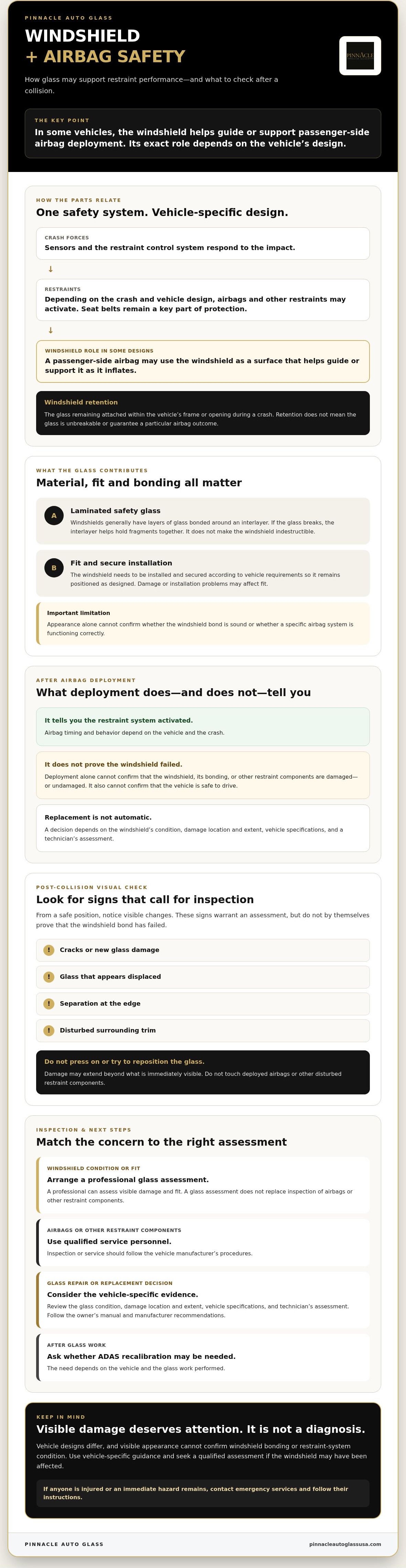
Post-Airbag Deployment: Windshield Safety Checklist
After an airbag deploys, put immediate safety first. This checklist can help you organize next steps, but it can’t determine whether a specific vehicle is safe to drive or replace emergency response, manufacturer guidance, or a qualified inspection.
- Address injuries. Check for injuries only if it’s safe to do so. Contact emergency services if anyone needs medical help or an immediate hazard remains.
- Follow emergency guidance. Move away from traffic or other hazards when instructed. Don’t re-enter or move the vehicle if doing so could put anyone at risk.
- Observe without touching. From a safe position, look for cracked or shifted glass, loose trim, unusual gaps, or anything blocking the driver’s view. Don’t press on damaged glass or handle deployed airbags or other disturbed restraint components.
- Document visible damage. If it’s safe and useful for an assessment, take photos from a distance. Note warning indicators or unusual conditions, but don’t attempt to diagnose or repair the airbag system yourself.
- Arrange assessment. Check the owner’s manual and follow vehicle-manufacturer guidance. Ask an appropriate qualified professional to assess concerns before deciding whether the vehicle can be driven.
What should drivers inspect without touching damaged components?
Focus on what you can see safely: cracks, glass that appears out of position, loose trim, or reduced visibility. These are observations, not a diagnosis. Don’t push glass back into place, test its attachment, or investigate restraint-system components. If a warning indicator appears, note it for the professional assessing the vehicle and follow the manufacturer’s instructions.
When should a technician inspect or replace the windshield?
Arrange an assessment if collision damage affects the windshield, its apparent attachment, or your view of the road. A technician can assess visible glass condition and fit, then determine whether repair or replacement is appropriate based on the damage and vehicle-specific requirements. A deployed airbag alone doesn’t establish that replacement is necessary.
For background on choosing a professional, see this auto glass technician safety guide. If the windshield needs attention, review windshield repair and replacement options. The connection between airbag deployment and windshield safety is a reason to take visible damage seriously, while leaving vehicle-specific decisions to manufacturer guidance and qualified assessment.
Don’t drive if the glass is loose, your visibility is compromised, or the vehicle seems unsafe. This checklist is educational only. It can help you identify concerns and plan a next step, but it can’t confirm roadworthiness or the condition of hidden glass bonds and restraint components.
Restoring Windshield Safety After a Collision: Inspection and Next Steps
After a collision, treat windshield work and restraint-system inspection as related but separate parts of the vehicle’s assessment. An auto-glass professional can evaluate visible glass damage and fit, and discuss whether repair or replacement may be appropriate. Airbags, sensors, and other damaged restraint components need assessment and service by qualified professionals following the vehicle manufacturer’s procedures.
This distinction matters for airbag deployment and windshield safety. Glass service can address windshield concerns, but it doesn’t repair airbags or replace a collision safety-system inspection. Follow the owner’s manual and instructions from emergency responders or the vehicle manufacturer before deciding whether the vehicle is safe to drive.
What should drivers ask about windshield replacement after a collision?
Before approving glass work, ask how the proposed glass and installation process will meet your vehicle’s specifications. If the vehicle has cameras or other advanced driver-assistance features associated with the windshield, ask whether ADAS recalibration is required for that vehicle and planned work. Requirements vary, so don’t assume recalibration is always necessary or that it can be skipped. For more background, see this windshield replacement safety and technology guide.
How can professional auto-glass service support the next step?
A professional glass assessment can help clarify whether visible damage, fit, or vehicle specifications point toward repair or replacement. Pinnacle Auto Glass provides windshield repair and replacement for personal and commercial vehicles, along with ADAS recalibration when required after glass installation. The appropriate service depends on the vehicle and work being performed.
Keep the process practical:
- Follow manufacturer guidance for the vehicle and its safety systems.
- Arrange qualified service for any suspected airbag or restraint-system damage.
- Ask an auto-glass professional to assess windshield damage and explain the glass-service options.
- Confirm whether ADAS recalibration applies to your vehicle and planned glass work.
If you need guidance about windshield repair, replacement, or recalibration, contact Pinnacle Auto Glass about glass-service options. This is a starting point for windshield concerns, not a substitute for emergency assistance or a qualified inspection of the vehicle’s restraint systems.
Take the Right Next Step for Your Windshield
The key to understanding airbag deployment and windshield safety is to avoid drawing conclusions from deployment or appearance alone. The windshield’s design and role in airbag performance vary by vehicle. A deployed airbag doesn’t confirm that the windshield failed, and glass that looks intact doesn’t establish that the vehicle is safe to drive.
After a collision, prioritize injuries and immediate hazards, then follow emergency and vehicle-manufacturer guidance. Arrange an assessment if you notice cracks, shifted glass, loose trim, or visibility problems. An auto-glass professional can evaluate windshield damage and discuss repair or replacement. Concerns about airbags or other restraint components need qualified service separate from glass work.
Pinnacle Auto Glass provides windshield repair and replacement for personal and commercial vehicles. ADAS recalibration is also available when required after glass installation. Requirements depend on the vehicle and service performed.
For guidance on windshield service options, contact Pinnacle Auto Glass. With vehicle-specific advice and the right professional assessment, you can make an informed decision about what to do next.
Frequently Asked Questions
Does the windshield help support an airbag during deployment?
Yes, some passenger-airbag designs may use the windshield as a support surface during deployment. The connection between airbag deployment and windshield safety depends on vehicle design, so it isn’t identical across makes and model years. The windshield works alongside seat belts, airbags, sensors, and vehicle structure as part of a coordinated restraint system. Check the vehicle-specific owner’s manual or manufacturer information. This general explanation can’t diagnose a particular vehicle.
Can an airbag break the windshield when it deploys?
An airbag can interact forcefully with nearby vehicle surfaces, but that doesn’t mean it will always break the windshield. Whether glass cracks or shifts depends on the collision, vehicle design, glass condition, and installation. No general answer can promise that a windshield will or won’t break. Arrange a professional assessment if you see cracks, displaced or loose glass, or damage that obstructs the driver’s view.
Should I replace my windshield after an airbag deploys?
No. Airbag deployment by itself doesn’t establish that windshield replacement is necessary. The decision depends on visible glass damage, whether the windshield remains properly attached, vehicle specifications, and a qualified inspection. After a collision, follow emergency guidance first. If the windshield may have been affected, consult the vehicle manual and arrange an assessment with an auto-glass professional before deciding whether repair or replacement is appropriate.
Is it safe to drive after an airbag deploys if the windshield looks intact?
Not necessarily. An intact-looking windshield can’t confirm the condition of its attachment, airbags, or other systems affected by a collision. Don’t drive if visibility is impaired, glass appears loose, warning indicators remain, or the vehicle seems unsafe. Follow emergency instructions and vehicle-manufacturer guidance, then arrange a qualified inspection before relying on the vehicle. If an immediate hazard or injury is present, contact emergency services.
What should I check on my windshield after a collision?
From a safe position, look for cracks, shifted glass, loose trim, or anything that blocks your view. Don’t touch damaged glass or deployed or disturbed restraint components. A visual check can’t reveal every hidden issue or confirm that the vehicle is roadworthy. If it’s safe and useful, photograph visible damage, follow emergency instructions, and arrange a professional assessment if the windshield or its attachment may have been affected.
Does windshield replacement affect airbags or ADAS?
Windshield replacement requires attention to correct fit and installation, but it doesn’t repair or recalibrate airbags. Damaged restraint-system components need qualified service using the vehicle manufacturer’s procedures. Some vehicles also require ADAS recalibration after windshield replacement, depending on their equipment and manufacturer requirements. Ask an auto-glass professional whether recalibration applies to your specific vehicle and planned work, and have restraint concerns assessed separately.


