
What happens if ADAS is not calibrated correctly? Safety features may respond differently than intended, such as providing a warning later than expected, offering less steering support, or failing to detect an object as intended. The issue may not trigger a dashboard warning, so a system can appear normal while still needing professional assessment.
It’s reasonable to question whether driver-assistance features can be trusted, especially after windshield replacement or other repair work. But a warning light, unusual behavior, or recent service alone can’t confirm a calibration issue. These systems have limits, and symptoms need professional assessment.
This article explains how incorrect calibration may affect emergency braking, lane assistance, adaptive cruise control, and blind-spot monitoring. You’ll learn what changes to note, how to distinguish a possible concern from normal system limitations, and what to ask a qualified auto-glass or calibration provider. If your windshield was replaced, ask how the vehicle’s calibration requirements were assessed and whether the work was completed and documented according to the manufacturer’s procedures.
Key Takeaways
- What happens if ADAS is not calibrated correctly can vary. Alerts or assistance may change, but symptoms alone can’t confirm a calibration problem.
- Note warning messages, unavailable features, or changed alerts, then have a qualified professional assess them.
- After windshield or other repair work, check whether your vehicle’s manufacturer procedure calls for calibration.
- Ask the service provider how calibration needs were assessed and whether the work record includes the procedure and relevant test results.
- If you’re unsure a feature is working as intended, don’t rely on it as your sole safety measure while you arrange an assessment.
What Can Happen If ADAS Is Not Calibrated Correctly?
ADAS calibration aligns or configures a vehicle’s cameras and other sensors according to requirements for that specific vehicle. This helps the systems interpret information from the intended sensor position and setup. Requirements vary by vehicle, sensor type, and manufacturer procedure. For a general overview of the technologies involved, see Advanced Driver-Assistance Systems (ADAS).
If calibration is incorrect, a driver-assistance feature may receive or interpret information differently than intended. That could affect a warning, steering support, or another form of assistance. It doesn’t mean every system will fail in the same way, or that a driver will notice an obvious symptom. The possible effect depends on the vehicle’s design and which sensors or features are involved.
Which driver-assistance features may be affected?
Depending on the vehicle’s equipment, affected features may include:
- Forward collision warning and automatic emergency braking, which use information about objects ahead.
- Lane departure warning and lane-keeping assistance, which use road-marking information to provide alerts or steering support.
Some vehicles also have adaptive cruise control or blind-spot monitoring, while others have different features or none of these systems. Equipment varies by make, model, and configuration. Check the owner’s information or ask a qualified provider which systems your vehicle has and whether the manufacturer requires calibration after relevant work.
Why can a small alignment error matter?
Cameras and other sensors collect information about road markings, vehicles, and nearby objects. Their position and aiming affect the view or measurements they provide to the vehicle’s systems. If a sensor isn’t set according to the required specifications, the information available to a feature may differ from what its software expects.
That difference doesn’t point to one guaranteed result. Depending on the vehicle and circumstances, a system’s alert or assistance could be affected, or the feature may appear to work as expected. A dashboard message, a quiet system, or an unusual alert can’t establish the cause on its own. Assessment needs to account for the vehicle-specific procedure and the work performed.
Incorrect calibration can create a safety concern, but the possibility of a concern is not a confirmed diagnosis.
How Incorrect ADAS Calibration Can Change System Behavior
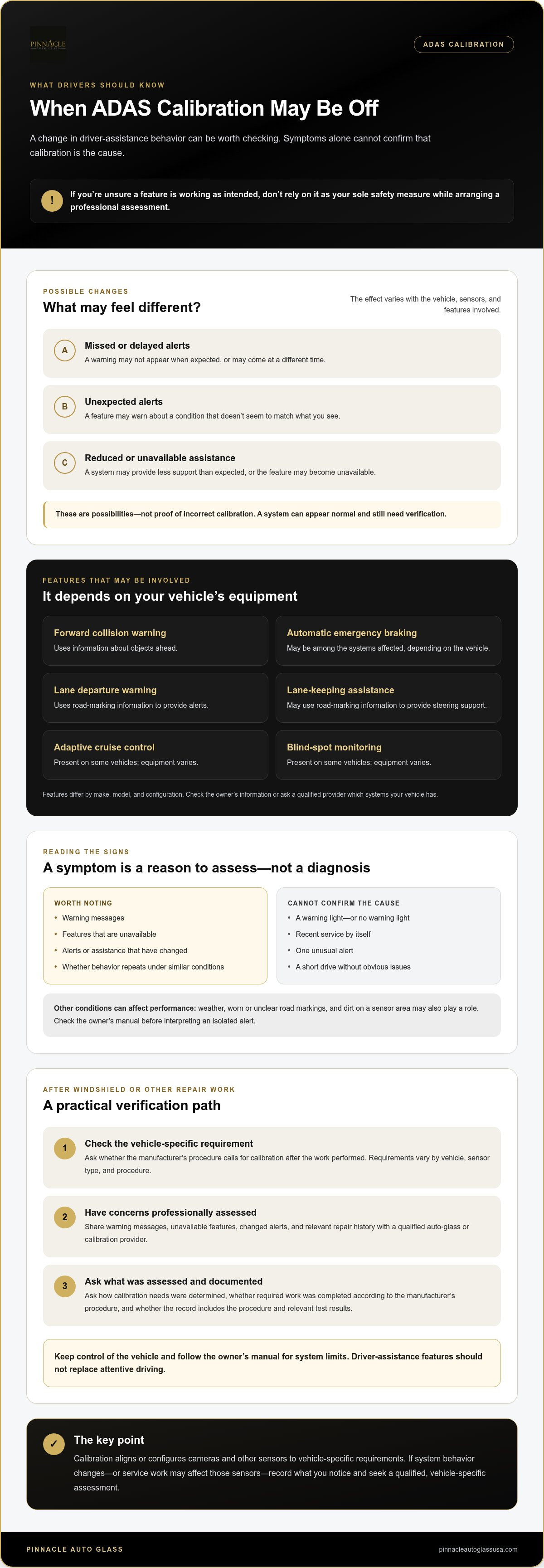
If an ADAS sensor isn’t positioned or configured as the vehicle requires, a feature may respond differently than expected. You might notice a change in an alert, the timing of assistance, or whether support is available. The specific effect varies, so don’t assume one symptom points to one cause. NHTSA describes the purpose of different driver assistance technologies, but a vehicle-specific assessment is needed to evaluate how its systems are operating.
Possible changes generally fall into three categories:
- Missed or delayed alerts: A warning may not appear when a driver expects it, or may come at a different time.
- Unexpected alerts: A feature may warn about a condition that doesn’t seem to match what the driver sees.
- Reduced assistance: A system may provide less support than expected or become unavailable.
These are possibilities, not proof of incorrect calibration. A feature can also appear to work normally while still needing verification. A warning-free dashboard or a short drive without obvious issues doesn’t confirm that calibration meets the vehicle manufacturer’s requirements.
Missed or delayed warnings and assistance
A forward-collision feature or lane system may not provide an alert or support at the time a driver expects if its input or operation is affected. That doesn’t mean automatic braking will always fail or lane assistance will always respond late. It does mean drivers shouldn’t assume assistance will compensate for inattention. Stay alert, keep control of the vehicle, and follow the owner’s manual for the feature’s limits.
False alerts and inconsistent system behavior
An unexpected warning can distract a driver and make it harder to know how much confidence to place in a feature. Calibration is only one possible factor. Weather, worn or unclear road markings, dirt on a sensor area, and other conditions can also affect system performance. Check the owner’s manual before interpreting an isolated alert, and note whether the behavior repeats under similar conditions.
Calibration concerns require vehicle-specific testing, not symptom-based guessing. Record what happened and when, then ask a qualified calibration provider to assess the vehicle using the applicable manufacturer procedure. If windshield work was recently completed, ask how calibration needs were determined and whether the provider can explain the results. A provider offering ADAS recalibration services can help you understand the next step for your vehicle.
Signs of an ADAS Calibration Problem, and What They Cannot Prove
A warning message or change in system behavior can be a reason to follow up, especially after windshield or other relevant repair work. But signs alone can’t confirm incorrect calibration. Similar symptoms may have different causes, and a system may need assessment even when no warning light appears. Use the table below to distinguish what you might notice from what it can, and can’t, tell you.
| Observed sign | Why it needs professional assessment |
|---|---|
| A dashboard message says an ADAS feature is unavailable or needs service. | The message indicates a system status or concern, but doesn’t establish the cause. Check the owner’s manual and ask a qualified technician to assess it. |
| A feature stops working, becomes unavailable, or behaves differently than before. | Changes can have more than one cause. An assessment can determine whether calibration or another issue needs attention. |
| Alerts seem to occur at different times, recur, or change after service. | Note which feature is involved and when the behavior occurs. A recurring change warrants follow-up, but isn’t proof of miscalibration. |
| Windshield replacement or other relevant repair work was completed. | Calibration requirements depend on the vehicle manufacturer’s procedure. Ask whether the work required calibration and how that need was assessed. |
| No warning light appears, and features seem to work normally. | A clear dashboard doesn’t confirm that every calibration measurement meets vehicle-specific requirements. |
Changes drivers may notice
Look for recurring alerts, disabled features, or a persistent change that began after relevant service. Record the feature involved, the message shown, and the conditions when it happened. For example, note whether an alert recurs in similar conditions or whether a feature remains unavailable. An isolated interruption during poor weather or when road markings are hard to see may have a different explanation from behavior that continues in ordinary conditions. This record can help a technician assess the concern.
Why symptoms alone are not a diagnosis
Different causes can produce similar alerts or feature interruptions. A dashboard status also doesn’t show every calibration measurement. The Insurance Institute for Highway Safety discusses issues with the technology after repair, underscoring why a post-service concern deserves careful review rather than guesswork.
For more background on glass work and calibration, see this ADAS calibration and auto glass reference guide. If you’re wondering what happens if ADAS is not calibrated correctly, treat symptoms as a prompt to seek assessment, not as a diagnosis. Ask a technician to follow the vehicle-specific procedure and use suitable equipment to evaluate the system.
What to Do If You Suspect ADAS Was Not Calibrated Correctly
If a feature behaves differently than expected, treat it as a reason to check, not a confirmed diagnosis. Knowing what happens if ADAS is not calibrated correctly can help you take a measured next step: document what you notice and ask a qualified provider to assess the vehicle.
- Note the symptom. Record the affected feature, any dashboard message, and when the issue occurs. Include whether it happens repeatedly or only under particular conditions.
- Review recent work. Note any windshield replacement, collision repair, or work involving sensors. Keep paperwork that describes the work and any calibration performed.
- Contact the service provider. Explain what changed and ask whether the work could affect an ADAS feature on your vehicle.
- Request an assessment. Ask whether the manufacturer’s procedure calls for calibration or additional diagnostics, and how the provider will verify the system.
What to share with the service provider
Have the vehicle’s year, make, and model ready. Describe the warning message as accurately as possible, name the affected feature, and explain when you noticed the change. Mention recent windshield replacement, collision repair, or sensor-related work. Ask which manufacturer procedure applies and whether it calls for calibration or other diagnostics. For more context on choosing a provider, read this auto glass technician safety guide.
When to limit reliance on driver-assistance features
While arranging an assessment, follow dashboard warnings and the owner’s manual. If a feature is unavailable or its behavior seems questionable, don’t rely on it as your sole safety measure. Stay attentive and maintain control of the vehicle. A warning that identifies a system fault warrants prompt professional guidance. If the vehicle’s condition or a warning makes you unsure it’s safe to continue, use your judgment and follow the vehicle manufacturer’s instructions rather than assuming every situation calls for the same response.
For windshield-related concerns, ask how calibration needs are assessed after glass work and whether the outcome can be documented. If you need windshield replacement or ADAS recalibration, contact Pinnacle Auto Glass about ADAS recalibration.
How to Confirm ADAS Calibration After Windshield Service
A windshield replacement doesn’t automatically tell you whether calibration was required or completed. The vehicle manufacturer’s procedure determines whether the work calls for calibration and how the system should be checked. Ask the service provider to explain the requirements for your vehicle and describe what was done. A dashboard without warning lights isn’t, by itself, proof that calibration is correct.
Questions to ask after windshield replacement
Use these questions to clarify what the service included:
- Does the manufacturer’s procedure call for calibration after the windshield work performed on my vehicle?
- If calibration or diagnostics were required, which steps were completed?
- Can I have a service record identifying the procedure and any relevant test results?
- Are there any unresolved warnings or follow-up steps I should know about?
Ask for clear explanations rather than relying on a general statement that the system was checked. For more context about glass work and vehicle technology, read this professional windshield replacement safety guide.
When professional follow-up makes sense
Arrange an assessment if a relevant warning persists or an ADAS feature behaves unexpectedly after service. If the concern began after windshield work, contact the original provider and describe what changed. Ask how the vehicle-specific calibration requirement was determined and whether the service record can clarify the completed steps and results. Don’t treat a clear dashboard alone as confirmation.
Keep the vehicle’s service records and note any warning messages or feature changes. That information can help a provider understand your concern and determine the appropriate next step. If you’re still asking what happens if ADAS is not calibrated correctly, the practical answer is that system behavior may be affected, but confirmation depends on a vehicle-specific assessment.
For windshield repair, windshield replacement, or ADAS recalibration assistance, contact Pinnacle Auto Glass and ask how calibration needs are assessed and documented for your vehicle.
Take the Next Step Toward Reliable ADAS Performance
What happens if ADAS is not calibrated correctly depends on the vehicle and the system involved. Warnings or driver assistance may change, but symptoms alone can’t confirm a calibration problem. A warning-free dashboard isn’t proof of correct calibration either.
If you notice a persistent warning or feature change, record what happened and review any recent windshield or repair work. Ask a qualified provider whether the vehicle manufacturer’s procedure calls for calibration, what checks were completed, and whether the results are documented. Until you have clarity, stay attentive and don’t rely on a questionable driver-assistance feature as your sole safety measure.
Pinnacle Auto Glass offers windshield replacement and ADAS recalibration for personal and commercial vehicle customers. If glass work is needed, ask how calibration requirements are assessed for your vehicle. Contact Pinnacle Auto Glass about windshield service and ADAS recalibration to discuss your next step. With clear information and a vehicle-specific assessment, you can move forward with greater confidence.
Frequently Asked Questions
What happens if ADAS is not calibrated correctly after windshield replacement?
If ADAS isn’t calibrated according to the vehicle’s requirements, affected features may provide warnings or assistance differently than intended. The specific effect depends on the vehicle and system, and symptoms alone can’t confirm a calibration problem. Check whether the manufacturer’s procedure calls for calibration after the windshield work. Ask the glass service provider what was assessed, whether calibration was completed if required, and whether the work record includes relevant procedure details or test results.
Can ADAS work without a warning light if calibration is incorrect?
Yes. A vehicle may not display a warning even if calibration needs professional verification. A dashboard message can be useful information, but its absence doesn’t confirm that every sensor meets the manufacturer’s specifications. If a feature behaves unexpectedly or relevant work was recently performed, contact a qualified provider. Ask them to assess the vehicle using the procedure specified for its make, model, and configuration rather than relying on dashboard status alone.
How do I know if my ADAS needs recalibration?
You can’t reliably diagnose a calibration need from symptoms alone. Warning messages, unavailable features, changed alerts, or recent windshield work are reasons to ask for an assessment, not proof of miscalibration. Check your owner’s manual and ask a qualified provider to verify the vehicle-specific manufacturer requirements. Share the vehicle’s year, make, and model, describe the affected feature, and explain what work was performed and when the behavior began.
Is it safe to drive if ADAS calibration may be incorrect?
That depends on the vehicle’s condition, the warning displayed, and the feature involved. Follow the owner’s manual and dashboard instructions, stay attentive, and don’t depend on a questionable driver-assistance feature as your sole safety measure. If a warning indicates a system fault, seek professional guidance promptly. Don’t assume every suspected calibration issue requires the same response. Use your judgment and follow the vehicle manufacturer’s instructions if you’re unsure about driving.
Does replacing a windshield always require ADAS recalibration?
No single answer applies to every vehicle. The manufacturer’s service procedure determines whether calibration is required after windshield replacement and how it should be checked. Before or after the work, ask the provider to confirm the requirements for your vehicle’s year, make, model, and configuration. If calibration is needed, ask which steps were completed and request service documentation that identifies the procedure and any relevant test results.
What should I ask the technician after ADAS recalibration?
Ask which manufacturer procedure applies to your vehicle, what calibration or diagnostic steps were completed, and whether the work record includes relevant results. Confirm whether any warning remains or whether follow-up is recommended. A clear dashboard alone doesn’t prove calibration is correct, so ask the technician to explain how the vehicle was assessed. Keep the service record with your windshield paperwork in case you need to refer to the work later.


