
What if the glass repair is finished, but the vehicle still isn’t ready for its next route? Fleet glass repair turnaround time includes more than the work on the windshield. Damage assessment, repair or replacement, parts coordination, and any required ADAS recalibration can all affect when a vehicle can safely return to service.
When a vehicle is unavailable, scheduled work and deliveries can become harder to manage. If several vehicles need attention, unclear timing also makes it difficult to coordinate service around drivers and operating schedules. A quick appointment is not useful if a required safety step is missed or your team does not know what happens next.
This guide explains what shapes the full return-to-service timeline, how repair and replacement differ, and when recalibration may be part of the process. You’ll learn how to plan fleet glass work around vehicle use, share the details needed for coordination, and reduce avoidable disruption. A clear plan helps you make informed decisions about getting each vehicle back to work safely.
Key Takeaways
- Fleet glass repair turnaround time includes more than the repair itself, from damage assessment to safe return to service.
- Damage location, vehicle details, and glass requirements can shape the service plan.
- A professional assessment helps determine whether repair or replacement is appropriate.
- A consistent incident workflow helps coordinate service, prioritize vehicles, and reduce avoidable disruption.
- Mobile or in-shop glass service, replacement, and ADAS recalibration can all factor into a fleet return-to-service plan.
Fleet Glass Repair Turnaround Time: What Counts as Vehicle Downtime?
Fleet glass downtime is the period from when glass damage makes a vehicle unavailable for its assigned work until it is cleared to perform that work again. It is not just the technician’s hands-on time. A repair appointment may be only one part of the timeline. The vehicle may be taken out of rotation before the appointment and remain unavailable while the work and any required return-to-service steps are completed.
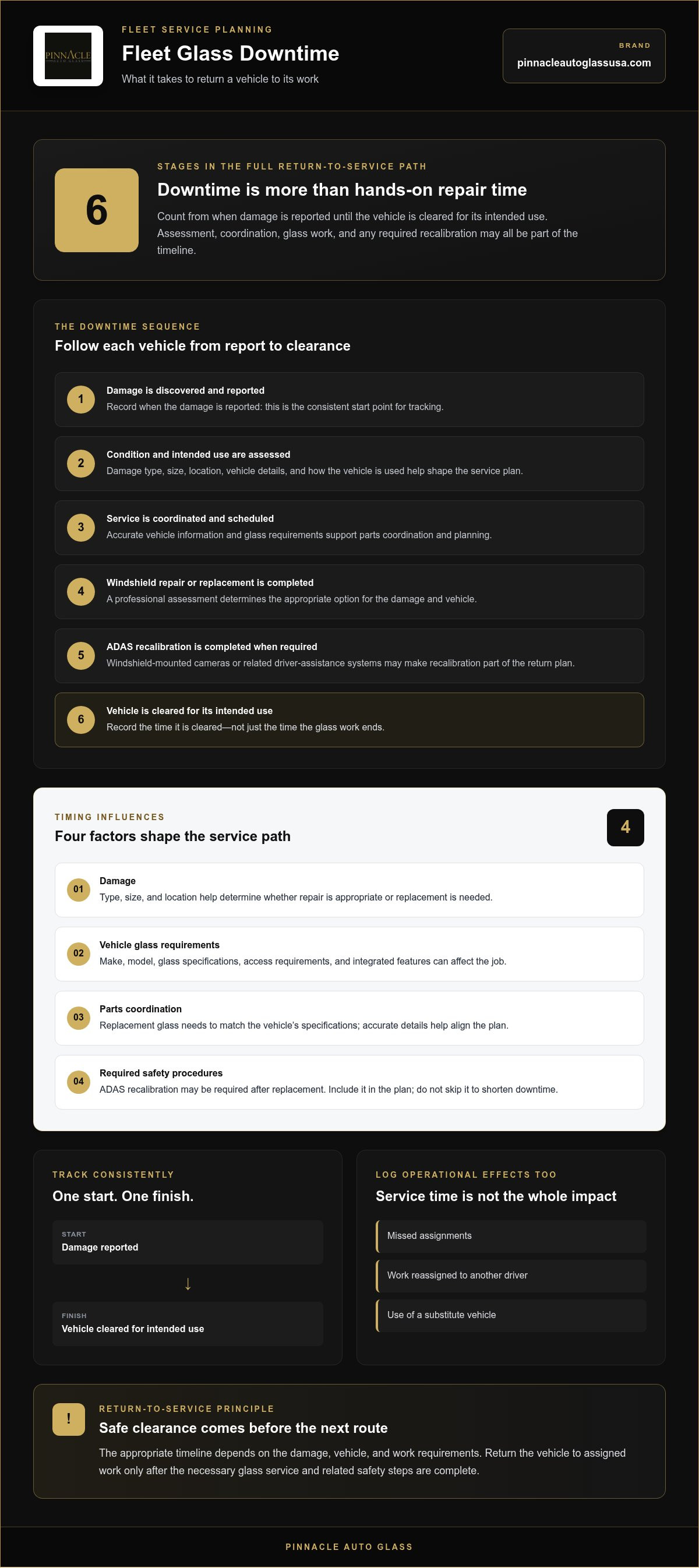
Track the stages separately to see where time is spent:
- Damage is discovered and reported.
- The vehicle’s condition and intended use are assessed.
- Service is coordinated and scheduled.
- Windshield repair or replacement is completed.
- ADAS recalibration is completed when required for the vehicle.
- The vehicle is cleared for its intended use.
These stages show why fleet glass repair turnaround time cannot be measured by labor time alone. Auto glass includes different types of vehicle glass, as outlined in this Auto glass overview. The damage, vehicle, and work requirements determine what needs to happen before it can return to its role.
How should a fleet manager measure glass-related downtime?
Use consistent start and end points. Record when the damage is reported, then record when the vehicle is cleared for its intended use. Track unavailable time alongside operational effects, such as missed assignments, work reassigned to another driver, or use of a substitute vehicle. Apply the same method to every incident. Consistent records make it easier to compare events even when the service needs differ.
Why does vehicle downtime matter beyond the repair appointment?
A vehicle out of service can reduce capacity even when the rest of the fleet is operating. A route may need to be reassigned, dispatch may have to revise the schedule, or another vehicle may be diverted from its planned work. These effects are separate from the time spent on glass service. Recording both gives managers a clearer picture of the disruption without relying on an unsupported dollar estimate.
For example, if a delivery vehicle is unavailable, another vehicle may cover its route while its own assignment is moved or delayed. A spare vehicle can help maintain capacity, but using it may also reduce backup options for the next disruption. The impact depends on the vehicle’s role, the schedule, and available fleet capacity; for specialized passenger services such as 1Executive Car, keeping vehicles in peak operational readiness is critical to upholding booked client itineraries. As a result, the same service duration can have different operational consequences.
Use downtime records to spot patterns, not just to close out individual incidents. Compare report and return-to-service times with missed work and vehicle substitutions. This can reveal where clearer reporting, earlier coordination, or more deliberate scheduling could reduce avoidable disruption. Keep safety requirements central: a vehicle should return to assigned work only after the necessary glass service and related steps are complete.
What Determines Fleet Glass Repair Turnaround Time?
Fleet glass repair turnaround time depends on the damage, the vehicle’s glass requirements, parts coordination, and any safety procedures needed after the work. There is no single duration that applies to every vehicle. A chip suitable for repair follows a different service path from damage that calls for windshield replacement. Vehicle technology can also add steps before the vehicle is cleared for use.
Start with the damage. Its type, size, and location help determine whether repair is appropriate or replacement is needed. The vehicle’s make and model matter because glass specifications and access requirements can vary. Sharing accurate vehicle details helps align the service plan and parts coordination with the job, reducing avoidable scheduling changes.
How do damage and vehicle details affect the service path?
An assessment establishes the appropriate response rather than assuming every chip can be repaired or every crack requires the same solution. Share the vehicle’s make and model, along with details about the damage, when arranging service. A qualified assessment determines which option suits the damage and vehicle. Automotive glass work requires task-specific knowledge, as reflected in the U.S. Department of Labor’s Automotive Glass Installers and Repairers occupational profile.
Parts coordination can also affect scheduling. The replacement glass must match the vehicle’s specifications, and sensors or other integrated features may influence the work involved. If your fleet includes different vehicle models, record the relevant details with each incident. This helps the service team plan for each vehicle instead of treating every glass issue as interchangeable.
When can ADAS recalibration affect a fleet vehicle’s return?
If windshield replacement involves a vehicle with windshield-mounted cameras or related driver-assistance systems, recalibration may be required. It is a safety step, not a task to skip to shorten downtime. Include any applicable recalibration in the vehicle’s return-to-service plan alongside the glass work. For more technical context, see this ADAS calibration and auto glass guide.
To help coordinate service, provide the glass team with the vehicle identification details, a clear description of the damage and its location, and information about relevant driver-assistance features. Explain how the vehicle is used, such as whether it supports scheduled deliveries or specialized fleet work. These details help clarify the job requirements and support a practical service plan, without assuming a fixed completion time.
Pinnacle Auto Glass provides windshield repair and replacement, with ADAS recalibration included in the plan when needed. Explore Pinnacle Auto Glass services to learn about coordinating fleet glass work around vehicle and job requirements.
Repair, Replacement, or Service Setting: Which Fleet Response Fits?
The right response depends on the damage, the vehicle, and the work it must safely perform. A professional assessment helps determine whether windshield repair is suitable or replacement is needed. Then consider whether mobile or in-shop service fits the vehicle and job requirements. Choosing based on fit rather than speed alone keeps fleet planning focused on safe completion.
| Option | When it may fit | Process and planning notes |
|---|---|---|
| Windshield repair | When an assessment finds the damage appropriate for repair. | Preserves the existing windshield when suitable. Share damage details and vehicle information to support planning. |
| Windshield replacement | When the damage cannot be appropriately repaired. | Requires replacement glass that meets the vehicle’s specifications. ADAS recalibration may also be needed. |
| Mobile service | When the vehicle and job requirements suit service at its location. | Can reduce the need to move a vehicle to a shop. Site access and work requirements inform coordination. |
| In-shop service | When the vehicle or job is better suited to a shop setting. | Plan around bringing the vehicle in and its availability for the service process. |
When might windshield repair be the appropriate option?
Repair may suit some damage, but not every chip or crack can be repaired. The damage’s characteristics and a professional assessment determine the appropriate path. If repair is suitable, preserving the existing windshield may avoid the steps involved in replacement. Include the damage location and a clear description when reporting the issue, then plan vehicle assignments around the assessed service needs.
When may replacement and recalibration be part of the solution?
Replacement may be needed when damage is not appropriate for repair. If the vehicle has ADAS equipment affected by windshield replacement, recalibration may be part of the work before return to service. Build this safety step into the plan rather than treating it as optional time. For more context on replacement considerations, consult the complete windshield replacement safety guide.
Review the service setting, too. Mobile service may suit a vehicle that can remain at an accessible fleet location, while in-shop service may better fit the vehicle or job requirements. Neither setting is always faster. Consider access, the work needed, and how moving the vehicle would affect assignments. Pinnacle Auto Glass offers mobile and in-shop service for fleet glass needs.
For clearer fleet glass repair turnaround time planning, record the assessment outcome, selected service path, service setting, and any calibration requirement for each vehicle. This gives dispatch and fleet teams a shared basis for adjusting assignments while the work is completed safely.
How to Plan Fleet Glass Service and Limit Avoidable Downtime
A consistent incident process helps fleet teams move from damage report to service coordination without losing track of safety or operational needs. Use the same steps whether one windshield is affected or several vehicles need attention. Clear records also make it easier to prioritize work and communicate updates among dispatch, maintenance, and drivers.
What should fleet teams do when glass damage is reported?
Record which vehicle is affected, where the glass is damaged, and whether it is currently operating. Take photographs if it is safe to do so. Follow company safety procedures, and do not dispatch a vehicle if the damage affects safe operation. Share the vehicle details and scheduling needs with the glass service team so coordination can start with useful information.
- Log the report. Record the report time, vehicle identification, model year, damage location, photographs where safe, and current operating status.
- Set priority. Address safety concerns first. Then weigh the vehicle’s operational role, upcoming assignments, and the consequences of removing it from rotation. A vehicle supporting a time-sensitive route may need a different plan from one with backup capacity.
- Share job details. Provide the vehicle make, model, model year, and relevant driver-assistance features. Describe the damage and note service logistics, such as where the vehicle can be accessed and when it is available.
- Coordinate the service plan. Use the assessment and vehicle requirements to align repair or replacement, mobile or in-shop service, and any applicable ADAS recalibration with fleet operations. Keep assignments flexible until the work and required safety steps are complete.
- Document return to service. Record service completion, applicable recalibration, and return-to-service guidance. Update fleet maintenance records and tell dispatch when the vehicle is cleared for its intended work.
How can managers reduce avoidable scheduling delays?
Keep vehicle records current, especially model year and driver-assistance features that may affect glass work. When reporting damage, share those details along with the damage description and the vehicle’s schedule. This gives the service team a clearer picture of the job and helps fleet staff plan around assignments without treating speed as a substitute for required work.
For mobile-service planning, consider vehicle access, site logistics, and whether the vehicle can remain at the location during service. The mobile glass repair fleet strategy offers further guidance on fitting mobile service into fleet operations.
Track report time, service coordination, completion, and return-to-service status consistently. If several vehicles are affected, keep a separate record for each one so assignments and updates remain clear. These records can show where coordination could improve and give dispatch a practical basis for adjusting routes or substitute-vehicle plans.
A structured fleet glass process supports safer decisions and clearer scheduling. Learn about coordinating fleet glass service with Pinnacle Auto Glass for windshield repair, replacement, and ADAS recalibration.
How Pinnacle Auto Glass Supports Fleet Glass Repair and Return to Service
Pinnacle Auto Glass supports fleet and commercial vehicle glass needs with windshield repair, windshield replacement, and ADAS recalibration. These services can work together in a return-to-service plan: assess the damage, determine the appropriate glass work, and include recalibration when the vehicle requires it. Fleet operators can coordinate the steps around the vehicle’s role and schedule while keeping required safety work central.
Service timing varies by vehicle and job. The assessment, glass specifications, service needs, and any required calibration all shape the work involved. A clear request helps establish the relevant details, but no single turnaround time applies to every fleet vehicle.
What can fleet operators coordinate with Pinnacle Auto Glass?
Fleet operators can coordinate windshield repair or replacement for commercial vehicles, including commercial trucks. Mobile and in-shop service are available. The right setting depends on the vehicle and job requirements, as well as practical details such as where the vehicle can be accessed. If windshield replacement involves ADAS equipment, include recalibration in the service discussion so the plan addresses the vehicle’s needs through return to service.
What information helps start a fleet glass service request?
Prepare the vehicle’s year, make, and model, along with a fleet contact and the best way to coordinate scheduling. Describe the damage and its location, where the vehicle is located, how it is used, and any known ADAS features. For multiple vehicles, list each one separately so its condition and operating needs can be considered individually.
- Vehicle year, make, and model
- Damage location and description
- Vehicle location and operating needs
- Known ADAS features and fleet contact details
These details help connect the service plan to fleet operations. For example, sharing when a vehicle is assigned to essential work can inform scheduling around its availability. If several units need glass service, note which have backup capacity and which support critical assignments. This information does not replace a damage assessment, but it gives the team a practical starting point for discussing repair or replacement and any related steps.
Plan around safe completion rather than treating the shortest possible appointment as the only measure of success. A vehicle should return to its intended work after the necessary glass service and applicable ADAS recalibration are addressed. Keep dispatch updated as plans develop, and record completion and return-to-service guidance in fleet maintenance records.
Share your vehicle details, damage information, and scheduling needs with Pinnacle Auto Glass to discuss a coordinated fleet glass plan. Discuss your fleet glass service needs.
Make Your Fleet’s Next Glass Decision Easier
Make glass response part of your fleet’s operating playbook before the next incident. Decide who records damage, who weighs vehicle priority, and how dispatch receives status updates. A shared process gives teams a clear starting point when schedules are moving and helps managers compare incidents without relying on memory. The goal is not to control every variable in fleet glass repair turnaround time. It is to make decisions and communication more consistent while treating safe return to service as the measure of completion.
Review your current process with the people who report damage, coordinate service, and assign vehicles. Identify where information tends to go missing, then add those details to your reporting routine. This preparation can make the next service request easier to organize without placing speed ahead of safety. Refresh the process as vehicle assignments and fleet responsibilities change.
Ready to plan the next step for your fleet? Discuss your fleet glass service needs with Pinnacle Auto Glass.
Frequently Asked Questions
How is fleet glass repair turnaround time measured?
Measure it from when damage makes a vehicle unavailable for its assigned work until it is cleared to return to that work. Record the timestamps, then note any operational impact, such as a missed route or substitute vehicle. For example, if a truck is taken out of rotation before an appointment, include that waiting period. Consistent records make fleet glass repair turnaround time reflect operational downtime, not just time spent on the repair.
Can fleet glass repairs be coordinated for multiple vehicles at once?
Yes. Fleet teams can coordinate glass service for multiple vehicles as part of a shared planning process. Provide a separate record for each vehicle, including its location, damage, operating needs, and relevant ADAS features. For example, if several vehicles are due for service during a planned maintenance window, identify which can be unavailable at the same time and which must remain in rotation. Pinnacle Auto Glass provides fleet glass services for commercial vehicles.
Does insurance approval affect fleet glass repair turnaround?
It can. If your fleet’s process requires insurer review or authorization, that administrative step may affect when service can proceed. The process can vary with your coverage and the insurer’s documentation requirements. To keep the request organized, gather the policy or claim details your fleet normally uses, along with the vehicle information and damage report. Coordinate with your insurer and fleet contact so service planning and approval steps stay aligned.
What information should I provide when reporting fleet glass damage?
Provide the vehicle’s year, make, and model, its current location and operating status, and a clear description of the damage and where it appears. Share photos if they can be taken safely, along with any known ADAS features and the fleet contact’s details. Explain the vehicle’s next assignment or scheduling constraints, too. For example, noting an upcoming route helps the team understand operational priorities while the damage is assessed.
What happens if a fleet vehicle is damaged during an active route?
Have the driver follow company safety procedures and stop operating the vehicle if the damage affects safe use or visibility. The driver should move to a safe location when possible, notify dispatch, and report the damage and vehicle status. Dispatch can then decide how to handle the assignment and arrange roadside support through a provider like Dependable Towing & Recovery Services under fleet procedures. Do not ask a driver to continue simply to protect the schedule. Safety and a qualified assessment come first.
Can a fleet vehicle return to service immediately after windshield replacement?
Not necessarily. Return depends on the work performed and the vehicle’s requirements. The technician must confirm when the vehicle is safe to drive, including any applicable adhesive-related instructions and ADAS recalibration after replacement. Do not dispatch it based only on the fact that glass installation is complete. Record the technician’s return-to-service guidance and make sure the vehicle is cleared for its intended use before assigning it again.


