
Can you file a glass claim without full coverage? The answer depends less on that familiar label and more on the coverage and terms in your actual policy. “Full coverage” is not a specific policy type, and policies can include different protections, deductibles, and exclusions.
Before arranging repairs or submitting a claim, check your declarations page and policy documents for comprehensive, collision, or glass-specific coverage. The cause of the damage and your deductible can also affect whether a claim makes sense. Knowing what to look for can help you avoid surprises and prepare useful details for your insurer.
This guide explains which policy details can affect eligibility, what information to gather before contacting your insurance company, and what to do if coverage isn’t available or your claim is denied. You’ll also learn how to plan windshield repair or replacement out of pocket, including when ADAS recalibration may be needed after glass installation.
Key Takeaways
- “Full coverage” isn’t a standardized policy type. Check your declarations page and policy terms to see which coverage may apply.
- Filing a glass claim without full coverage may still be possible, depending on the damage, your policy, and its deductible.
- Before contacting your insurer, gather your policy and vehicle details and record how and when the glass was damaged.
- Ask your insurer how it will assess the claim and what steps to follow before arranging the work.
- If insurance doesn’t pay, determine what glass work your vehicle needs. Pinnacle Auto Glass provides windshield repair, replacement, and ADAS recalibration.
Filing a Glass Claim Without Full Coverage: What the Phrase Really Means
“Full coverage” sounds like a specific level of protection, but it’s informal shorthand, not a standardized auto insurance policy. Drivers often use it to mean they carry liability, collision, and comprehensive coverage. The exact mix can differ from one policy to another, so the phrase alone can’t confirm whether windshield damage is covered.
In brief: “Full coverage” is a conversational label for a combination of auto coverages. A glass claim depends on the coverages and terms actually listed in your policy.
That distinction matters when filing a glass claim without full coverage. Not having one coverage type doesn’t automatically settle whether a glass loss is covered. The damage may have occurred in a collision or resulted from a non-collision event. Which coverage could apply depends on the circumstances, your policy language, and any deductible, exclusions, or limits.
What drivers usually mean by “full coverage”
People commonly use “full coverage” to describe a combination of protections rather than one universal package. But drivers, insurers, and others may use the phrase differently in conversation. Don’t treat it as a policy term or assume it guarantees coverage for every kind of damage.
Check your declarations page for the coverages shown on your policy, then read the related wording for details. A general Vehicle insurance overview can explain common coverage categories, but it can’t establish what your individual policy covers.
Why the policy wording matters for glass damage
Your policy sets out which losses may be covered, what deductible applies, which exclusions or limits may matter, and how to report a claim. For example, glass damage associated with a collision may be assessed differently from damage caused by a non-collision event. These are general distinctions, not a decision about a particular claim.
Your insurer determines how the policy applies to the reported loss. Review your documents and describe the damage accurately when you contact the company. Windshield work also has safety considerations beyond insurance. A windshield replacement safety guide explains why proper glass installation and, when required, ADAS recalibration matter.
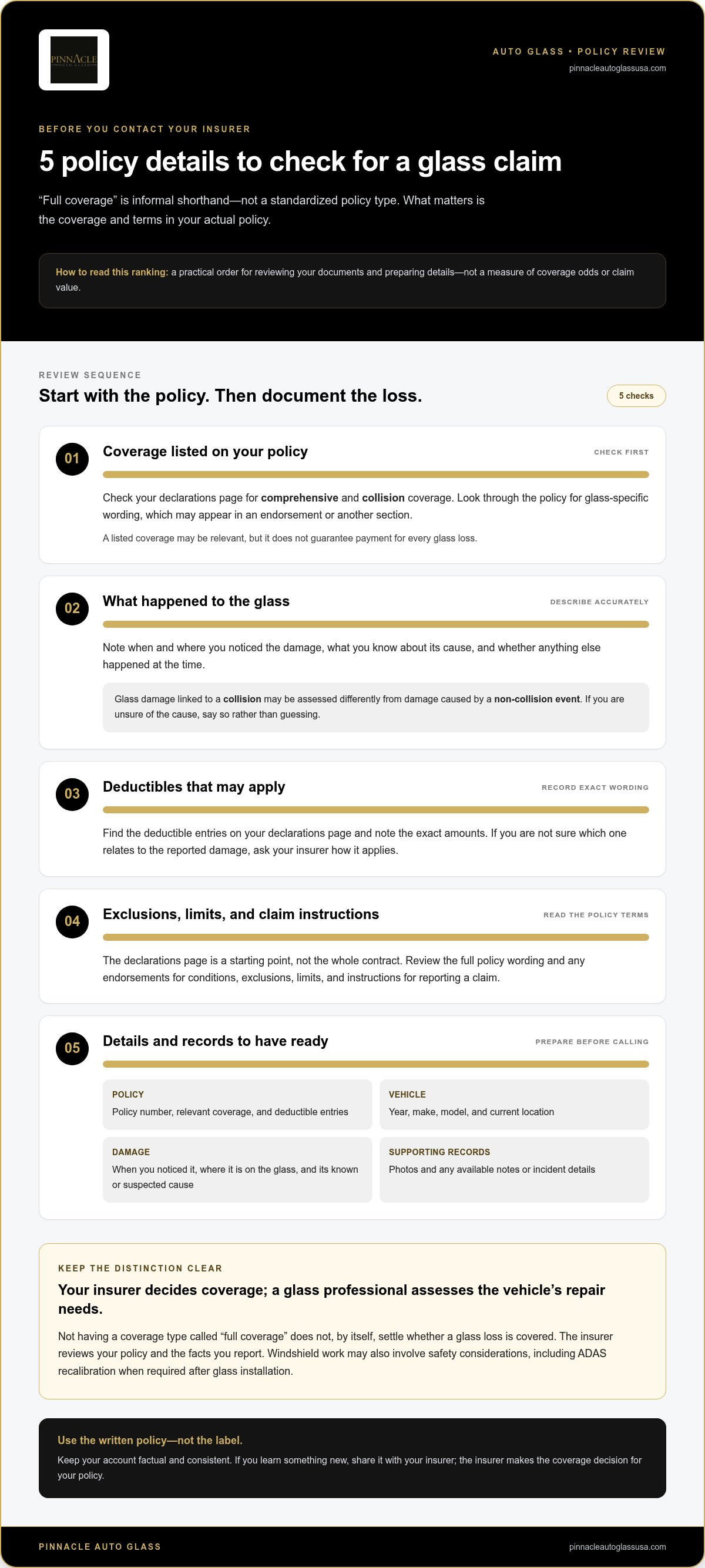
Before assuming a claim is covered or ruled out, identify the relevant policy details and the circumstances of the damage. Start with:
- Coverage names: Note the coverages listed on your declarations page.
- Loss description: Record when and how the glass was damaged, based on what you know.
- Policy terms: Look for applicable deductibles, exclusions, limits, and claim instructions.
This review won’t replace the insurer’s coverage decision, but it can help you ask focused questions and understand the response. Rely on the written policy, not the broad label “full coverage.”
Which Policy Details Can Affect an Auto Glass Claim?
Once you have your policy documents, focus on the details that connect your coverage to the damage. The declarations page is a useful starting point, but it may not explain every condition that applies. The full policy wording and any endorsements can provide important context. Your insurer evaluates the claim under your individual policy terms and the facts you provide.
When filing a glass claim without full coverage, don’t rely on a coverage label or assume that one missing protection settles the question. Check what coverage is listed, how the loss happened, and whether a deductible, exclusion, or limit could affect the claim.
Find the relevant coverage and deductible
Start with the declarations page, which summarizes the coverages on your policy and may show applicable deductibles. Look for comprehensive and collision coverage, then review the policy documents for terms specifically addressing glass. Glass-related provisions may appear in an endorsement or another section of the contract. A listed coverage can be relevant without guaranteeing payment for every glass loss.
Record the exact wording and deductible amounts. If a term is unclear, ask your insurer how it applies to the reported damage. Don’t make a decision based only on a general policy summary.
Match the loss details to the policy
Write down when and where you noticed the damage, what you know about its cause, and whether anything else happened at the time. If you’re unsure how the glass was damaged, say so rather than guessing. A clear, accurate account helps the insurer assess the event against the policy’s covered-loss language, conditions, and exclusions.
Policy provisions and applicable rules can vary. One driver’s experience or a general online explanation can’t determine your claim. The insurer reviews the circumstances and contract for your specific policy.
Before contacting the insurer, gather these practical details:
- Policy information: Your policy number and the relevant coverage and deductible entries.
- Vehicle details: The vehicle’s year, make, model, and current location.
- Damage information: When you noticed it, where it is on the glass, and the known or suspected cause.
- Supporting records: Photos of the damage and any available notes or incident details.
Keep your description factual and consistent. If you discover new information, share it with the insurer rather than trying to fit the event into a coverage category yourself. The insurer makes the coverage decision; a glass professional can address the vehicle’s repair needs separately.
Once you understand the policy review process, you can plan the glass work your vehicle needs. Pinnacle Auto Glass windshield services include repair and replacement, with ADAS recalibration after glass installation when the vehicle’s systems require it.
Glass Claim Scenarios: Comprehensive, Collision, or No Applicable Coverage?
The cause of the damage can help identify which part of a policy may be relevant. A falling object and a crash are different events, so the same coverage may not apply to both. The examples below are general illustrations, not predictions of claim approval. Your insurer assesses the facts under your policy terms.
| Policy situation | Possible relevance to glass damage | Question to ask your insurer |
|---|---|---|
| Comprehensive coverage | May apply to some non-collision losses, such as glass damaged by a falling object, subject to policy terms, exclusions, and deductible. | Does my comprehensive coverage apply to this cause of damage, and what deductible or glass-specific terms apply? |
| Collision coverage | May be relevant if the glass was damaged during a covered collision, depending on the policy and circumstances. | Would this event be assessed under collision coverage, and what conditions or deductible apply? |
| Liability coverage only | Generally addresses liability to others. It doesn’t automatically cover damage to your own vehicle’s glass. | Does any other coverage or policy provision apply to damage to my vehicle? |
| No applicable coverage | You may need to arrange and pay for the glass work yourself. | Has the claim been reviewed under all relevant policy terms, and what is the decision based on? |
When comprehensive or collision coverage may be relevant
Imagine a branch falls and cracks your windshield while your vehicle is parked. That’s a non-collision example where comprehensive coverage may be relevant. If the glass breaks during a crash, collision coverage may be considered instead. These examples show how the type of event can matter, but they don’t determine coverage.
Describe what happened as accurately as you can, then compare the event details with your policy and the insurer’s assessment. If the cause is uncertain, say so. Don’t assume that a coverage category guarantees payment or that a particular label settles the claim.
What if the policy has no applicable coverage?
If your insurer determines that no coverage applies, you may need to pay for the necessary glass work yourself. Ask for the reason behind the decision and review it alongside the relevant policy wording. If you believe a detail was misunderstood or omitted, provide accurate supporting information and ask the insurer how it can be reviewed. The insurer makes coverage decisions; a glass professional can address the repair or replacement your vehicle needs.
Service costs can depend on factors such as the vehicle and the work required. The windshield replacement cost guide explains factors that may affect replacement costs, but it doesn’t determine your insurance outcome. Pinnacle Auto Glass provides windshield repair and replacement, with ADAS recalibration after glass installation when the vehicle’s systems require it.
How to Ask Your Insurer About Filing a Glass Claim
An organized call can help you understand the next step without assuming the claim will be approved. Before contacting your insurer, collect the policy and damage details you have. Explain what happened as accurately as possible, then ask what the insurer needs from you and what to do before arranging work.
When filing a glass claim without full coverage, focus on getting clear answers about how your policy may apply instead of guessing what the insurer will decide. Follow the insurer’s instructions and keep a record of the conversation.
Prepare the information before calling
Have your declarations page and policy number ready. Note your vehicle’s year, make, and model, when you noticed the damage, and what you know about how it occurred. Take clear photos from angles that show the damage and its location. If you don’t know the cause or exact time, say so rather than filling in gaps with assumptions.
Write down your questions before the call. During the conversation, record the representative’s name or department, the date, any claim reference provided, and the instructions you receive. These notes can help you track what has been discussed if you need to follow up.
Questions to ask the claims representative
Ask focused questions and request clarification if an answer is unclear. The representative can explain the insurer’s process and how it will review the reported loss under your policy.
- Coverage: Which policy provision may apply to this reported damage?
- Deductible: Does a deductible apply, and how will it affect the claim?
- Conditions: Is an exclusion, limit, or other policy condition relevant?
- Documentation: Do you need photos, an inspection, or other information to assess the claim?
- Authorization: Is prior authorization required before I arrange repair or replacement?
- Claim tracking: What is the claim reference, and how should I provide additional information?
Follow the insurer’s sequence for reporting and documentation. Before authorizing work based on an expectation of insurance payment, make sure you understand whether the insurer has made a coverage decision or is still reviewing the claim. A claim reference or initial conversation alone isn’t confirmation that payment is approved. Ask what costs, if any, may remain your responsibility under the policy.
Keep the insurance process separate from the vehicle’s repair needs. Pinnacle Auto Glass provides windshield repair and replacement, as well as ADAS recalibration after glass installation when the vehicle’s systems require it. Learn about professional windshield service while you follow the insurer’s instructions.
Next Steps After a Glass Claim Decision
An insurance decision and the work your vehicle needs are separate matters. Approval, partial coverage, or denial determines how the insurer handles the claim under your policy. It doesn’t, by itself, tell you whether the windshield should be repaired or replaced. Plan the glass work based on the vehicle’s needs, and direct insurance questions to the insurer.
If you’re filing a glass claim without full coverage, first understand the written decision, then decide how to arrange the required glass service. Pinnacle Auto Glass provides windshield repair, windshield replacement, and ADAS recalibration. The company does not determine claim eligibility or guarantee reimbursement.
If the claim is approved, limited, or denied
Read the insurer’s written decision and note what it says about the applicable coverage, deductible, limits, or reason for a denial. If anything is unclear, ask the insurer to explain how the decision relates to your policy and the facts of the loss. For a limited approval, clarify which costs or steps may remain your responsibility before moving forward.
If you disagree with the decision, follow the insurer’s formal review process where applicable and provide any accurate information it requests. A coverage decision is not a recommendation about the right glass service, so keep those decisions separate.
Arrange professional glass service
Repair or replacement may be appropriate depending on the damage and your vehicle’s needs. A glass professional can assess the damage and explain the service required. If replacement is needed, vehicles equipped with Advanced Driver Assistance Systems (ADAS) may require recalibration after the glass is installed. This step relates to the vehicle’s systems, not to whether an insurer has approved a claim.
For more technical context, the ADAS calibration reference guide explains how recalibration connects to auto glass work. Use that information to understand the service involved, while relying on your insurer for coverage and payment questions.
Before authorizing work, make sure you understand the decision and any amount the insurer says may be your responsibility. If the claim is denied or no applicable coverage is available, ask the glass professional about the service needed and its cost before proceeding. Keep copies of the insurer’s decision, claim reference, and service documentation together. This gives you a clear record of both the claim and the work arranged without assuming one guarantees the other.
Choose the next step based on the glass condition and your vehicle’s requirements. Pinnacle Auto Glass handles windshield repair and replacement, with ADAS recalibration after installation when the vehicle’s systems require it. Arrange windshield repair or replacement with Pinnacle Auto Glass.
Take the Next Step Toward Resolving Your Glass Damage
An insurer’s decision addresses the claim, but your vehicle still needs a plan for its damaged glass. Use what you learned from the claim review to decide how to proceed, and keep the insurance outcome separate from the service your vehicle requires. If you’ll be paying out of pocket, get clear information about the work before authorizing it.
Filing a glass claim without full coverage can feel uncertain, but you can move forward by focusing on practical next steps and getting information from the right source. Your insurer can explain its coverage decision. Pinnacle Auto Glass provides windshield service for personal and commercial vehicles, including ADAS recalibration when required after installation. Contact Pinnacle Auto Glass about windshield repair or replacement.
Frequently Asked Questions
Is “full coverage” required to file an auto glass claim?
No. “Full coverage” is informal shorthand, not a single standardized policy type, and it isn’t a prerequisite for reporting damage. Filing a glass claim without full coverage means the insurer will review the loss under the coverages and terms in your actual policy. Before assuming payment is available, check your declarations page, endorsements, deductible, and exclusions. Describe what happened accurately, then let the insurer determine whether the policy applies.
Can liability-only insurance pay for damage to my own windshield?
Liability coverage generally addresses an insured driver’s responsibility for injury or damage to others. It doesn’t automatically pay to repair that driver’s own windshield. The result depends on your policy and the circumstances of the damage. Review your coverage documents and ask the insurer whether another coverage or endorsement could apply. Explain whether the glass was damaged in a collision or by a separate event, without assuming either situation is covered.
Will filing a glass claim make my insurance premium go up?
It may affect your premium, but there’s no universal outcome for every glass claim. The effect can depend on your insurer, policy, loss circumstances, and applicable rules. Before proceeding, ask how the claim would be recorded and whether the insurer can explain potential premium consequences. That information can help you weigh your options, but don’t treat a general answer as a guarantee of what your future premium will be.
Can I file a glass claim if I do not know what caused the damage?
Yes, you can report what you know without guessing at the cause. Note when you first noticed the damage, where it is on the glass, and any circumstances you observed, such as finding the vehicle damaged after it was parked. Take photos and tell the insurer what remains uncertain. The insurer will assess the available facts under your policy; uncertainty alone doesn’t establish either coverage or denial.
Should I contact my insurer before arranging windshield repair or replacement?
Contacting your insurer first can clarify whether it requires particular documentation, an inspection, or authorization before work begins. Procedures vary, so follow your policy instructions and the claims representative’s guidance. If the damage raises an immediate safety concern, prioritize safe vehicle use and promptly ask the insurer and glass service professional about next steps. Don’t assume that arranging work first will meet the insurer’s requirements or lead to payment.
What information should I have ready when I report a glass claim?
Have your policy number, vehicle year, make and model, the date you noticed the damage, and a factual description ready. Photos can help show the damage and its location. The insurer may request other details or documents depending on the policy and reported loss. During the conversation, record the claim reference and instructions, including any follow-up requested. These details help you track the process, but they don’t guarantee approval.
Can a damaged windshield affect ADAS features after replacement?
It can. Some vehicles have driver-assistance cameras or sensors connected to the windshield area, and replacement may require recalibration based on the vehicle’s equipment and service procedures. Don’t assume the same requirements apply to every vehicle. Review the ADAS calibration and auto glass guide for technical context, and discuss your vehicle’s service needs with Pinnacle Auto Glass.


