What if you could restore your vehicle's structural integrity without spending a single dollar out of pocket? Under Kentucky Statute 304.20-060, policyholders with comprehensive coverage are entitled to a zero-deductible glass replacement. Mastering the windshield replacement process Kentucky requires involves more than just swapping glass; it demands a precise technical approach to ensure your vehicle remains safe. You have the legal right to choose your repair shop, and current standards now require full transparency regarding your insurance claim and safety systems.
We understand that a cracked windshield is a stressful disruption that raises concerns about safety and vehicle downtime. This professional guide will help you master the technical steps, legal benefits, and safety requirements of replacing your glass in 2026. You'll learn how to secure a zero out-of-pocket replacement, why ADAS recalibration is essential for modern safety cameras, and how the April 2026 regulations protect your consumer rights. We'll also cover the federal standards for commercial truck glass to keep your fleet compliant and moving.
Key Takeaways
- Learn how Kentucky law enables zero out-of-pocket costs for glass replacement through comprehensive insurance policies.
- Master the technical windshield replacement process Kentucky professionals use to ensure structural integrity and long-term durability.
- Understand why ADAS recalibration is a non-negotiable step for modern vehicles to keep safety cameras and sensors functioning correctly.
- Discover specific DOT safety standards and glass requirements for maintaining commercial trucks and fleet vehicles.
- Navigate the updated 2026 insurance claim regulations to protect your consumer rights and ensure a transparent repair experience.
Understanding Kentucky Windshield Laws and Safety Standards
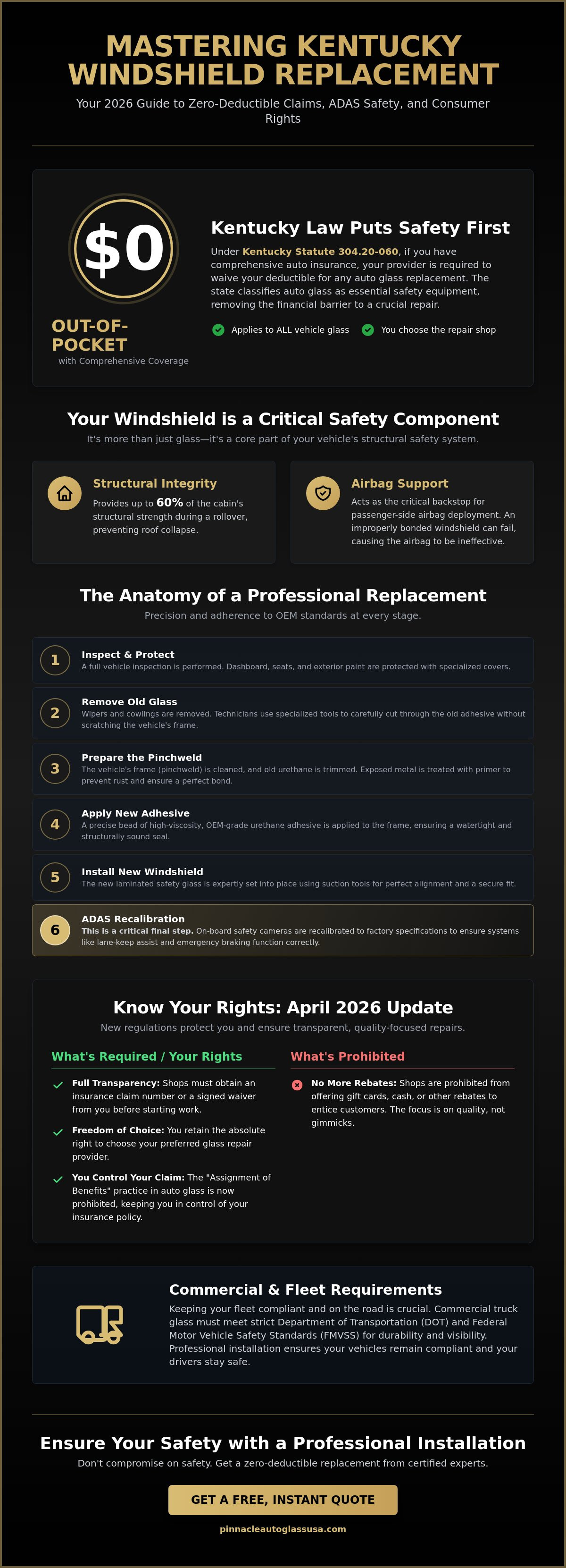
Kentucky laws prioritize driver safety by removing financial barriers to essential vehicle maintenance. The most significant legislation for vehicle owners is Kentucky Statute 304.20-060. This law mandates that insurance providers waive deductibles for glass replacement claims when the policyholder has comprehensive coverage. Because the state classifies auto glass as essential safety equipment, you don't have to choose between a clear view and your household budget. This zero-deductible benefit applies to all glass on the vehicle, not just the front windshield.
The windshield replacement process Kentucky drivers follow is governed by these consumer protection rules. By classifying glass as safety equipment, the state acknowledges that a damaged windshield is more than a cosmetic flaw; it's a potential structural failure. In a collision, your windshield provides up to 60% of the cabin's structural strength during a rollover. It also serves as the critical backstop for passenger-side airbag deployment. Without a professionally installed windshield, these safety systems cannot function as intended.
The Legal Right to Zero-Deductible Replacement
Kentucky is one of only a few "zero-deductible" states in the country. If you carry comprehensive insurance, your provider pays the full cost of the replacement. This benefit doesn't apply to those with liability-only coverage, as those policies only cover damage to other people's property. You have the absolute right to choose your preferred service provider, regardless of insurance company recommendations.
New regulations effective April 2026 have added layers of protection for consumers. These laws ended the "Assignment of Benefits" in auto glass claims, ensuring you maintain control over your insurance process. Glass shops must now obtain an insurance claim number or a signed waiver before starting any work. They're also prohibited from offering gift cards or rebates to entice customers. These changes ensure the focus remains on quality repairs and technical accuracy rather than marketing gimmicks.
Safety Standards for Modern Auto Glass
Modern windshields are made of laminated safety glass, which is designed to remain in one piece upon impact. This specialized material meets Federal Motor Vehicle Safety Standards (FMVSS) for roof crush resistance and occupant retention. DIY installations or non-professional work often fail these rigorous standards because they lack the high-pressure bonding tools required for a secure fit.
If a windshield isn't bonded correctly with professional-grade urethane, it can detach during an accident. This failure prevents the airbags from deploying at the correct angle, significantly increasing the risk of injury. Professional installation ensures the glass meets original equipment manufacturer (OEM) specifications, maintaining the safety envelope of your vehicle and protecting all occupants.
The 6-Step Professional Windshield Replacement Process
A professional installation is a rigorous technical workflow. It ensures the glass functions as a structural component of your vehicle frame. The windshield replacement process Kentucky experts utilize follows strict safety protocols to meet the Kentucky Revised Statutes for safety glass. Every step focuses on precision and long-term durability.
The process begins with a comprehensive vehicle inspection. Technicians protect the interior using specialized covers for the dashboard and upholstery. Next, they remove the wipers and plastic cowlings to access the glass edge. Using specialized fiber lines or power tools, the technician cuts through the old adhesive without scratching the paint. This prevents future corrosion and ensures a clean surface for the new bond.
Technical Preparation and Glass Removal
Once the old glass is removed, the technician trims the old urethane down to a thin, uniform layer. The pinchweld is the metal frame or flange where the glass meets the vehicle body, serving as the primary structural mounting point for the adhesive bond. Any exposed metal is treated with a specialized primer to prevent rust. This preparation phase is critical. If the bonding surface contains dirt or old residue, the new adhesive will fail. We prioritize a clean, clinical environment for every installation to ensure your safety.
The Installation and Curing Phase
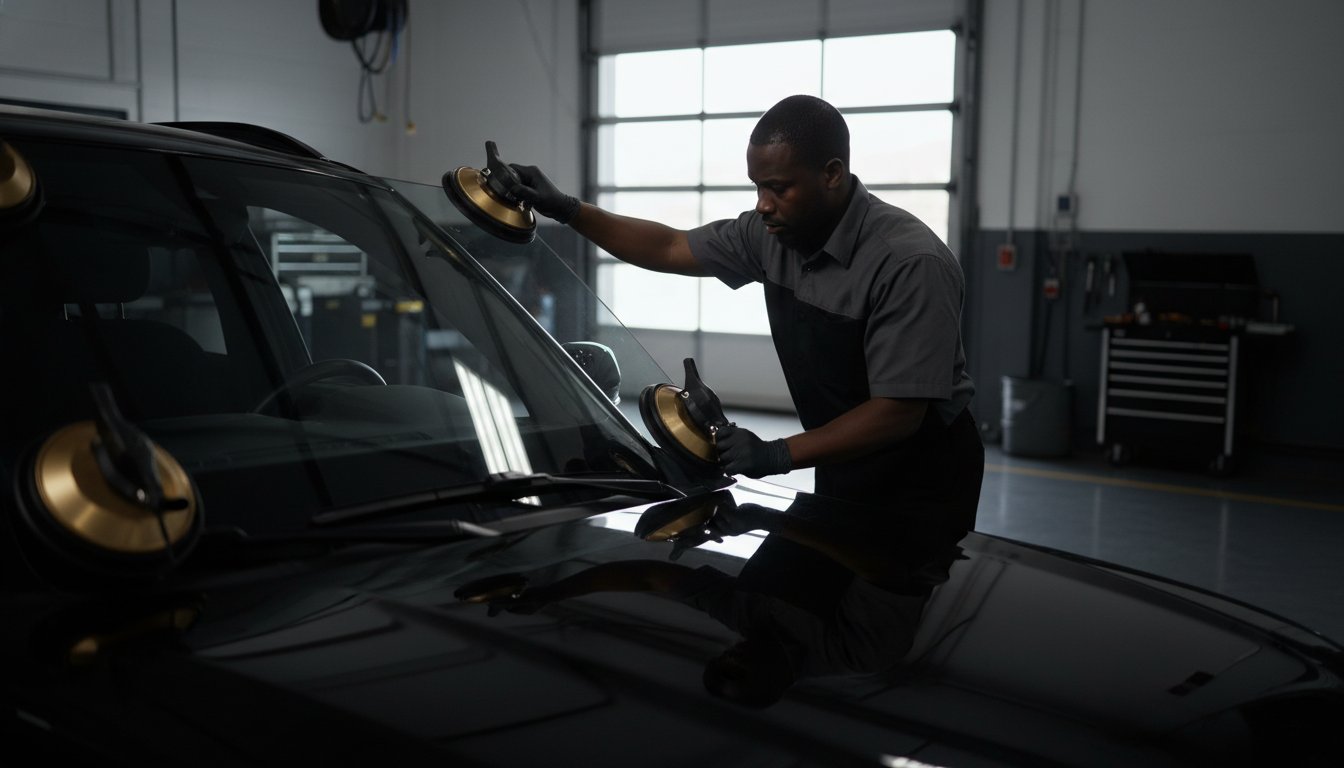
Modern vehicle assembly relies on high-viscosity urethane to provide immediate structural support. The technician applies a precise bead of this professional-grade adhesive around the perimeter. Precision glass setting follows, often using suction cups to ensure the unit sits perfectly within the frame. Once the glass is seated, the trim and wipers are reinstalled. If you notice a crack, scheduling a professional windshield replacement is the fastest way to ensure your vehicle remains road-legal.
The final and most important phase is the curing time. Safe Drive-Away Time (SDAT) for 2026 adhesives has improved, but you must still wait for the bond to set. Weather conditions in Kentucky, such as high humidity or freezing temperatures, can fluctuate. These factors influence how quickly the urethane reaches its full strength. A technician will provide a specific timeframe based on current conditions. This ensures the windshield replacement process Kentucky drivers undergo results in a vehicle that is ready for the road.
Recalibrating ADAS: The Critical Step After Glass Installation
By 2026, Advanced Driver Assistance Systems (ADAS) have become standard equipment in nearly every new vehicle on Kentucky roads. These systems utilize cameras and sensors mounted directly behind the windshield to manage critical safety functions like automatic emergency braking and lane-keeping assistance. When you begin the windshield replacement process Kentucky technicians follow, you aren't just replacing a piece of glass; you're disturbing a complex sensory network. Any physical shift in the glass position, however minor, requires a digital reset to ensure the safety systems remain accurate.
The Importance of ADAS recalibration cannot be overstated. Modern safety cameras are calibrated to specific geometric parameters. If a camera is off by even a single degree, its field of vision at 100 yards can be skewed by several feet. This misalignment causes the system to react to the wrong lane or fail to detect a hazard in time. Kentucky law now mandates that glass shops inform customers if their vehicle requires this service, reflecting the industry's shift toward comprehensive safety accountability.
Why Calibration is Non-Negotiable
A 1-degree camera tilt can lead to catastrophic failures in emergency braking performance. If the camera thinks an object is further away or in a different lane than it actually is, the vehicle's computer won't trigger the brakes correctly. This is why we integrate recalibration into the professional windshield replacement workflow. Most manufacturers require a post-installation safety check to verify that the camera "sees" the road as intended. Skipping this step leaves you with a vehicle that may provide a false sense of security while its active safety features are effectively blind.
Static vs. Dynamic Calibration Processes
Recalibration generally follows two distinct methods depending on the vehicle's make and model. Static calibration takes place in a controlled shop environment. Technicians use specialized target boards and laser levels to reset the camera's baseline. This requires a perfectly level floor and specific lighting conditions to ensure the camera identifies the targets with 100% accuracy.
Dynamic calibration involves a real-world road test. A technician connects a diagnostic tool to the vehicle's computer and drives the car at specific speeds on clearly marked roads. This allows the system to "learn" its new position by tracking lane lines and traffic patterns. Some vehicles require both methods for a complete reset. This dual-method approach is often the final technical hurdle in the windshield replacement process Kentucky drivers rely on for total vehicle safety. Once finished, you'll receive a detailed calibration report as proof that your safety systems are fully functional and compliant with OEM standards.
Commercial and Fleet Windshield Replacement Requirements
Commercial logistics in Kentucky demand high-performance equipment and strict adherence to safety protocols. For semi-trucks and box trucks, windshield damage is more than a nuisance; it is a significant compliance risk. Federal regulations, specifically 49 CFR § 393.60, dictate the condition of commercial glass. Any crack or chip larger than 3/4 of an inch in the area cleared by the windshield wipers is a violation. Intersecting cracks are also strictly prohibited. These rules ensure that long-haul drivers maintain an unobstructed view of the road at all times.
The windshield replacement process Kentucky fleet managers oversee must prioritize speed and regulatory alignment. Commercial vehicles often utilize specialized glass with unique thickness and curvature requirements. These units are designed to withstand the high-mileage demands of interstate transport. When a rig is sidelined due to glass damage, it impacts the entire supply chain. Professional service providers focus on getting these assets back into service quickly without compromising the structural integrity of the cab.
Heavy-Duty Glass for Logistics and Transport
Commercial rigs require glass that meets rigorous Federal Motor Carrier Safety Administration (FMCSA) standards. Unlike passenger vehicles, the glass in a Class 8 truck must handle different aerodynamic pressures and vibration levels. We ensure all replacements meet or exceed these federal motor carrier safety regulations. Visibility is the primary focus. Technicians verify that the new unit is free of distortions that could impair a driver's depth perception during long shifts on state highways. This technical precision prevents costly DOT fines and keeps your drivers safe.
Fleet Management and Scalable Services
Managing glass for a logistics company requires a scalable approach. High-mileage delivery vans and service trucks encounter road debris frequently, making regular maintenance a necessity. We provide streamlined billing for commercial insurance claims to reduce administrative burdens for your team. Our on-site mobile services allow technicians to perform replacements at your warehouse or terminal, eliminating the need to transport heavy equipment to a shop. This approach minimizes downtime and keeps your operations moving.
Maintaining safety consistency across a diverse fleet is a core requirement for modern transport companies. Whether you manage five box trucks or a hundred semi-tractors, the technical standards remain the same. Every installation must follow OEM procedures to ensure the glass remains secure during a collision or rollover. If your vehicles are currently grounded due to glass damage, schedule fleet glass services to restore your fleet to full capacity. Our team understands the urgency of commercial schedules and provides the organized, result-oriented service your business requires.
Navigating Kentucky Insurance Claims for Auto Glass
Understanding the insurance side of the windshield replacement process Kentucky mandates is the final step in restoring your vehicle's safety. Kentucky remains a zero-deductible state for glass claims under KRS 304.20-060. If you carry comprehensive insurance, your provider must cover the full cost of the replacement. Many drivers hesitate to file a claim because they fear premium increases. In most cases, glass damage is considered a "no-fault" comprehensive claim. These types of claims generally do not impact your monthly rates like an at-fault collision would.
The legal landscape changed significantly in April 2026. Kentucky law now prohibits the use of "Assignment of Benefits" for auto glass. This means you maintain full control over your claim rather than signing those rights over to a repair shop. You have the absolute right to choose your service provider. While insurers may suggest a preferred network, the choice remains yours. Choosing a specialist who understands these 2026 regulations ensures your claim is handled legally and efficiently.
The Claim Submission Workflow
Filing a claim is a straightforward process when you have the right documentation ready. Follow these steps to ensure a smooth experience:
- Gather Vehicle Data: Have your Vehicle Identification Number (VIN) and insurance policy number available.
- Contact a Specialist First: Speak with your glass provider before calling the insurance company. They can help identify if your vehicle requires ADAS recalibration, which must be included in the initial claim.
- Secure a Claim Number: Under the April 2026 law, the shop must obtain a claim number or a signed waiver from you before work begins.
- Identify the TPA: Many insurers use Third-Party Administrators (TPAs) to manage glass claims. Your service provider will coordinate with these entities to verify coverage.
Choosing a Certified Specialist
Technical expertise is the most important factor when selecting a shop. Look for providers that adhere to AGRSS (Auto Glass Replacement Safety Standards). Because modern vehicles rely on complex sensors, your chosen specialist must have the equipment to perform ADAS recalibration on-site. A provider that handles all insurance paperwork on your behalf reduces your administrative burden and ensures the billing reflects "reasonable and customary" charges as required by state law.
This streamlined windshield replacement process Kentucky residents benefit from ensures that technical safety standards are met without financial friction. Once the installation and recalibration are complete, verify that the provider offers a written warranty on the installation. This protects you against leaks or manufacturing defects for the life of the glass. By following this professional path, you ensure your vehicle returns to the road with its structural integrity and safety systems fully restored.
Secure Your View and Your Safety Today
Maintaining a clear and structurally sound windshield is a legal and safety necessity on Kentucky roads. You now understand how state laws enable zero out-of-pocket replacements and why technical precision is required for modern safety systems. The windshield replacement process Kentucky drivers follow must account for both the physical bond of the glass and the digital accuracy of ADAS cameras. Whether you manage a commercial fleet or a single family vehicle, prioritizing professional installation ensures you remain compliant with 2026 regulations.
Pinnacle Auto Glass provides the expertise needed to navigate these complex requirements. We are Certified ADAS Recalibration Experts and Commercial and Fleet Vehicle Experts who prioritize your safety and uptime. Our team acts as Direct Insurance Billing Specialists to simplify the paperwork and ensure your claim is handled correctly from the start. Start your Kentucky windshield replacement claim with Pinnacle Auto Glass and experience a seamless return to the road. Don't let a small crack compromise your safety when a professional solution is ready to assist you.
Frequently Asked Questions
Is windshield replacement really free in Kentucky?
Yes, windshield replacement is free if you carry comprehensive insurance coverage. Kentucky Statute 304.20-060 requires insurance providers to waive the deductible for all safety glass claims. This means you can have your glass replaced with zero out-of-pocket costs. This law applies to all motor vehicle glass, ensuring that financial concerns don't prevent drivers from maintaining a safe vehicle.
How long does the windshield replacement process take from start to finish?
The physical installation usually takes about 60 minutes to complete. However, the total windshield replacement process Kentucky experts perform includes additional time for adhesive curing and ADAS recalibration. You should plan for your vehicle to be unavailable for two to four hours. This ensures the safety systems are accurately reset and the structural bond is fully secure before you return to the road.
Can I drive my car immediately after the windshield is installed?
No, you must wait for the Safe Drive-Away Time (SDAT) to expire before driving. This period allows the professional-grade urethane to cure and create a structural bond with the vehicle frame. Driving too early can cause the glass to shift, which leads to wind noise, leaks, or even failure during an accident. Your technician will provide a specific wait time based on current weather conditions.
What happens if I don’t recalibrate my ADAS cameras after replacement?
Your vehicle's active safety features may malfunction or fail completely. Systems like automatic emergency braking and lane-keeping assist rely on the camera's precise alignment through the glass. If the camera is off by even a fraction of a degree, it can misjudge distances or lane positions. This creates a significant safety risk and may cause the vehicle to react unpredictably to road conditions.
Will filing a glass claim in Kentucky raise my insurance premiums?
Generally, filing a glass claim does not raise your insurance premiums. Most providers categorize glass damage as a non-fault comprehensive claim. Because these incidents are usually caused by road debris or environmental factors rather than driver error, they don't typically affect your risk rating. It's a standard part of your coverage designed to keep your vehicle in a safe, road-legal condition.
Does Kentucky law cover side windows and back glass as well?
Yes, the zero-deductible mandate covers all glass on your vehicle. Kentucky law specifies that the deductible waiver applies to "safety equipment," which includes side windows, vent glass, and rear windshields. If any piece of glass on your car is damaged, your comprehensive insurance will cover the full replacement cost. This comprehensive protection ensures every occupant is protected by sound, undamaged safety glass.
Can a windshield be replaced via mobile service in cold weather?
Yes, mobile service is available during winter months, but it requires specific technical adjustments. Technicians use specialized cold-weather urethanes that are engineered to cure in lower temperatures. The bonding surface must be kept dry and free of ice or frost during the installation. If the temperature is extremely low, the technician may recommend a shop-based installation to ensure the adhesive reaches its full structural strength.
How do I know if my insurance policy is comprehensive?
You can verify your coverage by reviewing your insurance declarations page or checking your provider's mobile app. Look for "Comprehensive" or "Other than Collision" listed alongside your vehicle's specific coverages. If your policy only lists "Liability," it won't cover glass replacement. If you're unsure, contact your insurance agent directly to confirm that your policy includes the zero-deductible glass benefit required by Kentucky law.


