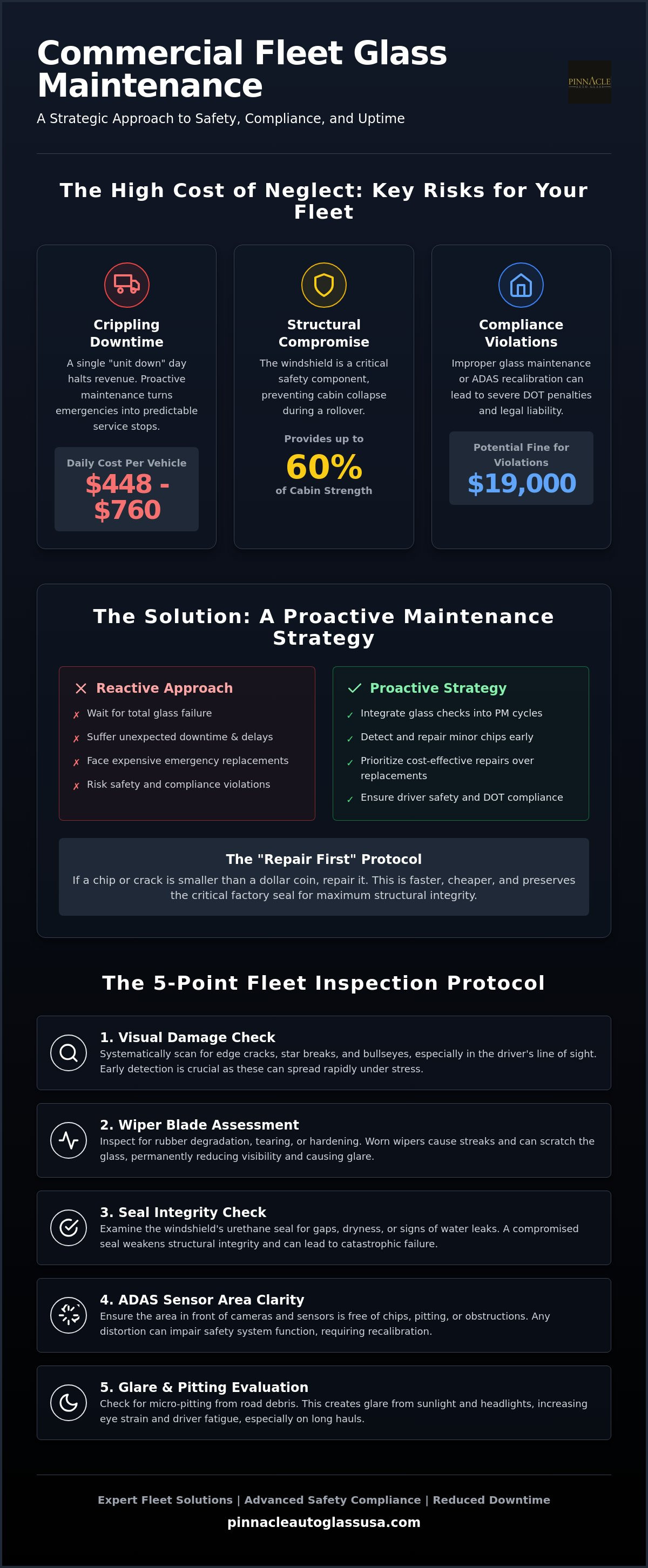
Did you know that a single day of vehicle downtime can cost your operation between $448 and $760? When a minor windshield chip spiders into a major crack, it's not just a repair bill. It's a "unit down" emergency that halts your revenue. Effective commercial fleet glass maintenance is no longer just about fixing cracks; it's a structural safety requirement and a regulatory necessity. You likely feel the pressure of rising maintenance costs and the technical complexity of recalibrating safety sensors on newer models. It's a constant challenge to balance tight schedules with the risk of a $19,000 fine for inspection violations.
We're here to help you regain control. This guide provides a clear roadmap to implement a proactive glass strategy that reduces downtime, ensures DOT compliance, and protects your bottom line. You'll learn how to establish a standardized maintenance protocol and handle ADAS recalibration with confidence. We'll also break down the 2026 regulatory environment so your fleet stays compliant and your maintenance costs stay predictable. It's time to move from reactive repairs to a strategic approach that keeps your drivers safe and your trucks on the road.
Key Takeaways
- Understand why the windshield serves as a vital structural component for rollover protection in modern commercial vehicles.
- Implement a proactive commercial fleet glass maintenance strategy to identify damage early and prioritize cost-effective repairs.
- Avoid DOT violations and legal liability by understanding the critical requirements for ADAS recalibration after glass replacement.
- Reduce downtime by leveraging mobile services and understanding Safe Drive-Away Time (SDAT) protocols for fleet adhesives.
- Discover how specialized technician training ensures your fleet meets the highest safety and technical standards for 2026.
The Strategic Role of Glass Maintenance in Commercial Fleet Operations
Effective commercial fleet glass maintenance is a systematic approach to vehicle inspection and repair. It's a core component of modern fleet management. Operators no longer treat glass as a simple commodity to be replaced only after a total failure. Instead, they treat it as a critical safety asset. Maintaining clear, undamaged glass directly impacts driver performance and safety. Micro-pitting and minor cracks cause light to scatter, creating intense glare. This glare increases eye strain and accelerates driver fatigue during long night shifts or in direct sunlight. By shifting from emergency replacements to scheduled inspections, you protect your drivers and your profit margins. A proactive strategy ensures that every vehicle in your fleet provides a clear, safe view of the road.
The Windshield as a Structural Safety Asset
Your windshield provides up to 60% of the structural strength of the vehicle cabin during a rollover. It's a support beam that prevents the roof from collapsing. This strength is made possible by Polyvinyl Butyral (PVB). PVB is the specialized interlayer that holds the glass together under extreme pressure. It ensures that the windshield remains in the frame during an accident. If the glass has a deep crack or a compromised seal, this structural bond is weakened. Glass integrity is a core pillar of vehicle crashworthiness. When the glass is compromised, the entire safety cage of the truck is at risk.
The True Cost of Fleet Downtime
The price of a new windshield is often the smallest part of an emergency repair. When a vehicle is taken out of service unexpectedly, you face significant downtime costs. Industry data for 2026 indicates that fleet downtime costs between $448 and $760 per vehicle, per day. A "unit down" status means lost revenue and idle drivers. These safety holds often happen at the worst times, such as during pre-trip inspections before a major haul. This creates logistical friction that disrupts your entire delivery network. You may have to reroute other trucks or pay for expedited shipping to meet deadlines. Scheduled commercial fleet glass maintenance eliminates these surprises. It allows you to address minor chips during regular service intervals. This proactive approach ensures that your fleet stays on the road and your delivery promises remain intact.
Implementing a Proactive Fleet Glass Maintenance Strategy
A successful commercial fleet glass maintenance program starts with a shift in mindset. You shouldn't wait for a driver to report a crack that has already spread across the entire windshield. Instead, integrate glass checks into your existing preventative maintenance cycles. Following industry best practices helps you move away from reactive "unit down" events and toward a predictable schedule. By the time a crack reaches the edge of the glass, your repair options are limited. Early detection is the only way to keep costs low and vehicles on the road.
Standardized reporting is vital for multi-vehicle fleets. When every driver and technician uses the same criteria to evaluate glass, you gain actionable data. This allows you to identify if certain routes or specific vehicle types are more prone to damage. Driver training plays a massive role here. Teach your team to recognize different types of chips, such as bullseyes or star breaks, during their daily walk-arounds. When drivers feel responsible for the vehicle's "eyes," they report issues sooner. If you're looking for a partner to manage these inspections, Pinnacle Auto Glass offers the specialized expertise needed to keep your fleet compliant.
The "Repair First" protocol is a cornerstone of this strategy. In 2026, the standard remains clear: if a chip is smaller than a quarter, repair it. Windshield repair is faster and significantly cheaper than a full replacement. It also preserves the factory seal, which is almost always superior to a field-installed seal. Preserving that original bond maintains the structural integrity we discussed in the previous section while keeping your maintenance budget in check.
The 5-Point Fleet Inspection Protocol
Consistency is key for your technicians. Use this checklist during every 5,000-mile or 90-day inspection to ensure nothing is missed:
- Visual Check: Look for edge cracks and star breaks that are likely to spread under stress.
- Wiper Blade Assessment: Check for rubber degradation that causes glass pitting or deep surface scratching.
- ADAS Housing: Ensure the camera mounting is secure and the glass area in front of the lens is perfectly clear.
- Seal Integrity: Inspect the molding for gaps, cracks, or dry rot that could lead to cabin leaks or wind noise.
- Optical Clarity: Verify the glass is free of excessive pitting that causes dangerous glare during night driving.
Preventative Chip Monitoring
Small chips are ticking time bombs for your fleet. Temperature fluctuations are the primary cause of crack expansion. In the winter, using the defroster on a frozen windshield creates intense thermal stress. In the summer, the hot sun does the same. This stress forces a small chip to "run" across the entire glass surface, often overnight. The ROI of an immediate repair is undeniable. For more details on these techniques, see our guide on Professional Windshield Repair: A Comprehensive 2026 Guide to Safety and Savings. Catching damage early is the difference between a 30-minute fix and a full day of expensive downtime.
Navigating ADAS Recalibration and DOT Safety Compliance
Safety systems have fundamentally changed the requirements for commercial fleet glass maintenance. In 2026, a windshield is no longer just a passive shield; it's a high-precision lens for your vehicle's brain. A dangerous misconception persists among some operators that sensors "self-calibrate" over time. This is false. Any shift in the glass position, even by a fraction of a millimeter, can significantly compromise the accuracy of Advanced Driver Assistance Systems (ADAS). These sensors govern Lane Departure Warning and Forward Collision systems. If they aren't aligned perfectly, the truck may fail to brake in an emergency or drift out of its lane without warning. This creates a massive legal liability for your operation.
Operating a fleet with uncalibrated safety systems is a gamble you can't afford to take. In the event of a collision, investigators will check if the ADAS was certified after the last glass replacement. Modern legal standards treat uncalibrated sensors as a known mechanical defect. Proactive maintenance ensures your technology works as intended, protecting your drivers and your insurance premiums. Beyond safety, clean and calibrated glass is a matter of federal law. Ignoring these technical requirements puts your entire business at risk of heavy fines and litigation.
Why Recalibration is Non-Negotiable in 2026
Heavy-duty trucks require extreme precision for camera and radar alignment. A tiny shift in the glass angle translates into significant "degrees of error" hundreds of feet down the road. For example, a camera misaligned by just one percent can miss a vehicle in the adjacent lane entirely. This is why certified recalibration is a mandatory step in our service process. It's the only way to ensure the safety cage of the vehicle functions correctly. For a deeper look at these technical requirements, see our full guide on ADAS Calibration and Auto Glass: The Complete 2026 Reference Guide.
FMCSA and DOT Compliance Standards
Federal regulations are very specific about glass condition and DOT Safety Compliance. The FMCSA prohibits cracks larger than 3/4 inch in diameter within the driver's field of vision. This "critical area" is roughly the width of the steering wheel. Any obstruction or discoloration here can lead to an immediate out-of-service (OOS) order. Roadside inspections move much faster when your glass is clean and intact. Remember, the FMCSA increased fines for willful falsification of inspection reports to as much as $19,000 in 2026. Keeping your glass in top shape isn't just about safety; it's about avoiding the heavy hand of federal enforcement and keeping your trucks moving.
Optimizing Logistics: Mobile Service and Downtime Reduction
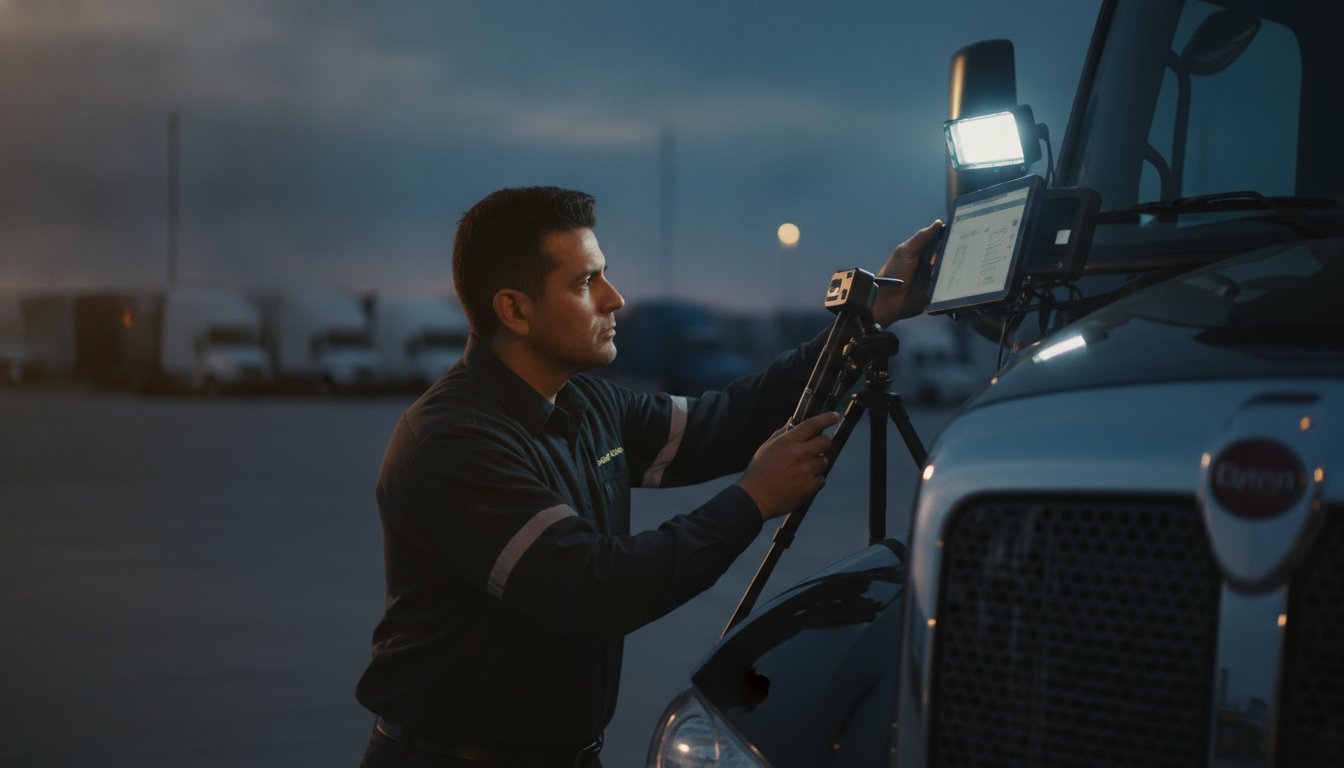
Logistics planning is the backbone of a profitable fleet. Every minute a truck sits in a repair shop is a minute it isn't earning revenue. Mobile service transforms how you handle commercial fleet glass maintenance by bringing the repair shop to your yard or loading dock. This integration eliminates the need for chase vehicles and extra drivers to shuttle trucks to a physical location. By performing replacements on-site, you maintain full control over your vehicle's schedule. It's a direct solution to the rising non-fuel operating costs that reached $1.779 per mile in 2026.
Quality materials are just as important as the location of the repair. Heavy-duty trucks face extreme vibration and constant road debris. Using OEM-quality glass is essential for long-term durability. These windshields meet strict specifications for thickness and optical clarity, which is vital for the ADAS cameras we discussed previously. Choosing sub-par glass often leads to premature pitting or stress cracks, forcing you to pay for the same repair twice. If you need to schedule professional on-site service, contact Pinnacle Auto Glass to keep your logistics moving.
Maximizing Efficiency with Mobile Repair
Effective scheduling is the secret to reducing downtime. Most fleet managers coordinate mobile repairs during mandatory driver rest periods or while a trailer is being loaded. This ensures the vehicle is ready for its next leg the moment the driver's clock resets. Mobile service is particularly beneficial for semi-trucks and box trucks that are difficult to navigate through standard city traffic or into smaller auto glass shops. For a deeper dive into these strategies, read our guide on Reducing Fleet Downtime with Mobile Glass Repair: A Strategic Guide for 2026.
Adhesive Technology and Safety
Modern commercial glass requires more than just a strong glue. High-modulus, non-conductive adhesives are now the standard. These materials provide the structural stiffness needed to support large windshields while preventing electrical interference with sensitive safety sensors. The curing process depends heavily on ambient temperature and humidity. Professional technicians use specialized charts to determine when a vehicle is safe to return to the road. Modern 2026 adhesive standards ensure a 30-minute SDAT for most commercial installations.
To ensure a smooth on-site service, follow this preparation checklist:
- Clear the Dash: Remove all personal items, paperwork, and electronics from the dashboard area.
- Provide Space: Park the vehicle on a level surface with at least five feet of clearance on both sides.
- Ensure Access: Make sure the technician has the keys and the vehicle is unlocked before they arrive.
- Safety First: Verify that the service area is free of overhead hazards or heavy machinery traffic.
- Authorized Sign-off: Have a contact person available who is authorized to sign off on the completed work.
Partnering with Pinnacle Auto Glass for National Fleet Solutions
Managing a large-scale operation requires partners who understand the high stakes of vehicle downtime. Pinnacle Auto Glass serves as a dedicated expert in commercial truck glass and ADAS recalibration. We move beyond simple repairs to provide a comprehensive commercial fleet glass maintenance partnership. Our team understands that your vehicles are revenue-generating assets, not just transportation. We prioritize reliability and speed to keep your operation moving forward. By acting as a single-source provider, we simplify the technical and administrative burdens of glass care. You get the strength of a nationwide entity with the focused attention of a localized service provider.
Professional Solutions for Commercial Fleets
Our service capabilities extend across your entire vehicle inventory. Whether you operate Class 8 semi-trucks, last-mile delivery vans, or refrigerated box trucks, we have the expertise to manage the specific glass requirements of each. Our technicians receive specialized training focused on the unique challenges of heavy-duty glass installation and safe drive-away times. We are committed to using high-quality glass that meets or exceeds OEM standards for every job. This ensures perfect optical clarity for ADAS sensors and the structural durability required for demanding long-haul routes. Discover the Pinnacle Auto Glass commitment to professional vehicle safety and see how we elevate industry standards with every installation.
Streamlining the Claims and Billing Process
Administrative friction is a significant hidden cost in modern logistics. We eliminate this hurdle by offering centralized billing and expert insurance management tailored for fleets. Our team works directly with your insurance providers to simplify the claims process from start to finish. This ensures that repairs are approved quickly and documented with precision. Professional documentation is essential for maintaining your safety and compliance records. It provides a clear, verifiable trail of certified ADAS recalibration and DOT-compliant repairs. This level of organization protects your business during federal audits or legal inquiries. We make commercial fleet glass maintenance the most predictable and organized part of your maintenance budget.
Ready to optimize your fleet's performance and safety? Contact Pinnacle Auto Glass for a custom fleet maintenance consultation today. We provide the results-oriented partnership your business deserves.
Secure Your Fleet’s Performance for 2026
Strategic glass management is no longer optional for modern operations. By shifting to a proactive inspection model, you prevent minor chips from becoming expensive, "unit down" emergencies. It's essential to remember that certified recalibration keeps your ADAS technology a safety asset rather than a legal liability. Implementing these standardized protocols ensures your drivers stay safe and your delivery schedules remain intact. A disciplined approach to commercial fleet glass maintenance protects your bottom line and maintains your DOT compliance status.
Our team provides the specialized support needed to handle these technical challenges. We offer national mobile service coverage and deep expertise in heavy-duty commercial truck glass. Our certified ADAS recalibration specialists ensure your fleet’s safety systems are always precise. Don't let glass damage disrupt your logistics chain or lead to costly violations. Maximize your fleet safety with Pinnacle Auto Glass fleet services. We're ready to help you keep your trucks on the road and your business moving forward.
Frequently Asked Questions
How often should commercial fleet vehicles undergo glass inspections?
Every 90 days or during every 5,000-mile preventative maintenance cycle is the recommended interval. This schedule aligns with standard industry reporting and ensures that small issues are identified early. Frequent checks help technicians spot micro-pitting and small chips before they compromise the structural integrity of the cabin. Daily pre-trip walk-arounds by drivers remain the first line of defense for immediate damage reporting between these professional inspections.
Can a cracked windshield lead to a DOT out-of-service violation?
Yes, a cracked windshield can result in an out-of-service (OOS) order if the damage is in the driver's critical field of vision. Federal law prohibits any crack larger than 3/4 inch in diameter within the area directly above the steering wheel. Inspectors view these obstructions as immediate safety hazards that prevent the vehicle from operating legally. Replacing the glass promptly is the only way to clear the violation and avoid heavy fines.
Is ADAS recalibration required for every windshield replacement?
Recalibration is mandatory for any vehicle equipped with safety sensors after a windshield replacement occurs. Even a slight change in the mounting angle of the new glass can throw off the camera's alignment by several degrees. This precision is necessary to ensure lane departure warnings and emergency braking systems function correctly. Skipping this step creates significant liability for your operation and compromises the safety of your drivers and the public.
What is the "Safe Drive-Away Time" for a commercial truck windshield?
Most modern commercial adhesives allow for a 30-minute Safe Drive-Away Time (SDAT) under standard conditions. This means the truck can safely return to the road half an hour after the glass is set. However, extreme cold or high humidity can extend this curing period. Technicians always verify the specific adhesive requirements based on the current environment. This ensures the factory-strength bond is fully achieved before the vehicle moves back into service.
Does mobile glass repair offer the same quality as in-shop service?
Mobile service provides the exact same quality and safety standards as an in-shop repair. Technicians use the same OEM-grade materials and certified recalibration equipment on-site at your facility. The primary difference is the convenience and time savings for your operation. Mobile service is specifically designed for commercial fleet glass maintenance to reduce the logistical burden of moving heavy-duty trucks to a physical shop, keeping your fleet on the road.
How does proactive glass maintenance reduce long-term fleet costs?
Proactive maintenance lowers costs by prioritizing minor chip repairs over expensive full windshield replacements. It also eliminates the high cost of emergency downtime and potential DOT fines. By identifying issues during scheduled service, you avoid the logistical friction of pulling a truck from a revenue-generating route. This consistent approach to commercial fleet glass maintenance makes your annual budget much more predictable while keeping your drivers safe and your vehicles compliant.
What types of commercial vehicles does Pinnacle Auto Glass service?
Pinnacle Auto Glass provides comprehensive services for a wide range of commercial vehicles. This includes Class 8 semi-trucks, medium-duty box trucks, and last-mile delivery vans. We also handle specialized glass needs for passenger buses and heavy equipment used in construction or logistics. Our team is trained to manage the unique structural and technical requirements of various fleet configurations. This ensures your entire inventory stays compliant and road-ready at all times.
Can you repair a chip on a windshield that has ADAS cameras?
You can repair a chip on an ADAS-equipped windshield as long as the damage isn't directly in the camera's line of sight. If a chip is in front of the lens, the repair resin may cause optical distortion that confuses the sensor. In those specific cases, a full replacement and recalibration are necessary. Technicians always inspect the camera housing area first to determine the safest and most reliable course of action for your vehicle.


