
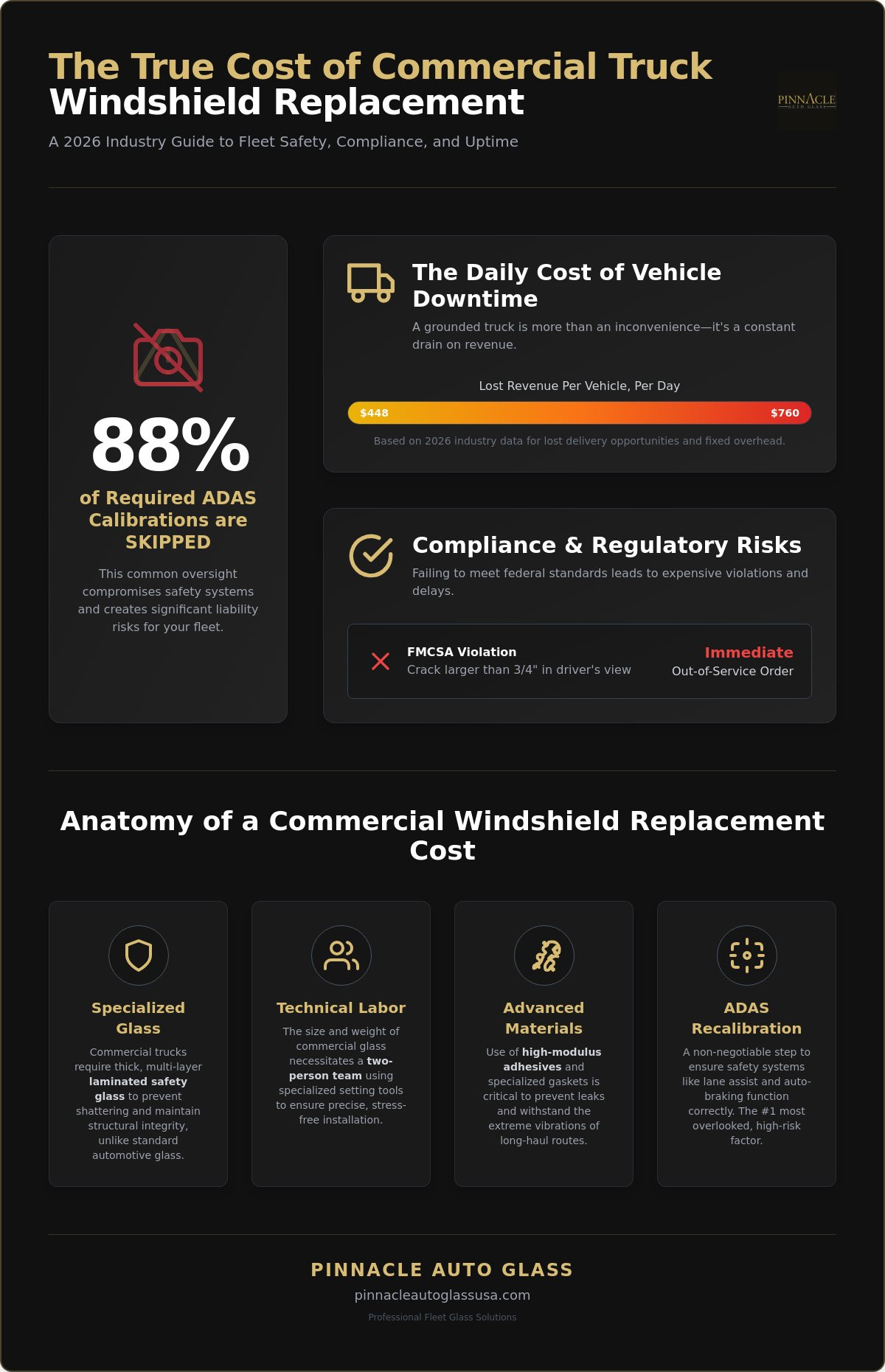
Did you know that 88% of required ADAS calibrations are currently skipped after glass repairs? This oversight creates massive liability risks and compromises the safety systems your drivers rely on every day. You already understand that a cracked windshield is more than a cosmetic issue. It's a direct threat to your fleet's uptime and regulatory compliance. When a truck is sidelined, you lose between $448 and $760 in revenue every single day. Managing the total commercial truck windshield replacement cost effectively requires looking at the full impact on your bottom line.
We've developed this 2026 industry guide to help you control these expenses without sacrificing safety. You'll learn how to navigate the complexities of modern glass technology and insurance claims while keeping your vehicles on the road. We cover the latest FMCSA regulations regarding driver visibility and the critical role of ADAS recalibration for newer trucks. This article provides a clear path to predictable maintenance and maximum fleet efficiency. We'll show you how to protect your drivers and your profits through professional glass management.
Key Takeaways
- Identify the specific variables that influence your total commercial truck windshield replacement cost, from specialized laminated safety glass to technical labor requirements.
- Learn why the true price of glass damage includes the revenue lost during vehicle downtime and how to calculate this impact on your bottom line.
- Ensure fleet safety and regulatory compliance by understanding the technical necessity of ADAS recalibration after every windshield replacement.
- Discover how to navigate commercial insurance claims and implement fleet maintenance programs for more predictable maintenance budgeting.
- Recognize the structural and financial risks of low-quality installations and the benefits of choosing professional fleet glass solutions.
Understanding Commercial Truck Windshield Replacement Cost Factors
Commercial glass expenses involve more than just a simple part swap. It is a technical process that combines specialized materials, high-precision labor, and safety system synchronization. The total commercial truck windshield replacement cost reflects these integrated layers. Unlike passenger vehicles, Class 8 trucks operate in punishing environments that demand higher material standards. They require laminated safety glass to prevent shattering and maintain structural integrity during a collision. This glass is significantly thicker and more durable than standard automotive options.
The sheer scale of a semi-truck windshield also increases manufacturing complexity. Large, curved glass panels are difficult to produce without optical distortion. Shipping these massive components requires specialized crating and freight handling. These logistics directly influence the final price. Additionally, heavy-duty trucks face extreme vibrations on the road. Technicians must use high-modulus adhesives and specialized gaskets. These materials are designed specifically for long-haul durability and prevent the leaks or wind noise that often plague low-quality installations.
Specialized Glass vs. Standard Automotive Glass
Passenger cars often use tempered glass for side windows, but commercial windshields must be laminated. This multi-layer construction holds the glass together if it breaks. Many modern trucks use two-piece windshield designs. This can be more cost-effective if only one side is damaged. However, OEM glass is the preferred standard for most fleets. It ensures a perfect fit and maintains the optical clarity required for safety sensors. Aftermarket options might save money upfront, but they often lack the long-term durability needed for high-mileage commercial use. Quality glass is a primary factor in the overall commercial truck windshield replacement cost over the life of the vehicle.
Labor Intensity and Technical Requirements
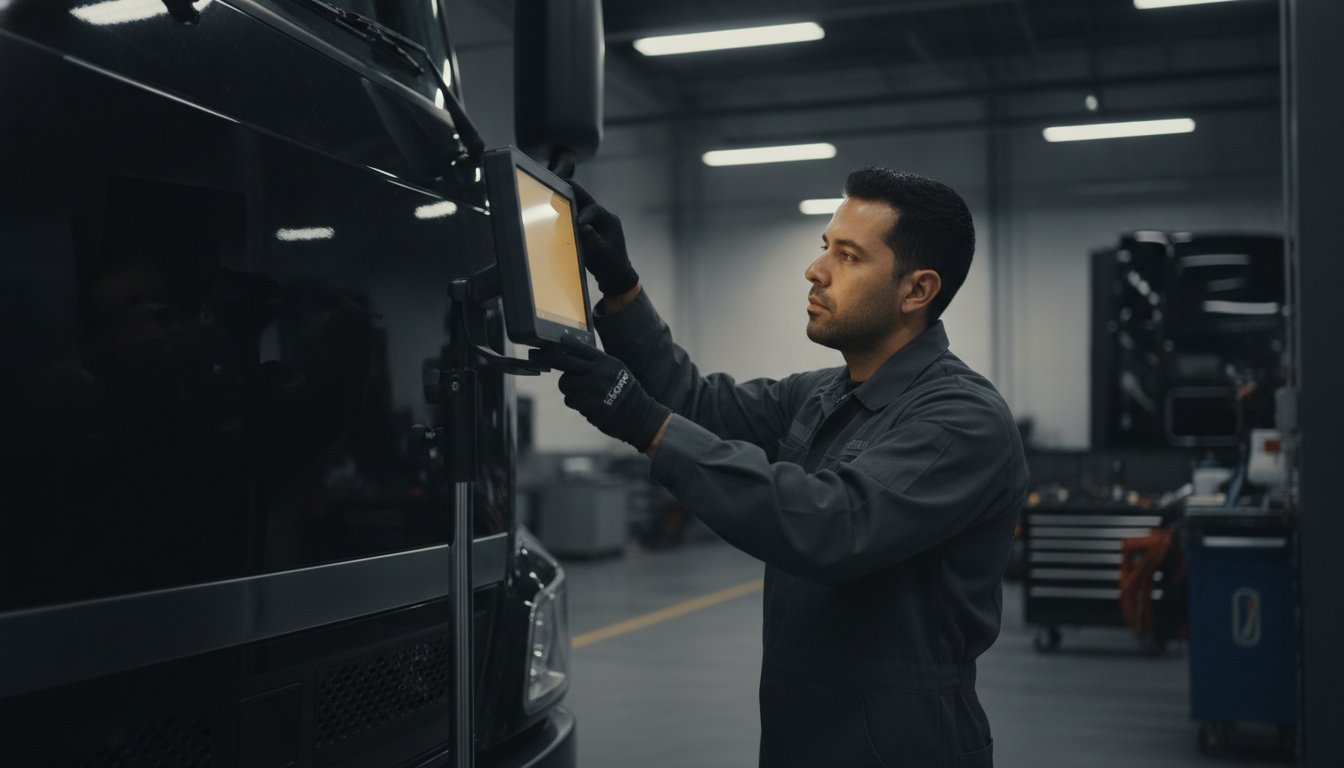
Installing a commercial windshield is rarely a one-person job. The size and weight of the glass require two-person teams to ensure precise placement. Technicians use specialized suction cups and setting tools to avoid stress fractures during the process. If the glass isn't set perfectly, structural issues will quickly lead to more downtime. Labor rates can also vary based on the service environment. A controlled shop environment is ideal for complex installs, while mobile services offer convenience. Both require highly trained professionals who understand the specific requirements of heavy-duty fleet glass.
Beyond the Glass: Calculating the Total Cost of Vehicle Downtime
When calculating your total commercial truck windshield replacement cost, don't just look at the line item for parts and labor. The invoice price represents only a fraction of the actual business impact. A grounded truck is a significant liability that drains resources every hour it sits idle. Industry data from 2026 estimates that the cost of downtime ranges between $448 and $760 per vehicle per day. These figures account for lost delivery opportunities and fixed overhead costs that continue to accrue even when the wheels aren't turning.
Logistical expenses also add up quickly. Rerouting a vehicle to a specialized repair facility consumes fuel and driver hours. If a truck is forced out of service during a route, you may face expensive towing fees or the need to dispatch a secondary vehicle to recover the load. Failing to maintain federal windshield safety standards can also lead to heavy fines. The FMCSA enforces strict limits on glass damage; any crack larger than 3/4 of an inch in the driver's field of vision can result in an immediate out-of-service order. These regulatory delays are far more expensive than a proactive repair.
The Opportunity Cost of a Grounded Truck
The financial impact of glass damage varies based on your operation type. For long-haul carriers, a grounded truck might mean missing a high-value backhaul opportunity. Local delivery vehicles face different pressures, such as missed windows for "just-in-time" inventory arrivals. Small chips are deceptive. They often seem minor until the vibration of the road or a sudden temperature change causes them to spread. Rapid response is the most effective way to prevent a simple repair from escalating into a full replacement. Keeping your fleet moving requires a partner that understands these time-sensitive pressures.
Logistical Delays and Late Delivery Penalties
Unexpected glass repairs disrupt the tight schedules of modern supply chains. Many shipping contracts include "on-time delivery" clauses with steep financial penalties for delays. When one truck stops, the ripple effect reaches your dispatchers, warehouse staff, and customers. You have to manage idle equipment and potentially pay overtime to reschedule drivers. One of the most effective strategies for reducing fleet downtime with mobile glass repair involves addressing damage at the yard before the driver starts their shift. Utilizing professional fleet glass services ensures your vehicles stay compliant and profitable without unnecessary trips to a shop.
The Role of ADAS Recalibration in Modern Fleet Safety Costs
Advanced Driver Assistance Systems (ADAS) have transformed fleet safety, but they've also changed the technical requirements of glass service. Over 90% of new commercial vehicles in 2026 feature these integrated systems. Cameras and sensors are typically mounted directly to the windshield to monitor the road ahead. When the glass is removed, these sensors are disturbed and lose their precise alignment. Recalibrating these systems is a mandatory step in the repair process. It's a key factor in the total commercial truck windshield replacement cost that fleet managers must account for during budgeting.
Skipping this step is a common but expensive mistake. Industry studies in 2026 show that 88% of required calibrations are being missed after repairs. This creates a massive liability gap for your business. If a truck is involved in an accident and the safety systems weren't properly synchronized, insurance providers may deny claims or significantly increase premiums. Professional technicians perform two types of recalibration to ensure accuracy. Static recalibration uses specialized targets in a controlled shop environment. Dynamic recalibration requires driving the vehicle on specific road types to allow the sensors to "learn" their surroundings. Many modern Class 8 trucks require both methods to meet ADAS recalibration requirements and maintain factory safety standards.
Safety Technology and Liability Management
Commercial ADAS features like lane departure warnings, collision avoidance, and adaptive cruise control rely on perfect camera alignment. Even a tiny deviation can cause these systems to fail at a critical moment. Operating a commercial vehicle with uncalibrated sensors creates significant legal exposure for fleet owners. If a safety system fails to engage during a collision, the lack of a calibration certificate can be used as evidence of negligence. For detailed technical specs on how these systems interact with your glass, consult our ADAS calibration and auto glass reference guide. It helps fleet managers understand the specific needs of different truck makes and models.
FMCSA Compliance and Documentation
Staying compliant with DOT regulations requires meticulous record-keeping. You must maintain a digital paper trail for every vehicle in your fleet. This documentation proves that safety systems were verified after any glass work was performed. Proper recalibration also prevents "ghost braking," where sensors misinterpret shadows or road markings and trigger sudden, dangerous stops. This protects your equipment and your drivers from unnecessary risks. While it adds a technical step to the process, professional recalibration saves money long-term by preventing accidents and ensuring your fleet remains fully operational and compliant with all federal safety mandates.
Strategies for Reducing Out-of-Pocket Replacement Expenses
Managing the commercial truck windshield replacement cost effectively requires a shift from reactive repairs to a proactive fleet strategy. High-mileage vehicles are constantly exposed to road debris. This makes glass damage an operational certainty rather than a rare possibility. By implementing a "repair first" policy, you can address small chips before they spread across the entire pane. Choosing professional windshield repair for minor damage typically costs a fraction of a full replacement. This approach saves on material costs. It also avoids the technical complexity and expense of ADAS recalibration required when installing new glass.
Proactive maintenance is your best defense against unexpected $1,000+ invoices. The FMCSA enforces strict regulations regarding driver visibility. Any crack larger than 3/4 of an inch in the driver's field of vision can result in a failed DOT inspection. Spiderwebbing or intersecting cracks also lead to immediate out-of-service orders. Catching a chip early prevents these legal and financial headaches. It keeps your trucks on the road and ensures your maintenance budget remains predictable throughout the fiscal year.
Commercial Insurance and Deductible Management
Commercial insurance policies differ significantly from personal coverage. Fleet managers must evaluate their "full glass" options to determine if the premium increase outweighs the cost of frequent out-of-pocket repairs. In states like Arizona, Florida, and South Carolina, zero-deductible laws may apply to certain policies. This can significantly reduce your immediate expenses. When filing claims, work with providers who understand commercial billing. This ensures the process doesn't negatively impact your fleet’s risk profile. Some larger operations choose to self-insure for glass damage. They set aside a dedicated maintenance fund to cover these predictable expenses without involving an insurance carrier for every minor incident.
Fleet Maintenance and Bulk Pricing
Large-scale operations benefit from centralized management and bulk pricing. By negotiating Service Level Agreements (SLAs) with national glass providers, you can secure fixed rates and priority scheduling. This creates a predictable maintenance budget and simplifies administrative tasks. Centralized billing and standardized reporting allow you to track glass performance across your entire fleet. You can identify specific routes or drivers with higher damage rates and adjust your safety protocols accordingly. Consistent reporting also provides a clear audit trail for DOT compliance. If you need to streamline your operations, consider our specialized fleet glass services to maintain consistent quality across all your vehicles.
Professional Fleet Solutions: Why Quality Installation Saves Money
Selecting a service provider based solely on the lowest bid often leads to higher long-term expenses. The initial commercial truck windshield replacement cost is only one part of the financial equation. Poorly executed installations frequently result in water leaks, distracting wind noise, and even structural failure. In a heavy-duty vehicle, the windshield provides essential support for the cab's structural integrity. A weak bond can compromise safety during a rollover or collision. Pinnacle Auto Glass balances speed with safety by using premium materials and rigorous installation protocols. This approach ensures that your fleet remains safe and operational without the need for repeat repairs.
Materials matter just as much as the technician's skill. Professional providers use high-quality, fast-curing urethanes specifically designed for heavy-duty applications. These advanced adhesives are critical for achieving rapid drive-away times. In the trucking industry, every hour a vehicle sits waiting for glue to dry is an hour of lost revenue. Premium sealants allow your drivers to return to the road sooner while maintaining a bond that withstands the extreme vibrations of long-haul routes. Investing in quality materials upfront reduces the risk of bond failure and extends the life of the replacement glass.
Mobile Service vs. In-Shop Efficiency
Strategic scheduling is the most effective way to minimize driver downtime. Mobile repair services offer significant cost-effectiveness by bringing the shop to your fleet yard. This allows technicians to perform installations during off-hours or while drivers are taking mandatory rest periods. You eliminate the fuel costs and logistical hurdles of moving a Class 8 truck to a repair facility. However, certain complex repairs or dual ADAS calibrations may benefit from a controlled shop environment. Evaluate your specific route requirements and vehicle age to determine which service model provides the best return on investment for your operation.
Certified Technicians and Warranty Protection
Commercial assets require specialized knowledge that standard auto glass shops may lack. A certified auto glass technician understands the unique specifications of heavy-duty trucks, including proper torque for trim pieces and the nuances of large-scale glass handling. This expertise is vital for maintaining the resale value of your fleet vehicles. Buyers look for documented, professional maintenance records when purchasing used equipment. Furthermore, professional installation often comes with nationwide warranty protection. For interstate haulers, this coverage is essential. It ensures that if a leak or defect occurs away from your home base, you can receive prompt service without incurring a second commercial truck windshield replacement cost. This layer of protection provides peace of mind and financial stability for your maintenance budget.
Maximize Fleet Uptime with Professional Glass Management
Effectively managing the commercial truck windshield replacement cost requires a comprehensive approach that goes beyond the initial invoice. You've seen how vehicle downtime and missed ADAS calibrations can quickly escalate into major financial liabilities. By prioritizing high-quality OEM-equivalent glass and proactive chip repairs, you ensure your drivers remain safe and your equipment stays compliant with federal regulations. Professional installation isn't just a maintenance task; it's a strategic investment in your fleet's long-term profitability.
Pinnacle Auto Glass provides the expertise needed to navigate these technical challenges. Our team consists of certified ADAS recalibration experts who understand the specific requirements of modern Class 8 trucks. We offer nationwide service for commercial fleets, ensuring consistent quality wherever your routes take you. Don't let glass damage sideline your operations or compromise your safety standards. We focus on results so you can focus on the road.
Get a Professional Fleet Glass Quote from Pinnacle Auto Glass today. We are ready to help you minimize downtime and maintain a reliable, compliant fleet.
Frequently Asked Questions
How much does a semi-truck windshield replacement typically cost?
The cost of replacing a semi-truck windshield varies based on the vehicle's year, make, and model. You must also consider whether the truck uses a one-piece or two-piece design and if it requires OEM-equivalent glass. These variables, along with labor and specialized logistics, determine the final commercial truck windshield replacement cost for your specific fleet assets.
Does commercial auto insurance cover windshield replacement without a deductible?
Many commercial policies include glass coverage, but your state's laws often dictate the deductible amount. For instance, states like Florida, Arizona, and South Carolina have mandates that can lead to zero-deductible glass service under comprehensive coverage. You should consult your insurance provider to understand how your specific commercial policy handles glass breakage and recalibration fees.
How long does it take to replace a commercial truck windshield?
Most professional installations take about one to two hours to complete. You must also wait for the adhesive to reach its safe drive-away time, which ensures the glass is structurally bonded to the cab. Using high-quality urethanes helps speed up this process, allowing your truck to return to service and generate revenue as quickly as possible.
Can a cracked commercial windshield be repaired or must it be replaced?
Minor chips and cracks can often be repaired if they are small and located away from the driver's field of vision. However, if the damage is larger than 3/4 of an inch or includes intersecting cracks, a full replacement is legally required. Proactive repair of small chips is a highly effective strategy for controlling your long-term commercial truck windshield replacement cost.
Why is ADAS recalibration required after a truck windshield replacement?
ADAS recalibration is required because the cameras and sensors are typically mounted on or near the windshield. Removing the glass disturbs their alignment, which can lead to "ghost braking" or the failure of lane-keeping systems. Recalibrating these components after a replacement ensures the safety technology functions correctly and protects your business from potential liability following an accident.
Will a windshield replacement claim increase my commercial insurance premiums?
A single glass claim is usually considered a "no-fault" event and rarely causes a significant increase in commercial premiums. Insurance companies understand that road debris is an unavoidable risk for long-haul vehicles. However, filing frequent claims for an entire fleet can affect your overall risk rating. Implementing a structured glass maintenance program can help you manage these costs more efficiently.
What are the FMCSA regulations regarding cracked windshields on commercial vehicles?
The Federal Motor Carrier Safety Administration (FMCSA) mandates that any crack larger than 3/4 of an inch in the driver's field of vision is a violation. Additionally, any intersecting cracks or spiderwebbing that obstructs the view will cause a vehicle to fail a DOT inspection. Staying compliant with these regulations is essential for avoiding out-of-service orders and heavy fines.
Is mobile windshield replacement safe for heavy-duty trucks?
Mobile windshield replacement is completely safe for heavy-duty trucks when performed by certified technicians. This service provides the convenience of on-site repairs at your fleet yard or warehouse without compromising on structural integrity. Technicians use professional-grade tools and specialized adhesives to ensure the installation meets all safety standards, regardless of whether the work is done in a shop or in the field.


