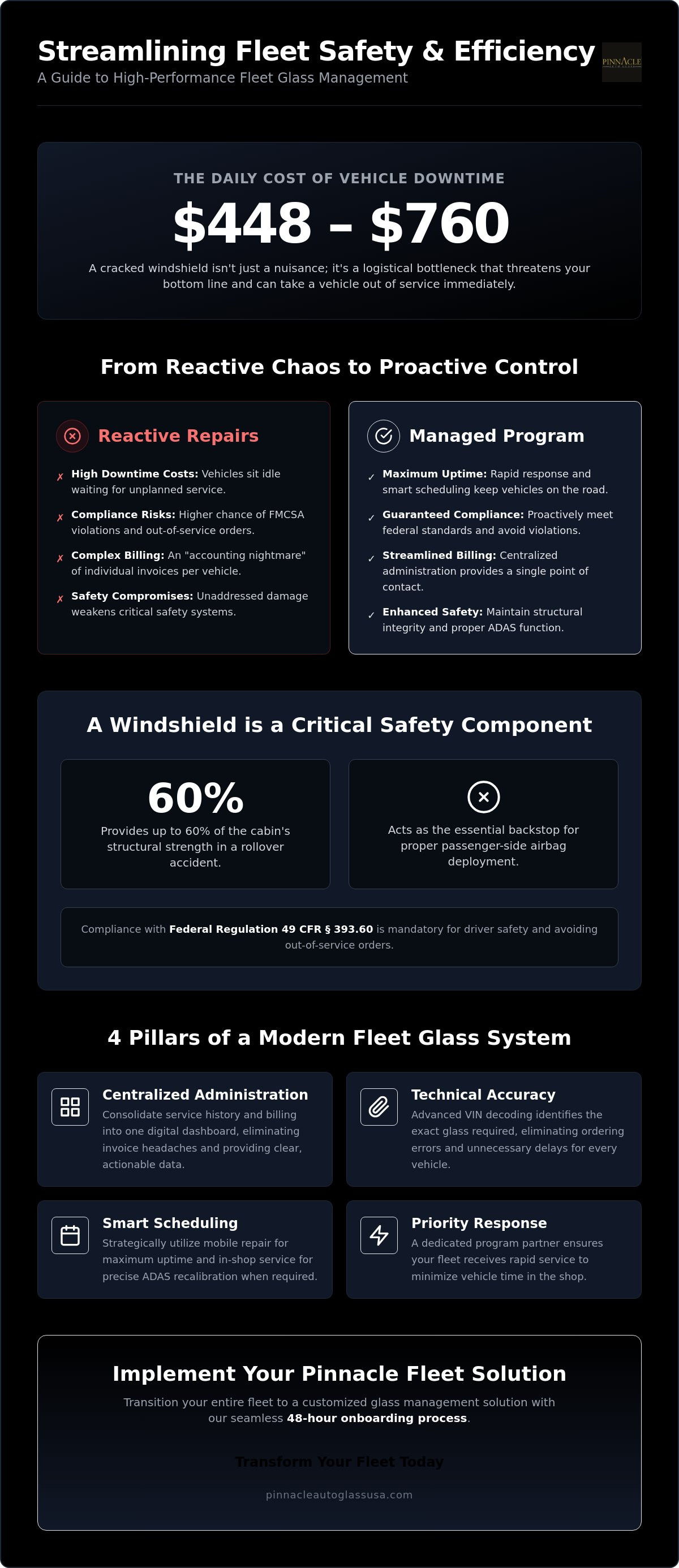
Did you know that vehicle downtime can cost your fleet between $448 and $760 per vehicle every single day? For many managers, a cracked windshield isn't just a minor nuisance; it's a logistical bottleneck that threatens your bottom line. Establishing a strategic fleet glass repair program is the most effective way to keep your drivers on the road and your budget under control. You already understand the frustration of juggling multiple service providers and complex billing cycles while trying to maintain federal safety standards.
We're here to help you turn those challenges into a streamlined workflow. This guide explains how to build a high-efficiency system that ensures ADAS compliance and minimizes vehicle time in the shop. You'll learn how to navigate federal safety regulations, manage the rising costs of technology-intensive repairs, and create a predictable maintenance schedule. We'll show you how a single point of contact for windshield replacement and ADAS recalibration can transform your fleet's operational reliability for 2026.
Key Takeaways
- Learn how a proactive fleet glass repair program prevents FMCSA violations and keeps your vehicles from being placed out of service.
- Discover how centralized administration and VIN-specific part matching eliminate billing headaches and ensure the correct glass is ordered every time.
- Identify when to utilize mobile repair for maximum uptime and when in-shop service is required for precise ADAS recalibration.
- Understand the critical safety requirements of 49 CFR Part 393 and why modern windshield replacement necessitates professional sensor recalibration.
- Explore the 48-hour onboarding process to transition your fleet to a customized management solution that fits your specific vehicle mix.
Scaling Fleet Operations: The Strategic Role of a Glass Repair Program
Scaling a commercial operation requires every asset to remain in top condition. A fleet glass repair program is a systematic approach to maintaining vehicle glass integrity through scheduled maintenance and rapid response. It moves glass care from an afterthought to a core strategy. This program is a critical element of modern Fleet management that ensures your vehicles stay on the road and out of the shop.
Ignoring minor glass damage creates significant risks for your organization. Unaddressed cracks often lead to FMCSA non-compliance and immediate out-of-service orders. Under federal regulation 49 CFR § 393.60, commercial vehicle windshields must meet strict clarity and integrity standards. A violation doesn't just stop a delivery; it impacts your company safety rating and driver records. Compliance is a necessity, not an option.
Safety is the primary driver of these regulations. The windshield is a vital structural component of the vehicle cabin. In a rollover accident, the glass provides up to 60% of the cabin's strength. It also serves as the necessary backstop for the passenger-side airbag. If the glass is compromised, the entire safety system is weakened. Moving from reactive repairs to a proactive maintenance model protects your drivers and your equipment.
Defining Your Fleet's Glass Needs
Every fleet has a unique risk profile based on its vehicle mix and service area. Fleet managers should categorize their needs to allocate resources effectively. Consider these factors during your assessment:
- Vehicle Types: Light-duty vans have different glass requirements and ADAS configurations than heavy-duty semi-trucks.
- Route Analysis: Identify high-risk routes where construction, gravel transport, or extreme temperatures make rock chips more frequent.
- Downtime Audit: Evaluate the current costs associated with vehicles sitting idle for glass service.
The Financial Case for a Managed Program
A managed fleet glass repair program reduces long-term expenses by addressing damage early. Fixing a small chip is significantly more cost-effective than a full windshield replacement. It also avoids the mandatory recalibration fees associated with modern safety sensors. Early intervention keeps your fleet operational. Streamlining insurance claims through a single preferred provider reduces administrative labor and simplifies billing. A fleet glass program serves as a vital tool for maintaining operational continuity across your entire organization.
Essential Components of a Modern Fleet Glass Management System
A high-performing fleet glass repair program is built on precision and administrative efficiency. It isn't just about fixing a chip; it's about the infrastructure that supports the repair. Modern systems focus on four primary pillars: centralized administration, technical accuracy, smart scheduling, and priority response. These components ensure that fleet managers spend less time on paperwork and more time on operations. Establishing a partner for your fleet glass services ensures these components work together seamlessly.
Streamlining the Billing Process
Managing dozens of individual invoices for a single fleet is an accounting nightmare. Centralized administration solves this by consolidating service history and billing into one digital dashboard. Large-scale logistics firms often utilize Electronic Data Interchange (EDI) to automate these transactions. This level of transparency allows you to track glass spend and identify high-frequency repair trends across your entire roster. It eliminates the "one invoice per vehicle" headache for your accounting team while providing clear, actionable data.
Technical Accuracy in Glass Procurement
Technical accuracy starts with the right part. Ordering the wrong glass causes unnecessary delays and extends vehicle downtime. Advanced VIN decoding tools eliminate these errors by identifying the exact specifications of the vehicle before the technician arrives. This is especially vital for windshield replacement on vehicles with integrated safety systems. Adhering to the Federal Motor Carrier Safety Regulations requires using glass that maintains the vehicle's original safety profile and structural integrity. Choosing OEM-quality glass ensures that Advanced Driver-Assistance Systems (ADAS) function as intended without calibration failures.
Efficiency also depends on when the work happens. Customized scheduling aligns repairs with vehicle "dwell time" at the depot. This ensures that maintenance occurs while the vehicle is already stationary, preventing disruptions to delivery windows. Priority service guarantees that your most critical vehicles receive immediate attention. By focusing on these essential components, a fleet glass repair program becomes a proactive tool for growth rather than a reactive expense. It keeps your primary revenue generators on the road and maintains your commitment to safety standards.
Mobile Repair vs. In-Shop Service: Maximizing Fleet Uptime
Uptime is your most valuable metric. Every hour a vehicle sits idle, your revenue takes a hit. A comprehensive fleet glass repair program provides the flexibility to choose between mobile and in-shop service based on the specific needs of your fleet. While mobile service offers unmatched convenience, certain complex installations require a controlled environment. Understanding when to use each model is essential for maintaining a high ready-rate across your operations.
The impact on your schedule is often measured in hours versus days. Mobile repairs are typically completed within two hours of a technician's arrival. This rapid response keeps your drivers on their routes. In contrast, in-shop service might be necessary for vehicles requiring advanced static recalibrations or structural bond curing that mobile environments can't always provide. Balancing these options ensures your safety systems remain compliant without sacrificing speed.
When to Choose Mobile Glass Repair
Mobile service is the ideal choice for routine maintenance and minor damage. It's particularly effective for rock chip repairs on delivery vans or box trucks that operate out of a central depot. By bringing the shop to the vehicle, you eliminate fuel costs and driver hours spent in transit. To ensure a successful mobile repair, your site should meet a few basic requirements:
- Level Ground: Technicians need a flat surface to ensure proper glass alignment and seal integrity.
- Overhead Clearance: Sufficient room is required for technicians to work safely around high-roof vehicles.
- Weather Protection: While many repairs happen outdoors, extreme temperatures or precipitation can affect resin curing and adhesive bonding.
The Strategic Advantage of Mobile Solutions
Integrating reducing fleet downtime with mobile glass repair into your daily dispatching is a smart move. You can schedule repairs during driver rest periods or overnight shifts at the depot. This proactive approach mirrors Fleet management best practices by minimizing the disruption to your primary service windows. It allows you to address safety hazards before they escalate into FMCSA violations.
Consistency is key when managing a national service area. Your fleet glass repair program should offer the same quality of work whether the technician is at your main headquarters or a remote job site. This geographic reach ensures that your safety standards remain high across the entire country. Reliable mobile solutions allow you to maintain operational continuity and keep your team focused on their core delivery goals.
Safety and Compliance: Managing ADAS Recalibration and Federal Standards
Safety is a non-negotiable priority in modern logistics. A robust fleet glass repair program must account for the shift from simple glass to complex safety technology. Every commercial windshield replacement now involves more than just adhesive and glass. It requires the precise alignment of sensors that power features like collision avoidance and lane-keeping assist. Failure to recalibrate these systems isn't just a technical oversight; it's a significant safety risk that impacts your entire operation. Documentation is your best defense against liability, ensuring you can prove every vehicle meets factory safety specifications after a repair.
Compliance depends on following strict federal guidelines. The FMCSA enforces 49 CFR Part 393, which dictates the condition of glazing materials on all commercial motor vehicles. If a windshield has cracks that intersect or obstruct the driver's view, the vehicle is legally non-compliant. Using certified auto glass technicians ensures these standards are met every time. Professional certification guarantees that the installation process adheres to the highest safety protocols, protecting your drivers and your business from regulatory penalties.
Understanding the Recalibration Process
Recalibration isn't a one-size-fits-all procedure. Depending on the vehicle make and model, technicians perform either static or dynamic recalibration. Static processes occur in a controlled shop environment using specialized targets, while dynamic procedures involve driving the vehicle at specific speeds to reset the sensors. Recognizing that ADAS calibration auto glass is the most critical safety step in 2026 is essential for fleet managers. Always demand a "Recalibration Certificate" upon completion. This document serves as your official proof of safety during DOT inspections and internal audits.
Regulatory Standards for Commercial Glass
Commercial glass must meet the impact and visibility requirements of FMVSS No. 205. These standards ensure the glass can withstand road debris while maintaining a clear field of vision. Even a small crack in the wrong location can cause a Lane Departure Warning system to malfunction or provide false alerts. This creates a dangerous environment for the driver and others on the road. ADAS failure due to improper glass installation is a major liability risk that can lead to costly litigation and insurance complications. Maintaining a high standard for your glass and sensors is the only way to mitigate these risks effectively.
Protect your fleet by choosing a partner that understands the intersection of technology and safety. Schedule your ADAS recalibration and fleet glass services today to ensure your vehicles remain compliant and your drivers stay safe on the road.
Partnering for Success: Implementing Your Pinnacle Fleet Solution
Choosing a fleet glass repair program is the first step toward operational stability. The next step is implementation. We customize every program to match your specific fleet size and vehicle mix. Whether you manage light-duty delivery vans or heavy-duty semi-trucks, your glass solution should be as specialized as your equipment. We provide access to expert technicians who understand the unique structural requirements of commercial truck glass and specialty fleet vehicles. This tailored approach ensures that your specific safety and budgetary goals are met from day one.
Efficiency is our priority. Our 48-hour onboarding process ensures your transition is seamless and fast. We utilize centralized management tools designed for the 2026 logistics landscape. These tools give you instant visibility into repair status, service history, and compliance documentation. You won't waste time chasing down paperwork or wondering which vehicles are ready for service. Our system handles the details so you can focus on your core business. We act as a dependable guide throughout the entire lifecycle of your fleet's glass needs.
Your Fleet Onboarding Checklist
Getting started is straightforward. We work with you to gather the necessary data to build a responsive service model. A clear plan prevents delays when an urgent repair need arises. Onboarding shouldn't be a hurdle; it's the foundation of your future uptime. Use this checklist to prepare for your program launch:
- Vehicle Roster: Provide a complete list of vehicles, including VINs and primary service locations.
- Billing Profile: Set up your centralized billing preferences and insurance data to automate claims.
- Primary Contact: Establish a single point of contact to streamline communication for urgent repairs.
Long-Term Fleet Health and Maintenance
Success requires ongoing attention. We recommend scheduling quarterly glass audits to identify windshield repair needs before they become costly replacements. Training your drivers to report small chips immediately is a simple way to protect your budget. This proactive culture keeps your safety ratings high and your downtime low. It's a no-nonsense strategy that prioritizes results and driver safety. Ready to streamline your operations and secure your fleet's future? Contact Pinnacle Auto Glass to start your fleet program today!
Secure Your Fleet's Operational Future
Managing a modern fleet requires a shift from reactive repairs to a strategic maintenance model. You've seen how a centralized system eliminates administrative headaches and ensures your vehicles meet strict federal safety standards. By prioritizing proactive chip repairs and mandatory ADAS recalibration, you protect your drivers and your bottom line. A well-structured fleet glass repair program is no longer just a service; it's a competitive advantage for 2026 operations. It transforms a logistical hurdle into a predictable, streamlined workflow.
Pinnacle Auto Glass provides the specialized expertise your business needs to stay mobile. We offer Expert ADAS Recalibration, Nationwide Service Capability, and Specialized Commercial & Heavy-Duty Glass Solutions. Our team acts as a dependable guide to simplify your logistics and maximize vehicle uptime across your entire roster. Contact Pinnacle Auto Glass for a Fleet Program Consultation to begin optimizing your workflow. We're ready to help you build a safer, more efficient fleet today.
Frequently Asked Questions
What is a fleet glass repair program and how does it work?
A fleet glass repair program is a centralized management system that handles all glass maintenance and safety requirements for your commercial vehicles. It works by consolidating service requests, billing, and technical scheduling into a single point of contact. This setup allows you to track glass health across your entire roster without managing dozens of individual vendors or separate invoices.
How much downtime should I expect for a commercial windshield replacement?
Most mobile windshield replacements are completed within two hours of a technician's arrival at your site. If your vehicle requires complex static ADAS recalibration, the process might take slightly longer to ensure sensor accuracy. We prioritize returning your vehicle to service as quickly as possible to minimize the daily cost of downtime for your operations.
Is ADAS recalibration required for all commercial vehicle glass replacements?
Recalibration is mandatory for any commercial vehicle where safety sensors are mounted to or integrated with the windshield. This ensures that critical features like forward-collision warning and lane-keeping assist function correctly. Skipping this step after a windshield replacement can lead to system failures and significant liability risks for your company.
Can you provide mobile glass services for semi-trucks and heavy equipment?
We provide comprehensive mobile service for semi-trucks, box trucks, and heavy equipment directly at your depot or job site. Our technicians bring the necessary tools to perform high-quality windshield replacement and repair where your vehicles are already parked. This eliminates the fuel costs and driver hours associated with moving large equipment to a repair shop.
How do fleet glass programs handle insurance claims and billing?
A professional fleet glass repair program simplifies your accounting by consolidating all invoices into one digital dashboard or EDI system. We work directly with your insurance provider to streamline the claims process and reduce administrative labor for your team. This approach eliminates the need to process separate payments for every individual vehicle repair across your fleet.
Are your technicians certified to work on advanced safety systems?
Technicians are professionally certified to handle both commercial glass installations and advanced safety system recalibrations. They follow strict industry protocols to ensure every repair meets original equipment manufacturer specifications. This expertise is vital for maintaining the structural integrity and safety technology of modern commercial vehicles in the 2026 landscape.
What happens if a commercial vehicle fails a DOT glass inspection?
Failing a DOT glass inspection results in an immediate out-of-service order for the vehicle. Under federal regulations, any crack that obstructs the driver's view or intersects the wiper sweep area is a violation. The vehicle cannot return to the road until the glass is replaced or repaired to meet FMCSA compliance standards.
Do you offer national coverage for large-scale logistics fleets?
We offer national coverage to support large-scale logistics firms with multiple regional locations. This ensures that every depot in your network receives the same high standard of service and centralized reporting. You maintain total visibility over your national glass spend through a single management platform while receiving localized service at each branch.


