

Did you know that 88% of vehicles requiring ADAS recalibration after a repair never actually receive it? This 2026 market report statistic highlights a major gap in automotive safety. When you need a windshield replacement with rain sensor technology, you aren't just buying a piece of glass. You're maintaining a sophisticated safety network that dictates how your vehicle responds to the environment. It's natural to worry about "phantom wiping" or a sensor that simply fails after the job is done. You need your car to function exactly as the manufacturer intended.
This guide explains how rain sensors interact with modern glass and why professional recalibration is a non-negotiable step for your safety. You'll learn about the latest industry standards and the impact of the 2026 ADAS Functionality and Integrity Act. We provide a clear roadmap for the replacement process and address the quality differences between glass types. By the end, you'll have the confidence to ensure your vehicle's safety systems remain fully operational.
Key Takeaways
- Understand how rain sensors utilize infrared light and Total Internal Reflection to automate wiper speed and improve driver focus.
- Evaluate the differences between OEM and aftermarket glass to ensure your sensor's mounting bracket and refractive index remain precise.
- Review the step-by-step process for a windshield replacement with rain sensor to avoid damage to sensitive electronic components.
- Recognize the necessity of professional recalibration to eliminate risks like sensor failure or inconsistent wiper performance.
- Learn how integrated glass and ADAS services restore your vehicle's safety features to original manufacturer specifications.
Understanding Windshield Replacement with Rain Sensor Technology
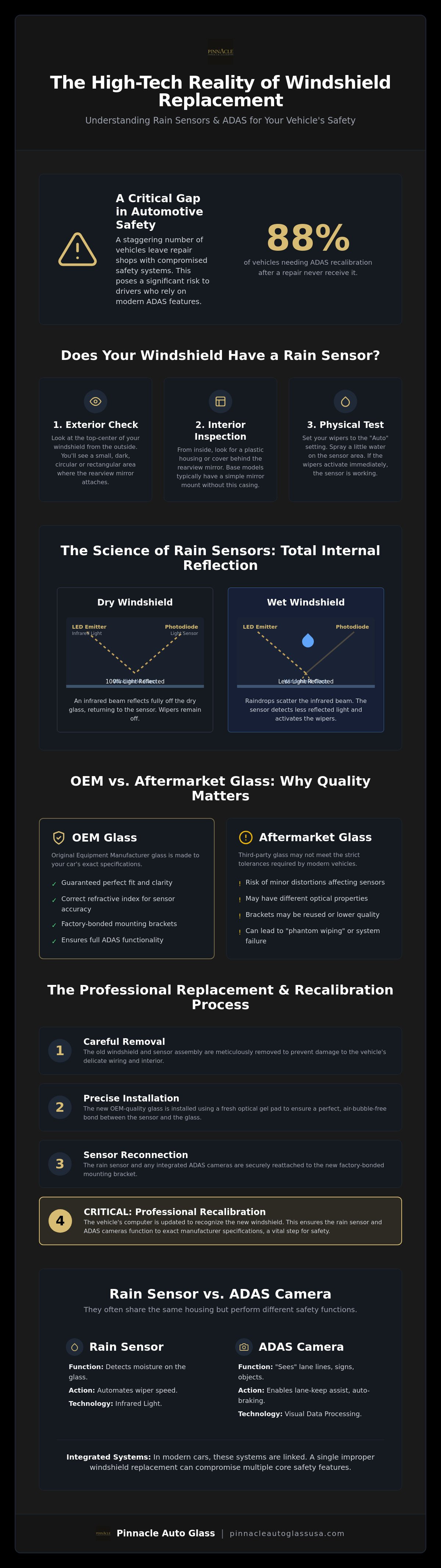
A rain sensor windshield is a specialized piece of automotive glass. It features a dedicated mounting area, typically positioned behind the rearview mirror, designed to house a cluster of infrared sensors. These sensors serve a critical safety purpose. They automatically adjust wiper speed based on the intensity of rain or snow. This automation allows you to keep your hands on the wheel and your focus on the road during sudden downpours. Understanding How Rain Sensors Work involves the principle of total internal reflection, where moisture on the glass surface disrupts an infrared beam to trigger the wipers.
Standard glass is insufficient for a vehicle equipped with this technology. Standard windshields lack the specialized brackets that are factory-bonded to the glass. Additionally, the specific "window" area where the sensor sits requires extreme optical clarity. Even a minor distortion in the glass can lead to "phantom wiping" or a total system failure. Under 2026 safety standards, these sensors often provide data to broader vehicle safety systems. This makes a precise windshield replacement with rain sensor compatibility essential for your car's integrity.
How to Identify if Your Windshield Has a Rain Sensor
Many drivers are unsure if their vehicle includes this feature. You can verify it quickly with these three methods:
- Check the exterior: Look at the top-center of your windshield from the outside. You will see a small, darkened circle or a rectangular film behind the glass where the mirror attaches.
- Inspect the interior: Look for a plastic casing or housing behind the rearview mirror. Base-model vehicles usually have a simple mirror mount without this bulky cover.
- Run a physical test: Set your wipers to the "Auto" or "Sensitivity" setting. Spray a small amount of water on the top-center of the glass. If the wipers activate immediately, your sensor is functional.
Rain Sensors vs. ADAS Cameras: Clearing the Confusion
It's common to confuse rain sensors with Advanced Driver Assistance Systems (ADAS) cameras. While they often sit in the same "tech hub" near the mirror, they perform different tasks. Rain sensors use infrared light to detect physical moisture. ADAS cameras use visual data to "see" lane lines, traffic signs, and pedestrians.
Modern 2026 models frequently integrate both into a single sensor cluster. Because these systems are so closely linked, they require specific professional windshield replacement techniques. A technician must handle the delicate wiring and ensure the glass is perfectly aligned so that both the rain detection and the camera's field of vision remain unobstructed. Failing to account for both during a windshield replacement with rain sensor setup can compromise your automatic emergency braking and lane-keep assist features.
How Rain Sensors Work and Why They Affect Your New Glass
Rain sensors operate on the principle of Total Internal Reflection. A light-emitting diode (LED) beams infrared light into the windshield glass at a specific 45-degree angle. If the glass is dry, the light reflects off the outer surface and returns to a photodiode at nearly full intensity. When raindrops hit the glass, they scatter the light and allow some of it to escape. The photodiode measures this drop in reflected light and signals the wiper motor to activate. This system is often integrated with broader Advanced Driver Assistance Systems (ADAS) to manage visibility in real-time.
Between the sensor unit and the glass sits a specialized optical gel pad. This component is vital for a successful windshield replacement with rain sensor. Its job is to eliminate the air gap between the sensor and the windshield. Air has a different refractive index than glass, which causes light to bounce incorrectly. Even a microscopic air bubble trapped in this gel can lead to "phantom wiping," where your wipers trigger on a perfectly sunny day. Using a fresh, high-quality gel pad is mandatory to maintain system accuracy.
The Importance of the Mounting Bracket
The mounting bracket is factory-bonded to the glass to ensure the sensor stays at the precise angle and distance required for accurate readings. Reusing an old bracket is a common mistake in low-quality installations. An old bracket may have slight warping or adhesive residue that causes vibration. These vibrations lead to intermittent sensor failure or delayed responses. Refractive index refers to the measurement of how much light bends when entering a material, and for automotive glass, this value must remain consistent to ensure the sensor's infrared beams are not distorted. If you suspect your sensor is lagging, it's wise to consult a professional glass technician about your mounting hardware.
Hydrophobic Coatings and Sensor Accuracy
Surface chemistry also plays a role in how your wipers behave. Many drivers apply aftermarket water repellents to their windshields. While these improve visibility, they can sometimes interfere with sensor readings by causing water to bead in a way the sensor doesn't recognize. High-quality glass often includes "sensor-friendly" factory treatments in the specific window area to prevent this. Glass thickness must be exact too. Variations in laminate thickness can alter infrared transmission, making the sensor less sensitive to light mist or fog. Precision in every layer of the glass is what makes a successful windshield replacement with rain sensor project possible.
OEM vs. Aftermarket: Choosing the Right Glass for Sensor Accuracy
Selecting the right glass is the most critical decision in a windshield replacement with rain sensor project. Original Equipment Manufacturer (OEM) glass is produced by the same company that supplied the glass for your vehicle's assembly line. It is guaranteed to have the exact mounting bracket and refractive index required for your specific sensor model. Aftermarket glass is a cost-effective alternative made by third-party manufacturers. While many aftermarket options meet safety standards, the quality of the "sensor window" area can vary significantly between brands. Precision in this specific area determines if your wipers will react correctly to environmental changes.
Low-quality glass often creates what technicians call the "ghosting" effect. This occurs when minor distortions or waves in the glass laminate cause the sensor's infrared light to bounce incorrectly. The sensor becomes "confused," leading to erratic behavior like wipers triggering on a clear day or failing to activate during a heavy storm. Beyond performance, you must consider your vehicle's warranty. In 2026, many manufacturers require OEM glass for any repairs involving integrated safety components. Using uncertified parts could potentially complicate future warranty claims related to your vehicle's electronic systems.
When to Insist on OEM Glass
Luxury vehicles often require OEM glass because their rain sensors are part of a highly sensitive integrated tech hub. These hubs house multiple sensors that must work in perfect harmony. If you drive a leased vehicle, OEM glass is usually mandatory. Lease contracts typically require "like-for-like" parts to maintain the vehicle's value and safety integrity. Furthermore, OEM glass is the safest choice when the rain sensor is part of a larger ADAS calibration suite. It provides the most stable platform for the cameras and sensors that manage your automatic braking and lane-keeping features.
Evaluating Aftermarket Options
High-quality aftermarket glass can be a reliable choice if it is specifically certified for sensor compatibility. You should pay close attention to the "frit," which is the black ceramic dot pattern around the edge of the glass. The frit must be positioned accurately to manage heat around the sensor cluster. Excessive heat can degrade the optical gel pad, leading to system failure over time. Understanding the cost to replace a windshield helps you weigh these technical needs against your budget. A reputable technician will help you identify which aftermarket brands maintain the optical clarity needed for a successful windshield replacement with rain sensor installation.
The Professional Replacement and Recalibration Process
Executing a windshield replacement with rain sensor requires a blend of mechanical skill and software expertise. The physical installation is only half the job. Modern technicians follow a rigorous protocol to ensure the delicate electronics remain intact and functional. This process moves through five distinct stages:
- Step 1: The technician carefully removes the rearview mirror and plastic housing. This exposes the sensor cluster without damaging the interior trim.
- Step 2: The sensor is disconnected from the vehicle. This requires handling a delicate wiring harness that can be easily pinched or severed if forced.
- Step 3: The sensor face is meticulously cleaned. A fresh, bubble-free optical gel pad is applied to ensure a perfect light path between the sensor and the glass.
- Step 4: The new windshield is set into place. The technician ensures the sensor clicks perfectly into the pre-installed bracket, leaving no room for vibration.
- Step 5: The vehicle undergoes electronic recalibration and a series of system tests to confirm the repair is successful.
Precision is mandatory during every second of this workflow. If the sensor is misaligned by even a fraction of a millimeter, the infrared beams will not reflect correctly. To ensure your vehicle receives this level of care, you should book your service with a high-tech glass specialist who understands these specific requirements.
Why Recalibration is Non-Negotiable
Your vehicle's computer needs to be told that the "view" through the glass has changed. New glass has slightly different optical properties than the original. Technicians use static calibration, involving physical targets in a shop, or dynamic calibration, which requires a specific test drive, to reset the system. In many 2026 models, the rain sensor data is linked to the Automatic Emergency Braking (AEB) system. If the sensor incorrectly detects a dry surface during a storm, the AEB might not prime the brakes for wet conditions, increasing your stopping distance.
Testing the Finished Installation
A reputable shop never returns a vehicle without a physical verification. Technicians perform a "Mist Test" by simulating light rain with a spray bottle. This confirms the wipers trigger at the correct speed and stop when the glass is clear. They also check the dashboard for error codes that indicate a communication fault between the sensor and the main computer. Always ensure your certified auto glass technician provides a signed calibration certificate. This document is proof that your safety systems are restored to factory standards and is often required for insurance compliance.
Ensuring Safety and Functionality with Pinnacle Auto Glass
Pinnacle Auto Glass specializes in the intersection of automotive glass and advanced electronics. We recognize that a modern vehicle is a rolling computer. Our technicians don't just perform a windshield replacement with rain sensor integration; they restore the entire safety ecosystem of your car or truck. Every team member is trained in the latest 2026 ADAS and sensor standards to ensure factory-level performance. We provide a comprehensive solution by handling both the glass installation and the technical recalibration in a single visit. This efficiency supports individual drivers and nationwide commercial fleets alike.
The Pinnacle Advantage for Modern Vehicles
We prioritize reliability by using premium adhesives and advanced bubble-free optical gel technology. This precision prevents common post-installation errors and system malfunctions like phantom wiping. Our company offers a stable, nationwide presence combined with the personalized care of a localized service provider. This model is ideal for fleet vehicle glass maintenance. We focus on reducing downtime so your drivers can return to the road safely and quickly with fully functional safety systems.
Next Steps for Your Windshield Replacement
Start the process by locating your Vehicle Identification Number (VIN). This 17-digit number ensures we identify the exact glass and sensor bracket required for your specific model. When speaking with your insurance provider, confirm that your policy covers the necessary recalibration services. Most modern policies recognize these as essential safety repairs rather than optional extras. Proper windshield replacement with rain sensor recalibration is vital for your vehicle's 2026 safety compliance. Book your appointment today to restore your vehicle's safety systems to original manufacturer specifications.
Restoring Your Vehicle's High-Tech Safety Systems
Modern windshields act as the primary housing for your vehicle's most sensitive technological hubs. A successful windshield replacement with rain sensor integration requires more than just high-quality glass. It demands precision mounting and expert recalibration to ensure your wipers and ADAS features respond correctly to every raindrop. By choosing the right materials and following professional installation protocols, you eliminate risks like phantom wiping and sensor communication errors. These steps are essential for maintaining the safety standards mandated for 2026 models.
Pinnacle Auto Glass is ready to assist with your next repair. We are recognized specialists in modern vehicle safety systems and provide expert ADAS recalibration as a standard part of our service. Whether you require nationwide mobile assistance or a specialized in-shop appointment, our technicians ensure your car functions to original manufacturer specifications. Get a Professional Quote for Your Tech-Integrated Windshield Replacement today. We prioritize your time and your safety by handling the glass and the tech in one seamless visit. Trust our expertise to keep your vision clear and your safety systems fully operational.
Frequently Asked Questions
Will my rain sensor work after the windshield is replaced?
Yes, your rain sensor will function perfectly provided the technician uses a new optical gel pad and performs the required recalibration. Proper installation ensures the infrared beams reflect correctly through the new glass. If the sensor is handled with care and the glass meets high quality standards, the functionality remains identical to the original factory performance.
Does a windshield with a rain sensor cost more to replace?
Yes, these windshields are generally more expensive because the glass is more complex and the process requires additional labor. The glass includes specialized mounting brackets bonded at the factory and requires a fresh optical gel pad during the installation. Most 2026 models also require electronic recalibration to ensure the sensor communicates accurately with the vehicle's computer.
Can I reuse the old rain sensor on a new windshield?
You can typically reuse the sensor unit itself, but you must replace the optical gel pad. The sensor is a durable electronic component that unclips from the mounting bracket. However, the gel pad that creates the seal between the sensor and the glass is a single-use item. Reusing an old, dry, or dusty pad will lead to system failure.
Why are my wipers turning on when it isn't raining after a replacement?
This issue is known as "phantom wiping" and usually indicates an air bubble or debris trapped in the optical gel. If the light path is obstructed, the sensor incorrectly interprets the distortion as moisture. This often occurs during a windshield replacement with rain sensor if the technician fails to clean the sensor face or uses a low-quality gel pad.
Do I need to go to the dealership to calibrate my rain sensor?
No, a dealership visit isn't necessary as long as you choose a glass specialist with ADAS recalibration capabilities. Modern glass shops use the same diagnostic tools and software as dealerships to reset your vehicle's computer. Ensure your technician is certified to handle 2026 safety standards to guarantee that all integrated systems function correctly after the glass is set.
What happens if I install a windshield without a rain sensor bracket?
Your rain-sensing wipers will cease to function because there is no secure way to mount the sensor to the glass. Some installers attempt to glue old brackets onto standard glass, but this often leads to vibration and incorrect light refraction. You must select a windshield specifically manufactured with the correct bracket bonded to the laminate to maintain system integrity.
Does insurance cover the recalibration of rain sensors?
Most insurance policies cover recalibration because it's a necessary part of restoring the vehicle's safety systems. Since rain sensors are often linked to broader ADAS features like emergency braking in 2026 models, insurers view this as a mandatory safety requirement rather than an optional add-on. You should verify your specific coverage details with your provider before starting the repair.
How long does it take to replace a windshield with a rain sensor?
A standard windshield replacement with rain sensor typically takes between 90 minutes and two hours to complete. This timeframe includes the physical glass installation, the delicate sensor transfer, and the electronic recalibration process. You must also account for the adhesive "drive-away" time, which ensures the glass is safely bonded before you operate the vehicle on the road.


