
Did you know that 88% of required safety system recalibrations are missed during standard vehicle repairs? When a rock hits your glass, your first instinct is to fix the crack, but a modern windshield is more than just a window. It's a housing for the cameras and sensors that keep you safe. Filing a windshield replacement insurance claim can feel overwhelming, especially when you're worried about your deductible or a potential spike in your monthly premiums.
You deserve a clear path to a safe vehicle without the stress of navigating complex policy language. We understand the confusion surrounding ADAS recalibration and the uncertainty of out-of-pocket costs. This guide provides a complete roadmap for 2026. You'll learn how to handle the paperwork, verify your coverage for advanced safety systems, and determine if filing a claim is your best financial move. We'll explore state-specific laws and the technical steps required to restore your car to factory standards.
Key Takeaways
- Differentiate between comprehensive and collision coverage to identify which policy section applies to your specific glass damage.
- Use "deductible math" to determine if filing a windshield replacement insurance claim offers better long-term value than paying out-of-pocket.
- Master a streamlined filing process that includes proper damage documentation and efficient communication with your insurance provider.
- Ensure your vehicle's safety systems are fully restored by including mandatory ADAS recalibration as a standard part of your claim.
- Learn why glass-only claims move through the insurance system faster than standard collision repairs, allowing for a quicker return to the road.
Understanding Windshield Replacement Insurance Claims
A windshield replacement insurance claim is a formal request for your insurance provider to cover the costs of restoring your vehicle's glass. While general auto body repairs often involve lengthy inspections and complex appraisals, glass claims typically follow an accelerated path. Most insurers treat glass as a specialized category because the damage is easily verified and the repair procedures are standardized. This efficiency allows you to move from the initial report to a completed installation much faster than a standard collision claim.
In 2026, many insurance policies now include a specific glass endorsement. This addition to your policy is designed to address the rising costs of integrated technology. Since modern windshields house critical safety sensors, these endorsements clarify how your insurer handles the high price of technical components and calibration. Filing your claim quickly is essential. Road vibrations and temperature fluctuations can cause a minor chip to expand into a structural crack within hours. Prompt action often allows for a simple repair rather than a full replacement.
The Difference Between Repair and Replacement Claims
Insurance companies generally prefer repairs over full replacements because they are more cost-effective. To encourage this, many providers waive the deductible entirely for minor chip repairs. A professional repair is usually possible if the damage is smaller than a credit card and located away from the driver's direct line of sight. However, if the crack is large, deep, or positioned over a sensor, a full replacement is the only way to ensure structural integrity. Understanding these thresholds helps you set realistic expectations for your claim outcome.
Common Terminology You Will Encounter
Gaining a clear Understanding Windshield Replacement Insurance Claims requires familiarity with industry-specific terms. Knowing these definitions will help you communicate effectively with your agent and your glass technician.
- Deductible: This is the specific amount you pay out-of-pocket before your insurance coverage pays the remaining balance.
- Comprehensive Coverage: This is the portion of your policy that covers glass damage from non-collision events, such as road debris, theft, or weather.
- Network Provider: These are service centers that have established billing agreements with your insurance company. Using a network provider often simplifies the paperwork because the shop bills the insurer directly.
- OEM vs. Aftermarket Glass: Original Equipment Manufacturer (OEM) glass is produced by the same company that made your original windshield. Aftermarket glass is a third-party alternative that meets safety standards but may differ slightly in branding or specific features.
By identifying these terms early, you can navigate the claims process with confidence. Your insurance provider will likely guide you toward a network provider to ensure the billing remains seamless and the work meets their specific quality standards.
Evaluating Coverage: Comprehensive vs. Collision
The type of insurance coverage you carry dictates exactly how your windshield replacement insurance claim is processed. Most drivers assume any glass damage is covered. This is not always the case. If you only carry liability insurance, your provider won't pay for your own vehicle's glass damage. Coverage is typically split between comprehensive and collision policies. Knowing which one to use is the first step toward a successful windshield replacement insurance claim.
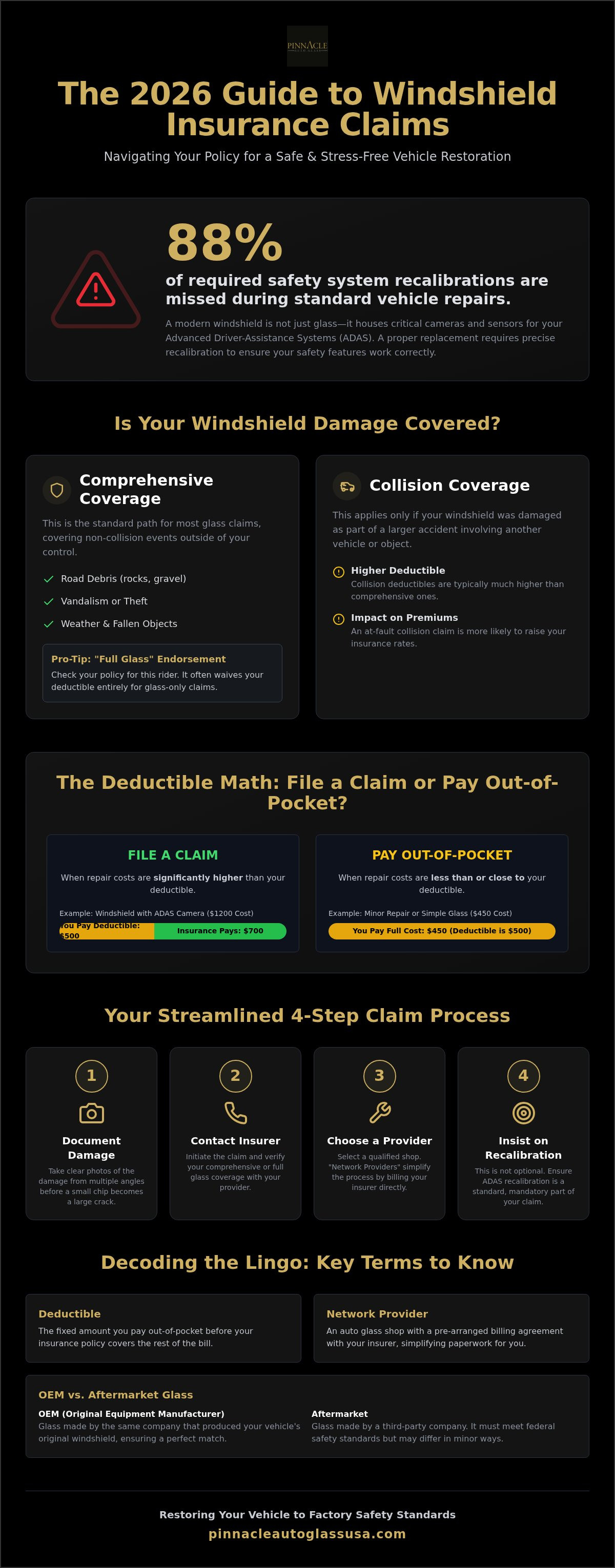
Comprehensive coverage is the standard path for most glass claims. It protects against 'acts of God' or incidents outside of your direct control. This includes flying gravel, fallen tree limbs, and even vandalism. Many modern policies in 2026 offer a 'Full Glass' endorsement. This specific rider allows you to bypass your deductible entirely for glass-related incidents. It is a vital tool for managing a Financial Strategy: Filing a Claim vs. Paying Out-of-Pocket, as it ensures safety systems are restored without an immediate financial burden. This endorsement is particularly valuable now that windshields include expensive sensor arrays.
When Comprehensive Coverage Kicks In
Comprehensive claims are designed for incidents where you aren't at fault. Common scenarios include damage from road debris or gravel kicked up by other vehicles on the highway. It also covers vandalism, theft attempts, or fallen objects like tree branches during a storm. Even extreme temperature shifts can cause a minor, existing chip to spiderweb across the glass. These claims are generally viewed as low-risk by insurance providers. Because these events are considered outside of the driver's control, they rarely cause the same premium increases that a collision claim might trigger.
Collision Claims and Glass Damage
If your windshield shatters during a multi-vehicle accident, it falls under collision coverage. In these cases, the glass is often just one part of a larger, more complex repair bill. The deductible for collision is usually significantly higher than the comprehensive deductible. If you are not at fault, the other driver's insurance should cover the total cost, including glass and ADAS recalibration. However, if you are at fault, you'll need to pay your full collision deductible before the insurance company covers the rest. Unlike comprehensive claims, collision repairs must account for the full restoration of the vehicle's structural frame. If your insurer suggests skipping recalibration to save costs, remember that 2026 safety standards require these systems to be fully operational for the vehicle to be road-legal. You can consult with a specialist to determine which coverage applies to your specific situation and ensure your safety systems are handled correctly.
Financial Strategy: Filing a Claim vs. Paying Out-of-Pocket
The math behind a windshield replacement insurance claim changed significantly as vehicles became smarter. A decade ago, a windshield was just a piece of glass. Today, it's a sophisticated housing for cameras and radar. Deciding whether to file a claim or pay cash is no longer a simple comparison of a $200 piece of glass against a $500 deductible. It's a strategic decision that impacts your vehicle's safety and your long term policy standing.
Most drivers start by performing "Deductible Math." If your out-of-pocket cost is only slightly higher than your deductible, you might consider paying cash to keep your claims history clean. However, this logic often fails to account for the mandatory technical work required for modern cars. When you factor in the labor for a proper installation and the specialized equipment needed for safety system restoration, the total invoice often justifies a windshield replacement insurance claim even with a moderate deductible.
Calculating the Total Cost of Replacement
To make an informed choice, you must look at the complete picture. A standard invoice includes the glass itself, specialized labor, and essential moldings that ensure a leak-proof seal. You should also consider the specific glass type required. To get a sense of the variables involved, you can review our guide on how much does windshield replacement cost. The most significant variable in 2026 is ADAS recalibration. This process ensures your lane-keep assist and emergency braking function correctly. Skipping this step isn't an option for safety-first installations, and it can add several hundred dollars to the final bill.
When to Avoid Filing a Claim
There are specific scenarios where paying cash is the smarter financial move. If the damage is a simple stone chip, a professional repair is often very affordable. Many insurance companies waive deductibles for repairs, but if you've already filed multiple glass claims in the last 12 months, paying a small flat fee out-of-pocket might protect your "low-risk" status. For commercial operators managing Fleet Glass Services, balancing these small costs helps maintain a lower insurance loss ratio, which keeps fleet-wide premiums stable over time.
When Understanding Comprehensive Coverage, remember that glass-only claims are generally viewed as "no-fault" incidents. Unlike at-fault accidents, they rarely trigger massive premium spikes. However, every insurer has different thresholds for claim frequency. If you're unsure about your specific policy's limits, contact your agent or check out SI Insurance before initiating the process. This ensures you maintain your coverage benefits without unexpected changes to your monthly rates.
Step-by-Step: How to File Your Auto Glass Claim Successfully
Successful filing starts with immediate action. As soon as you notice damage, pull over and document the scene. High-resolution photos are your best tool for a smooth windshield replacement insurance claim. Take shots from multiple angles, including close-ups of the impact point and wider views of the entire windshield. This documentation proves the cause of damage and helps your insurer categorize it under comprehensive coverage accurately.
Once you have photos, contact your insurance provider. Many companies in 2026 prioritize claims submitted through their mobile apps. These platforms allow you to upload images and select service providers in real-time. During this step, verify your deductible. Ask specifically if your policy includes a "full glass" endorsement, which might waive costs entirely. You should also confirm if they have "preferred shop" requirements, though you generally have the right to choose your own technician for a windshield replacement insurance claim.
Information You'll Need Ready
To keep the process moving, gather these details before you call or log in. Having this data ready prevents back-and-forth delays with the insurance adjuster:
- Your current policy number and the exact date the damage occurred.
- The Vehicle Identification Number (VIN), which is found on the driver-side dashboard or door jamb.
- A concise description of the incident, such as "rock kicked up by a construction truck on the highway."
The VIN is particularly critical in 2026. It allows the glass shop to identify the specific sensor array and camera system installed in your vehicle. This ensures the correct parts are ordered for your windshield replacement, avoiding delays caused by incompatible glass types.
Working with the Glass Shop
Choosing the right service provider is the final hurdle. Not all shops are equipped to handle modern vehicle requirements. You must confirm that the facility provides ADAS calibration auto glass services. Without this, your safety features like lane-keep assist will remain offline after the glass is installed. This step is a mandatory safety requirement, not an optional convenience.
Professional shops often offer "direct billing." This means they coordinate directly with your insurance adjuster to handle the payment. It saves you from paying the full amount and waiting for a reimbursement check. Ensure the shop provides a nationwide warranty recognized by your insurer. This protects you if a leak or sensor error occurs later. If you need a partner to manage the technical paperwork for you, contact Pinnacle Auto Glass to start your claim with certified experts today.
Ensuring Safety: Why ADAS Recalibration is Part of Your Claim
Modern vehicles are mobile computers. Advanced Driver Assistance Systems (ADAS) use complex cameras and sensors mounted directly to your windshield to monitor the road. When you file a windshield replacement insurance claim, recalibration is a mandatory technical requirement. It is not an optional upgrade or a luxury add-on. If the camera is off by even a single millimeter, your safety features could fail or react unpredictably. This precision is why the technical side of your claim is just as important as the glass itself.
By 2026, insurance standards have evolved to recognize that a vehicle is not road-legal or safe without proper recalibration. Insurers are now required to cover these costs as part of the primary claim. They understand the liability risks involved. If a safety system like automatic emergency braking fails because of an uncalibrated camera, the legal and financial consequences are severe. Including this service in your windshield replacement insurance claim protects both your physical safety and your financial liability.
Manufacturer Requirements and Insurance
Vehicle manufacturers set the rules for safety. They mandate specific recalibration procedures to ensure their systems function as designed. These requirements are essential for maintaining your vehicle's factory warranty. Because this work involves sensitive electronics, certified auto glass technicians must perform the task. Most insurance providers won't settle a claim until they receive digital documentation proving the recalibration was successful. This paperwork serves as a safety certificate for your vehicle's history.
The Pinnacle Approach to Claims and Safety
Pinnacle Auto Glass removes the complexity from the insurance process. We handle the coordination of the recalibration within your existing claim so you don't have to manage multiple vendors. Our technicians ensure every sensor is fully operational. We test everything from lane departure warnings to pedestrian detection systems. This comprehensive approach provides peace of mind through professional, nationwide service standards. We focus on restoring your vehicle to its original safety specifications, ensuring your safety systems are ready for the road the moment you leave our shop.
Restore Your Vehicle's Safety and Clarity
Navigating a windshield replacement insurance claim doesn't have to be a burden. By understanding the distinction between comprehensive and collision coverage, you can ensure your policy works for you as intended. Modern windshields are sophisticated technical components. Professional recalibration is a non-negotiable step to keep your lane-assist and emergency braking systems functional. Whether you're managing a personal vehicle or a commercial fleet, the right documentation and a certified partner make the difference between a simple repair and a long-term liability risk.
For auto dealers and finance companies who need to manage these risks across large inventories, you can learn more about Verifacto and their cloud-based collateral protection tools.
At Pinnacle Auto Glass, we provide specialized ADAS recalibration expertise and hassle-free insurance claim assistance. Our nationwide service covers both personal and commercial vehicles with a focus on reliability and technical precision. Start your windshield replacement claim with Pinnacle Auto Glass today to ensure your vehicle is restored to factory standards. We handle the technical details and the insurance paperwork so you can focus on the road ahead. You're just one step away from a clear view and a fully functional safety system. Drive with the peace of mind that comes from professional excellence.
Frequently Asked Questions
Will my insurance premium go up if I file a windshield claim?
Generally, filing a single glass claim will not increase your insurance premiums. Most glass damage falls under comprehensive coverage, which is intended for "no-fault" incidents like road debris or weather. Because these events are outside your control, insurers typically don't penalize you for them. However, your risk profile could change if you file multiple claims within a 12-month period.
Do I have to pay my deductible for a windshield repair?
In many cases, you won't have to pay anything for a repair. Insurance providers often waive the deductible for chip repairs to encourage you to fix the glass before it cracks completely. As of July 2026, states like Florida, Kentucky, and South Carolina even have laws requiring insurers to waive deductibles for full replacements if you carry comprehensive coverage.
Can I choose my own glass shop or must I use the insurance company's recommendation?
You have the legal right to choose any glass shop you prefer. While insurance companies often suggest "preferred" network providers to simplify their own billing, they cannot mandate where you take your vehicle. Selecting your own specialist ensures that your windshield replacement insurance claim is handled by technicians who prioritize your specific safety system requirements and recalibration needs.
Does insurance cover the cost of ADAS camera recalibration?
Yes, insurance companies are generally required to cover ADAS recalibration as part of the replacement process. Since manufacturers mandate recalibration to ensure safety features like emergency braking function correctly, it's considered a necessary repair step rather than an optional add-on. Your insurer should pay for this service to restore your vehicle to its original factory safety standards.
What happens if my insurance company refuses to pay for OEM glass?
Most standard policies only cover the cost of "Like Kind and Quality" aftermarket glass. If your vehicle's safety systems specifically require Original Equipment Manufacturer (OEM) glass to function, you may need to provide a manufacturer's statement to your adjuster. If the insurer still refuses, some policyholders choose to pay the price difference out-of-pocket to ensure maximum compatibility with their sensors.
How long does the insurance approval process take for glass replacement?
The approval process is typically very efficient, often taking between two and twenty-four hours. Because auto glass claims are standardized and frequent, many insurers use automated systems for nearly instant authorization. Once the shop receives the "work order" or approval number, they can immediately order your specific glass and schedule the installation for your vehicle.
Is a cracked windshield considered a safety violation for insurance purposes?
Yes, a cracked windshield is a significant safety concern and can be a legal violation if the damage is in the driver's line of sight. Insurers view damaged glass as a liability because it compromises the structural integrity of the roof and can cause safety cameras to malfunction. Promptly filing a windshield replacement insurance claim helps mitigate these risks and keeps your vehicle road-legal.
Can I file a claim for a rear window or side glass replacement?
You can file a claim for any glass on your vehicle, including side windows, vent glass, and rear windshields. These components are covered under the same comprehensive section of your policy as the front windshield. If the damage resulted from theft, vandalism, or a storm, the claim process remains the same, though these windows rarely require the ADAS recalibration needed for front glass.


