
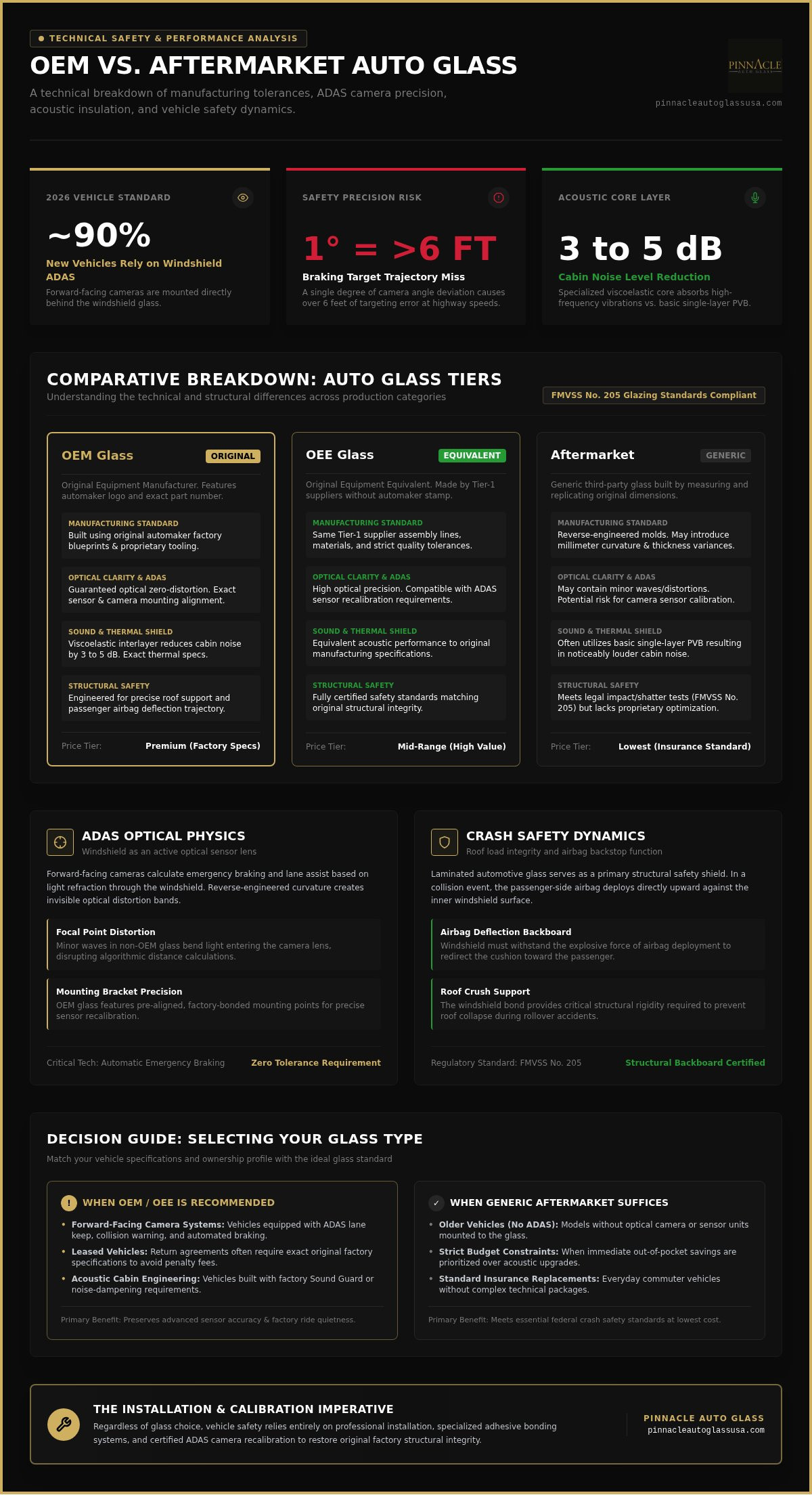
Did you know that a camera misalignment of just one degree can cause your automatic braking system to miss its target by more than six feet at highway speeds? As of 2026, nearly 90% of new vehicles rely on forward-facing cameras mounted directly behind the windshield. This technical shift makes the choice between original equipment and generic alternatives a matter of precision rather than brand loyalty. You might feel like you're overpaying for a logo, but the real question is whether your vehicle's safety tech can function without it. Many drivers find themselves asking, is OEM glass worth the extra cost when faced with a high-tech windshield replacement?
It's natural to feel frustrated when a simple repair turns into a complex technical project. You want to ensure your safety systems work perfectly without paying for unnecessary markups. This analysis explores the critical differences between OEM and aftermarket options to help you make an informed investment. We will examine current safety standards, the impact on ADAS recalibration, and how to navigate insurance coverage limits. This framework gives you the confidence to choose the right glass for your budget and your vehicle's technology.
Key Takeaways
- OEM glass is manufactured to exact factory specifications for superior optical clarity and sound dampening. These technical properties maintain your cabin's quiet environment and ensure a distortion-free view.
- Determining if is OEM glass worth the extra cost depends on the precision of your vehicle's safety sensors. Learn how glass curvature affects the focal points of your advanced driver assistance systems.
- OEE glass provides a high-quality alternative by meeting original manufacturer tolerances without the brand-name markup. This option often serves as a reliable middle ground for many modern vehicles.
- Your vehicle's age and lease terms play a major role in the final decision. Discover when the premium price is a technical necessity and when it becomes an optional upgrade.
- Success relies on professional installation and expert ADAS recalibration. The quality of the technician and the adhesive system are critical to restoring your vehicle's structural integrity.
Defining the Debate: OEM vs. Aftermarket Auto Glass
Understanding the difference between glass types is the first step in deciding if is OEM glass worth the extra cost. Many vehicle owners assume all glass is created equal. This is a misconception. Automotive glass is a complex component known as laminated safety glass, engineered to support the vehicle's roof and protect occupants during a collision. While every piece of glass must meet federal safety standards, the manufacturing process varies significantly between original parts and third-party replicas.
The price gap between these options isn't just about a brand name. Licensing fees, proprietary production standards, and specialized tooling all contribute to the higher cost of OEM parts. Many drivers worry that generic glass is unsafe, but that isn't true. All glass sold in the U.S. must pass impact and shatter tests. The real debate centers on how well that glass integrates with your car's specific technology and structural design. OEM glass is made by the same company that provided the original windshield for your car's assembly line. It features the automaker's logo and part number. OEE (Original Equipment Equivalent) glass is manufactured by these same Tier-1 suppliers using identical materials and standards but lacks the vehicle brand stamp. This branding difference often accounts for a portion of the price gap, yet OEE remains a high-quality professional choice.
The Manufacturing Standards Gap
Millimeters matter in modern automotive engineering. OEM glass is produced using the vehicle's original blueprints. These documents specify exact curvature, thickness, and mounting points for sensors. Aftermarket manufacturers don't have access to these proprietary files. They must rely on reverse-engineering existing glass to create their molds. This can lead to tiny variations in the glass's tolerances. Even a slight deviation can affect how the glass sits in the frame or how cameras see through it. OEM glass is the only product guaranteed to match original factory specs.
Aftermarket Glass: The Cost-Effective Alternative
Generic aftermarket glass is built by companies with no direct link to the automaker. They create designs by measuring original parts and replicating the shape. These products are designed to fit the opening, but they don't always match the internal specifications of the original equipment. Insurance companies often prefer this option because it reduces claim costs. Industry data shows that aftermarket glass typically costs significantly less than OEM alternatives. However, the lower price sometimes comes with compromises in acoustic dampening or optical clarity. Choosing between these options requires weighing immediate savings against long-term performance. If you drive a modern vehicle with advanced sensors, the technical precision of the glass becomes a safety-critical factor.
The Technical Specifications That Justify the OEM Price Premium
The premium price of OEM glass isn't just for the manufacturer's logo. It's for the engineering hidden between the layers. When considering is OEM glass worth the extra cost, you must look at optical clarity. Cheaper aftermarket glass often contains minor waves or distortions. These imperfections are difficult to spot with the naked eye but cause significant eye strain during long drives. While all glass must meet FMVSS No. 205 glazing standards for basic safety, OEM glass is designed to exceed these minimums. It provides the exact structural integrity required for your passenger-side airbag to deploy correctly. In a collision, the airbag deflects off the inside of the windshield. If the glass lacks the necessary strength or the bond fails, the safety system cannot protect the occupants.
Acoustic and Thermal Performance
Modern vehicles stay quiet because of specialized Sound Guard technology. OEM glass features a viscoelastic core layer designed to absorb specific sound frequencies. This specialized layer reduces interior cabin noise by 3 to 5 decibels compared to standard glass. Many aftermarket alternatives use a basic single-layer PVB, which results in a noticeably louder environment. Thermal protection is another critical technical factor. Advanced interlayers in OEM glass reflect infrared heat, reducing the load on your vehicle's HVAC system. This is especially important for electric vehicles, where cabin temperature regulation directly impacts battery range and overall energy efficiency.
Durability and Resale Value
Long-term durability is a major part of the value equation. Aftermarket glass is frequently more susceptible to pitting and surface scratches from road debris. Over time, this wear creates a hazy effect that compromises visibility during night driving. This premature degradation might lead you to ask how much does windshield replacement cost when you're forced to replace the glass sooner than expected. Furthermore, the presence of an OEM stamp affects your vehicle's appraisal. Dealerships and private buyers look for the manufacturer's logo during inspections. A missing stamp can signal previous accidents or low-quality repairs, which often lowers the trade-in value of your car.
Choosing the right materials ensures your car remains as safe and comfortable as the day it left the factory. If you're ready to see the difference quality makes, you can request a professional quote for your next replacement.
ADAS Compatibility: The Ultimate Deciding Factor for Modern Vehicles
In 2026, your windshield is no longer just a piece of glass. It's a sophisticated optical lens for your vehicle's Advanced Driver Assistance Systems (ADAS). Cameras and sensors mounted behind the rearview mirror rely on the glass to see the road clearly. If the glass has even minor optical distortion, the software might misinterpret traffic lanes or fail to detect a pedestrian. This technical requirement is the primary reason why many experts argue that is OEM glass worth the extra cost for newer models. A clear view for the driver is important, but a clear view for the computer is essential.
The relationship between glass curvature and camera focal points is incredibly precise. Cameras are programmed to focus through a specific thickness and curve. According to AAA windshield replacement and calibration guidance, even slight variations in glass quality can compromise these safety systems. When an aftermarket windshield has a different curvature than the original, it creates a "blindness" effect where the camera cannot lock onto targets accurately. This isn't just a nuisance; it's a safety hazard that can lead to system failure when you need it most.
The Precision of ADAS Sensors
Systems like Lane Departure Warning and Forward Collision Warning operate on tight tolerances. A deviation of just 1mm in glass thickness can shift the sensor's data by several feet on the road ahead. This misalignment leads to delayed braking or phantom alerts that frustrate drivers. Ensuring proper ADAS calibration auto glass is the most critical safety step in 2026. Without this precision, the expensive hardware in your vehicle is essentially ornamental. OEM glass ensures the camera's field of vision remains exactly as the manufacturer intended.
Recalibration Success Rates
Technicians often struggle to calibrate generic aftermarket glass on luxury brands like Mercedes-Benz or BMW. These vehicles use complex dual-camera arrays that are highly sensitive to glass quality. If the calibration fails due to glass imperfections, you face the hidden cost of multiple shop visits and extra labor fees. You might wonder again, is OEM glass worth the extra cost, when your safety alerts remain disabled after a replacement. Pinnacle avoids these issues by verifying tech compatibility before the installation begins. We prioritize glass that meets the exact optical requirements of your specific ADAS platform. This proactive approach ensures your safety systems work correctly the first time, protecting both your budget and your passengers.
Making the Decision: When to Choose OEM vs. OEE Glass
Deciding whether to pay for a manufacturer's logo requires a look at your vehicle's current status and your long-term plans. The question of is OEM glass worth the extra cost often comes down to technical necessity versus financial practicality. For newer vehicles, the technical argument usually wins. For older models, the financial one takes priority. You must balance the immediate price with the potential for long-term complications or safety system failures.
The Lease and Luxury Factor
Owners of luxury brands like BMW, Mercedes, and Tesla should almost always insist on OEM parts. These manufacturers use highly specialized glass that integrates with complex sensor arrays. Beyond the tech, lease agreements often include strict "like-for-like" replacement clauses. If you return a leased vehicle with an aftermarket windshield, the inspector may flag it. You could be charged for a full OEM replacement at the end of your term. This makes the upfront premium a smart way to avoid expensive penalties during your lease return inspection.
Reviewing your insurance policy's fine print is essential before you book a service. Many standard policies default to aftermarket glass to keep claim costs low. However, you can often negotiate for OEM coverage if your car is less than two years old or features advanced safety tech. Look for an "OEM parts endorsement" in your policy. This rider ensures the insurance company pays the full price difference, so you don't have to worry if is OEM glass worth the extra cost out of your own pocket.
When Aftermarket Glass is the Smart Choice
There are scenarios where aftermarket glass is the more logical choice for your budget. Older vehicles without camera-based safety systems don't require the extreme optical precision of OEM products. High-mileage workhorses where functional utility beats brand name recognition are also prime candidates for aftermarket options. In these cases, you can save money while still receiving a safe, reliable windshield. You can identify high-quality aftermarket brands that rival OEM standards in durability and fit, provided they meet all federal safety regulations.
OEE (Original Equipment Equivalent) glass serves as the ideal middle ground for many drivers. It offers the same thickness and acoustic properties as OEM glass but lacks the automaker's stamp. It's a professional solution for those who want factory-level performance without the "logo tax." This allows you to maintain high safety standards while keeping your maintenance costs manageable. If you're unsure which option fits your specific car and budget, contact our team for an expert recommendation today.
Professional Installation: Ensuring Value Regardless of the Glass Type
Quality materials are only half of the equation. Even the most expensive factory windshield can fail if the technician uses subpar adhesives or rushes the curing process. When evaluating is OEM glass worth the extra cost, you must also consider the skill of the person performing the work. A precise fit is essential for maintaining your vehicle's structural integrity and ensuring a leak-free, rattle-free experience. High-quality urethane adhesives require specific conditions to bond correctly. Rushing this step violates industry safety standards and compromises the windshield's role in supporting the roof during a rollover or deflecting airbags during a collision.
Pinnacle Auto Glass focuses on balancing these technical requirements with your specific budget. We don't just sell glass; we provide a safety-first installation protocol that protects your investment. Our team ensures that every replacement meets or exceeds federal safety requirements, giving you a reliable result regardless of the glass tier you choose.
The Role of the Certified Technician
Modern safety technology has changed the job description of the installer. A certified auto glass technician is now responsible for more than just a physical seal. They must ensure that camera brackets are perfectly aligned and that sensors have a clear, unobstructed path through the glass. At Pinnacle, our technicians follow strict checklists to verify sensor functionality before you drive away. This includes checking the seal for potential leaks and ensuring that the ADAS hardware is securely mounted to prevent vibration-induced errors.
Final Verdict: Is it Worth it?
In 2026, the calculation of is OEM glass worth the extra cost is straightforward. If your car features forward-facing cameras, Head-Up Displays, or specialized acoustic glass, the answer is yes. The premium price prevents future system errors and maintains your car's resale value. For older vehicles without these features, high-quality OEE or aftermarket glass remains a practical, safe alternative. The ultimate goal is peace of mind. You want to know that your safety systems will react correctly in an emergency. We recommend requesting a quote that compares both options. This allows you to see the price difference clearly and decide which path fits your car's specific technical needs and your personal budget.
Securing Your Vehicle's Tech and Safety
Choosing a new windshield requires a careful look at your vehicle's technical needs and your long-term budget. For 2026 models, the optical precision found in original equipment is often essential for advanced safety sensors to perform correctly. While high-quality OEE glass provides a reliable alternative for many, the decision on whether is OEM glass worth the extra cost depends on your car's specific ADAS requirements. We provide nationwide professional service with expert ADAS recalibration included in our workflows. Our team also serves as fleet and commercial vehicle specialists, ensuring heavy-duty trucks and personal cars alike receive the highest installation standards.
Don't leave your safety to chance with unverified parts or rushed labor. Prioritize a partner that understands the complexity of modern glass and values your security. Get a Professional Quote for Your Windshield Replacement Today. We are ready to help you restore your vehicle to its original factory standards.
Frequently Asked Questions
Will using aftermarket glass void my vehicle's warranty?
Using aftermarket glass won't void your entire vehicle warranty. Federal law protects your right to choose parts from third-party manufacturers for repairs. However, if a specific aftermarket windshield causes a leak or a sensor failure, the dealer won't cover those specific repairs under warranty. You'd be responsible for fixing any issues directly related to the non-factory part. It's best to check your specific lease or warranty fine print for any unique glass clauses.
How can I tell if my current windshield is OEM or aftermarket?
You can identify your glass type by checking the "bug" or stamp in the bottom corner. OEM glass features the vehicle manufacturer's logo, such as Toyota or Ford, along with the part number. Aftermarket glass only displays the name of the glass company and technical safety codes. If you don't see your car brand's logo, you likely have an aftermarket or OEE replacement installed on your vehicle.
Does insurance always cover the cost of OEM glass?
Insurance companies typically don't cover the full price of OEM glass by default. Most standard policies only pay for the cost of aftermarket or OEE alternatives. If you want the manufacturer-branded part, you'll likely need to pay the price difference out of pocket. Some drivers avoid this by adding an OEM endorsement rider to their policy, which guarantees the use of factory parts for all covered glass claims.
Can ADAS be calibrated on any type of aftermarket glass?
ADAS calibration is possible on high-quality aftermarket glass, but success isn't guaranteed. Some generic glass options have slight curvature variances that distort the camera's view. This makes it difficult to determine if is OEM glass worth the extra cost until a calibration fails. We recommend using OEE or OEM glass for vehicles with lane-keep assist or automatic braking to ensure the safety sensors can lock onto targets correctly.
What happens if my car's cameras won't calibrate with the new glass?
If your cameras won't calibrate, the vehicle's safety systems will remain inactive. You'll likely see warning lights on your dashboard indicating that features like collision warning are disabled. This usually happens because of optical distortion or incorrect bracket placement on low-quality glass. In these cases, the windshield must be replaced again with a higher-quality part to restore the sensor's vision and allow for a successful recalibration.
Is OEE glass the same thing as OEM glass?
OEE glass isn't exactly the same as OEM, but it's the closest alternative. Original Equipment Equivalent glass is made by the same Tier-1 manufacturers that supply automakers. It uses the same materials and production standards but lacks the vehicle brand logo. While it's technically identical in performance, the absence of the brand stamp makes it a more affordable option for drivers who want factory quality without the premium price.
Why is OEM glass so much more expensive than aftermarket?
OEM glass is more expensive because of proprietary engineering and licensing fees. Automakers own the specific blueprints for the glass's shape and sensor mounting points. Third-party manufacturers have to reverse-engineer these designs, which saves them money on research and development. The higher price also reflects the automaker's strict quality control requirements and the added value of the brand name, which can help maintain your vehicle's trade-in appraisal.
Does OEM glass provide better protection in a car accident?
All glass sold in the United States must meet federal safety standards for impact and shatter resistance. However, OEM glass is specifically engineered to match your car's structural design. This ensures the windshield provides the exact support needed for airbag deployment and roof strength during a rollover. While aftermarket glass is legal and safe, OEM parts offer the peace of mind that every safety specification matches the original factory testing.


