
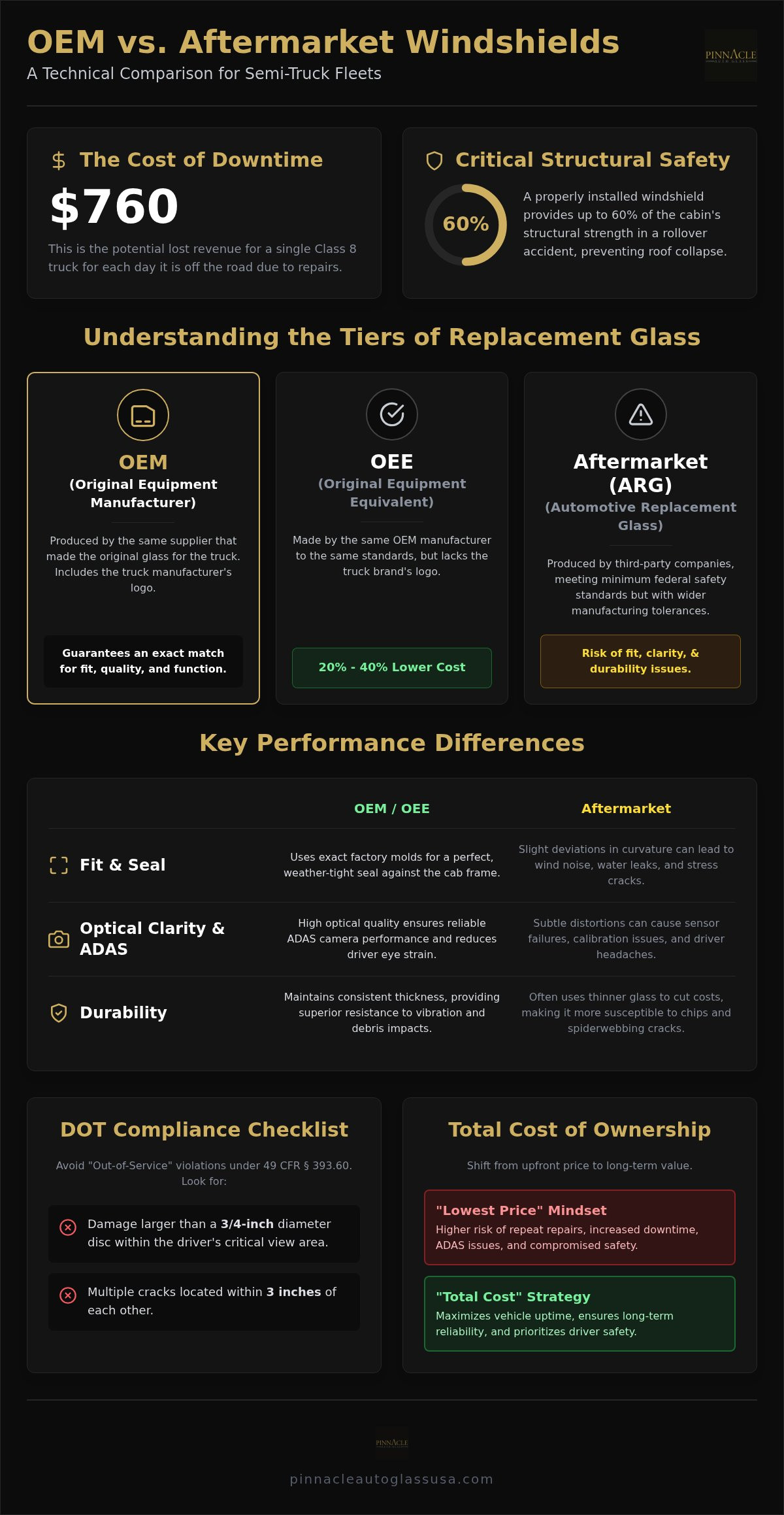
A single day of downtime for one Class 8 truck can cost your fleet up to $760 in lost revenue. When a cracked windshield pulls a vehicle off the road, the pressure to get it back in service often leads to quick decisions. You likely find yourself weighing the immediate savings of a budget part against the long-term reliability of a premium one. Choosing between an OEM vs aftermarket semi truck windshield is a strategic calculation that impacts your bottom line, driver safety, and DOT compliance.
We understand that your priority is keeping your drivers safe and your trucks moving. This guide provides the technical insights you need to make an informed decision for your fleet. You will discover how glass quality affects structural integrity, which can account for up to 60% of cabin strength during a rollover. We also detail the necessity of precise ADAS recalibration for modern collision systems and lane-keep assist. By the end of this article, you will know how to minimize sensor failures and reduce driver fatigue caused by poor optical clarity.
Key Takeaways
- Understand how the massive surface area of Class 8 glass increases vulnerability to pressure and affects your fleet's overall safety.
- Identify the technical differences between an OEM vs aftermarket semi truck windshield to ensure a precise fit and maintain DOT compliance.
- Learn how optical clarity and refractive index directly impact the reliability of your ADAS safety sensors and camera performance.
- Transition from a "lowest-price" mindset to a Total Cost of Ownership strategy that prioritizes long-term uptime over upfront savings.
- Use a proven decision framework to choose the right glass based on vehicle age and the complexity of your truck's safety suite.
The Critical Role of Glass Quality in Semi Truck Safety
Semi-truck windshields serve as critical structural elements. For Class 8 trucks, the windshield isn't just a window. It's a safety barrier that supports the cab's integrity. Because of the massive surface area of these panels, they face intense pressure from wind resistance and environmental factors. Choosing between an OEM vs aftermarket semi truck windshield requires understanding these physical demands. High-quality glass preserves the "optical health" of long-haul drivers. Poor glass often has subtle distortions that cause eye strain and headaches during 11-hour shifts. Maintaining clear, undistorted vision is essential for driver retention and road safety.
Why Semi Truck Glass Faces Unique Stressors
Commercial rigs operate in high-vibration environments. Constant engine hum and road irregularities put immense stress on the adhesive seals. If a seal fails, the glass loses its structural purpose. In a rollover accident, the windshield provides up to 60% of the cabin's strength. It acts as the primary backstop for the passenger-side airbag. Low-quality glass or poor installation can lead to a catastrophic roof collapse. Highway driving also exposes glass to frequent debris impacts. Durable glass prevents small chips from spiderwebbing into vision-obscuring cracks that sideline your fleet. You need glass that can withstand the daily rigors of the open road without compromising the truck's frame.
Regulatory Standards: FMVSS 205 and DOT Compliance
Every windshield must meet Federal Motor Vehicle Safety Standard (FMVSS) No. 205. This regulation dictates the strength and clarity required for all automotive glazing. An Original Equipment Manufacturer (OEM) part is built to the exact specifications used during the truck's assembly. Aftermarket parts must also meet these federal standards, but variations in thickness or curvature can still cause issues during roadside inspections. Precision matters when your carrier's safety rating is on the line.
The FMCSA enforces strict rules under 49 CFR § 393.60. Inspectors look for cracks or chips that obstruct the driver's view. Any damage larger than a 3/4-inch disc, or cracks within three inches of each other, can result in an "out-of-service" order. Using non-compliant glass doesn't just invite fines. It creates significant legal liability if a glass failure contributes to an accident. Professional fleet managers prioritize glass that ensures long-term compliance and driver safety. This focus on quality keeps the fleet moving and avoids the high costs of unplanned downtime.
Defining OEM vs. Aftermarket for Class 8 Vehicles
Choosing between an OEM vs aftermarket semi truck windshield involves more than comparing prices. You need to understand the three distinct tiers of glass available for Class 8 vehicles. Original Equipment Manufacturer (OEM) glass is produced by the same factory supplier that provided the glass when the truck was built. Companies like Pilkington, Fuyao, and Vitro are common manufacturers for major truck brands. This glass carries the truck manufacturer's logo and guarantees an exact match for fit, form, and function.
Original Equipment Equivalent (OEE) glass serves as a middle ground. It's produced by the same manufacturers using the same quality standards but lacks the truck brand's logo. This often results in a 20% to 40% lower cost while maintaining high performance. Aftermarket glass, also known as Automotive Replacement Glass (ARG), is produced by third-party manufacturers. While these parts must meet the Federal Motor Vehicle Safety Standard (FMVSS), they often operate at the wider edge of allowed manufacturing tolerances. Professional fleet glass services can help you determine which glass grade fits your specific operational budget without sacrificing safety.
Manufacturing Specs: Thickness and Curvature
The precision of a windshield's curvature determines how well it seats against the cab frame. OEM and OEE glass use exact molds to ensure a perfect seal. Budget aftermarket glass can have slight deviations in curvature. These "close enough" fitments often lead to persistent wind noise, water leaks, and stress cracks over time. Thickness also varies. OEM glass maintains a consistent thickness across the entire panel. Some aftermarket options use thinner glass to reduce shipping weight and production costs. This thinner profile makes the windshield more susceptible to vibration and stone chips, potentially increasing your replacement frequency.
Acoustic Properties and Driver Fatigue
High-quality semi truck glass does more than block the wind. It acts as a sound barrier. Premium OEM glass typically features specialized polyvinyl butyral (PVB) interlayers designed for acoustic damping. These layers significantly reduce engine roar and high-frequency wind whistling. In a long-haul environment, cabin noise is a major contributor to driver fatigue. Excessive noise levels increase stress and decrease alertness during long shifts. Budget aftermarket glass often lacks these advanced acoustic properties. Saving money on the glass might inadvertently increase the physical toll on your drivers, impacting safety and retention across your fleet.
Performance Comparison: Clarity, ADAS, and Durability
The performance gap between an OEM vs aftermarket semi truck windshield becomes most visible during extreme driving conditions. While both must meet the Federal Motor Vehicle Safety Standard No. 205, the manufacturing precision varies. Low-end aftermarket glass often exhibits "waviness" or subtle ripples. These imperfections are not just aesthetic issues. They distort the driver's field of vision and can cause significant eye strain over long hauls. High-quality glass ensures consistent thickness and surface flatness, providing the crisp clarity required for professional operations.
Durability is another critical factor for fleet longevity. Semi-trucks frequently encounter sand, salt, and road debris. Premium glass features a harder outer layer that resists "pitting" better than budget alternatives. When glass pits, it catches light and creates a hazy effect that reduces visibility. Furthermore, the strength of the polyvinyl butyral (PVB) interlayer is vital. This layer must maintain a perfect bond during extreme temperature fluctuations. In sub-zero winters or desert heat, inferior interlayers can delaminate, causing the glass to lose its safety properties and structural bond.
ADAS Recalibration in Modern Commercial Trucks
Modern Class 8 trucks rely on sophisticated Advanced Driver Assistance Systems (ADAS) like Bendix Wingman Fusion or WABCO OnGuard. These systems use cameras mounted behind the windshield to manage Lane Departure Warning and Collision Mitigation. Glass quality is vital here because cameras are sensitive to the refractive index of the glass. If the replacement glass has even minor distortions, the camera may misinterpret distances or fail to "see" lane markings. This leads to system error codes or, worse, safety system failure. Professional ADAS recalibration after windshield replacement is mandatory to ensure these life-saving technologies function as intended. Research from the Virginia Tech Transportation Institute indicates that trucks with Automatic Emergency Braking (AEB) have a 40% lower crash rate, making system accuracy a top priority.
Optical Clarity and Night Driving Safety
Night driving presents unique challenges for long-haulers. Imperfections in the glass become magnified when hit by oncoming headlights. Low-quality aftermarket windshields often produce a "ghosting" effect, where secondary images appear around light sources. This glare can temporarily blind a driver, increasing the risk of an accident in low-visibility conditions. Clarity is non-negotiable for safety. High-end glass minimizes these internal reflections, allowing drivers to maintain better situational awareness. Choosing glass with superior optical health reduces fatigue and helps your drivers stay alert during the most demanding parts of their route.
Cost-Benefit Analysis: Fleet Uptime vs. Upfront Savings
Comparing an OEM vs aftermarket semi truck windshield often starts with the purchase price. OEM glass is typically 30% to 60% more expensive at the counter. While that initial savings looks good on a monthly budget report, it often ignores the Total Cost of Ownership (TCO). Savvy fleet managers look beyond the invoice. If a budget windshield requires replacement twice as often due to pitting or stress cracks, those initial savings vanish. You're paying for labor, adhesive kits, and shop time every single time that truck stops. High-quality glass is an investment in uptime, which is the most valuable metric in any logistics operation.
Insurance claims also play a role in this calculation. Commercial insurance policies vary in how they handle glass. Some carriers prioritize the lowest-cost part to settle a claim. Others recognize that OEM glass preserves the truck's resale value and safety rating. It's helpful to negotiate "OEM glass" coverage into your fleet policy during renewal. This ensures you aren't stuck paying the difference out of pocket when a high-tech windshield needs replacement. For expert guidance on managing your vehicle glass assets, consider partnering with a provider that specializes in fleet glass services.
The Real Cost of Fleet Downtime
A truck sitting in a bay isn't making money. Industry data estimates the cost of a semi-truck being out of service ranges from $448 to $760 per day. This figure doesn't include the logistics of rerouting the vehicle or the cost of driver pay during the idle period. When you choose a budget part that doesn't fit perfectly, you risk extended downtime for adjustments or seal repairs. Opting for professional windshield replacement with high-tier glass ensures a faster turnaround. It minimizes the risk of a "redo" caused by poor fitment, keeping your equipment on the road where it belongs.
Durability and Resistance to Pitting
Highway-driven rigs face a constant barrage of sand, road salt, and small debris. Many aftermarket options use a softer glass composition that pits significantly faster under heavy use. This sandblasted effect creates a permanent haze, which becomes dangerous during sunrise and sunset. Pitted glass often fails DOT inspections even without a major crack because it compromises the driver's vision. Investing in a durable OEM windshield provides a better long-term ROI. One premium unit that lasts three years is more cost-effective than two budget units that last 18 months each. By reducing the frequency of replacements, you lower your long-term maintenance costs and improve fleet safety.
Choosing the Right Glass for Your Commercial Fleet
Selecting the right part for your fleet requires a balanced approach to risk and budget. You should base your decision on the vehicle's age, its remaining service life, and the complexity of its safety systems. For trucks in the first three years of service, OEM glass is almost always the superior choice. As a vehicle nears the end of its service life, high-quality aftermarket options provide a way to maintain compliance while managing costs. The choice between an OEM vs aftermarket semi truck windshield is a strategic maintenance decision that directly impacts your insurance premiums and CSA scores.
Regardless of the glass grade you choose, you must rely on auto glass specialists for the installation. A poor seal on a premium windshield is just as dangerous as using inferior materials. Professional technicians ensure the glass is seated perfectly to support the cab's structural integrity. They also verify that the glass meets the necessary clarity standards for your specific truck model. This level of expertise prevents the leaks and wind noise that lead to driver complaints and premature failures.
When to Insist on OEM Glass
There are specific scenarios where aftermarket glass is not an appropriate substitute. You should prioritize OEM glass in the following cases:
- Warranty and Lease Agreements: Many commercial lease contracts mandate the use of OEM parts to maintain the vehicle's residual value. Using aftermarket glass could result in financial penalties at the end of the lease term.
- Advanced Technology: If your trucks feature Heads-Up Displays (HUD), OEM glass is essential. HUD systems require a specific wedge-shaped interlayer to prevent "ghosting" or double images.
- Safety-Critical Routes: For fleets hauling hazardous materials or operating in extreme weather, the highest optical standards are a requirement. OEM glass provides the most consistent performance in these high-stakes environments.
Selecting a Professional Fleet Glass Partner
A dependable glass partner does more than just swap out windshields. They act as a consultant for your maintenance team. Look for a provider that offers comprehensive mobile service to minimize the logistics of moving equipment. They must also have the specialized equipment required for static and dynamic ADAS recalibration. Without this capability, your trucks will require a second trip to a dealer, doubling your downtime and increasing your costs.
Pinnacle Auto Glass provides the national reach and specialized expertise required for modern fleet care. We understand that your priority is keeping your drivers safe and your trucks on the road. Our team handles the technical complexities of glass selection and safety system calibration so you don't have to. We provide consistent, high-quality service across your entire service area. Contact us today to schedule your next semi truck windshield replacement and experience a more efficient approach to fleet maintenance.
Optimize Your Fleet’s Safety and Uptime
Managing a commercial fleet requires balancing immediate expenses with long-term reliability. You now understand that your windshield is a critical structural component and the foundation for your truck's advanced safety systems. Whether you choose an OEM vs aftermarket semi truck windshield, your decision should prioritize maximizing uptime and protecting your drivers. High-quality glass reduces visual fatigue and prevents the frequent, unplanned replacements that drain your maintenance budget. It's a strategic investment in your fleet's total cost of ownership.
Partnering with the right specialists makes this process seamless and efficient. Pinnacle Auto Glass provides national service coverage for commercial fleets and employs specialized technicians specifically for Class 8 and heavy-duty vehicles. We include expert ADAS recalibration with every high-tech installation to ensure your collision mitigation systems work exactly as intended. Get a Professional Fleet Glass Quote from Pinnacle Auto Glass today. We're ready to assist you in keeping your equipment on the road and your operations running at peak performance.
Frequently Asked Questions
Is it legal to use aftermarket glass in a semi truck for DOT inspections?
Yes, it is legal to use aftermarket glass in a semi truck for DOT inspections. The glass must comply with Federal Motor Vehicle Safety Standard No. 205 and feature a visible DOT certification stamp. Inspectors prioritize visibility and the absence of cracks or obstructions rather than the presence of an OEM logo.
Will an aftermarket windshield affect my truck’s ADAS camera performance?
An aftermarket windshield can potentially impact ADAS performance if the glass quality is inconsistent. Minor distortions in the glass can interfere with the camera's ability to track lane markings. Regardless of whether you choose an OEM vs aftermarket semi truck windshield, professional recalibration is required to ensure your safety systems operate within factory specifications.
How much more does an OEM semi truck windshield cost compared to aftermarket?
OEM windshields generally cost more than aftermarket options. This price difference covers the truck manufacturer's licensing, guaranteed fitment, and strict quality control standards. While the initial investment is higher, many fleet managers find the long-term durability and perfect seal justify the additional expense.
Can I switch from aftermarket back to OEM glass during my next replacement?
You can switch back to OEM glass during your next replacement without any technical issues. The installation process remains the same, though your technician will ensure the new glass matches your specific VIN and safety suite requirements. This is a common choice for fleets prioritizing driver comfort and safety system reliability.
Does insurance usually cover OEM glass for commercial trucks?
Insurance coverage for OEM glass varies by policy. Some commercial insurers default to the lowest-cost replacement part available. You should review your fleet policy or speak with your agent about an OEM endorsement if you want to guarantee factory-supplied glass is used for all replacements.
How do I know if my current semi truck windshield is OEM or aftermarket?
Look at the permanent stamp, often called the "bug," in the bottom corner of the glass. OEM windshields display the logo of the truck manufacturer alongside the glass producer's name. Aftermarket glass will only show the glass manufacturer's branding and the required DOT certification code.
What is the typical warranty difference between OEM and aftermarket glass?
OEM glass is typically backed by the vehicle manufacturer's parts warranty, while aftermarket glass carries a warranty from the glass producer. These warranties generally cover manufacturing defects like distortion or delamination. Always verify your installer's labor warranty, as this protects you against leaks and seal failures.
Does glass quality affect the resale value of a commercial truck?
Glass quality definitely influences the resale value of your commercial vehicles. High-tier glass signals to potential buyers that the truck has been maintained with premium parts. Maintaining original equipment standards, especially for an OEM vs aftermarket semi truck windshield, ensures the vehicle remains attractive to buyers who prioritize safety and factory specifications.


