
In 2026, treating a windshield replacement like a simple glass swap is the fastest way to compromise your vehicle's safety systems. Your windshield is no longer just a clear barrier. It is a sophisticated structural component and a mounting point for critical sensors. It's natural to feel anxious about a new installation. You might worry about a whistling seal, a water leak, or a camera that fails to track your lane correctly. Understanding the common windshield replacement mistakes to avoid helps you bypass these risks and ensures a professional result.
We understand that you want a reliable, high-quality installation without the guesswork. This guide breaks down the critical errors in the replacement process. We cover glass selection, technical ADAS recalibration, and the specific aftercare steps required for a perfect seal. You will also learn how to navigate insurance requirements as OEM approvals become more difficult to secure. By the end of this article, you'll know how to secure a leak-free installation and maximize your glass lifespan. Use these insights to protect your vehicle and your passengers. We focus on technical precision so you can drive with confidence.
Key Takeaways
- Learn why prioritizing the lowest quote over technician credentials can lead to structural failures and poor glass quality.
- Understand why ADAS recalibration is a non-negotiable safety step and one of the most common windshield replacement mistakes to avoid in 2026.
- Identify the specific post-installation care steps, such as respecting drive-away times, that prevent whistling and water leaks.
- Discover how to verify your insurance coverage and warranty terms to prevent unexpected out-of-pocket expenses.
- Learn how professional pre-installation inspections ensure your vehicle frame is ready for a perfect, long-lasting seal.
Pre-Service Pitfalls: Mistakes Made Before the Glass is Replaced
Many drivers select a service provider before they understand the technical requirements of their specific vehicle. This is one of the most common windshield replacement mistakes to avoid. Choosing a shop based solely on the lowest price quote usually results in compromised safety. A cheap quote often indicates a provider is cutting corners on labor or materials. Your windshield is a structural component. It's not a place to hunt for bargains.
The Danger of "Budget" Auto Glass Services
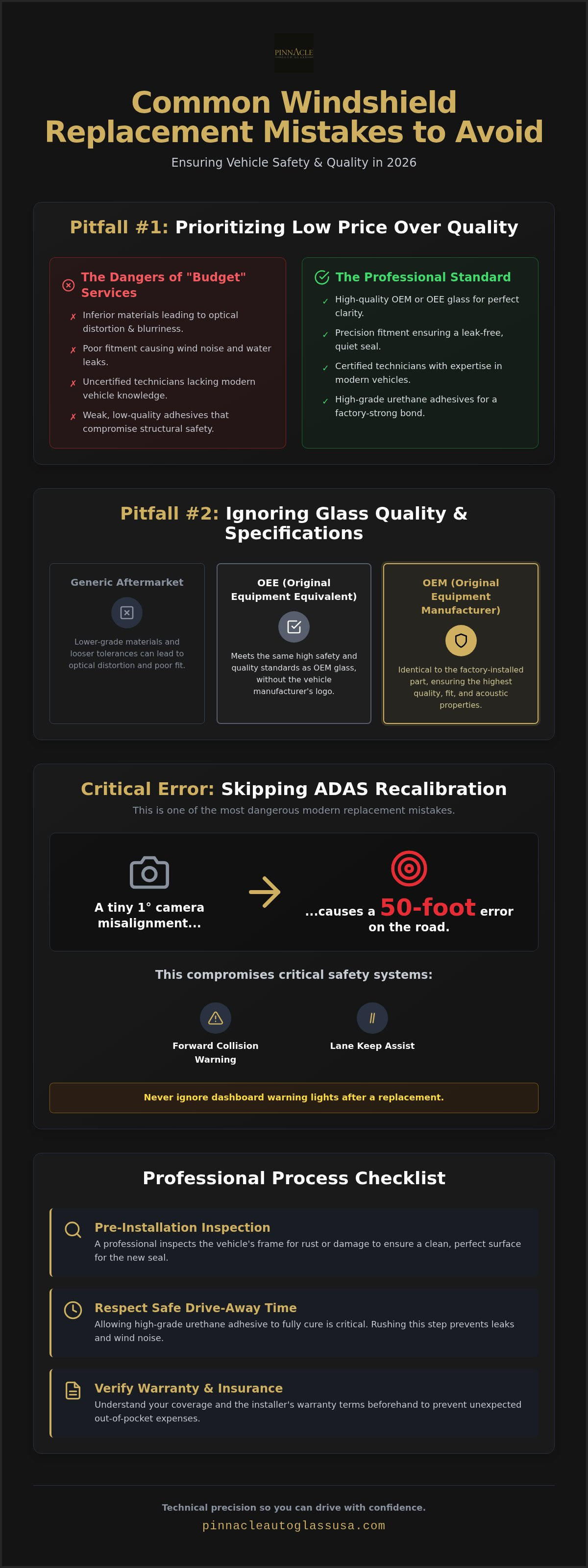
Low-cost providers frequently use inferior materials that don't meet factory standards. This leads to optical distortion, where the glass appears wavy or blurry. Poor fitment can also cause wind noise or water leaks during the first rainstorm. The hidden cost of a botched installation is high; you'll likely pay for a second replacement to fix the errors. Before booking, you must verify you are working with a certified auto glass technician. Certification ensures the person handling your car understands modern structural requirements and adhesive technology. Don't settle for a shop that can't prove its expertise.
Verifying Glass Quality and Specifications
Not all glass is created equal. Your original windshield was made of high-quality laminated safety glass designed to support the roof during a rollover. Generic aftermarket glass is often thinner and lacks the acoustic properties of the original. This makes your cabin louder and less comfortable. When requesting a quote, ask about the specific glass types available:
- OEM (Original Equipment Manufacturer): This glass is identical to the part your car was built with, featuring the same thickness and safety ratings.
- OEE (Original Equipment Equivalent): These parts meet the same standards as OEM but lack the vehicle manufacturer's logo.
- Generic Aftermarket: These are often produced with looser tolerances and lower-grade materials to keep costs down.
You must also request a quote that specifically includes high-grade urethane adhesives. The adhesive is the critical bond that holds the glass in place. Low-quality urethanes have longer cure times and weaker bonds. This increases the risk of the glass detaching during an accident. Finally, check the shop's reputation for mobile versus in-shop service. While mobile service is convenient, some complex recalibrations require the controlled environment of a professional facility. Ensure the provider has the equipment to handle your specific vehicle needs before the technician arrives at your home or office.
Technical Oversights: Why Skipping ADAS Calibration is a Critical Error
Modern vehicles are increasingly complex. Your windshield no longer serves as just a piece of glass; it's a mounting platform for advanced safety technology. Skipping the recalibration of these systems is one of the most dangerous common windshield replacement mistakes to avoid. When a technician removes the old glass, they also disconnect the cameras and sensors that govern your car's safety logic. Failing to reset these components can turn a helpful safety feature into a significant road hazard.
Defining ADAS and Its Link to Your Windshield
Advanced Driver Assistance Systems (ADAS) is the network of sensors and cameras mounted directly to the windshield. These devices act as the eyes of your vehicle. A 1-degree misalignment in a camera can lead to a 50-foot error on the road. This massive discrepancy occurs because the camera miscalculates distances at higher speeds. Such errors directly impact the performance of Forward Collision Warning and Lane Keep Assist systems. If your car cannot accurately "see" the lane markings or the vehicle ahead, it cannot intervene to prevent an accident.
Many drivers mistakenly ignore warning lights or dashboard alerts following an installation. They assume the system will eventually self-correct. This rarely happens. If your dashboard displays a safety system error, the sensors are likely blind or misaligned. You should never trust a shop that lacks the specialized equipment for ADAS calibration auto glass. Without the proper diagnostic tools, a technician cannot verify that your safety systems are functional.
Static vs. Dynamic Recalibration Mistakes
Technicians use two primary methods to reset your safety systems. Static calibration occurs in a controlled shop environment using physical targets and laser levels. Dynamic calibration involves a road test where the vehicle's computer learns by identifying actual lane lines and traffic patterns. A common error is believing that one method replaces the other. Many 2026 vehicle models require both static and dynamic calibration for full safety compliance. Driving a modern car without a comprehensive post-installation check is a liability you don't want to carry.
Always insist on receiving a calibration certificate after your service. This document serves as proof that the cameras were tested and meet original manufacturer specifications. It's an essential piece of paperwork for your records and potential insurance needs. To ensure your vehicle remains as safe as the day it was built, you can book professional ADAS recalibration with experts who prioritize technical accuracy over speed. Taking this extra step guarantees that your safety systems will perform exactly when you need them most.
Post-Installation Aftercare: A Checklist to Prevent Seal Failure
The success of a windshield replacement depends heavily on what happens after the technician finishes the job. Many drivers assume the vehicle is ready for normal use immediately. This is one of the common windshield replacement mistakes to avoid. The urethane adhesive requires specific conditions to cure properly and create a permanent, waterproof bond. If you ignore these aftercare steps, you risk shifting the glass or causing a structural failure that compromises your safety in a collision.
One frequent error is removing the retention tape too early. This tape holds the glass in place while the adhesive begins its initial set. You should leave it on for at least 24 hours. Additionally, avoid slamming your car doors or the trunk lid. Doing so creates a sudden spike in internal air pressure. This pressure can push against the fresh seal and create tiny gaps that eventually lead to persistent water leaks or whistling sounds while driving.
The First 24 Hours: Critical Curing Rules
The most important concept to understand is Safe Drive-Away Time (SDAT). This is the minimum amount of time the vehicle must remain stationary for the adhesive to meet federal safety standards. Modern urethanes cure through a chemical reaction with atmospheric moisture. High humidity can actually speed up the process, while extremely dry or cold air may extend it. Always follow the specific time frame provided by your technician before moving the vehicle.
To protect the new seal during the first day, leave one window cracked about an inch. This allows air to escape when you close the doors, preventing the pressure-related leaks mentioned earlier. You should also avoid heavy temperature fluctuations. Parking in direct sunlight on a hot day or in a freezing garage can stress the bond before it reaches full strength. Keep the car in a temperate, shaded area whenever possible during the first 24 hours.
Cleaning and Maintenance Errors to Avoid
Maintenance mistakes can ruin a perfect installation days after the service. Never use ammonia-based glass cleaners on a fresh windshield. Ammonia can break down the chemical structure of the adhesive and damage the specialized coatings on modern glass. Stick to plain water or a cleaner specifically labeled as safe for automotive glass. Furthermore, you must avoid high-pressure automated car washes for at least 48 to 72 hours. The intense water jets can easily displace a curing seal.
One often overlooked step is replacing your windshield wipers. Old wiper blades often have trapped grit and uneven edges that can scratch your brand-new glass immediately. Installing a fresh set of blades ensures the surface remains clear and protected. By following these chronological steps, you ensure the maximum lifespan for your new windshield and maintain the structural integrity of your vehicle.
Administrative and Financial Blunders: Insurance and Warranty Missteps
Managing the paperwork and financial details of a glass claim is just as important as the physical installation. Many vehicle owners overlook these logistical steps. This leads to unexpected bills or a lack of protection if the seal fails later. Failing to confirm insurance coverage details before the service starts is one of the common windshield replacement mistakes to avoid. You don't want to find out after the glass is installed that your policy doesn't cover the specific type of service you received.
Administrative errors often stem from a lack of communication between the driver, the insurance carrier, and the glass shop. If you neglect to check if the shop handles the insurance claim paperwork directly, you may end up stuck in a cycle of phone calls and manual filings. A professional provider acts as a liaison, ensuring that all technical requirements are documented for your insurance company's records.
Navigating the Insurance Claim Process
Understanding your specific policy is critical. Many drivers assume they have "full glass coverage" when they actually have a standard comprehensive deductible. This distinction can result in significant out-of-pocket expenses. You should also check the cost to replace windshield factors that your insurance might not cover, such as specialized moldings or specific ADAS recalibration fees. Insurance companies have become more restrictive recently; industry data from mid-2026 shows that approvals for OEM glass have dropped to under 10 percent. If you want factory glass for a newer vehicle, you must secure approval before the technician arrives.
A shop that manages the claim for you is a major time-saver. They know exactly which codes to use for recalibration and glass types, reducing the risk of a claim denial. If a provider asks you to pay the full amount upfront and "reimburse yourself" through insurance, it's often a red flag. Choose a partner that communicates directly with your carrier to streamline the financial process.
Understanding Your Warranty Rights
Accepting a replacement without a written national warranty on labor and parts is a significant risk. A "limited" warranty might only cover the glass itself, leaving you responsible for labor costs if a seal fails. A lifetime warranty against leaks and manufacturer defects is the industry standard for professional providers. This protection ensures that if you notice wind noise or water seepage a week later, the shop will resolve the issue at no additional cost. It provides the peace of mind that the job was done correctly.
A national warranty is particularly essential for drivers who travel frequently. If a seal fails while you are out of town, a local-only warranty provides no assistance. You need a guarantee that holds up across the country. Verify that your provider offers this level of security before you sign any work orders. To ensure your vehicle is protected by industry-leading standards and a robust warranty, contact Pinnacle Auto Glass for your next service. We prioritize your financial security and long-term safety by managing every detail of the replacement process.
The Professional Path: How to Ensure a Perfect Windshield Replacement
Securing a perfect installation requires a shift in perspective. You should view your windshield as a primary safety system rather than a simple piece of glass. One of the most common windshield replacement mistakes to avoid is choosing a shop that prioritizes speed over technical precision. A rushed job often results in misaligned sensors or a weak bond. Instead, consult with auto glass specialists who follow a methodical, safety-first protocol.
A professional installation begins before the old glass is even removed. Insist on a pre-installation inspection of the vehicle frame. If the technician discovers rust or structural damage on the pinchweld, they must address it before proceeding. Installing new glass on a compromised frame is a recipe for seal failure. Additionally, ensure the shop uses high-modulus, non-conductive adhesives. High-modulus urethanes provide the stiffness required for modern vehicle structures. Non-conductive formulas are essential to prevent electrical interference with the sensitive electronics and cameras mounted to your glass.
The Pinnacle Standards for Glass Safety
At Pinnacle Auto Glass, our technicians use precision tools to ensure a factory-perfect fit every time. We don't just swap the glass; we integrate the entire safety system. Our commitment to 2026 safety standards means we include comprehensive ADAS recalibration as a core part of our service. This technical expertise sets us apart from budget shops that leave your safety sensors uncalibrated. We offer the convenience of professional service for both personal vehicles and commercial fleet glass. Whether you manage a single commuter car or a large fleet of commercial trucks, our standards remain uncompromising.
Next Steps for Your Vehicle Safety
The best way to protect your vehicle is to act quickly. Delaying windshield repair for a small chip is the ultimate mistake. Small cracks can spread instantly due to temperature changes or road vibrations. This turns a simple fix into a costly full replacement. Schedule a professional assessment of your current glass damage today. Our experts will determine if a repair is possible or if a full replacement is necessary to maintain your vehicle's structural integrity. Book an expert consultation now for complete peace of mind and a safer driving experience.
Secure Your Vehicle's Safety and Structural Integrity
A windshield replacement is a technical restoration of your car's safety systems. You now understand that skipping ADAS recalibration or ignoring post-installation aftercare can lead to dangerous malfunctions and persistent water damage. By identifying the common windshield replacement mistakes to avoid, you've taken the first step toward protecting your investment and your passengers. Reliability comes from choosing a partner that treats every installation with clinical precision and follows manufacturer specifications.
Pinnacle Auto Glass delivers national service standards for both personal and commercial fleets. Our certified technicians specialize in complex ADAS recalibration to ensure your safety features function exactly as intended. We provide a lifetime warranty against leaks and workmanship defects, giving you total confidence on the road. Don't risk your safety with budget shortcuts or uncertified labor. Book Your Professional Windshield Replacement and Recalibration with Pinnacle Auto Glass today. We are ready to restore your vehicle to factory standards with the efficiency and quality you deserve. Drive safely and enjoy the clarity of a professional installation.
Frequently Asked Questions
How long must I wait to drive after a windshield replacement?
You should wait at least one hour before driving your vehicle after a windshield replacement. This period is known as the Safe Drive-Away Time (SDAT). It allows the urethane adhesive to reach the minimum strength required to hold the glass in place during a collision. Driving too early is one of the common windshield replacement mistakes to avoid. Always confirm the specific curing time with your technician based on current weather conditions.
Can I wash my car immediately after getting a new windshield?
You must wait at least 48 to 72 hours before using a high-pressure automated car wash. The intense water jets can displace the fresh adhesive before it fully cures. Hand washing is generally safe after 24 hours if you avoid direct pressure on the new seal. Keeping the glass dry and undisturbed ensures a long-lasting, waterproof bond. Avoid chemical cleaners or wax treatments near the windshield edges during this initial period.
Why do I need to recalibrate my camera after a glass replacement?
Recalibration is necessary because your vehicle's safety cameras are mounted directly to the glass. Even a microscopic shift in the camera's position during a replacement can lead to significant errors in distance calculation. Systems like Lane Keep Assist and Automatic Emergency Braking rely on precise alignment to function correctly. Without professional recalibration, these safety features may fail to respond or could intervene incorrectly while you are driving. This ensures your safety systems remain reliable.
Is it a mistake to use aftermarket glass instead of OEM?
Using aftermarket glass is not always a mistake, but it carries higher risks for modern vehicles. Original Equipment Manufacturer (OEM) glass matches the exact specifications of your factory windshield, including thickness and acoustic properties. Generic aftermarket glass may lack these precise standards, leading to optical distortion or increased cabin noise. For vehicles equipped with ADAS, OEM glass is preferred to ensure safety cameras have a clear and compatible view of the road for accurate sensing.
What happens if I slam my car door after a new installation?
Slamming your car door creates a sudden spike in internal air pressure that can compromise the fresh adhesive seal. This pressure can push the windshield outward, creating tiny gaps or pinholes in the urethane. These gaps eventually result in persistent water leaks or annoying whistling sounds at highway speeds. To prevent this, leave one window cracked an inch for the first 24 hours to allow air to escape safely when closing doors. This simple step protects the installation.
Can I remove the yellow tape on my new windshield right away?
You should leave the retention tape on your windshield for at least 24 hours. This specialized tape helps hold the glass in its proper position while the adhesive begins the initial curing process. Removing it too soon can allow the windshield to shift slightly due to gravity or road vibrations. While the tape looks unsightly, it is a critical component of a successful installation. Peel it away gently after the first full day to avoid disturbing the bond.
How do I know if my windshield was installed incorrectly?
Several signs indicate a poor installation. Listen for whistling or rushing air sounds when driving at high speeds. Check for water seepage around the edges after a rainstorm or during a gentle hand wash. Visual distortions in the glass or dashboard warning lights for your safety systems are also major red flags. Identifying these common windshield replacement mistakes to avoid early can save you from a complete re-installation. Contact a professional immediately if these symptoms appear.
Does insurance always cover the cost of ADAS recalibration?
Most comprehensive insurance policies cover ADAS recalibration as it is a required safety step. However, coverage depends on your specific policy and deductible. Some insurance carriers may attempt to limit coverage for recalibration if they deem the service unnecessary or overpriced. Always verify with your insurance provider before the service begins. A professional glass shop can often assist by providing the necessary technical documentation and safety codes to ensure your claim is approved without issues or unexpected costs.


