
A water leak after windshield replacement is never a minor inconvenience. It is a critical safety failure that compromises your vehicle's structural integrity and sensitive electronics. You expect a professional installation to provide a perfect, airtight seal from the moment you leave the shop. Finding moisture on your dashboard or smelling damp upholstery is understandably frustrating. If you're dealing with water ingress, you're likely worried about the long term risks of mold, mildew, and expensive electrical shorts.
We understand the urgency of resolving a failed repair. This guide helps you identify the specific causes of a faulty seal and provides a clear path to a leak-free vehicle. Discover how to diagnose the source of the intrusion and learn about the professional standards required for a permanent fix. We also cover your warranty rights and the essential role of ADAS recalibration in modern safety systems. Use this information to understand exactly what went wrong and ensure your vehicle is restored to its original, safe condition.
Key Takeaways
- Understand that a professional windshield installation must be 100% watertight from day one, as there is no "settling" period for modern urethane seals.
- Learn how to use the soapy water test to accurately locate seal gaps and confirm a water leak after windshield replacement.
- Recognize the serious risks of moisture ingress, including damage to ADAS camera sensors and long-term pinchweld corrosion.
- Identify why improper pinchweld preparation and bonding surface contamination are the primary causes of seal failure.
- Discover why reputable shops prioritize a complete re-installation over temporary silicone patches to fix a leaking seal permanently.
Is a Water Leak Normal After Windshield Replacement?
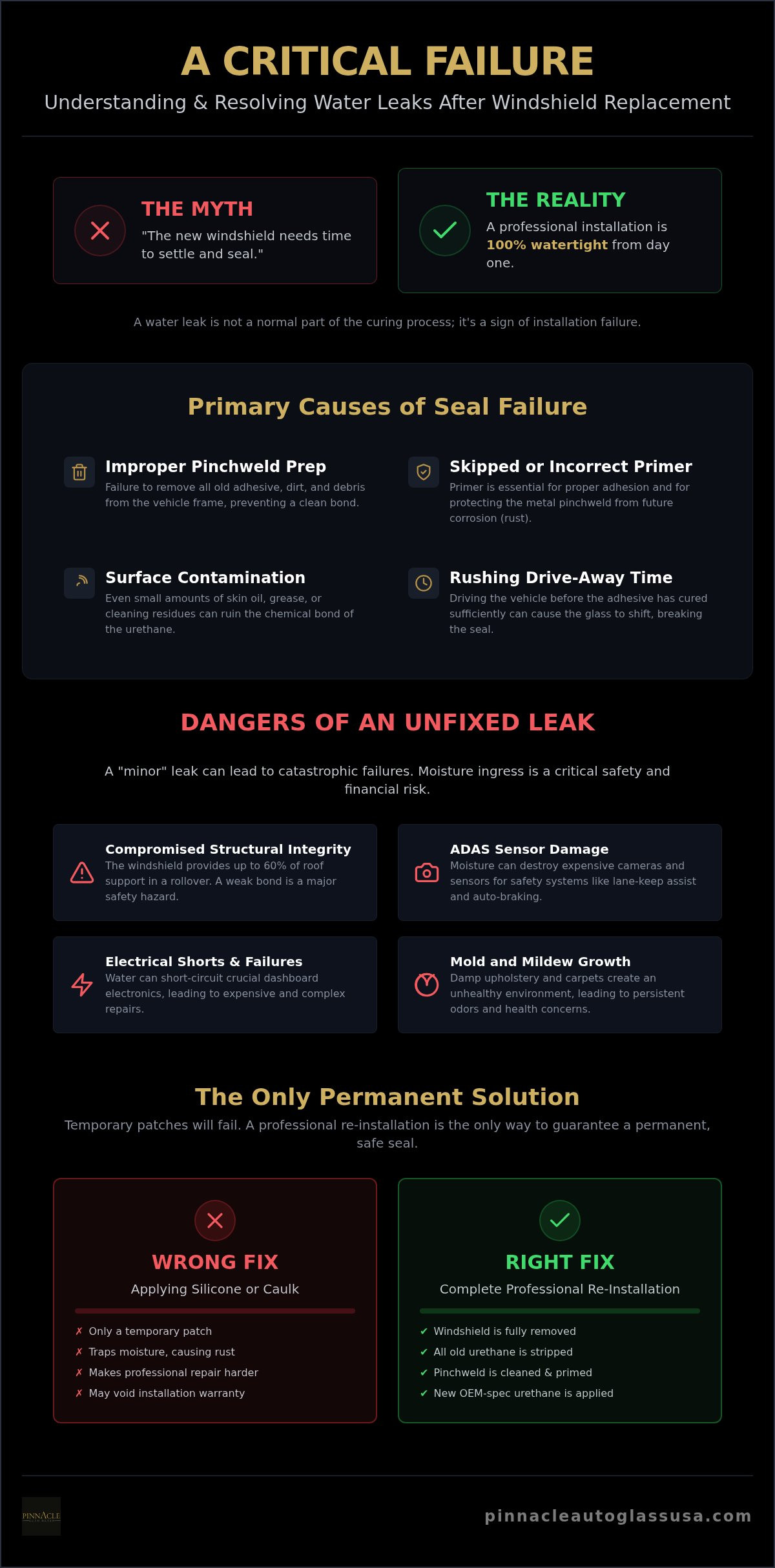
A professional installation is never a "work in progress." It must be 100% airtight and watertight from the second the technician finishes the job. If you notice a water leak after windshield replacement, it's a sign of a failed installation, not a natural part of the curing process. Modern automotive glass relies on high-viscosity urethane to create a structural bond. This adhesive is designed to hold the glass in place and prevent moisture ingress immediately after the recommended drive-away time.
You might hear that a windshield needs time to "settle" into the frame before it becomes fully waterproof. This is a dangerous myth. While the adhesive takes time to reach its full laboratory-tested strength, it should provide a complete seal against the elements right away. A leak usually points to a major installation failure rather than a minor manufacturing defect in the glass itself. Proper preparation of the vehicle's pinchweld is the only way to ensure this seal holds permanently.
The Difference Between Wind Noise and Water Leaks
Air gaps often serve as the first warning sign of a compromised seal. If you hear a distinct whistling or rushing sound at highway speeds, you likely have an air leak. Because air molecules are smaller than water droplets, air will bypass a weak seal long before you see physical moisture. These sounds are a significant red flag. A cabin that isn't airtight cannot maintain its structural integrity. The windshield provides up to 60% of the roof's support during a rollover, so a gap in the bond is a safety priority.
Immediate Steps to Take When You Spot Water
Moisture can destroy your vehicle's internal computer systems and cause mold growth within days. If you find a water leak after windshield replacement, take these steps immediately:
- Document the evidence: Use your phone to take clear photos and videos of where the water is entering the cabin.
- Protect the interior: Place dry towels over the dashboard and electronic components to prevent short circuits.
- Call the shop: Contact the original certified auto glass technician to report the failure.
Don't attempt to "caulk" the leak yourself with hardware store silicone. This often makes a professional repair more difficult and may void your installation warranty. A reputable provider will prioritize your return to fix the issue correctly.
Common Causes of Windshield Seal Failure
Identifying the root cause of a water leak after windshield replacement requires a look at the technical installation process. Most failures occur because of technician error during the preparation phase. The pinchweld, which is the metal frame where the glass sits, must be meticulously cleaned and prepped. If a technician fails to remove old urethane properly or leaves behind dirt and debris, the new adhesive cannot create a continuous bond with the metal. This creates microscopic gaps that eventually allow water to seep into the cabin.
Contamination is another major factor that ruins a seal. Even small amounts of skin oil from a technician's hands or grease from a dirty rag can compromise the chemical bond. Professional-grade primers are non-negotiable in this process. These primers serve two roles: they enhance adhesion and protect the metal from rust. Skipping this step or using a low-quality substitute often leads to premature leaking. Environmental conditions, such as high humidity or extreme cold, also affect how the urethane cures. If the technician does not account for these variables, the seal may never reach its intended strength.
The Dangers of 'Short-Cut' Installations
Some providers use the "drop-in" method to save time. This involves applying new urethane over a thick layer of old material rather than stripping it down to the required level. This shortcut significantly increases the risk of a failure. Using generic, low-quality adhesives also compromises the job. While these materials are cheaper, they lack the long-term durability of OEM-spec urethanes. Rushing the "Drive-Away Time" is equally dangerous. If you drive the vehicle before the adhesive has formed a skin, the glass can shift, breaking the seal before it ever has a chance to set. Choosing a high-quality windshield replacement service ensures these technical steps are never ignored.
Mechanical vs. Adhesive Failures
Not every water leak after windshield replacement is the fault of the glue itself. Mechanical issues can also prevent a perfect fit. If the vehicle frame is slightly warped from a previous accident, the glass may not sit flush against the pinchweld. Glass manufacturing defects, though rare, can also occur. A warped piece of glass or one with thinned edges will create uneven pressure points on the urethane bead. Finally, improper handling is a common culprit. If a technician does not use suction cups and instead grabs the edges of the glass with bare hands, they introduce oils that prevent the primer and urethane from bonding correctly.
How to Diagnose a Leaking Windshield: A Step-by-Step Guide
Confirming a water leak after windshield replacement requires a methodical approach. You need to distinguish between a seal failure and other common vehicle issues. Start with a visual inspection of the interior. Look for "trails" of dried minerals or white residue on the dashboard or A-pillars. These marks indicate where water has previously traveled and dried. If you see rust along the pinchweld area, it suggests water has been sitting against the metal for some time.
The "Paper Test" is another simple diagnostic tool. Slide a thin piece of paper or a business card between the glass and the roofline or side pillars. If the paper slides through easily or feels loose in specific spots, the urethane bond is likely insufficient in those areas. You can also use a plastic trim tool to gently press against the interior edge of the glass. If the glass moves or you feel "soft spots" in the adhesive, the structural bond is compromised.
Is it the Windshield or Something Else?
Before blaming the glass, rule out other common ingress points. Clogged sunroof drains are the most frequent cause of "false positive" windshield leaks. These drains channel water through the A-pillars; if they're blocked, water spills into the headliner or floorboards. Similarly, check your door seals and window weatherstripping for secondary entry points. If you find water specifically in the passenger footwell without any dampness on the dashboard, it might be air conditioning condensation. A blocked evaporator drain line can cause water to back up into the cabin, mimicking a water leak after windshield replacement.
Performing the Air Pressure Test Safely
Execute the air pressure test by closing all doors and windows, then set your vehicle's climate control blower motor to the highest speed on the "fresh air" setting. This creates positive pressure inside the cabin. Apply a mixture of dish soap and water to the exterior perimeter of the windshield using a spray bottle. If there is a gap in the seal, the escaping air will create visible bubbles in the soapy solution. Avoid using high-pressure power washers directly on a fresh seal. The intense force can push water past the urethane before it reaches its full chemical cure, causing damage to the very seal you're trying to test.
The Serious Risks of Ignoring a Windshield Leak
Ignoring a water leak after windshield replacement is a gamble with your vehicle's safety and long term value. While a few drops on the dashboard might seem minor, the hidden damage is often extensive. Modern vehicles are packed with sensitive electronics. Water ingress can quickly reach the Advanced Driver Assistance Systems (ADAS) cameras mounted directly to the glass. Moisture in this area disrupts sensor accuracy and may require specialized ADAS calibration auto glass services to restore critical safety functions like lane-keep assist or emergency braking.
Beyond electronics, standing water trapped against the vehicle's frame leads to pinchweld corrosion. This hidden rust eats away at the metal, creating a rough, pitted surface that prevents future windshields from bonding correctly. Once rust takes hold, a simple glass replacement becomes a costly auto body repair. Electrical short circuits are another immediate threat. Water often drips behind the dashboard into the fuse box or the Engine Control Unit (ECU). This leads to unpredictable component failure, random warning lights, or a vehicle that refuses to start.
Health risks are also a significant factor. Moisture trapped in the headliner or floor insulation creates a breeding ground for mold and mildew. These spores circulate through the cabin's ventilation system, causing respiratory issues and persistent odors. These smells are nearly impossible to remove once they set in, often requiring the replacement of entire interior components.
Structural Integrity and Airbag Deployment
A leaking windshield is a structural liability. In a rollover accident, the windshield provides up to 60% of the roof's support. A weak seal means the glass could fail under pressure, leading to a roof collapse. Additionally, the passenger side airbag relies on the windshield as a backstop during deployment. If the seal is compromised, the force of the airbag can pop the glass out of the frame. This prevents the airbag from properly protecting the passenger. A leak is a clear signal that your car no longer meets professional windshield replacement safety standards.
Long-term Depreciation and Vehicle Value
Water damage significantly impacts your car's resale value. That signature "musty car" smell is a red flag to any professional appraiser or private buyer. It suggests deep-seated neglect and potential electrical issues. Water also leaves permanent stains on luxury headliners and leather upholstery. If a leak is documented during a service visit, it may appear on vehicle history reports, further lowering the market price. If you notice moisture, book an appointment with Pinnacle Auto Glass to protect your investment and ensure your vehicle remains safe to drive.
How to Resolve the Leak: Warranty and Professional Repairs
Resolving a water leak after windshield replacement starts with understanding your installation warranty. Reputable auto glass providers offer a written guarantee that covers leaks and wind noise for the life of the vehicle. If you've documented moisture ingress, the original shop is responsible for correcting the issue at no additional cost to you. However, you must ensure the correction follows industry safety standards rather than a temporary "patch" job.
A major red flag is a technician who suggests "smearing" more adhesive or silicone on the outside of the glass. This approach never works. It fails to address the lack of a chemical bond between the glass and the vehicle frame. The only professional solution is the "Remove and Reinstall" (R&R) process. This involves cutting the glass out completely, stripping the old urethane down to the pinchweld, and applying a fresh, continuous bead of high-viscosity adhesive. This is the only way to guarantee a watertight seal and permanently fix a water leak after windshield replacement.
Evaluating the Repair Shop's Response
Pay close attention to how a shop handles your claim. A quality provider will immediately offer a full inspection and a plan for glass removal if they identify a seal gap. If the shop refuses to acknowledge a documented leak or attempts to blame unrelated vehicle features, you may need to involve your insurance company. Filing a claim for a failed replacement is often the fastest way to get a third-party inspection and ensure the vehicle is restored to a safe condition.
Ensuring Your Next Replacement is Leak-Free
Preventing future issues requires choosing a provider that prioritizes quality over speed. Whether you need a full replacement or a windshield repair, verify the materials being used. High-quality shops use OEM or OEE glass and top-tier adhesives with specific cure times. Don't settle for "budget" services that skip essential priming steps or use generic materials. Trust the professionals at Pinnacle Auto Glass for a secure, watertight installation that protects your vehicle and your safety.
Restore Your Vehicle's Safety and Integrity
A water leak after windshield replacement is a serious technical failure that requires immediate professional attention. We've explored how improper pinchweld preparation and contamination lead to these gaps; we also clarified why temporary patches are never a viable solution. Protecting your vehicle's electronics and structural strength means addressing moisture ingress before it causes permanent damage, rust, or mold growth. Reputable service providers prioritize your safety by ensuring a complete, watertight seal through industry-standard removal and reinstallation.
Pinnacle Auto Glass provides dependable nationwide service for both personal and commercial vehicles. Our certified technicians focus on long-term safety and durability; we include expert ADAS recalibration to ensure your vehicle's advanced safety systems function perfectly. Don't let a failed installation compromise your investment or your safety on the road. Schedule a Professional Windshield Inspection with Pinnacle Auto Glass to resolve your leak today. You deserve the peace of mind that comes with a high-quality, professional installation from a partner you can trust.
Frequently Asked Questions
Is it normal to hear a whistling sound after a new windshield is installed?
Whistling sounds are never normal and indicate an air leak in the urethane seal. Because air molecules are smaller than water droplets, a whistling noise often serves as an early warning sign of a future water leak after windshield replacement. This sound typically occurs at highway speeds when cabin pressure forces air through microscopic gaps. If you hear rushing air or high pitched whistling, contact your technician immediately to inspect the structural bond.
How long should I wait to wash my car after a windshield replacement to prevent leaks?
You should wait at least 24 hours before taking your vehicle through an automated car wash. Most technicians recommend 48 hours for the urethane to reach a sufficient chemical cure to withstand high pressure jets. Washing your car too soon can displace the adhesive or force water into the fresh seal. If you must wash the vehicle, stick to a gentle hand wash and avoid spraying water directly at the glass edges.
Can a leaking windshield cause my car's electrical system to fail?
Yes, a leaking windshield can lead to catastrophic electrical failure. Water often tracks down the interior pillars and drips directly into the dashboard fuse box or the Engine Control Unit (ECU). Moisture causes immediate short circuits, corrosion of sensitive connectors, and unpredictable sensor behavior. If you notice damp carpets or fogged gauges, your vehicle's computer systems are at risk. Professional repair is necessary to prevent expensive electronic replacements and ensure long term reliability.
Will my insurance cover a leak if the original shop went out of business?
If your original glass shop went out of business, your insurance company may still cover the repair depending on your policy. Many major insurers provide a lifetime warranty on installations performed by their preferred providers. If you paid out of pocket, you might be responsible for the cost of a new installation. Always check with your insurance agent to see if a failed seal qualifies as a secondary claim under your comprehensive or glass coverage.
What is the soapy water test for windshield leaks?
The soapy water test is a reliable diagnostic method for identifying seal gaps. Apply a mixture of dish soap and water to the exterior edges of the glass while running the vehicle's heater blower on the highest fresh air setting. This creates positive pressure inside the cabin. If a water leak after windshield replacement exists, air will escape through the gap and create visible bubbles in the soap solution on the outside of the vehicle.
Does a leaking windshield affect my car's safety sensors or cameras?
Yes, moisture ingress directly impacts the performance of Advanced Driver Assistance Systems (ADAS). Most modern safety cameras and sensors are mounted against the upper windshield. Water or condensation in this area can blur the camera's field of vision or cause electrical shorts in the sensor housing. This leads to system errors in lane departure warnings and emergency braking. A watertight seal is essential for maintaining your vehicle's safety technology and ensuring proper sensor calibration.
Can I fix a windshield leak myself with silicone sealant?
You should never attempt to fix a windshield leak with hardware store silicone sealant. Silicone does not bond correctly to automotive urethane and creates a messy residue that makes a professional repair much harder. A patch job only hides the problem while rust continues to form on the metal pinchweld underneath. The only safe and permanent solution is for a certified technician to remove the glass and reinstall it with professional grade adhesive.
How do I know if the leak is from my sunroof or my windshield?
Determining the source of a leak requires checking the location of the moisture. If the headliner near the doors or the center console is wet, the issue is likely a clogged sunroof drain. Windshield leaks typically manifest as dampness on the top of the dashboard or water dripping from the rearview mirror area. Use the soapy water test on the windshield first; if no bubbles appear, inspect the sunroof drainage tubes for debris or blockages.


