

That high-pitched whistle at highway speeds isn't just a minor annoyance; it's a clear signal that your vehicle's safety seal is compromised. You expect a new windshield to restore your clear view and cabin quiet. Instead, you're hearing a persistent air leak that makes you question the quality of the installation. It's frustrating to deal with wind noise after windshield replacement, especially when you start worrying about potential water leaks or the structural integrity of your car.
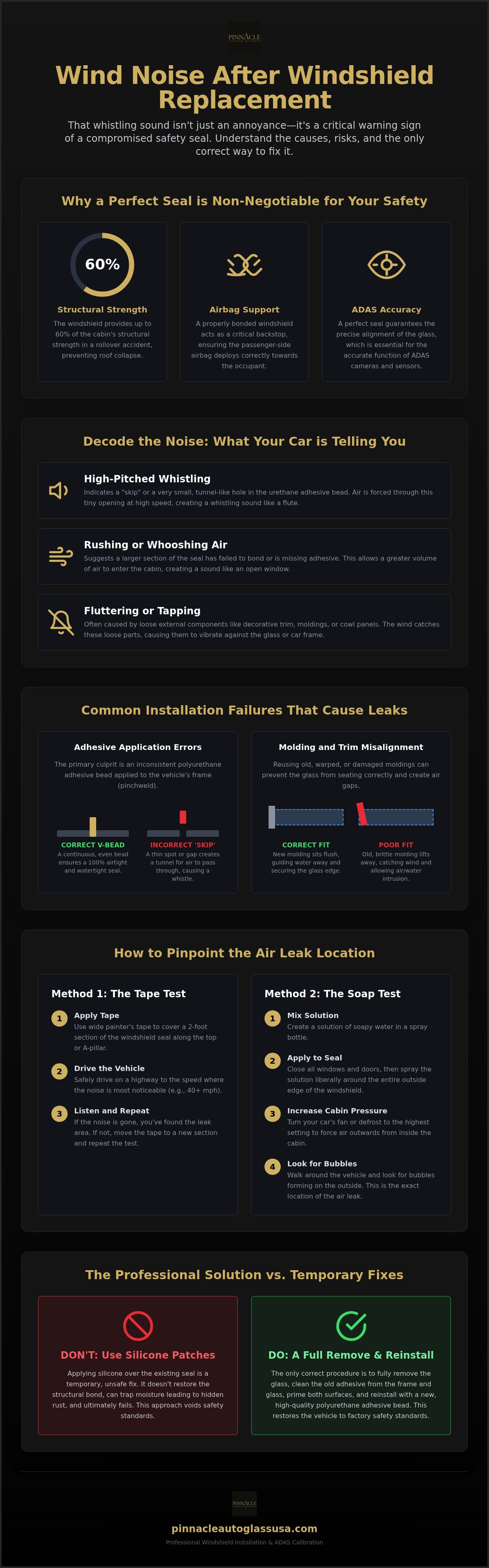
We understand that a secure bond is vital for your safety. In a rollover accident, your windshield provides up to 60 percent of the cabin's structural strength. If you hear whistling, the seal may be failing. This guide will help you understand exactly why your new glass is making noise and how to address it immediately. You'll learn the professional steps to diagnose air leaks, including the effective soap test, and how to ensure your installer honors their warranty. We'll also explain why modern features like ADAS recalibration are essential when re-sealing your glass. Follow these steps to return your vehicle to a silent, safe, and factory-standard condition.
Key Takeaways
- Identify why wind noise after windshield replacement indicates a compromised structural seal rather than a simple cosmetic flaw.
- Master the "Tape Test" and other professional diagnostic methods to pinpoint the exact location of air bypass.
- Learn why a full "remove and reinstall" procedure is necessary to restore vehicle safety instead of using temporary silicone patches.
- Understand the critical link between a proper glass seal and the functional accuracy of your ADAS safety systems.
- Discover how to verify that your installer follows AGRSS standards and uses high-quality polyurethane adhesives for a permanent fix.
Understanding Wind Noise After Windshield Replacement
Experiencing wind noise after windshield replacement is more than a nuisance; it is a sign of a mechanical failure in the installation process. This noise occurs when air bypasses the intended seal, usually through a gap in the polyurethane adhesive or an improperly seated molding. A professional installation requires a 100 percent airtight environment. This seal isn't just for comfort. It is a fundamental requirement for the vehicle's structural integrity. Modern windshields consist of laminated safety glass, which provides rigid support to the frame. When the bond is broken, the glass cannot perform its safety functions correctly.
You can usually identify the type of installation error by the specific sound profile produced at higher speeds:
- High-pitched whistling: Typically indicates a "skip" or a tiny hole in the urethane bead.
- Rushing air: Often suggests a larger section of the seal is missing adhesive or has failed to bond.
- Fluttering or tapping: Usually caused by loose decorative trim or moldings catching the wind.
It is a common misconception that some noise is "normal" while the adhesive cures. In reality, a properly installed windshield should be silent immediately after the safe drive-away time has passed. Persistent noise almost always indicates a specific error that requires professional attention.
The Difference Between Wind Noise and Road Noise
Distinguishing between air leaks and standard road noise is the first step in diagnosis. Road noise is generally a low-frequency hum caused by tire friction or mechanical vibrations. It is present at most speeds. In contrast, wind noise caused by a faulty seal has a distinct aerodynamic quality. It typically becomes audible once you reach a threshold of 40 mph or higher. You might notice that crosswinds significantly change the volume or pitch of the sound. If a gust of wind from the side makes the whistling louder, you're likely dealing with a compromised seal rather than a mechanical issue with your tires or suspension.
Why a Silent Seal Matters for Vehicle Safety
A quiet cabin is the primary indicator that your windshield is bonded correctly to the vehicle frame. This bond is critical because the glass provides up to 60 percent of the cabin's structural strength during a rollover accident. It also acts as a backstop for the passenger-side airbag. If the seal is weak enough to let air through, it may not hold the glass in place during an impact. Beyond immediate safety, even a microscopic air gap allows moisture to reach the metal pinchweld, which eventually leads to hidden rust and permanent frame damage. Additionally, a precise seal is vital for ADAS calibration auto glass. If the glass is slightly offset due to a poor seal, the cameras and sensors mounted to it may provide inaccurate data to your safety systems.
Common Technical Causes of Post-Replacement Wind Noise
Most instances of wind noise after windshield replacement result from human error or improper preparation of the vehicle's frame. While a new windshield should be silent, technical oversights during the bonding process create air bypasses. These gaps allow high-pressure air to force its way into the cabin, resulting in characteristic whistling or rushing sounds. Identifying the root cause requires looking beyond the glass itself to the materials and methods used during installation.
Adhesive Failures and Air Pockets
The primary culprit is a "skip" or thin spot in the polyurethane adhesive bead. Professional installers use a specific "V-bead" technique to ensure the adhesive compresses evenly against the glass and the metal pinchweld. If the bead is too thin or the technician moves the caulking gun too quickly, a microscopic tunnel remains. This tunnel acts like a flute, creating a high-pitched whistle at highway speeds. Adherence to the Federal Motor Vehicle Safety Standard (FMVSS) No. 205 requires a consistent, high-quality bond to maintain safety and structural integrity. Environmental factors like extreme humidity or low temperatures also affect how the urethane cures. If a vehicle is driven before the "safe drive-away time" is reached, the glass can shift, creating air pockets that didn't exist when the car was stationary.
Molding and Trim Misalignment
Not all noise is structural; sometimes the sound comes from external components like moldings, A-pillar covers, or the cowl panel at the base of the glass. Reusing old rubber moldings is a frequent mistake. These components often lose their shape or become brittle over time. Reinstalling them instead of using new parts can lead to gaps that catch the wind. Similarly, the plastic cowl panel where your wipers sit must be clipped tightly against the glass. If it's loose, it creates turbulent "fluttering" sounds. You should distinguish between these cosmetic issues and structural leaks, as trim vibration is annoying but doesn't necessarily compromise the safety seal.
A common shortcut that leads to wind noise after windshield replacement is failing to trim the old urethane down to a thin, smooth layer on the pinchweld. If the new adhesive is applied over an uneven surface, it won't bond correctly. This creates air leaks and can also cause the glass to sit a few millimeters higher than factory specifications. For modern vehicles, even a slight height difference can throw off the pitch of ADAS cameras mounted to the glass. If you hear whistling, it's a sign that your safety sensors may need a professional windshield replacement and recalibration to ensure they "see" the road accurately. Expert installation ensures the glass sits at the correct depth, preventing both noise and sensor errors.
How to Diagnose and Locate the Air Leak
Finding the exact source of wind noise after windshield replacement requires a systematic approach. You shouldn't attempt to diagnose the issue while driving; instead, have a passenger assist you or perform tests while the vehicle is stationary. Identifying the leak location is the first step toward a successful warranty claim or repair. Professional technicians follow the Automotive Glass Replacement Safety Standard (AGRSS) to ensure every seal is airtight, and these diagnostic tests help prove where those standards weren't met.
The Professional Soap Test Method
The soap test is a highly effective way to visualize an invisible air leak. It uses cabin pressure to force air through any gaps in the urethane seal. Follow these three steps for an accurate result:
- Step 1: Mix liquid dish soap with water in a spray bottle. Generously spray this solution around the entire exterior perimeter of the glass, focusing on the edges where the glass meets the frame.
- Step 2: Enter the vehicle and close all doors and windows tightly. Turn the engine on and set the climate control blower motor to its highest "high" setting. Use the defrost mode to direct air specifically toward the windshield.
- Step 3: Have an assistant stand outside the vehicle and watch the soapy film. If air is escaping through the seal, it will create visible bubbles or foam at the point of the leak.
The Masking Tape Isolation Test
If you prefer a road-test method, use high-quality painter's tape to isolate sections of the windshield. Apply the tape over the external molding or the gap between the glass and the car body, one section at a time. Start with common "hot spots" like the top corners or the area near the rearview mirror. Drive the vehicle at the speed where the whistling usually begins. If the noise disappears after taping a specific section, you've found the leak. The tape test is a temporary diagnostic tool used to confirm seal failure before professional repair. Don't use duct tape or packing tape, as these can leave a permanent residue or damage your vehicle's paint.
For larger gaps, a simple light test can confirm a failed installation. In a dark garage, have someone slowly move a high-intensity flashlight around the exterior seal of the windshield. From inside the cabin, look for any light peeking through the edges of the dashboard or headliner. If you can see light, the gap is significant enough to allow both air and water into the vehicle. This level of failure indicates that the Automotive Glass Replacement Safety Standard (AGRSS) was likely ignored, and the glass needs immediate attention to restore your vehicle's safety.
Steps to Resolve Wind Noise and Seal Issues
Fixing wind noise after windshield replacement requires a permanent mechanical solution rather than a cosmetic patch. Many vehicle owners attempt to stop whistling by applying silicone sealant to the exterior of the glass. This is an unsafe and temporary practice. Silicone doesn't bond correctly to the polyurethane adhesives used in modern installations. A surface-level patch fails to address the underlying structural gap. If air is bypassing the seal, the safety bond of your vehicle is broken. You must address the root cause to ensure the glass remains secure during an airbag deployment or a rollover accident.
Working with Your Auto Glass Provider
Reputable installers stand behind their work with a lifetime warranty on labor and seals. To secure a successful warranty repair, you need to provide clear evidence of the failure. Record a high-quality video or audio clip of the noise at the specific speed it occurs. This helps the technician replicate the issue without a lengthy test drive. When you return to the shop, use this checklist to guide the conversation:
- Present your original invoice and the written warranty documentation.
- Share your diagnostic recordings to pinpoint the sound profile (whistling vs. rushing air).
- Request a professional soap or pressure test to verify the exact failure point.
- Ensure the shop agrees to a full "remove and reinstall" (R&I) if the leak is structural.
If your original provider refuses to acknowledge a verified leak, don't settle for a patch. You may need to seek a second opinion from a professional windshield replacement service that adheres to strict safety standards. Your safety is too important to leave to a compromised seal.
Why a Full Re-installation is Often Necessary
A structural air leak usually indicates "dry spots" or areas where the adhesive failed to bond to the metal frame. These gaps weaken the entire structural support of the vehicle roof. To fix this correctly, the technician must perform a full R&I. This involves cutting the glass out entirely, trimming the old urethane down to the pinchweld, and applying a new, continuous bead of adhesive. It's a complex task that requires precision tools to avoid breaking the glass during removal. You can review our how much does windshield replacement cost guide to understand the labor value involved in this corrective work.
Crucially, any time the glass is removed and reset, you must perform ADAS recalibration. Even a millimeter of shift in the glass position can misalign the cameras that power your lane-keep assist and emergency braking. A professional shop will never skip this step because it's vital for the functional safety of your vehicle. If you're dealing with a botched install from another shop, contact Pinnacle Auto Glass for an expert inspection and a permanent, noise-free solution.
Ensuring a High-Quality, Noise-Free Installation
Preventing wind noise after windshield replacement begins long before the new glass meets the frame. It requires a commitment to technical precision and the use of premium materials. While many shops focus on speed, a high-quality installation prioritizes the chemical bond between the glass and the vehicle. Choosing auto glass specialists who strictly follow Automotive Glass Replacement Safety Standards (AGRSS) is the most effective way to guarantee a silent, secure drive. These standards ensure that every step, from pinchweld preparation to adhesive application, meets or exceeds factory specifications. A quiet cabin isn't just a comfort feature; it's a diagnostic indicator that your vehicle's structural integrity is intact.
What to Look for in a Certified Technician
A certified auto glass technician understands that modern vehicles are complex safety systems. They don't just "swap glass"; they manage a critical structural component. A professional installation requires a meticulously clean pinchweld. Any debris or old urethane left behind creates uneven surfaces that lead to air gaps. The technician must also apply high-quality primers to prevent rust and ensure the polyurethane adhesive bonds permanently to the metal. If you're opting for a mobile service, weather conditions are a major factor. Rain, high humidity, or extreme cold can compromise the adhesive's ability to cure properly, often leading to seal failure. A professional installation should include a post-drive check to ensure all moldings and cowls are secure.
The Pinnacle Standard for Silent Safety
At Pinnacle Auto Glass, we prioritize technician training and the use of industry-leading materials to prevent installation errors. We use high-grade polyurethane adhesives that offer superior strength and faster safe drive-away times. Our goal is to get the seal right the first time. This prevents the frustration of wind noise after windshield replacement and eliminates the safety risks of a compromised bond. This focus on precision is especially critical for commercial clients who cannot afford fleet downtime due to avoidable repairs. We treat every vehicle with the same level of technical rigor, ensuring that the cabin remains quiet and the ADAS systems remain perfectly aligned. A quiet ride is the clearest evidence of a safe, professional job. Contact Pinnacle Auto Glass for professional replacement and recalibration.
When you choose a provider that values quality over volume, you protect your vehicle's resale value and your family's safety. Expert installers will always verify the fitment of the cowl panel and side moldings before handing back the keys. They understand that even a small piece of loose trim can create turbulent noise that mimics a structural leak. By insisting on a shop that uses OEM-equivalent glass and follows a methodical installation process, you ensure your car remains as quiet and safe as the day it left the factory.
Restore Your Quiet Cabin and Vehicle Safety
Persistent wind noise after windshield replacement is a clear signal that your vehicle's structural bond is compromised. You shouldn't ignore a whistle or rushing air; these sounds indicate that the safety seal isn't performing its job. By using professional diagnostic methods like the soap test or tape isolation, you can identify the exact failure point and hold your installer accountable. Remember that a surface-level patch with silicone is never a valid solution. A full removal and re-installation is the only way to restore the airtight seal required for roof strength and proper airbag deployment.
We're ready to help you resolve these technical issues with precision and care. As certified ADAS recalibration experts, we ensure your safety sensors and glass are perfectly aligned to nationwide professional standards. We use only premium OEM-quality materials to guarantee a permanent, silent bond that lasts. Don't settle for a noisy drive or a compromised safety system. Get a Professional Windshield Inspection from Pinnacle Auto Glass today. You deserve the peace of mind that comes with a perfectly sealed, high-quality installation.
Frequently Asked Questions
Is it normal to hear wind noise after a new windshield is installed?
No, it's not normal to hear wind noise after a new windshield is installed. A professional installation must be 100 percent airtight to meet safety standards. If you hear whistling or rushing air, it usually means there's a gap in the polyurethane adhesive bead. This skip in the seal allows high-pressure air to enter the cabin. Contact your installer immediately to address the issue before it leads to further structural or water damage.
Can I fix a windshield air leak myself with silicone sealant?
Don't attempt to fix a windshield air leak yourself with silicone sealant. Silicone is a cosmetic fix that doesn't provide the structural strength required to hold the glass during an accident. It also fails to bond correctly with the professional polyurethane adhesives used by technicians. Applying a DIY patch can actually make a professional "remove and reinstall" more difficult and may void your existing installation warranty.
How long should I wait to drive my car after a windshield replacement to prevent leaks?
You must wait for the specific "safe drive-away time" provided by your technician. This is typically at least one hour. Driving too soon can cause the glass to shift, creating the air gaps that lead to wind noise after windshield replacement. While some modern adhesives cure in as little as 4 to 6 minutes, always follow the installer's instructions. This ensures the structural seal remains undisturbed during the initial curing phase.
Will a small air leak in my windshield cause a water leak later?
Yes, a small air leak will almost certainly lead to a water leak over time. If air can bypass the urethane seal, water molecules will eventually follow. This is common during heavy rain or high-pressure car washes. Moisture causes the metal pinchweld to rust, which permanently compromises the vehicle's frame. Moisture also damages expensive electronic components and safety sensors located behind the dashboard or near the headliner.
Does wind noise mean my windshield wasn’t installed safely?
Wind noise usually indicates the windshield wasn't installed to factory safety standards. The adhesive bead must be continuous to provide the necessary structural support for airbag deployment and roof crush protection. A whistle means there's a physical break in that bond. While some noises come from loose trim, any air leak through the adhesive suggests the glass isn't safely secured. You should have a certified technician inspect the seal immediately.
What should I do if the glass shop says they can’t find the leak?
If a shop can't locate the leak, perform a soap test or a masking tape isolation test yourself. Document the exact location where bubbles form or where the noise stops when taped. Provide this evidence to the service manager. If the original provider still refuses to acknowledge the issue, seek a second opinion from a certified specialist. A professional shop can confirm the seal failure and help you resolve the dispute.
Can an improperly sealed windshield affect my car’s safety cameras?
An improperly sealed windshield can significantly affect the accuracy of your car's safety cameras. Modern ADAS systems rely on cameras mounted directly to the glass. If the windshield sits too high or is slightly tilted, the camera's optical path is altered. This misalignment causes lane-keep assist or emergency braking to malfunction. A professional inspection and recalibration are essential to ensure these safety systems "see" the road correctly.
Is wind noise covered under my auto glass replacement warranty?
Wind noise is typically covered under a standard lifetime installation warranty. Reputable auto glass providers guarantee their workmanship against leaks and bond failures for as long as you own the vehicle. Since wind noise after windshield replacement is a direct result of an installation error, the shop should perform a full "remove and reinstall" at no cost. Check your warranty terms before the initial installation begins.


