
What if your car windshield is no longer just a piece of glass, but a sophisticated piece of hardware critical to your vehicle's survival? In 2026, most drivers are shocked to find that a simple stone chip leads to a complex repair bill. It's frustrating when a quote for car windshield replacement cost jumps significantly because of sensors you didn't even realize were there. You want a safe vehicle, but you don't want to pay for unnecessary extras or hidden fees.
We'll help you understand the technical and economic factors driving these modern prices. This guide provides the clarity you need to choose between OEM and aftermarket glass with total confidence. You'll learn exactly why your digital safety net requires precise calibration to keep you protected on the road. We'll examine ADAS requirements, the structural role of modern glass in rollover accidents, and how specific state insurance laws impact your final balance. By the end of this article, you'll have a clear path forward to restore your vehicle's integrity without the guesswork. You can move forward knowing your safety systems will work exactly as the manufacturer intended.
Key Takeaways
- Learn how advanced sensors and heads-up displays influence your total car windshield replacement cost in 2026.
- Understand why ADAS recalibration is a non-negotiable step to ensure your vehicle's safety systems function correctly.
- Compare the performance differences between OEM and aftermarket glass to make an informed decision for your budget.
- Identify the specific insurance options, such as full glass riders, that can minimize your out-of-pocket expenses.
- Recognize the critical role professional installation plays in maintaining the structural integrity of your vehicle's cabin.
Understanding the 2026 Drivers of Windshield Replacement Cost
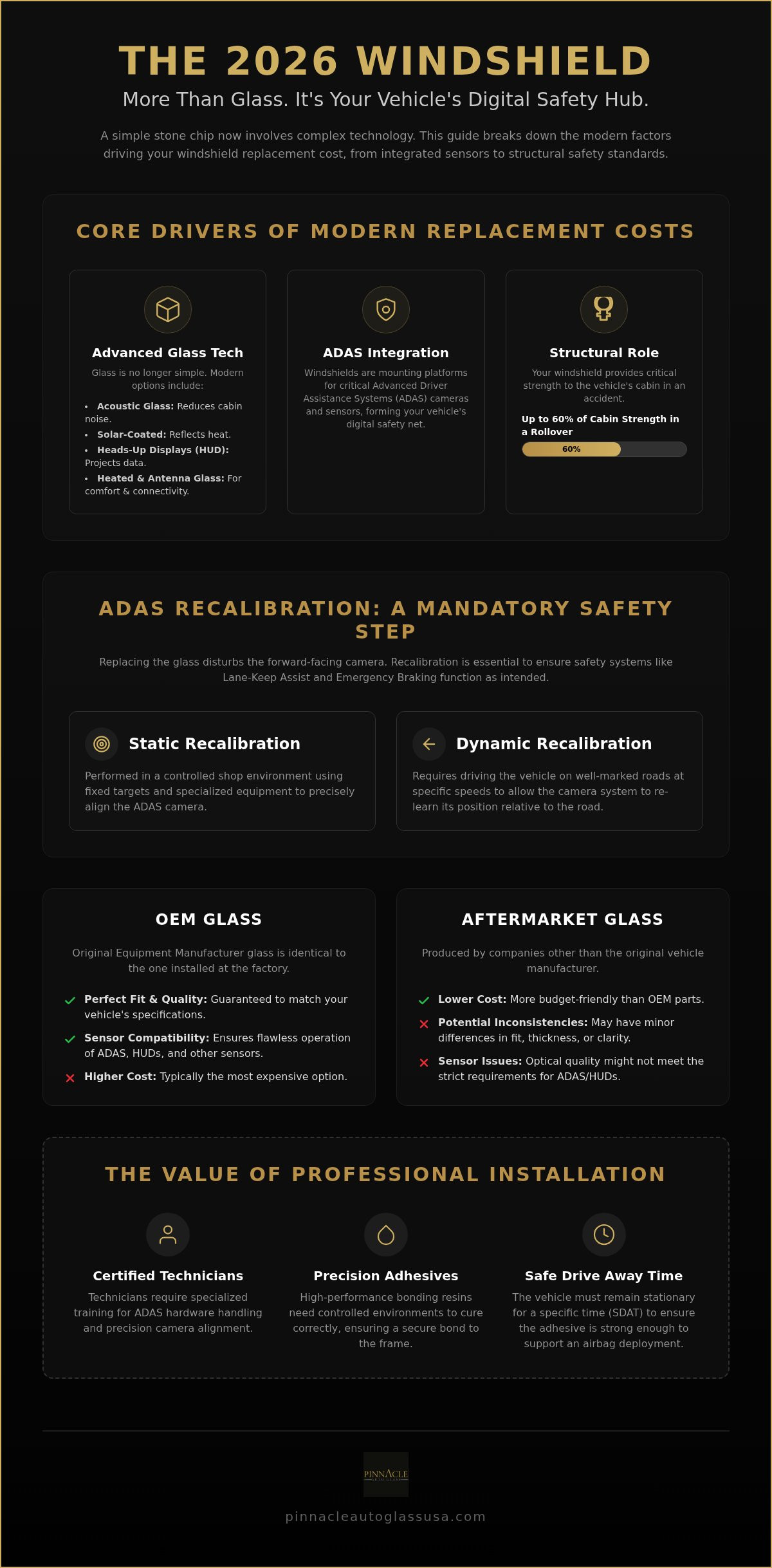
Total car windshield replacement cost isn't a single, flat figure. It's a calculated sum of high-grade materials, precision labor, and integrated technology. If your vehicle was manufactured after 2018, "glass-only" quotes are effectively obsolete. Modern cars treat the windshield as a mounting platform for cameras, rain sensors, and safety hardware. This makes safety system integrity the primary driver of modern pricing. You aren't just buying glass; you're maintaining your vehicle's digital safety net.
Traditional laminated safety glass has evolved into multi-functional layers designed for comfort and efficiency. Basic laminate provides essential impact protection, but 2026 standards favor acoustic and solar-coated variants. Acoustic glass uses a specialized interlayer to dampen cabin noise and vibration. Solar-coated options reflect infrared light to reduce heat buildup inside the car. These features increase driver comfort but add to the manufacturing complexity and final price of the replacement part.
The Evolution of Auto Glass Technology
Windshields now provide up to 60% of a cabin's structural strength in rollover accidents. They aren't just windows; they're critical structural components. High-end vehicles often include Heads-Up Displays (HUD) that project speed and navigation onto the glass. These systems require specialized glass with a wedge-shaped interlayer to prevent "ghosting" or double images. Additionally, smart glass with integrated heating elements or embedded antennas is becoming standard in many fleets. Each added feature requires a more specialized part, which directly impacts your car windshield replacement cost.
Why Labor Costs Vary Nationally
Specialized training is mandatory for today's glass technicians. Installing a windshield on a modern SUV takes significantly more time than on a vintage sedan. Complex adhesive systems require strict curing environments to ensure the glass bonds correctly to the vehicle frame. Technicians must manage several critical variables during the installation process:
- Technical certification for ADAS hardware handling.
- Precision alignment for camera mounting brackets.
- Environmental controls for high-performance bonding resins.
Service duration is largely dictated by the Safe Drive Away Time (SDAT). Safe Drive Away Time is the minimum duration a vehicle must remain stationary for the adhesive to bond sufficiently to withstand the force of an airbag deployment. Skipping this step or rushing the process compromises your safety. Because technicians must follow these rigorous protocols, labor rates reflect the high level of expertise required for a secure, professional fit.
Factors That Influence Your Specific Replacement Estimate
Your vehicle's category is the most significant starting point for any estimate. Economy sedans typically use high-volume, standard-sized glass that is readily available. Luxury vehicles and commercial trucks, however, require specialized components that drive up the car windshield replacement cost. If you drive a late-model SUV, your glass likely houses rain sensors that trigger wipers and light sensors for automatic headlamps. These components must be carefully detached and re-bonded to the new glass without compromising their sensitivity or response times.
Damage location also dictates your next steps. Small chips in the center of the glass are often repairable. However, cracks that extend to the edge or sit directly in the driver's line of sight require a full replacement. Following the Auto Glass Replacement Safety Standard ensures that the structural integrity of your vehicle remains intact after the service. Cracks near the edge are particularly dangerous because they compromise the bond between the glass and the vehicle frame, which is vital for airbag deployment.
ADAS Recalibration: The Mandatory Safety Step
Advanced Driver Assistance Systems (ADAS) rely on cameras mounted behind your rearview mirror. When you replace the glass, these cameras are disturbed. Recalibration is required to ensure features like lane-keep assist and emergency braking function correctly. Technicians use static recalibration, which involves fixed targets in a controlled shop environment, or dynamic recalibration, which requires driving the vehicle at specific speeds. You can find more detail in our ADAS calibration and auto glass reference guide. Failure to perform this step can lead to safety system malfunctions or total failure during an emergency.
Luxury vs. Economy Vehicle Glass
Luxury brands often use proprietary molding and complex trim kits that cannot be reused during a replacement. If you own a high-end European model or a discontinued vehicle, the glass might be locally unavailable, requiring specialized shipping. Panoramic windshields present the greatest challenge. These massive panes extend deep into the roofline, requiring multiple technicians and advanced bonding agents to install safely. These designs are visually stunning but significantly increase the complexity of the installation. If you're managing a fleet or a high-end personal vehicle, professional glass services can help streamline these complex replacements across multiple vehicle types.
OEM vs. Aftermarket Glass: Performance and Pricing Differences
Choosing between Original Equipment Manufacturer (OEM) and aftermarket glass is a major decision for any vehicle owner. OEM glass is produced by the same manufacturer that provided the original windshield for your car. It features the exact same dimensions, thickness, and tint as the factory part. This guarantees a perfect fit and seamless integration with your vehicle's frame. When you prioritize a precise fit, you reduce the risk of future issues like wind noise or water leaks.
Original Equipment Equivalent (OEE) glass is made by the same companies that produce OEM parts but doesn't carry the vehicle manufacturer's logo. Standard aftermarket glass is produced by third-party companies. While aftermarket options are often more affordable, they don't always match the rigorous tolerances of OEM parts. For vehicles made after 2020, opting for OEM is often the safest way to manage your long-term car windshield replacement cost by avoiding secondary recalibration failures or fitment errors.
Sensitive ADAS cameras are particularly vulnerable to glass quality. Even a microscopic distortion in aftermarket glass can cause a camera to misread the road. This leads to false alerts or the total failure of lane-keep assist and emergency braking systems. We recommend OEM glass for any vehicle equipped with a camera-based safety system to ensure the hardware can "see" through the glass without interference.
The Safety Implications of Glass Quality
Optical clarity is the most critical factor for forward-facing safety cameras. OEM glass undergoes strict testing to ensure zero distortion in the camera’s field of view. Additionally, glass thickness plays a vital role in cabin acoustics and structural rigidity. Thinner aftermarket glass often fails to block road noise as effectively as the original part. Choosing an OEM windshield replacement ensures all factory specifications are met, maintaining the structural integrity of the vehicle's roof in the event of an accident.
Long-Term Value and Resale Impact
An OEM windshield can help preserve your vehicle’s resale value. Discerning buyers and dealerships often look for the manufacturer’s stamp on the glass as a sign of high-quality maintenance. Warranty coverage also differs; manufacturer glass typically comes with robust guarantees that aftermarket brands may not match. If you're driving a leased vehicle, check your contract carefully. Most leasing companies mandate OEM glass for replacements to avoid significant penalties during the turn-in process. Making the right choice now prevents unexpected fees at the end of your lease term.
Navigating Insurance Claims and Out-of-Pocket Expenses
Understanding your policy is the fastest way to lower your car windshield replacement cost. Most drivers carry comprehensive insurance, which typically includes glass damage caused by road debris, weather, or vandalism. However, your specific out-of-pocket expense depends on your deductible. A standard deductible might be $500, but many carriers offer a "full glass" rider. This add-on often removes the deductible entirely for glass-only claims, allowing for a replacement at no direct cost to you. Because ADAS is vital for safety, most modern insurance companies cover recalibration as part of the glass claim. They recognize that an uncalibrated camera is a liability. Verify your coverage limits before booking to avoid surprises.
Working with Your Insurance Provider
You have the legal "right to choose" your repair facility in many jurisdictions. Insurance companies might suggest a specific chain, but you aren't required to use them. Professional shops simplify the process by handling paperwork and billing directly with the carrier. This removes the administrative burden from the vehicle owner. Always verify that your claim specifically includes ADAS recalibration before the work begins. This ensures your safety systems are fully restored without unexpected secondary bills. A reputable shop will confirm this with your adjuster before the glass is even ordered.
Managing Costs for Fleet and Commercial Vehicles
Fleet managers face different challenges. Minimizing vehicle downtime is often more important than the car windshield replacement cost itself. You can find strategies for reducing fleet downtime with mobile glass repair in our latest strategic guide. Logistics companies often benefit from volume pricing and centralized service contracts to keep costs predictable. Commercial truck glass, specifically for semi-trucks, involves larger panes and specialized seals that require heavy-duty expertise. These windshields must withstand higher wind pressures and road debris than standard passenger cars. If you're ready to start a claim or need a professional estimate, contact Pinnacle Auto Glass today for expert assistance.
Why Professional Installation Protects Your Investment
Your windshield is a critical safety shield, not just a window. Choosing a discount installer might save a few dollars upfront, but the long-term risks are significant. Improper installation often leads to persistent water leaks and irritating wind noise that ruins your driving experience. More importantly, an incorrectly bonded windshield can fail during a collision. If the glass detaches, the passenger-side airbag cannot deploy correctly, as it relies on the windshield for structural support. Pinnacle Auto Glass prioritizes your safety by strictly adhering to manufacturer standards for both personal and commercial vehicles. We ensure that your car windshield replacement cost covers a total value package: high-quality glass, expert labor, and certified recalibration.
Modern vehicles are mobile computers. Every component must be perfectly aligned to function. A professional installation ensures that the adhesive bond is uniform and the glass sits flush within the frame. This precision prevents the structural weaknesses that lead to stress cracks later. Our technicians follow rigorous protocols to guarantee that every replacement meets or exceeds original factory specifications. This commitment to quality protects your vehicle's resale value and ensures your safety systems are ready when you need them most.
The Role of a Certified Auto Glass Technician
Modern vehicle technology has made the "DIY" or uncertified repair a thing of the past. Hiring certified auto glass technicians is critical for maintaining your vehicle's safety systems. These professionals use specialized tools for precision glass alignment, ensuring that the mounting brackets for your ADAS cameras are exactly where they need to be. Technicians also possess the expertise to handle high-performance bonding resins that require specific temperature and humidity controls. A comprehensive warranty on both the glass and the labor is a standard part of our service. This provides the peace of mind that your investment is protected against defects or installation errors.
Final Checklist Before You Book
Before you commit to a service provider, verify the details of your quote. A transparent estimate should be easy to understand and free of surprises. Use this checklist to ensure you're getting a professional-grade service:
- Review the quote for hidden fees: Ensure the price includes glass disposal, new moldings, and the necessary recalibration.
- Verify shop experience: Confirm that the technicians have worked on your specific make and model, especially for luxury or commercial vehicles.
- Confirm service type: Ask if the shop offers mobile service for your convenience or if an in-shop visit is required for complex static recalibration.
- Check for certification: Ensure the shop follows the latest industry safety standards for glass bonding and adhesive curing.
Taking these steps helps you manage your car windshield replacement cost effectively. It ensures you aren't just paying for a piece of glass, but for a fully restored safety system. Whether you manage a large fleet or a single personal car, choosing a professional partner is the only way to guarantee your vehicle remains roadworthy and safe.
Restore Your Vehicle's Safety and Structural Integrity
Managing your car windshield replacement cost in 2026 requires looking beyond the price of the glass itself. You're investing in a complex safety system that integrates high-performance materials with advanced camera technology. Choosing the right glass type and ensuring precise ADAS recalibration are essential steps to keep your lane-departure and emergency braking systems functioning as intended. Skimping on professional installation can lead to long-term issues like leaks, wind noise, or even structural failure during a collision.
Pinnacle Auto Glass provides the expertise needed to navigate these technical requirements. Our certified technicians maintain high-quality glass standards for both personal vehicles and commercial fleets across the country. We prioritize your safety by including expert ADAS recalibration in our service to ensure your digital safety net remains intact. Get a transparent windshield replacement quote from Pinnacle Auto Glass today to restore your vehicle's integrity. You can drive away with total confidence in your vehicle's performance and protection.
Frequently Asked Questions
How much does windshield replacement cost without insurance?
The total car windshield replacement cost without insurance depends on your vehicle's specific glass features and integrated technology. Luxury models and vehicles with advanced safety sensors typically fall on the higher end of the price spectrum. It's important to request a detailed quote that includes labor, materials, and any necessary sensor recalibration. This ensures you understand the full scope of the repair before the work begins.
Is ADAS recalibration always necessary when replacing a windshield?
Recalibration is mandatory for any vehicle equipped with Advanced Driver Assistance Systems (ADAS). When a windshield is replaced, the cameras and sensors mounted to the glass are disturbed. Even a fraction of a millimeter of misalignment can cause lane-keep assist or emergency braking to fail. Professional recalibration ensures these systems are perfectly aligned with the road, maintaining your vehicle’s safety standards and ensuring all hardware functions correctly.
Does a higher cost for OEM glass actually provide better safety?
OEM glass provides a higher level of safety by matching the original factory specifications for thickness and structural bonding. It also offers superior optical clarity, which is vital for the cameras used in modern safety systems. While some aftermarket options are available, OEM glass is the most reliable way to ensure your windshield performs its structural role during a rollover accident or an airbag deployment.
Can I drive my car immediately after the windshield is replaced?
You shouldn't drive the vehicle until the adhesive has reached its Safe Drive Away Time. This curing period is essential to ensure the windshield is structurally bonded to the car's frame. If you drive too soon, the glass could shift or fail to stay in place during an accident. Your technician will confirm the exact wait time based on the specific bonding agents used and current environmental conditions.
Will my insurance rates go up if I file a glass claim?
Filing a single comprehensive claim for glass damage usually doesn't result in a premium increase. Most insurance carriers view glass repair and replacement as a standard maintenance necessity caused by external factors like road debris. However, if you file multiple claims within a short period, your insurer might review your policy. It's always a good idea to confirm your specific coverage details and deductible with your agent.
What happens if I choose a cheap installer who skips recalibration?
Skipping recalibration puts your safety at risk and can lead to malfunctioning safety features. Cheap installers often cut corners by ignoring the complex sensor alignment required for modern cars. This can result in your vehicle failing to brake automatically or drifting out of its lane without warning. In the long run, the risk of an accident far outweighs any small savings from a discount installation.
How long does a professional windshield replacement service take in 2026?
A professional service generally takes two to four hours depending on your vehicle's specific technology. This timeframe allows the technician to properly seat the glass, perform necessary ADAS recalibration, and ensure the adhesive reaches its Safe Drive Away Time. Factors like the car windshield replacement cost drivers, such as heads-up displays or rain sensors, can influence the complexity and total duration of your appointment.
Are there extra costs for replacing glass on a semi-truck or delivery van?
Commercial vehicles often require a higher investment due to the sheer size of the glass and specialized installation requirements. Semi-trucks and delivery vans use reinforced glass designed to withstand high wind pressures and constant road vibration. These jobs also require heavy-duty bonding resins and specialized technicians. Fleet managers should prioritize quality and speed to minimize operational downtime and ensure driver safety across their entire fleet.


