
A small chip in your windshield is no longer just a cosmetic blemish. In 2026, it is a potential failure point for your vehicle's entire safety network. You have likely felt that flash of frustration when a stray pebble hits your glass, followed by the worry that a simple fix might turn into an expensive ordeal. It is natural to want to save the original glass and avoid a full replacement. However, understanding exactly when to repair vs replace windshield damage is critical for your safety and your car's structural integrity.
This professional guide clarifies the exact standards technicians use to make that call. You will learn how to identify damage that qualifies for a quick repair and when a full replacement is the only safe path forward. We also address the complexities of modern safety systems. Since many windshields now house cameras and sensors, we explain why ADAS recalibration is a non-negotiable step in the process. Finally, we provide a clear framework for handling insurance claims to help you manage costs effectively. By the end of this article, you will have the confidence to make an informed decision and get back on the road safely.
Key Takeaways
- Identify the specific damage thresholds for size and depth that professional technicians use to determine when to repair vs replace windshield glass.
- Understand the critical role your windshield plays in vehicle structural integrity and why delayed action increases safety risks.
- Learn why ADAS recalibration is a safety mandate for 2026 vehicles to keep cameras and driver-assistance sensors properly aligned.
- Review DOT regulations for commercial fleets to ensure heavy-duty vehicles remain compliant and minimize operational downtime.
- Gain a clear framework for navigating insurance claims and professional inspections to manage your total out-of-pocket costs effectively.
The Science of Windshield Integrity: Why Damage Matters
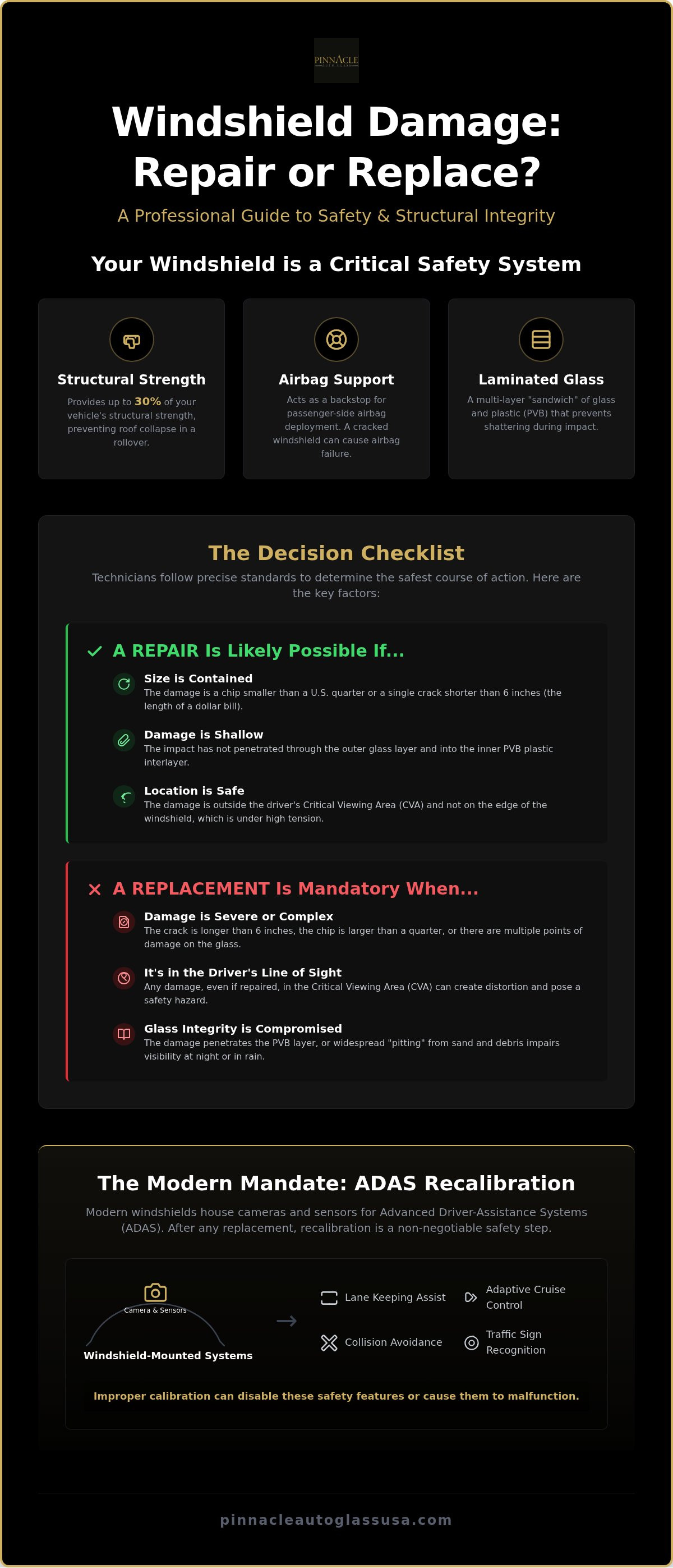
Your windshield is far more than a clear window. It is a critical safety component that provides up to 30% of your vehicle's structural strength. In the event of a rollover accident, that percentage can increase significantly as the glass helps prevent the roof from caving in. Understanding The Science of Windshield Integrity reveals why even a minor chip is a serious concern. Modern glass is a complex, multi-layer safety system designed to protect occupants during a collision. When you are deciding when to repair vs replace windshield damage, you aren't just looking at a crack; you're evaluating the stability of your car's cabin.
A small chip is effectively a breach in a high-tension system. Once the surface is broken, the structural load of the glass is redistributed, creating a "stress-point" that is highly vulnerable to external forces. Every time you hit a pothole or drive over a speed bump, vibrations travel through the frame and settle in that weak spot. This is why a chip that looks stable today can suddenly spiderweb across your entire field of vision tomorrow.
The Role of Laminated Safety Glass
Modern windshields use a specific "sandwich" construction known as laminated safety glass. This consists of two layers of glass bonded together by a Polyvinyl Butyral (PVB) plastic interlayer. This design ensures that if the glass breaks, the shards stay adhered to the plastic rather than flying into the cabin. A chip compromises this seal. When moisture, road salt, or dirt enters the PVB layer, it causes the layers to separate. Professional windshield repair works by injecting specialized resin into the impact zone to displace air and moisture. This process restores the structural tension required to keep the glass stable and clear.
The Danger of Delayed Action
Small chips are under constant environmental pressure. Temperature changes are the most common cause of sudden crack expansion. Glass expands in the heat and contracts in the cold; if you blast the defrost on a frozen morning, the rapid temperature shift can snap a weakened windshield instantly. Beyond visibility, "glass fatigue" impacts your safety systems. In many vehicles, the passenger-side airbag relies on the windshield as a backstop to deploy correctly toward the occupant. If the glass is fatigued or cracked, the force of the airbag can cause the windshield to fail, rendering the safety system useless. Structural integrity is defined by the vehicle's ability to meet Federal Motor Vehicle Safety Standards (FMVSS), ensuring the roof and cabin remain intact during a crash.
The Professional Checklist: 5 Steps to Decide
Professional technicians don't rely on guesswork. They follow a standardized diagnostic workflow to ensure every vehicle meets rigorous safety requirements. This methodical approach is essential when determining when to repair vs replace windshield glass, as even a small error in judgment can compromise the vehicle's structural integrity. Technicians evaluate five specific factors: the size of the impact, the depth of the damage, the precise location on the glass, the total number of existing faults, and the specific type of glass used in the vehicle. By adhering to Auto Glass Safety Council standards, professionals can provide a definitive recommendation that prioritizes your safety over simple convenience.
The Size and Depth Thresholds
The most common metrics for repairability are the "Quarter" and "Dollar Bill" rules. Generally, a stone chip is repairable if it's smaller than a quarter. Cracks are often salvageable if they are shorter than six inches, which is roughly the length of a dollar bill. However, depth is just as critical as surface area. If a rock hit is deep enough to penetrate both the outer glass layer and the inner plastic interlayer, a replacement is mandatory. You should also watch for "pitting." This occurs when thousands of tiny sub-surface impacts from sand and road debris create a hazy effect. While no single pit is large, the collective surface wear eventually requires a new windshield to restore clear visibility during night driving or rainy conditions.
Location and Proximity Risks
Where the damage sits on your glass often matters more than how big it is. Technicians define the area directly in front of the steering wheel as the Critical Viewing Area (CVA). Even a perfect repair can leave a slight bit of distortion. Because this can distract a driver or obscure a pedestrian, damage in the CVA usually results in a replacement. The "Edge Rule" is another non-negotiable safety standard. If a crack is within two inches of the windshield frame, it's considered an automatic replacement. Cracks near the perimeter compromise the bonding surface of the urethane adhesive that holds the glass to the vehicle's frame. If the seal is weak, the windshield won't provide the necessary support during a collision or rollover.
The final steps involve counting the number of existing repairs. Most safety protocols suggest a maximum of three repairs before the glass is considered structurally fatigued. Additionally, while windshields are laminated and repairable, most side and rear windows are made of tempered glass. Tempered glass is designed to shatter into tiny pieces upon impact, meaning any damage to these panels requires a full replacement. If you're unsure about the severity of a chip, a professional windshield inspection is the most reliable way to determine your next steps. Don't wait for a small chip to reach the edge of your glass and force a more expensive solution.
ADAS Recalibration: The Modern Replacement Mandate
Advanced Driver Assistance Systems (ADAS) are standard in almost every 2026 vehicle. These systems manage critical functions like lane-keep assist, adaptive cruise control, and autonomous emergency braking. Most of these features rely on sophisticated cameras and sensors mounted directly to the interior of your windshield. This technology has fundamentally changed the criteria for when to repair vs replace windshield glass. If damage occurs in the camera's field of vision, a repair is rarely an option. The specialized resin used in repairs can cause optical distortion that confuses the vehicle's computer.
Cameras and Sensors Behind the Glass
Safety systems require a "pixel-perfect" view of the road to function reliably. Even a tiny chip or a slight haze in the glass can lead to system failure or false alerts. Accuracy is vital. A 1-degree camera misalignment can result in a 50-foot error downrange, potentially causing the car to brake for a non-existent obstacle or miss a lane departure entirely. This is why professional ADAS calibration auto glass services are a mandatory part of any modern replacement.
Recalibration isn't a one-size-fits-all process. Technicians use two primary methods to ensure accuracy:
- Static Recalibration: This takes place in a specialized service bay using physical targets and laser alignment tools to reset the camera's baseline.
- Dynamic Recalibration: This involves driving the vehicle on the road at specific speeds to allow the sensors to "learn" their environment through real-world visual data.
Many newer models require both processes to verify that the safety network is fully synchronized with the new glass. Skipping these steps can leave your safety features inactive or dangerously inaccurate.
The Recalibration Process at Pinnacle Auto Glass
At Pinnacle Auto Glass, our certified technicians ensure your safety tech is fully restored after every installation. We use manufacturer-specific software to reset your vehicle's cameras to their original factory specifications. DIY glass replacement is no longer a viable option for tech-heavy vehicles because you cannot bypass the software handshake required for recalibration. We work directly with your provider to ensure these insurance-approved services are handled correctly. This specialized attention guarantees that your safety features remain dependable every time you start the engine. We prioritize efficiency so your vehicle stays on the road with its safety systems fully intact.
Commercial and Fleet Considerations: Managing Heavy-Duty Glass
Commercial operators face unique pressures that personal vehicle owners rarely encounter. A cracked windshield on a semi-truck, delivery van, or box truck is more than a safety issue; it is a regulatory liability. Fleet managers must decide when to repair vs replace windshield glass based on strict Department of Transportation (DOT) standards to avoid costly fines or out-of-service orders. Every hour a vehicle sits idle in a repair shop is an hour of lost revenue. Specialized glass for heavy-duty vehicles requires expert handling to maintain structural integrity under high-mileage stress and varying road conditions.
DOT Safety Standards for Commercial Vehicles
The Federal Motor Carrier Safety Administration (FMCSA) and DOT enforce specific requirements for commercial glass. Any chip or crack larger than 3/4 of an inch in diameter is a violation of federal regulations. Damage is also prohibited if it sits within the "swipe area" of the windshield wipers, as this obscures the driver's vision during inclement weather. Furthermore, federal rules state that there cannot be two cracks within three inches of each other, nor can there be any intersecting cracks. Operating a commercial vehicle with compromised glass increases your company's liability risks during an accident. Pinnacle Auto Glass supports fleet compliance by providing rapid, certified assessments that keep your drivers within legal safety limits.
Fleet Management Efficiency
Reducing operational gaps requires a proactive approach to glass maintenance. Scheduled inspections are always more cost-effective than emergency roadside glass replacement. Utilizing reducing fleet downtime with mobile glass repair techniques allows your drivers to stay on their routes while technicians handle the work at your terminal or job site. Managing multiple vehicles through a single glass service partner simplifies your billing process and ensures consistent quality across your entire fleet.
Professional repairs are exceptionally durable, even in high-mileage commercial environments. Our technicians use high-viscosity resins specifically designed to withstand the constant vibrations of long-haul trucking. If a replacement is necessary, we use heavy-duty glass that meets OEM specifications for commercial applications to ensure all ADAS features remain operational. To keep your drivers safe and your trucks on the road, schedule your fleet glass services today.
Selecting a Solution: Professional Inspection and Insurance
A visual check is a useful starting point. However, a professional assessment is the only way to guarantee your vehicle meets national safety standards. A certified technician uses specialized tools to look beyond the surface of a crack. They check for internal delamination and sensor interference that the naked eye cannot see. Making the final call on when to repair vs replace windshield glass requires an understanding of structural load and technical requirements. While a chip might look simple, its proximity to an ADAS camera or the frame of the car often dictates the final outcome.
Cost is a common concern for most vehicle owners. In 2026, the complexity of the glass and the necessity of recalibration are the primary drivers of total expense. You can find a detailed breakdown of these variables in our guide on how much does windshield replacement cost. Prices vary based on vehicle make, glass type, and the specific safety sensors involved. Professional shops prioritize safety by ensuring the new glass matches the original manufacturer's specifications perfectly.
Insurance and Deductibles
Many drivers believe in the "No-Cost Repair" myth. While specific insurance laws regarding deductibles can vary by location, most drivers rely on their comprehensive coverage. Insurance companies often waive the deductible for a small chip repair because it prevents a more expensive replacement later. If a replacement is necessary, your standard comprehensive deductible usually applies. Most insurance providers do not increase premiums for glass-only claims, as these are considered "no-fault" incidents. We recommend contacting your glass provider first to verify the damage and allow them to handle the paperwork directly with your carrier.
Why Pinnacle Auto Glass is the Premier Choice
We prioritize your safety by using only high-quality windshield replacement materials. Our adhesives meet or exceed OEM specifications to ensure the bond is as strong as the day your car left the factory. We understand that your time is valuable. That is why we offer nationwide mobile service for both personal vehicles and commercial fleets. Our technicians arrive fully equipped to handle both the installation and the necessary ADAS recalibration in a single visit. This eliminates the need for multiple appointments and reduces your vehicle's downtime. We act as a seasoned partner, simplifying complex technical tasks for every vehicle owner.
Contact Pinnacle Auto Glass today for a professional inspection.
Secure Your Vehicle's Safety and Structural Integrity
Determining when to repair vs replace windshield damage is a critical decision that impacts your vehicle's entire safety network. You now understand that modern glass is a high-tech structural component. It provides essential strength during a rollover and serves as the mounting point for your advanced driver assistance systems. Whether you're managing a personal car or a heavy-duty commercial fleet, adhering to professional standards ensures you remain compliant with DOT regulations and safety mandates. Delayed action only increases the risk of a simple chip becoming a costly replacement.
Pinnacle Auto Glass acts as your authoritative guide for all glass needs. Our nationwide professional technicians deliver expert service directly to your location to reduce downtime and stress. We are ADAS recalibration specialists; we ensure your safety sensors are pixel-perfect after every installation. For business owners, we provide specialized commercial fleet glass solutions tailored to high-mileage demands and regulatory requirements. Trust a partner that prioritizes reliability and quality above all else.
Get a Professional Glass Quote from Pinnacle Auto Glass today. We are ready to restore your vehicle's integrity with efficiency and expertise.
Frequently Asked Questions
How long can I wait before a windshield chip becomes unrepairable?
You shouldn't wait at all. Dirt and moisture enter the chip immediately, which makes a clean, clear repair much more difficult. Road vibrations and daily temperature shifts can cause a small chip to spread into a full crack within hours. Acting quickly is the most reliable way to ensure you don't have to decide when to repair vs replace windshield glass after the damage becomes too severe to fix.
Can a windshield crack be repaired if it is longer than six inches?
Most professional safety standards require a full replacement for cracks longer than six inches. While some specialty resins exist, a long crack significantly compromises the structural integrity of the laminated safety glass. If the damage extends to the edge of the frame, the windshield is no longer safe to use. Technicians prioritize your safety by replacing glass that has lost its ability to support the vehicle's roof during a collision.
Will my insurance premium increase if I file a glass repair claim?
Filing a glass repair claim usually does not increase your insurance premium. Most insurance companies view glass damage as a no-fault comprehensive claim. Since a quick repair is much cheaper for the insurer than a full replacement, they often waive the deductible to encourage you to fix the chip early. You should check your specific policy for details on glass-only coverage and local state laws regarding deductibles.
Do I really need ADAS recalibration if my camera looks fine after a replacement?
Yes, recalibration is a mandatory safety requirement after any windshield replacement. Even if the camera appears aligned, a microscopic shift in the glass thickness or mounting angle can throw off the sensor's calculations. This leads to dangerous failures in lane-departure warnings or emergency braking systems. Professional recalibration ensures these systems function exactly as the manufacturer intended for your protection on the road.
Is a repaired windshield as strong as a brand-new one?
A professionally repaired windshield is structurally sound but is not quite as strong as a brand-new factory-installed unit. The resin restores the tension and prevents the crack from spreading further, but it cannot perfectly replicate the original bond of the glass layers. If the glass has already been repaired multiple times or has significant pitting, it is usually safer to opt for a full replacement to maintain cabin security.
What happens if I drive a commercial truck with a cracked windshield?
Driving a commercial truck with a cracked windshield can result in heavy DOT fines and immediate out-of-service orders. Federal regulations are strict about damage within the wiper's swipe area or any crack larger than 3/4 of an inch. Beyond the legal risks, a compromised windshield in a heavy-duty vehicle increases your liability in the event of an accident. Fleet managers should prioritize mobile glass service to avoid these operational risks.
How much does it cost to repair a rock chip vs. replacing the whole glass?
Repairing a rock chip is significantly more affordable than a full windshield replacement. The total cost for a new windshield depends heavily on your vehicle's make and the presence of complex ADAS technology. While repairs are a small investment to save the original glass, a replacement is a necessary expense when the structural safety of the vehicle is at stake. Most comprehensive insurance policies cover these costs with minimal out-of-pocket impact.
Can temperature changes cause a small chip to shatter the entire windshield?
Extreme temperature changes are the leading cause of chips spreading into large, non-repairable cracks. Glass expands in the heat and contracts in the cold. If you use the defroster on a frozen morning or the air conditioner on a hot day, the rapid temperature shift puts immense stress on the damaged area. This stress often causes the glass to pop, turning a minor chip into a massive crack instantly.


