
Would you trust a surgeon who wasn't board-certified simply because they offered a lower rate? Most vehicle owners view a windshield as a simple piece of glass; however, it's actually a critical structural component that supports your roof during a rollover and ensures proper airbag deployment. It's natural to look for the best price when a crack appears. The choice between a certified vs non-certified glass technician involves much more than just the initial quote. You're deciding whether your vehicle's safety systems will actually work when you need them most.
We understand the anxiety of choosing a repair shop, especially when you're worried about wind noise, leaks, or safety sensors failing. This article clarifies the technical and structural differences between expert installation and uncertified labor. You'll gain the confidence to ensure your car remains safe and structurally sound after any glass service.
We'll examine the current ANSI/AGSC/AGRSS 005-2022 standards that professionals follow to maintain vehicle integrity. We also preview the necessity of ADAS recalibration and how proper certification prevents the high costs of fixing a botched installation later. You'll have a clear path to protecting your vehicle and your passengers.
Key Takeaways
- Modern windshields act as load-bearing components that maintain roof strength and ensure proper airbag deployment during a collision.
- Choosing a certified vs non-certified glass technician ensures your vehicle meets the rigorous ANSI/AGSC/AGRSS 005-2022 safety standards.
- Uncertified labor often skips critical installation protocols, leading to hidden frame rust, water leaks, and compromised structural integrity.
- Professional ADAS recalibration is a non-negotiable requirement for modern safety sensors to function correctly after a windshield replacement.
- Use the AGSC directory to verify a technician's registration status and protect your vehicle’s safety and long-term value.
The Structural Role of Modern Automotive Glass
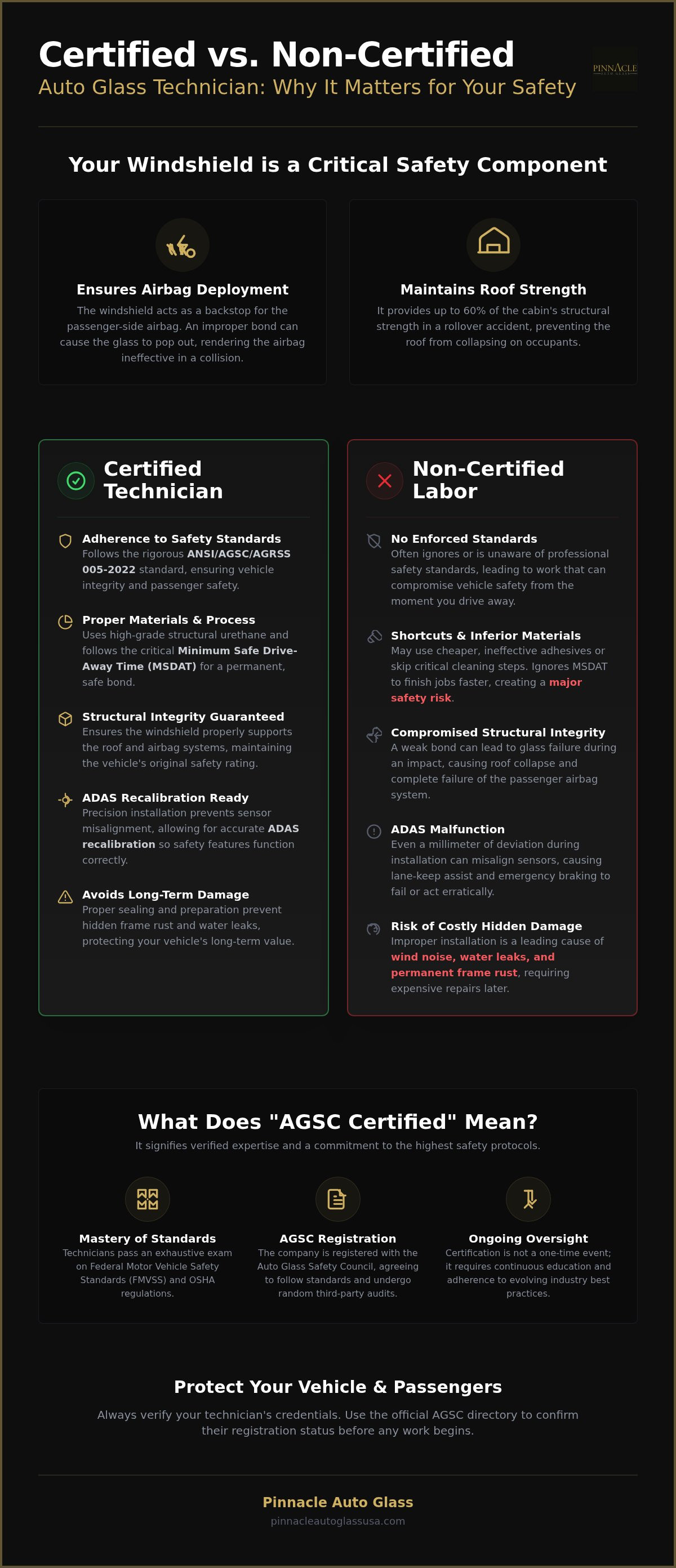
Your windshield is far more than a clear view of the road. It's a structural pillar. Modern vehicles rely on laminated safety glass to provide a significant portion of the cabin's strength. In a rollover accident, the windshield prevents the roof from collapsing on the occupants. It also serves as the primary backstop for the passenger-side airbag. If the glass isn't installed with precision, it can pop out during an accident. This renders the airbag useless and leaves the roof unsupported. This is where the distinction between a certified vs non-certified glass technician becomes a life-saving detail.
The transition from "simple glass" to complex safety housing has changed the industry. Modern windshields aren't just windows; they're sophisticated components that house cameras and sensors. A "good enough" installation isn't just a cosmetic issue. It's a significant safety liability. If the glass isn't bonded perfectly to the frame, the vehicle's structural integrity is compromised. You won't know there's a problem until the moment of impact, which is the worst time to discover poor workmanship.
The Bond: Why Urethane Choice and Application Matter
The strength of your windshield depends entirely on the chemical bond between the glass and the vehicle frame. Professional technicians use high-grade structural urethane. It's a specialized adhesive designed to withstand immense pressure. Uncertified labor might use cheaper primers or skip cleaning steps to save time. These shortcuts are invisible once the trim is replaced, but they create a major safety risk. A critical factor is the Minimum Safe Drive-Away Time (MSDAT). Certified experts strictly follow these timing requirements to ensure the adhesive has cured enough to hold the glass in place during an impact. Skipping this wait time can lead to the glass shifting or failing to hold during a collision.
ADAS Integration and Precision Requirements
Today's glass is the housing for your vehicle's Advanced Driver Assistance Systems (ADAS). These systems use cameras and sensors mounted directly to the windshield to manage lane-keep assist and emergency braking. Think of ADAS as the "brain" of the vehicle that relies on the "eyes" of the glass. Even a millimeter of deviation during installation can misalign these sensors. The choice of a certified vs non-certified glass technician determines if your safety tech functions or fails. Precision installation is the first step toward successful ADAS recalibration. Without expert placement, your vehicle's most advanced safety features can become a hazard rather than a help.
What Does "Certified" Actually Mean in the Auto Glass Industry?
Certification isn't just a marketing badge or a sticker on a shop window. It's a rigorous verification of a technician’s ability to perform work that meets federal safety requirements. An AGSC Certified Technician has passed an exhaustive examination administered by the Auto Glass Safety Council. This test confirms their mastery of Federal Motor Vehicle Safety Standards (FMVSS) and OSHA safety regulations. It also validates their understanding of the complex chemical properties of modern structural adhesives. When you weigh the choice between a certified vs non-certified glass technician, you're choosing between verified competence and guesswork.
The industry makes a clear distinction between "Certified" and "Qualified" designations, which is a key factor when comparing a certified vs non-certified glass technician. A certified company is a registered member of the AGSC. These businesses agree to follow the industry's most stringent safety standards and submit to random third-party audits. A "Qualified" individual might have passed a manufacturer's training course but lacks the ongoing oversight of a national safety body. For those who demand the highest level of skill, Master Technician status requires years of field experience and a specialized exam that covers advanced technical challenges. This level of expertise is essential for maintaining the structural integrity of modern vehicles.
The AGRSS Standard: The Industry Benchmark
The ANSI/AGSC/AGRSS 005-2022 standard is the North American benchmark for safe auto glass replacement. It governs every technical aspect of the job, from the removal of the old glass to the final inspection. Certified technicians are trained to follow these protocols without exception. This includes ensuring the vehicle's frame is free of corrosion and that the glass is properly primed to prevent bond failure. Because these shops are audited, you have documented proof that the technician isn't cutting corners. Following these standards is the only way to guarantee that a windshield will perform as intended during a collision.
Continuing Education and Evolving Technology
Automotive technology changes every year. A technician's knowledge can become obsolete quickly as manufacturers introduce new materials and sensor arrays. Certification programs require technicians to stay current with 2026 vehicle technologies through periodic recertification and continuing education. This ensures they are prepared for the precision required in modern windshield replacement and ADAS integration. Years of experience are helpful, but they don't replace verified current knowledge of new safety systems. Choosing a certified professional means your vehicle is handled by someone who understands the latest industry advancements and safety requirements.
Certified vs. Non-Certified Glass Technicians: A Risk Comparison
The difference between a certified vs non-certified glass technician often becomes visible only weeks after the service is complete. While an uncertified worker might offer a lower price, they often bypass critical safety steps to maintain that margin. Professional installation follows a strict sequence of cleaning, priming, and bonding. If a technician uses a standard screwdriver instead of a specialized cold knife to remove old glass, they can easily scratch the vehicle's pinchweld. These scratches expose bare metal to the elements, leading to hidden rust that compromises the vehicle's structural integrity over time.
Choosing a certified vs non-certified glass technician also impacts your vehicle's long-term resale value and longevity. Rust degradation isn't just an aesthetic problem; it prevents future windshields from bonding correctly to the frame. This forces you to pay for expensive bodywork repairs before a new piece of glass can be safely installed. The "cheaper" upfront option frequently results in secondary repair costs that far exceed the initial savings. Quality workmanship ensures the glass remains a permanent, safe part of your vehicle's safety cage.
Safety and Liability Risks
Safety is the primary concern in every glass replacement. If a windshield isn't bonded properly, it can fail to support the passenger-side airbag during deployment. This creates a massive liability for individual owners and fleet managers alike. Insurance companies may also scrutinize claims if they discover a non-standard installation caused secondary damage or injury. The Auto Glass Safety Council develops the standards that prevent these catastrophic failures. Using an uncertified vendor puts your passengers at risk and leaves you legally vulnerable in the event of an accident.
The Quality of Workmanship
Poor workmanship shows up in small but annoying ways before it becomes a major safety failure. You might hear whistling wind noise on the highway or find water pooling on your dashboard after a heavy rainstorm. These issues stem from improper adhesive application or misaligned glass that creates gaps in the seal. Professionals use calibrated tools that amateurs simply don't possess. Professional windshield repair requires calibrated resin injection tools to ensure a permanent fix. Without these tools, a simple chip can quickly turn into a full-length crack that requires a total replacement.
Verifying Technician Credentials Before Your Service
Verification is the final step in protecting your vehicle. Many shops claim to be experts, but you must confirm their credentials before the glass is removed. The best way to start is by searching the Auto Glass Safety Council (AGSC) directory. This public database allows you to verify a company's registration status and ensure their technicians have passed the necessary safety exams. When comparing a certified vs non-certified glass technician, the directory provides objective proof rather than marketing promises. This verification is especially important for leased vehicles. Many leasing companies require documented proof of professional installation to avoid penalties during the lease return process.
Watch for red flags during a mobile service. A professional technician will always clean the new glass and the vehicle frame thoroughly. If you see a technician skipping the primer step or rushing the installation in under thirty minutes, they're likely cutting corners. Insurance companies may also deny secondary claims if an investigation reveals that a non-standard installation led to preventable damage. Ensuring you have a certified vs non-certified glass technician on the job protects your insurance standing and your wallet.
Questions to Ask Your Service Provider
- "Are your technicians AGSC certified?"
- "Do you follow the AGRSS-003 safety standard for every installation?"
- "Will you perform a full ADAS recalibration after the glass is set?"
Asking these questions directly forces the provider to disclose their standards. A reputable shop will have no trouble providing these answers. If they hesitate or claim that recalibration is optional, look for a different provider. Professional windshield replacement cost reflects these safety protocols. You aren't just paying for the glass; you're paying for the technical precision and specialized equipment required to keep your car safe.
Documentation and Post-Service Records
Always demand a written record of the Safe Drive-Away Time (SDAT). This is the specific amount of time the adhesive needs to cure before the vehicle can be driven safely. Driving too soon can cause the bond to fail in an accident. You should also receive a written warranty and a record of the specific urethane used for the job. If your car has safety sensors, a recalibration certificate is mandatory. This document proves the "eyes" of your vehicle were correctly aligned after the glass was replaced. For reliable results and verified safety, contact a professional glass service to schedule your next appointment.
Why Pinnacle Auto Glass Prioritizes Certified Expertise
Pinnacle Auto Glass operates with a single mission: to provide the highest level of safety for every driver on the road. We recognize that the debate between a certified vs non-certified glass technician isn't just about technical titles. It's about the standard of care your vehicle receives during a critical repair. Our team follows the AGRSS standards rigorously. This ensures every installation maintains the vehicle’s structural integrity. We don't view glass as a commodity. We view it as a primary safety system that requires professional handling.
Modern vehicles require more than just a steady hand. They require technical expertise in safety electronics and sensor alignment. Our commitment to safety is evident in our professional ADAS calibration services. We integrate this process directly with every glass replacement. This eliminates the need for separate appointments at a dealership and ensures your lane-keep assist works correctly. For fleet managers, the choice between a certified vs non-certified glass technician impacts liability and operational uptime. We provide specialized care for commercial trucks and logistics vehicles with minimal downtime. You get the peace of mind that comes with a certified auto glass technician who understands the specific needs of high-utilization commercial vehicles.
National Standards, Professional Results
Pinnacle maintains a national service area while focusing on expert-level glass care for all clients. We provide consistent quality regardless of your location. Our safety-first culture dictates every windshield replacement we perform. We balance mobile convenience with the technical precision of a specialized shop. This allows us to serve both individual car owners and large-scale commercial fleets with the same level of authority and speed. We use high-grade materials and follow strict curing times to ensure your car is safe the moment it leaves our care. Our technicians are trained to identify frame issues that uncertified labor often ignores.
Ready to Experience Professional Glass Care?
Choosing a certified expert is an investment in your long-term safety. You avoid the risks of leaks, wind noise, and sensor failure that plague low-cost installations. You also protect your vehicle's resale value and insurance standing. Our technicians are ready to assist with results-oriented solutions for any glass issue. Don't settle for uncertified labor that puts your passengers at risk. Experience the difference that professional certification makes for your vehicle. Reach out to our team today. Visit the Pinnacle Auto Glass booking page to schedule your professional assessment and secure your vehicle.
Secure Your Vehicle With Professional Glass Standards
Your safety depends on the structural integrity of your vehicle's glass. We've explored how modern windshields support the roof and ensure proper airbag deployment. The technical gap between a certified vs non-certified glass technician isn't just about skill; it's about adhering to life-saving protocols like the AGRSS-003 standard. Choosing an expert ensures that your vehicle's safety cage remains intact and your ADAS technology stays correctly calibrated. It's a choice that protects your passengers and your vehicle's long-term value.
Pinnacle Auto Glass provides the technical precision your vehicle deserves. Our team utilizes AGSC-aligned safety protocols and includes comprehensive ADAS recalibration with our glass services. Whether you manage a commercial fleet or need care for a personal vehicle, our national expertise ensures consistent, professional results. Don't leave your safety to chance with unverified labor that might skip critical bonding steps. Get a Professional Quote from Pinnacle Auto Glass today. We are ready to help you get back on the road with total confidence in your vehicle's safety systems.
Frequently Asked Questions
Is it illegal to use a non-certified glass technician?
It's not illegal on a national level because the United States doesn't have a mandatory national licensing requirement for auto glass technicians. However, state laws are evolving quickly. In 2026, Massachusetts and New York have introduced or enacted legislation requiring shops to adhere to AGRSS standards. While you won't face criminal charges, using an uncertified provider increases your liability and safety risks. Always check local regulations to see if specific standards are mandated.
How can I tell if my auto glass technician is actually certified?
You can verify a technician's credentials by searching the Auto Glass Safety Council (AGSC) directory online. This database lists registered member companies and individual technicians who have passed safety examinations. You should also ask the shop for proof of certification before they begin work. A professional service provider will be happy to show you their credentials. Look for the AGSC logo on their website and service vehicles as an indicator of professional standing.
What is the risk of an improperly installed windshield?
An improperly installed windshield creates significant safety hazards during a collision. It can lead to roof collapse in a rollover accident or cause the passenger-side airbag to deploy incorrectly. Beyond structural failure, you may experience water leaks, wind noise, and frame corrosion from scratched paint. These issues compromise the vehicle's safety cage and lead to expensive repairs. Ensuring you choose a certified vs non-certified glass technician prevents these hidden dangers from affecting your vehicle.
Does insurance require the use of certified glass technicians?
Most insurance policies don't explicitly mandate certified technicians, but they do require repairs to meet industry safety standards. If an investigation reveals that a non-standard installation caused secondary injuries or damage, the insurance company might scrutinize or deny parts of the claim. Many insurers prefer working with AGSC-registered shops because it reduces their liability. Check your specific policy details to see if they offer better coverage or lower deductibles for using certified professional providers.
What is the difference between a certified and a qualified technician?
A certified technician has passed a formal examination from a recognized body like the AGSC and follows specific industry standards. A qualified technician might have years of experience or manufacturer training but hasn't undergone third-party testing or regular safety audits. Certification provides a verified level of current knowledge in adhesive chemistry and safety regulations. The distinction between a certified vs non-certified glass technician ensures that the person working on your car meets national safety benchmarks.
Can a non-certified technician perform ADAS recalibration?
Technically anyone can attempt recalibration, but uncertified labor often lacks the specialized equipment and training required for precision. ADAS sensors require alignment down to the millimeter to function correctly. If the cameras aren't calibrated to exact manufacturer specifications, safety features like emergency braking or lane-keep assist may fail. Certified professionals use specific software and targets to ensure these systems are restored to factory settings. Relying on uncertified labor for complex electronics is a major safety risk.
Does certification expire for auto glass professionals?
Yes, auto glass certifications typically expire every three years. This requirement ensures that technicians stay updated on the latest vehicle technologies and safety standards. As automotive engineering evolves, professionals must demonstrate their continued mastery of new adhesive systems and sensor integration. Periodic recertification is a hallmark of a committed professional. It differentiates those who simply have experience from those who maintain verified, current knowledge of the industry's most recent safety protocols and technical advancements.
Why do certified technicians charge more for glass replacement?
Higher rates reflect the investment in specialized tools, high-grade structural adhesives, and ongoing safety training. Certified shops use premium urethanes that meet specific Safe Drive-Away Time requirements. They also invest in expensive ADAS recalibration equipment that uncertified shops often skip to lower their prices. When you pay for a certified technician, you aren't just buying glass. You're paying for the technical precision and safety equipment that ensures your vehicle remains structurally sound after the repair.


