
Did you know that in a rollover accident, your windshield provides up to 60% of your vehicle's roof crush resistance? It isn't just a piece of glass; it's a structural pillar held in place by a thin bead of glue. This reality highlights the importance of OEM quality urethane adhesive in every windshield replacement. If that bond fails, your roof could collapse or your passenger-side airbag might not deploy correctly. Many drivers focus on the price of the glass, but the adhesive is what actually keeps you safe during a collision.
It's frustrating to see wild price differences between glass shops when every quote looks the same on paper. You want a fair deal, but you don't want to compromise your family's safety. Discover why the adhesive used in your windshield replacement is a critical structural safety component that protects you in a collision. We will explain the safety risks of low-quality materials, how they impact your ADAS systems, and which questions you should ask your glass technician to ensure a professional result.
Key Takeaways
- Learn how your windshield contributes to roof crush resistance and why the adhesive is a critical safety pillar.
- Understand the importance of OEM quality urethane adhesive in meeting federal safety standards for windshield retention and passenger protection.
- Identify the risks of low-quality adhesives, including stress cracks, water leaks, and compromised structural integrity.
- Discover the science of Safe Drive Away Time (SDAT) and why rushing back onto the road can be a life-threatening mistake.
- See how professional installation and high-grade materials ensure your vehicle's ADAS systems function correctly after a glass replacement.
Beyond Just Glue: The Structural Role of Urethane in Modern Vehicles
Most drivers view a windshield as a simple piece of glass that keeps the wind and debris out of their faces. In reality, it's a sophisticated structural safety component. Auto glass urethane is a specialized, high-strength bonding agent designed to handle extreme physical stress. Modern windshields are generally made of laminated safety glass, which relies entirely on the strength of the adhesive bond to stay in place. This bond must be permanent and flexible enough to act as a shock absorber against constant road vibrations and sudden impacts.
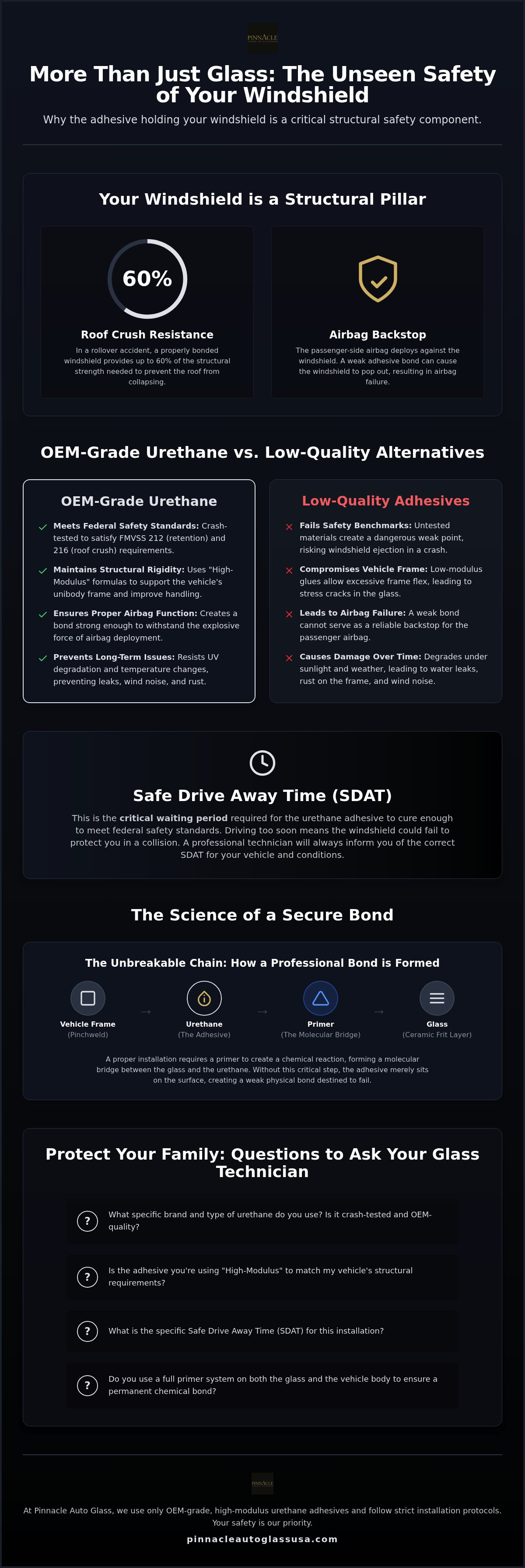
The windshield is a major contributor to the vehicle's overall rigidity. In a rollover accident, the windshield can provide up to 60% of the vehicle's roof crush resistance. This statistic underscores the importance of OEM quality urethane adhesive. Without a high-performance bond between the glass and the vehicle's pinchweld, the roof can easily collapse during an accident, putting everyone inside at risk. The adhesive is the invisible pillar that maintains the cabin's structural integrity.
The Passive Safety System Connection
The windshield serves as a critical backstop for the passenger-side airbag. When the airbag deploys, it strikes the glass at high speed before inflating toward the occupant. If the adhesive isn't strong enough, the force of the airbag can pop the windshield out of the frame. This causes the airbag to fail because it has nothing to push against. Proper bonding also prevents the glass from ejecting during a collision. This keeps occupants inside the vehicle's safety cage and ensures that the certified auto glass technician has restored the car to its original safety specifications.
Why Standard Construction Sealants Fail
You can't use hardware store silicone or standard construction sealants for automotive glass. Modern unibody vehicles require "high modulus" adhesives. These specialized urethanes are stiffer and provide the structural rigidity necessary for the car's frame. Inferior adhesives often lack the chemical resistance to handle constant UV exposure and extreme temperature fluctuations. Over time, low-quality sealants degrade, leading to leaks, wind noise, and eventual bond failure. Choosing the right material is essential for maintaining the vehicle's safety and preventing long-term damage like rust or corrosion on the pinchweld.
Engineering Standards: Why OEM Quality Matters for Passive Safety
Vehicle safety isn't accidental. It's the result of strict engineering protocols and federal mandates. The importance of OEM quality urethane adhesive becomes clear when you examine how manufacturers validate specific formulas to ensure they meet crashworthiness requirements. These adhesives aren't just shop supplies; they're engineered components that must perform under extreme pressure to protect lives.
FMVSS 212 and Windshield Retention
The Federal Motor Vehicle Safety Standard 212 is the primary benchmark for windshield mounting. This standard requires the windshield to remain in its frame during a 30 mph frontal barrier crash. If the glass pops out, the safety cage is compromised. OEM urethane is specifically tested to meet these retention benchmarks for each vehicle class. Using an adhesive that hasn't been crash-tested for your specific car model creates a dangerous weak point in your passive safety system. This bond also supports the vehicle's compliance with FMVSS 216, which regulates roof crush resistance during rollovers.
Engineers verify these bonds using lap-shear strength tests, often following ASTM D1002 standards. This metric measures the force required to pull the glass away from the metal frame. To achieve a bond that won't fail, technicians must facilitate a primer-urethane chemical reaction. The primer acts as a molecular bridge between the ceramic frit on the glass and the urethane itself. Without this precise chemical bond, the adhesive is merely sitting on the surface rather than becoming part of the vehicle's structure.
High-Modulus and Non-Conductive Requirements
Modern vehicle designs have evolved significantly. Many late-model cars require "High Modulus" adhesives. These are stiffer urethanes that increase the vehicle's torsional rigidity. This stiffness improves handling and prevents the unibody frame from flexing excessively during normal driving. If a technician uses a standard, low-modulus adhesive on a car designed for a high-modulus bond, the glass may develop stress cracks as the frame twists around it.
Electric vehicles and luxury cars with advanced electronics also require non-conductive adhesives. These specialized formulas prevent electrical currents from traveling through the adhesive bead. This is essential for protecting integrated antennas, heated glass elements, and sensitive ADAS cameras from interference. Non-conductive urethanes also stop galvanic corrosion, a process where electrical currents cause the metal pinchweld to rust prematurely. Ensuring your car receives the correct technical grade of adhesive is vital for long-term reliability. You can trust Pinnacle Auto Glass to use the specific materials required for your vehicle's engineering standards.
Comparing OEM-Grade Adhesives vs. Standard Aftermarket Options
Choosing a glass shop based on the lowest quote often means accepting "value" adhesives. These products save the installer money but create long-term risks for the vehicle owner. The importance of OEM quality urethane adhesive isn't just about immediate safety; it's about the longevity of your car. Cheap urethanes often lose elasticity as they age. When the adhesive becomes brittle, it can't handle the natural flex of the vehicle frame. This lack of flexibility often leads to mysterious stress cracks in the glass months after the installation.
There are also electronic concerns. Many modern windshields contain integrated antennas and sensors. If an installer uses a conductive, low-grade adhesive, it can cause electromagnetic interference (EMI). This might disrupt your radio reception or GPS signal. Insurance companies generally prefer OEM-equivalent materials because they reduce the likelihood of these expensive follow-up claims. Investing in quality materials up front prevents the hidden costs of wind noise, leaks, and electrical gremlins.
The ADAS Factor: Accuracy Starts with the Bond
Advanced safety features rely on extreme precision. If the adhesive has excessive "slump," the windshield may sit slightly lower or at a different angle than the factory intended. This shift can throw off the field of view for cameras mounted directly to the glass. For successful ADAS calibration auto glass must be perfectly seated and stabilized. Even a fraction of a millimeter of movement can cause lane departure warnings or emergency braking systems to malfunction. OEM-grade adhesives are engineered to maintain their shape during the curing process, ensuring the camera stays exactly where the manufacturer intended.
Corrosion and Pinchweld Damage
Budget installations often leave messy beads or uneven seals that trap moisture against the metal frame. When water sits against the pinchweld, it leads to rapid rust. This corrosion eventually eats through the frame, making future glass replacements impossible without expensive auto body repair. The Auto Glass Safety Council sets standards to prevent these structural failures. You can identify a "budget" job by looking for uneven gaps between the glass and the body or visible, messy adhesive spilling into the interior. A professional installation uses high-grade bonding agents to create a clean, watertight seal that protects the metal frame from the elements for the life of the vehicle.
Safe Drive Away Time (SDAT): The Critical Waiting Period
Safe Drive Away Time (SDAT) is the most overlooked safety factor in auto glass service. It defines the minimum time required for the adhesive to reach a strength sufficient to pass federal crash tests. This isn't just about the glass staying in the frame during a bumpy ride. It's about ensuring the bond can withstand a high-speed collision or an airbag deployment. The importance of OEM quality urethane adhesive is magnified here because high-grade materials offer predictable, certified curing times that low-cost alternatives cannot guarantee. Rushing back onto the road before the SDAT has passed can turn a minor fender bender into a structural failure.
Factors That Influence Curing Speed
Most one-part polyurethane adhesives are moisture-cured. They pull humidity from the air to harden. In cold, dry winter conditions, this process slows down significantly. A standard adhesive might take hours longer to reach SDAT in January than it does in July. Modern "fast-cure" urethanes are engineered to reach crash-test strength in as little as 30 to 60 minutes under standard conditions. Professional technicians often use dual-component (2K) urethanes to solve weather-related delays. These materials use a chemical activator to ensure a consistent cure regardless of the external environment. Before you leave the shop, a technician should verify the "skin time" to ensure the outer layer has stabilized.
What to Do (and Not Do) During the First 24 Hours
Your role in vehicle safety continues after you leave the shop. A windshield replacement is a two-part process: the physical installation and the chemical curing. While your car is safe to drive after the initial SDAT, the urethane won't reach its full structural strength for at least 24 hours. During this window, you must protect the integrity of the seal through a few simple actions:
- Keep a side window cracked about one inch. This prevents pressure spikes when closing doors, which can push the wet adhesive out of the frame.
- Avoid high-pressure car washes. The forceful jets can disturb the bead or force water into the seal before it reaches full strength.
- Don't remove the retention tape too early. It holds the glass in the exact position required for the adhesive to set without shifting.
Driving too early or failing to follow post-installation care can cause the windshield to shift. This leads to wind noise, water leaks, or total bond failure in an accident. We prioritize your safety by using only the highest-grade materials and following strict curing protocols. If you want to ensure your vehicle is restored to factory safety standards, schedule your service with Pinnacle Auto Glass today.
Ensuring a Safe Installation: The Pinnacle Auto Glass Approach
Pinnacle Auto Glass operates with a single priority: your safety. We refuse to cut corners by using sub-standard materials that compromise your vehicle's structural integrity. Our technicians understand the importance of OEM quality urethane adhesive in maintaining the factory-spec safety cage of your car. We utilize only high-modulus, non-conductive formulas to ensure that your vehicle's frame remains rigid and your electronic systems stay protected from interference. This commitment to quality is what separates a professional installation from a budget-rate job.
Every certified auto glass technician on our team undergoes rigorous training. They learn to handle the chemical complexities of modern bonding agents. Applying urethane correctly requires more than just a steady hand. It requires an understanding of how different materials react to temperature and humidity. We balance the convenience of mobile service with the strict safety protocols usually reserved for a controlled shop environment. Whether we are working in your driveway or at our facility, the process never varies.
The Pinnacle Quality Checklist
We follow a methodical checklist to ensure every installation is flawless. This starts with meticulous pinchweld preparation. We remove old, degraded adhesive and apply specialized primers to prevent rust and ensure a molecular bond. Our team uses factory-perfect bead geometry. This means the adhesive is applied in a specific triangular shape that allows the glass to set at the exact height intended by the manufacturer. This precision ensures that every car glass replacement we perform meets or exceeds Federal Motor Vehicle Safety Standards (FMVSS). We don't just replace glass; we restore your vehicle's primary passive safety system.
Commercial and Fleet Reliability
For our commercial clients, reliability is a business necessity. Using high-quality adhesives helps in reducing fleet downtime by eliminating the need for re-work due to leaks or stress cracks. Heavy-duty commercial trucks face extreme vibrations and road stress. A "value" adhesive will fail quickly in these conditions, leading to expensive repairs and safety risks for your drivers. Our OEM-grade urethanes provide the structural strength needed to keep large vehicles on the road safely. We provide consistent, professional results that fleet managers can depend on for their entire inventory.
Trust Pinnacle Auto Glass for your next windshield replacement. We provide the expertise and high-performance materials required to keep you and your passengers safe on the road.
Prioritize Your Safety with Professional Installation
Your windshield is a vital safety component that protects passengers during a collision. Choosing a service provider requires looking beyond the lowest price to find quality materials. Recognizing the importance of OEM quality urethane adhesive ensures your vehicle's structural integrity remains intact and your ADAS systems function with precision. The adhesive bond is the foundation of your car's passive safety system, from maintaining roof strength to supporting airbag deployment.
Pinnacle Auto Glass never compromises on materials. Our team features certified ADAS recalibration experts who use OEM-quality materials guaranteed to meet federal safety standards. We provide national fleet support and professional glass solutions for all vehicle types. Don't leave your safety to chance with budget-grade sealants that may fail when you need them most.
Take the next step toward a secure and reliable repair. Get a Quote for Professional Windshield Replacement today. We are ready to restore your vehicle to factory safety specifications with the professional care you deserve.
Frequently Asked Questions
What is the difference between urethane and regular silicone?
Urethane is a high-strength structural bonding agent, while silicone is a simple sealant. Silicone is designed to fill gaps and block moisture, but it lacks the tensile strength needed to hold a windshield in place during an impact. Automotive urethane provides the rigidity required to support the vehicle's roof and airbag deployment. Using silicone in a windshield replacement is dangerous because it cannot withstand the extreme pressures of a collision.
Is it safe to drive my car immediately after a windshield replacement?
You must wait for the Safe Drive-Away Time (SDAT) to pass before driving. This period allows the adhesive to reach a specific strength required to pass federal crash tests. For many modern fast-cure urethanes, this takes between 30 and 60 minutes. Driving too early can cause the windshield to shift or the bond to fail entirely. Always follow the specific timing provided by your technician to ensure your safety.
Does a cheap windshield replacement use lower-quality adhesive?
Budget-rate glass shops often reduce their operating costs by using lower-quality "value" adhesives. These products may lack the rigorous testing and certifications found in premium brands. This is where the importance of OEM quality urethane adhesive becomes clear. High-quality urethanes are engineered for specific vehicle requirements, providing more predictable curing times and better long-term durability. Investing in quality materials prevents future issues like leaks, wind noise, or structural bond failure.
What happens if the urethane adhesive fails during a crash?
If the adhesive fails during a crash, the windshield may eject from the vehicle frame. This ejection causes the passenger-side airbag to fail because it relies on the glass as a backstop to deploy toward the occupant. Additionally, the vehicle's roof integrity is compromised. In a rollover, the windshield provides up to 60% of the roof's crush resistance. A failed bond allows the roof to collapse more easily, increasing the risk of serious injury.
How does the weather affect how long the windshield glue takes to dry?
Humidity and temperature are the primary drivers of the chemical curing process. Most one-part urethanes pull moisture from the air to harden. Cold, dry winter air can significantly extend the time needed to reach a safe drive-away strength. Professional technicians monitor these environmental factors and may use specialized dual-component urethanes in extreme weather. These advanced formulas use a chemical activator to ensure the glass sets correctly regardless of the outside temperature or humidity levels.
Can I wash my car right after the windshield is replaced?
You should avoid high-pressure car washes for at least 24 hours after a replacement. The powerful jets and heavy machinery can shift the glass or force water into the adhesive bead before it reaches full strength. This can create permanent leaks or weaken the structural bond. Hand washing your vehicle is generally safe if you avoid the area around the windshield. Wait for the full cure period to ensure the seal is completely watertight.
Why do some cars require non-conductive urethane adhesive?
Many modern vehicles feature integrated electronics like GPS antennas, heated glass elements, and ADAS sensors. Standard adhesives can conduct electricity and cause electromagnetic interference with these sensitive systems. Non-conductive urethane is specifically formulated to prevent electrical currents from traveling through the adhesive bead. It also stops galvanic corrosion, which occurs when electrical currents cause the metal frame of your car to rust. Using the correct technical formula is essential for modern vehicle maintenance.
How do I know if my glass technician used high-quality urethane?
Ask your technician for the brand of adhesive they use and the specific Safe Drive-Away Time for your vehicle. Professional shops typically use industry-leading brands like Sika or Dow and can provide documentation of their safety standards. You can also inspect the finished job for a clean, uniform adhesive bead without any messy overflow or gaps. A technician who prioritizes quality will also give you a clear list of post-care instructions to protect the bond as it cures.


