
Did you know your windshield provides up to 60% of your vehicle's cabin strength in a rollover accident? It isn't just a piece of glass. It's a structural pillar that keeps you safe. When you get a replacement, the clock starts ticking on a critical chemical curing process. You're likely facing plenty of conflicting information about when it's actually safe to get back on the road. It's frustrating to wait when you have a busy schedule, and the fear of a leak or the glass shifting is a valid concern.
We understand the need for clear, authoritative answers. This guide helps you master the essential driving after windshield replacement rules to ensure your new glass bonds correctly and maintains your vehicle's integrity. You'll learn the 2026 safety standards for Safe Drive-Away Time (SDAT) and get a comprehensive checklist of "do nots" for the first 48 hours. We also detail why ADAS recalibration is a mandatory step for your safety systems to function. Follow these rules to ensure your vehicle remains a reliable fortress on the road.
Key Takeaways
- Understand why the "Golden Hour" is the most critical period for adhesive stability and overall passenger safety.
- Master the driving after windshield replacement rules to prevent seal blowouts and maintain structural integrity during the first 48 hours.
- Learn how environmental factors like humidity and cold weather dictate your specific timeline for a safe return to the road.
- Identify why ADAS recalibration is a mandatory requirement for modern vehicles to ensure safety cameras and sensors function accurately.
- Discover the direct link between a secure glass bond and your vehicle's ability to protect occupants during a rollover or frontal impact.
Understanding Safe Drive-Away Time (SDAT)
SDAT represents the minimum time a vehicle must stay parked after glass installation. It's the period required for the adhesive to reach a specific structural strength. Technicians calculate this based on the adhesive type, temperature, and humidity. This isn't a suggestion; it's a mandatory safety requirement that ensures your car is ready for the road. Following driving after windshield replacement rules starts with respecting this initial window of time.
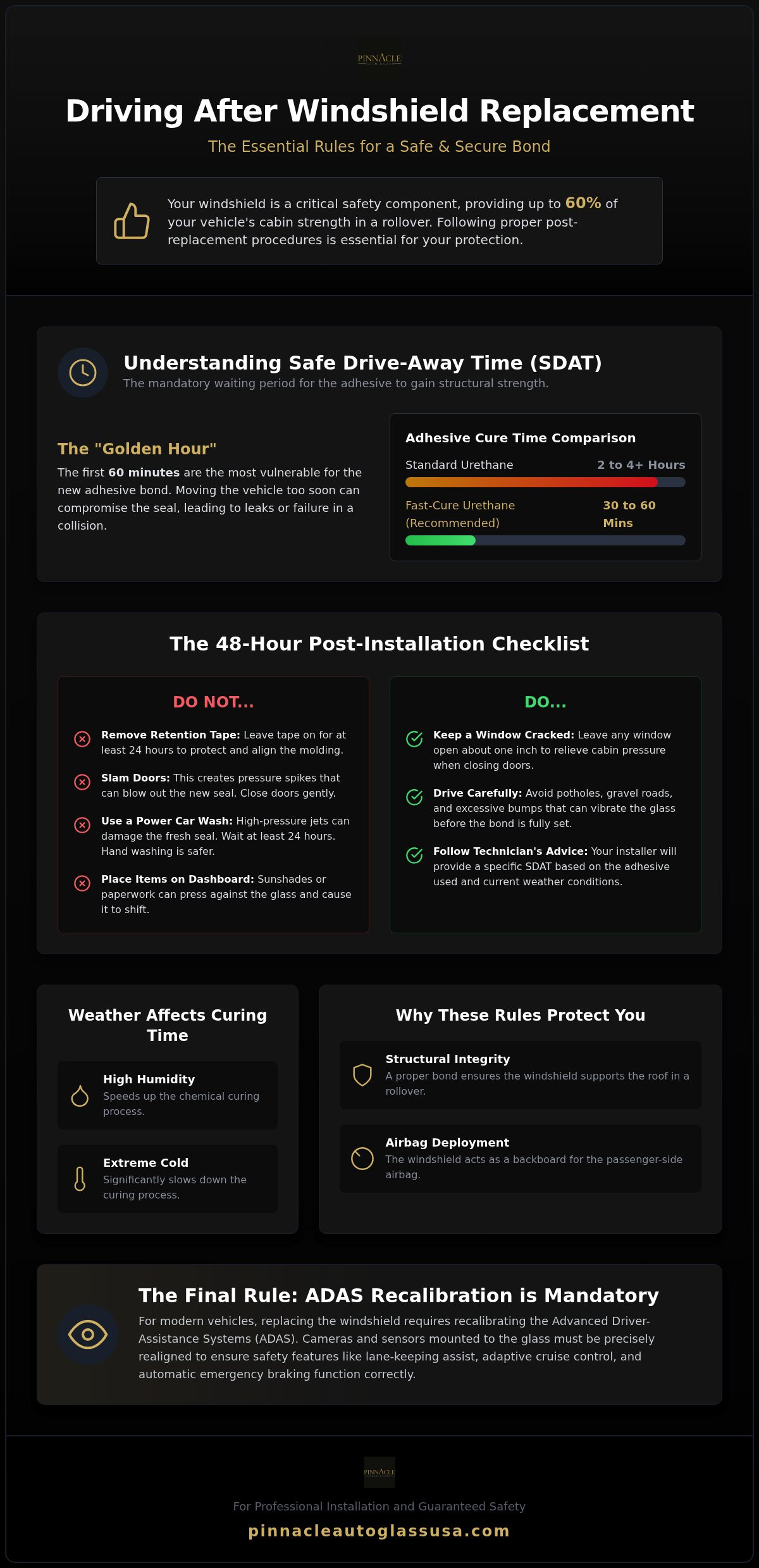
The "Golden Hour" is the first 60 minutes post-installation. During this time, the bond is at its most vulnerable. Modern automotive glass relies on high-viscosity urethane to create a permanent seal between the vehicle frame and the laminated safety glass. If you move the vehicle too soon, you risk compromising the structural bond that keeps you safe during a collision.
Professional technicians don't just guess the wait time. They use data sheets provided by adhesive manufacturers. These charts factor in current weather conditions. High humidity often speeds up the cure, while extreme cold can slow it down significantly. Adhering to these rules is the only way to guarantee your safety systems perform as designed.
The Science of the Adhesive Bond
Urethane is a specialized polymer. It begins as a heavy liquid and transforms into a rigid structural solid through a process called curing. If the vehicle moves before the cure is sufficient, the windshield can experience "shifting" or "sliding." Even a millimeter of movement can create air leaks or water penetration later. SDAT is defined as the exact point where the chemical bond can withstand the force of a collision or airbag deployment.
Standard vs. Fast-Curing Adhesives
The market offers various adhesive grades. Standard-cure urethanes are often cheaper but require extensive wait times, sometimes four hours or longer. These are common in budget installations but increase the risk of user error. Fast-curing professional urethane allows for much shorter windows without sacrificing strength. Consider these differences:
- Standard Urethane: 2 to 4+ hours of wait time.
- Fast-Cure Urethane: 30 to 60 minutes of wait time.
- High-Viscosity Formulas: Provide immediate "green strength" to hold glass in place.
Pinnacle prioritizes your safety and time. We use industry-leading, fast-curing materials that typically allow for a one-hour SDAT. This ensures the driving after windshield replacement rules are easy to follow while maintaining your vehicle's structural integrity. Our technicians always verify the specific cure requirements for your vehicle model before releasing it for use.
The 48-Hour Post-Installation Checklist
The first hour is just the beginning. While you can drive away after the initial Safe Drive-Away Time, the adhesive continues to cure for the next two days. Adhering to the driving after windshield replacement rules during this 48-hour window prevents the seal from failing prematurely. Start by leaving the blue retention tape in place for at least 24 hours. This tape keeps the molding protected and aligned while the urethane reaches full strength. Removing it too early exposes the fresh seal to wind, debris, and moisture.
Keep your dashboard clear during this period. Don't place sunshades, heavy covers, or paperwork against the glass. The adhesive needs consistent airflow and a stable environment to bond. Any weight pressing against the interior of the glass can cause it to sag or shift. If you have questions about your specific vehicle, seeking professional windshield replacement advice ensures you don't miss a critical step in the recovery process.
Managing Pressure and Physical Stress
Modern vehicles are airtight. Closing a door creates a sudden spike in cabin pressure. If your windows are rolled up, this pressure pushes directly against the fresh adhesive bead. It can cause a "blowout" where the seal separates from the frame, leading to permanent air or water leaks. Always crack a window at least one inch for the first 48 hours to give this air an escape route. This simple practice ensures your installation meets the Federal Motor Vehicle Safety Standards for structural retention. Avoid slamming doors and stay off gravel roads or heavy potholes during this period. Physical vibrations can shift the glass before the bond is permanent.
The "No Car Wash" Rule Explained
Water itself isn't the primary enemy; pressure and chemicals are. Commercial car washes use high-pressure jets that can easily penetrate a fresh seal. If water gets trapped behind the molding, it prevents the adhesive from curing correctly. It can also lead to mold growth or hidden rust on the vehicle frame. Wait at least 24 hours for a gentle hand wash. Avoid automatic car washes for a full 48 hours. Following these driving after windshield replacement rules regarding water exposure is the best way to prevent long-term leaks and maintain a clear view. If you must clean the glass, use a soft cloth and mild soap only on the exterior surface after the first day has passed.
Environmental Factors That Change the Rules
Weather conditions dictate the chemical speed of your installation. While the technician provides a baseline, the actual environment determines how strictly you must follow driving after windshield replacement rules. Urethane adhesives are primarily moisture-cured. This means they require water vapor from the air to transform into a structural solid. In high-humidity environments, the bond forms rapidly. Conversely, in arid climates or during dry winter months, the process slows down significantly.
The Auto Glass Safety Council (AGSC) establishes the Minimum drive-away time based on these variables. If you're in a region with less than 20% humidity, your technician may advise a longer waiting period to ensure the safety bond is fully established. This is critical for maintaining the structural integrity of the vehicle's safety cage. Cold weather presents the biggest challenge. When temperatures drop below freezing, the molecular movement in the urethane slows. Professional shops often use heated adhesives or climate-controlled bays to counteract this. If you're driving in winter, expect your wait time to extend compared to a humid summer day.
Direct sunlight also plays a role in the curing process. Intense UV rays and high heat cause the glass to expand. If the adhesive hasn't set, this expansion can create microscopic gaps in the seal. Technicians factor in the surface temperature of the vehicle frame before starting the work. This ensures the bond remains stable even as the metal and glass react to the sun's heat throughout the day.
Temperature and Humidity Variables
A common misconception is that a hot, dry day is perfect for curing. In reality, heat without moisture can leave the adhesive tacky rather than cured. Optimal conditions involve moderate temperatures and a relative humidity level above 50%. Our technicians monitor these levels during every installation to provide an accurate timeline. If the air is too dry, we use specialized primers or curing agents to ensure the bond meets safety standards. This precision prevents the glass from shifting during your first drive.
Extreme Weather Precautions
Heavy rain immediately after your SDAT requires caution. While the surface may be waterproof, the internal bond is still maturing. Avoid driving in torrential downpours or through deep puddles that could splash high-pressure water against the molding. For fleet operators managing vehicles across different altitudes, atmospheric pressure is another factor. Moving from sea level to high mountain passes causes air trapped behind the glass to expand. We recommend following driving after windshield replacement rules even more strictly during cross-country transport to prevent the change in pressure from stressing the fresh seal.
Why Driving Rules Protect Your Structural Safety
The windshield is a primary safety feature of your vehicle. It acts as a structural pillar within the "safety cage" designed to protect passengers. When you ignore driving after windshield replacement rules, you compromise this critical defense system. A secure bond is the only thing keeping the glass in place during a high-impact event. Without it, the vehicle's roof is significantly more likely to collapse during a rollover accident. The glass provides the vertical support necessary to keep the cabin from crushing the occupants. For a deeper look at these systems, read our guide on professional windshield replacement safety.
Airbag Deployment and the Windshield
The passenger-side airbag relies entirely on the windshield to function correctly. When the airbag deploys, it strikes the interior of the glass at approximately 200 mph. It uses the glass as a structural brace to expand toward the passenger. If the adhesive hasn't cured properly, the force of the airbag can literally eject the windshield from the frame. This leaves the passenger with no protection and renders the airbag ineffective. The windshield provides up to 45% of cabin structural integrity. Following the rules ensures the glass stays where it belongs when you need it most.
Long-Term Integrity and Leak Prevention
Safety isn't the only concern; your vehicle's longevity is also at stake. Minor "shifts" in the glass during the initial cure phase can create microscopic gaps in the urethane bead. These gaps eventually lead to annoying wind whistles at highway speeds and persistent water leaks. Over time, moisture trapped in these gaps causes rust to form on the pinchweld. This is the metal frame that holds your glass in place. Rust weakens the metal and makes future replacements much more difficult and hazardous.
A "bad set" often requires a complete second replacement to fix. This is an avoidable expense that costs you both time and money. It also lowers the resale value of your vehicle. By adhering to the driving after windshield replacement rules, you protect your investment and your life. If you need a reliable installation that follows these strict standards, contact our team for expert windshield services today. We prioritize your structural safety with every job we perform.
ADAS Recalibration: The Final Rule of Modern Driving
Modern vehicles are computers on wheels. Safety isn't just about the glass bond anymore; it's about the sensors. Most 2026 models rely on Advanced Driver Assistance Systems (ADAS) to prevent collisions. These systems use cameras and sensors typically mounted directly to the windshield. When you replace the glass, you move the "eyes" of your vehicle. You shouldn't rely on this safety tech until a full recalibration is performed. Even if the glass is installed perfectly, the software must be taught the new physical alignment. We've developed an ADAS calibration auto glass guide to help you understand this complex process. At Pinnacle, we integrate this step into our standard workflow to ensure your car is truly safe.
Camera and Sensor Alignment
A shift of just a fraction of a millimeter can cause your safety systems to fail. If the camera angle is off by one degree, it may miscalculate the distance to the car ahead by several feet. This error renders your Lane Departure Warning and Automatic Emergency Braking unreliable. It's important to distinguish between "recalibration wait time" and "adhesive cure time." While the adhesive might be firm enough to drive, the sensors might still need a static or dynamic calibration session. Don't engage your Forward Collision Warning on the highway until you're certain the system is active and accurate. This is a vital part of the modern driving after windshield replacement rules.
Professional Standards for 2026 Vehicles
Discount shops often skip recalibration to lower their prices. This practice is dangerous. A 2026 vehicle requires a certified auto glass technician who understands both structural bonding and digital alignment. Skipping this step means your car might not "see" a hazard until it's too late. Before you take your car on the highway, use this final checklist:
- Confirm the technician performed a post-installation system scan.
- Check for any ADAS-related warning lights on your dashboard.
- Verify that your lane-keep assist feels responsive and centered.
- Ensure the adhesive has met its Safe Drive-Away Time.
Following these driving after windshield replacement rules completes your safety journey. It ensures your vehicle's physical structure and digital safety systems work in perfect harmony. We prioritize this dual-stage safety approach because a structural bond is only half the battle in a modern car. Trusting a professional who handles both the glass and the tech is the only way to drive with total confidence.
Securing Your Safety on the Road Ahead
Mastering the driving after windshield replacement rules ensures your vehicle remains a protective safety cage. The initial hour is just the start of a 48-hour structural bonding process. During this window, managing air pressure and avoiding high-pressure car washes prevents seal failures and future leaks. Modern safety also requires precise digital alignment. Without proper ADAS recalibration, your cameras and sensors cannot accurately detect hazards or keep you in your lane. These steps are mandatory for maintaining the structural integrity and technical accuracy of your vehicle.
Choosing a partner who uses high-quality OEM-standard adhesives is the best way to protect your investment. We provide national service with a focus on safety and technical precision. Our team of certified ADAS recalibration specialists is ready to restore your vehicle to factory standards and ensure every safety system functions correctly. Get a Professional Quote from Pinnacle Auto Glass Today to ensure your installation is handled with expert care. Drive with confidence knowing your new windshield is bonded, calibrated, and ready for the miles ahead.
Frequently Asked Questions
Can I drive my car 30 minutes after a windshield replacement?
No, you should typically wait at least one hour. Pinnacle Auto Glass uses high-quality adhesives that require a 60-minute Safe Drive-Away Time (SDAT). Driving after only 30 minutes increases the risk of the glass shifting or sliding. This movement can lead to air leaks or water penetration. Always follow the specific timeline provided by your technician to ensure the adhesive meets federal safety standards for structural retention.
Is it okay to leave the blue tape on my windshield for a week?
No, you should remove the retention tape after 24 hours. While it's vital for keeping the molding in place during the initial cure, leaving it on for a week is counterproductive. The tape's adhesive can bake into your vehicle's paint or leave a stubborn residue that's difficult to clean. Most driving after windshield replacement rules recommend a 24-hour window for removal to protect your car's finish and ensure proper airflow.
What happens if it rains right after my windshield is replaced?
Light rain is actually beneficial because moisture acts as a catalyst for the urethane curing process. However, you must avoid heavy downpours or deep puddles immediately after installation. High-pressure water contact can breach a fresh seal before it reaches full strength. If your Safe Drive-Away Time has passed, you're safe to drive in moderate rain. Just ensure you don't take the vehicle through a commercial car wash for at least 48 hours.
Why do I need to leave a window cracked after getting new auto glass?
You must crack a window to prevent air pressure spikes from damaging the fresh seal. Closing a car door forces a burst of air against the new adhesive bead. This pressure can push the glass outward or create a "blowout" in the seal. Keeping a window open about an inch for the first 24 hours provides an escape route for this air. It's a simple way to ensure the bond remains intact and leak-free.
Can I use my windshield wipers immediately after a replacement?
Wait at least 24 hours before using your wipers. The mechanical pressure and friction from the blades can stress the fresh adhesive or shift the glass before it's fully cured. If you're caught in the rain after your SDAT, use them only if necessary for visibility. Otherwise, let the seal sit undisturbed. This prevents any microscopic movements that could lead to annoying wind noise or permanent leaks later on.
When is it safe to take my car through a high-pressure car wash?
Wait a minimum of 48 hours before using an automatic or high-pressure car wash. These systems use powerful water jets and harsh chemicals that can penetrate a fresh urethane seal. If water gets trapped behind the molding, it can interfere with the final curing stage or cause rust on the pinchweld. A gentle hand wash is acceptable after the first 24 hours. Just avoid the glass perimeter to keep the adhesive bead dry and stable.
What are the signs that my windshield was not installed correctly?
Look for visible gaps in the adhesive bead or water leaking into the cabin during rain. You might also hear a distinct whistling or "whooshing" sound at highway speeds, which indicates an air leak. If the glass appears off-center or the molding is loose, the installation is likely flawed. Failure to follow driving after windshield replacement rules can cause these issues. Sometimes they stem from poor technician technique or using low-quality materials.
Does ADAS recalibration happen before or after I drive away?
Recalibration should happen immediately after the glass is set but before you drive on the highway. Static recalibration is performed in a controlled shop environment, while dynamic recalibration requires a specific driving sequence. At Pinnacle, we integrate this into the workflow so your safety systems are functional before you leave. Never rely on lane-keep assist or collision warnings until a certified technician confirms the sensors are accurately aligned. This ensures your vehicle's structural and digital safety are restored.


