

Driving through a high-pressure car wash too soon after a glass installation can do more than just cause a leak; it can actually compromise your vehicle's emergency braking and lane-keep sensors. It's understandable to want your car looking its best after a fresh install. You're likely wondering, can I wash my car after windshield replacement, or will the water pressure ruin the seal? You've just invested in high-tech glass and ADAS recalibration. The last thing you want is to jeopardize that investment or your safety for the sake of a clean exterior.
We agree that protecting your new glass is the top priority. This guide provides the exact 2026 safety timeline you need to maintain your vehicle's structural integrity. You'll learn why the 24-hour wait for hand washes differs from the 72-hour requirement for automated bays. We also cover the specific risks to your ADAS technology, when it's finally safe to peel off that blue retention tape, and how to avoid common mistakes that lead to costly leaks. Follow these professional protocols to ensure your adhesive cures perfectly and your safety systems remain fully functional.
Key Takeaways
- Follow the 24 to 72-hour timeline to allow your urethane adhesive to reach full structural strength before any exposure to water pressure.
- Get the definitive answer to can I wash my car after windshield replacement by distinguishing between safe drive-away time and a full chemical cure.
- Protect your ADAS technology from micro-shifting risks that can occur when high-pressure jets hit a fresh, curing seal.
- Learn the proper techniques for removing retention tape and why replacing old wiper blades is essential for your new glass.
- Avoid the harsh chemicals and mechanical stress of automatic washes that can cause leaks or compromise your vehicle's safety systems.
Why Curing Time is Critical for Your New Windshield
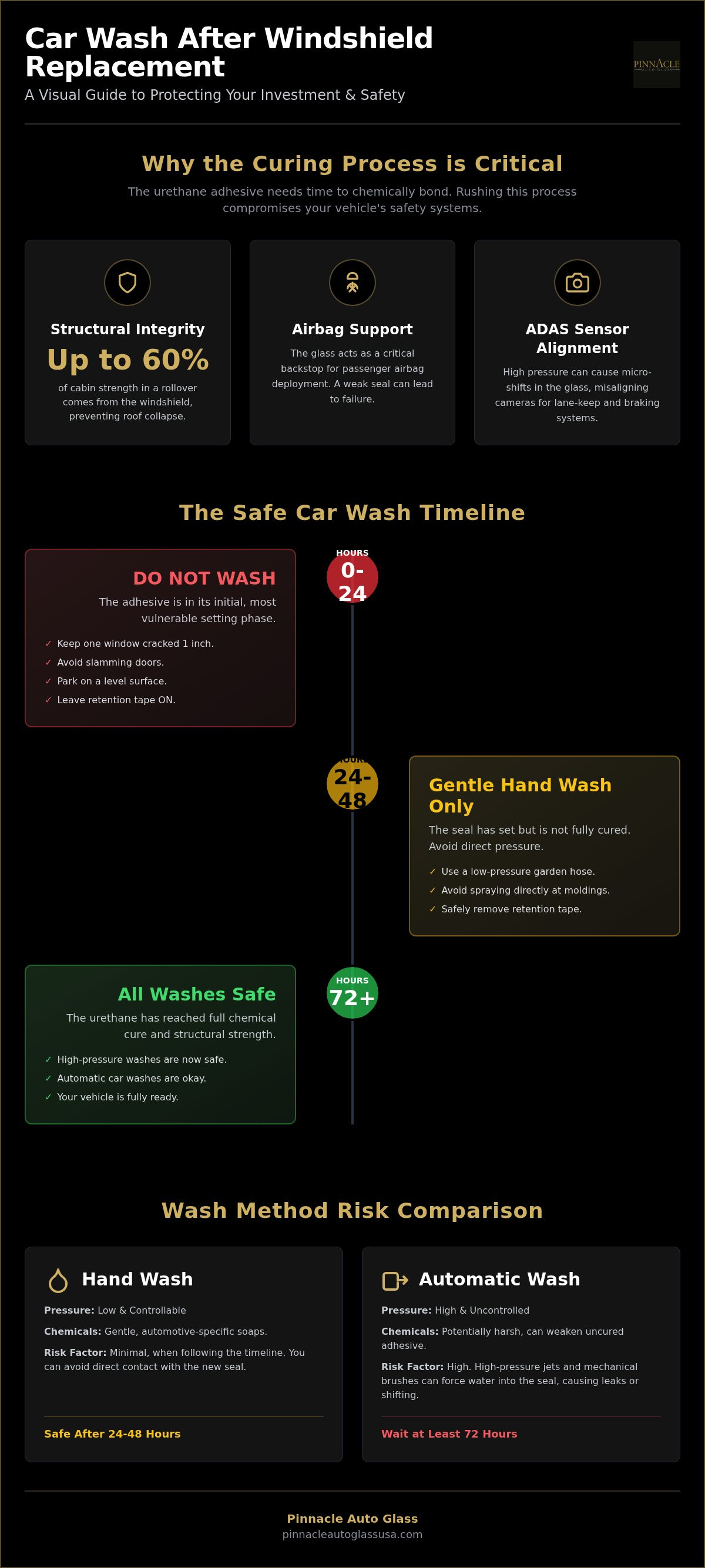
Most drivers assume that once they leave the shop, the installation is complete. That isn't the case. While modern adhesives allow for a Safe Drive-Away Time (SDAT) as short as 30 to 60 minutes, this only means the car is safe for basic operation. A full cure, where the urethane reaches its peak chemical strength, typically takes 24 to 72 hours. If you ask, can I wash my car after windshield replacement, the answer depends entirely on which stage of curing the adhesive has reached.
The Structural Role of Auto Glass Adhesive
The windshield is a vital safety component. In a rollover accident, the laminated safety glass provides up to 60% of the cabin's structural integrity. It prevents the roof from collapsing and protects the occupants. Additionally, the glass acts as a backstop for the passenger side airbag. If the adhesive hasn't transitioned from a liquid to a solid state, the force of an airbag deployment could physically push the windshield out of the frame. This failure leaves the passenger without a critical safety barrier. The chemical transition from a viscous liquid to a rigid, structural solid requires undisturbed time to ensure the bond is permanent.
Environmental Factors That Affect Curing
Auto glass urethane is a moisture-cure product. It draws hydrogen from the air to trigger the hardening process. High humidity can actually speed up the initial set of the adhesive. However, extreme cold makes the seal brittle and slows the chemical reaction significantly. Temperature stability during the first 24 hours ensures the bond remains flexible enough to handle road vibrations without shifting. We recommend keeping the vehicle in a controlled environment or avoiding extreme weather shifts immediately after the installation.
Disturbing the bond early leads to "glass shifting." Even a 1mm movement can cause a permanent leak or an annoying wind whistle at highway speeds. It can also move the glass out of alignment with the cameras used for ADAS recalibration. This is why the question of can I wash my car after windshield replacement is about more than just aesthetics; it's about maintaining the technical precision of your vehicle's safety systems. High-pressure water can force its way into the uncured seal, creating microscopic gaps that compromise the entire installation.
The Safe Car Wash Timeline: 24 to 72 Hours
Timing is the most important factor when determining when you can safely clean your vehicle. While your car is safe to drive shortly after the technician finishes, the adhesive remains vulnerable to external pressure for several days. If you're asking, can I wash my car after windshield replacement, you must follow a tiered timeline to avoid compromising the seal. Rushing into a car wash can lead to immediate leaks or long-term structural failure.
The Auto Glass Safety Council emphasizes that the bond must be fully set to ensure passenger safety. Following these phases protects your vehicle:
- Phase 1 (0 to 24 Hours): No washing of any kind. Keep the vehicle on level ground and avoid driving on rough or unpaved roads.
- Phase 2 (24 to 48 Hours): A gentle hand wash is permissible. Use low-pressure water from a garden hose and avoid the area around the new seal.
- Phase 3 (48 to 72 Hours+): Standard automatic car washes and high-pressure power washers are finally safe to use.
The First 24 Hours: The Critical Window
The first day is the most dangerous time for your new glass. You should keep at least one window cracked about an inch. This prevents air pressure spikes. When you close a car door with all the windows up, the sudden increase in internal pressure can "pop" the wet seal, creating a gap. Avoid slamming the doors or the trunk during this window. Always park on a flat, level surface. Parking on an incline or a curb can cause the vehicle's frame to twist slightly, which might shift the glass before the urethane hardens. If you have questions about your specific installation, our experts in professional windshield replacement can provide guidance based on the adhesive used.
Removing the Retention Tape Safely
Technicians often apply blue painter's tape to the top of the windshield. This is retention tape. It isn't there for decoration; it holds the exterior moldings in place and prevents the glass from sliding while the adhesive is in its initial set. Leave this tape on for at least 24 hours. When you're ready to remove it, don't just rip it off. Peel it slowly and pull it away from the glass at a 90-degree angle. This prevents you from putting unnecessary tension on the fresh seal. If you notice any sticky residue on your paint, don't use harsh chemicals. A small amount of mild soap and water or a dedicated automotive adhesive remover will safely clear the surface without damaging the finish.
Hand Wash vs. Automatic Car Wash: Know the Risks
Understanding the timeline is only half the battle. The specific method you choose to clean your vehicle during the first week determines whether your seal remains watertight. Many drivers ask, can I wash my car after windshield replacement, assuming that a touchless wash is the safest shortcut. In reality, the high-pressure environment of a commercial car wash is the primary cause of post-installation leaks and sensor failures.
The Danger of Hydrostatic Pressure
Natural rainfall rarely poses a threat to a new windshield because it lacks significant force. A typical rainstorm exerts very little pressure on the glass surface. Commercial car washes are different. These systems use high-pressure nozzles that often exceed 1,000 PSI. This intense hydrostatic pressure can force water directly under a semi-cured urethane bond. This creates a "channeling" effect. Once water carves a microscopic path through the adhesive, that path remains as a permanent leak point even after the rest of the seal hardens. You won't notice the damage until the next heavy storm when water begins dripping into your dashboard.
Chemical Sensitivity of New Seals
Modern auto glass adhesives are robust but remain chemically sensitive during the first 48 hours. Commercial car washes rely on highly acidic or alkaline detergents to strip away road grime without the use of brushes. These harsh chemicals can degrade the surface of the urethane before it fully polymerizes. Additionally, the waxes and sealants used in automatic bays can trap moisture or prevent the adhesive from "breathing." This interference slows down the curing process and can weaken the final bond. If the glass shifts even slightly due to a weakened bond, it can necessitate a new ADAS recalibration to ensure your safety cameras are still aligned correctly.
For the safest results, stick to a gentle hand wash for the first 48 to 72 hours. Use a bucket, a soft sponge, and pH-neutral automotive soap. Avoid spraying water directly at the edges of the glass. Instead, let the water flow over the windshield naturally. This manual approach gives you total control over the pressure and ensures that no aggressive chemicals touch the fresh seal. It's the only way to guarantee the structural integrity of your installation remains intact while the urethane reaches its full chemical strength. Don't risk a permanent leak for the sake of a ten-minute automated wash.
The ADAS Connection: Why a Wash Can Affect Your Safety Tech
Modern vehicles treat the windshield as a precision mounting bracket for safety technology. This glass houses cameras that control emergency braking, adaptive cruise control, and pedestrian detection. When you ask, can I wash my car after windshield replacement, you're really asking if your safety systems can handle the pressure. A shift of just 1 millimeter can throw these sensors out of alignment. This "micro-shifting" happens when high-pressure water hits a seal that hasn't fully cured, physically moving the glass before the bond is permanent.
A professional ADAS recalibration is the only way to verify these systems are functional. It's the final step in any modern glass service. Without this process, your car's computer won't know the physical position of the camera has changed. This leads to delayed braking or false alarms that frustrate drivers and compromise safety. Ensuring the glass is stable before any wash is the best way to prevent these technical failures.
How Sensors Interact with the Glass
Forward Collision Warning systems require a crystal-clear view to function. If you take your vehicle to a wash too early, soap film or hard water spots can form in the camera's dedicated line of sight. These obstructions cause system failures. A certified auto glass technician understands how to protect these sensor windows during the installation. During a windshield replacement, every detail matters. Even a small amount of soap residue trapped behind a sensor can trigger a persistent error code that requires a full system reset.
Troubleshooting Post-Wash Tech Issues
Dashboard warning lights are your first clue that something is wrong. If your Lane Keep Assist stops working after a car wash, the water pressure likely moved the glass or contaminated a sensor. Never ignore these errors. A misaligned camera can cause the car to steer incorrectly or fail to detect a hazard in your path. If your dashboard shows a "sensor blocked" or "calibration required" message after a wash, your safety is at risk. These systems are designed to save lives, but they only work when the glass and the software are in perfect harmony. Regular checks of your safety tech are vital for overall vehicle health.
If you've recently replaced your glass, schedule your professional ADAS recalibration today to confirm your systems are safe and aligned.
Best Practices for Post-Replacement Vehicle Care
Maintaining your vehicle after a glass installation requires more than just knowing when you can visit the car wash. While the question of can I wash my car after windshield replacement is a primary concern, your daily habits during the first week are equally important. Proper care ensures the longevity of the seal and the clarity of your view. Following these professional protocols prevents secondary damage to your new investment.
Interior Glass Cleaning Tips
Wait at least 72 hours before cleaning the interior of your new glass. When you do, avoid ammonia-based cleaners. These chemicals can off-gas and potentially interfere with the curing adhesive. Use a microfiber cloth and a dedicated glass cleaner instead. Be extremely careful when wiping near the bottom edge of the glass where it meets the dashboard. Don't apply outward pressure during the first week. Also, wait at least three days before reattaching toll passes, dash cams, or radar detectors. The weight and suction of these devices can pull on the glass before the bond is fully rigid.
Long-Term Maintenance for New Glass
Wiper blades are often overlooked but critical for glass health. We recommend installing new blades immediately after a replacement. Old blades often have embedded road grit and microscopic tears. These imperfections will scratch your brand-new glass surface within the first few uses. This is a small investment that protects your much larger investment in the glass and its safety systems.
Parking strategies also play a role in a successful cure. For the first 24 hours, park in the shade if possible. Excessive heat causes the air inside the cabin to expand. This expansion puts pressure on the fresh seal. If you suspect an issue, look for warning signs like a high-pitched whistling sound at highway speeds or water pooling on the dashboard. These are indicators of a failed seal. If these occur, contact a professional immediately. Addressing a small gap early is much easier than dealing with a fully failed bond later.
If you notice a small chip later in the year, prioritize windshield repair to prevent the damage from spreading. Follow this final checklist for a successful post-replacement week:
- Keep one window cracked 1 inch for the first 24 hours.
- Remove retention tape after 24 hours.
- Avoid automatic car washes for at least 72 hours.
- Install new wiper blades to prevent surface scratches.
- Keep the vehicle on level ground during the initial cure.
Maintain Your Vehicle's Structural Integrity
Protecting your safety standards requires patience during the initial curing phase. The difference between a successful installation and a permanent leak often comes down to those first 72 hours. High-pressure car washes pose a genuine risk to your ADAS cameras and the structural bond of the urethane adhesive. By following the tiered timeline for hand washing and automated bays, you protect both your glass and your safety technology. It's about more than aesthetics; it's about ensuring your car is ready for the road.
Knowing the answer to can I wash my car after windshield replacement ensures you avoid the common mistakes that lead to leaks and sensor errors. Our team consists of certified ADAS recalibration experts who prioritize technical precision for every job. We offer comprehensive national fleet and commercial services, including mobile service available for maximum convenience. Trusting a professional ensures your vehicle meets all safety protocols from the moment of installation through the final cure. Don't let a premature car wash compromise your vehicle's integrity or your peace of mind.
Schedule your professional windshield replacement with Pinnacle Auto Glass today. We're ready to provide the high-quality service your vehicle deserves.
Frequently Asked Questions
Can I drive my car in the rain immediately after a windshield replacement?
Driving in rain is generally safe after the Safe Drive-Away Time (SDAT) has passed. Most adhesives used today are moisture-cured. This means humidity and water from the atmosphere actually help the urethane harden. However, you should avoid heavy storms or high-speed driving for the first 24 hours. The physical force of heavy rain at highway speeds can be too much for a fresh bond. Stick to essential travel until the seal sets.
What happens if I accidentally wash my car too early?
Accidentally washing your car too early can cause the urethane to shift or develop leaks. High-pressure water creates microscopic channels in the adhesive. These gaps won't close once the bond fully cures. You might experience wind whistles or water dripping onto your dashboard later. If you've washed it too soon, inspect the seal for gaps. You should contact a certified technician to verify the structural integrity of the installation and safety systems.
Why do I need to leave a window cracked after a new windshield is installed?
You must leave a window cracked to manage cabin air pressure. When you slam a car door with the windows up, the air has nowhere to go. It pushes against the weakest point, which is your fresh, wet windshield seal. This can "pop" the glass out of alignment. Keeping one window open by an inch provides a vent for this pressure. It ensures the glass stays exactly where the technician placed it during the cure.
Is it safe to use a pressure washer at home on my new windshield?
Using a pressure washer at home is dangerous for a new windshield during the first 72 hours. These machines generate significant force that far exceeds natural weather conditions. The direct stream can physically lift the molding or force water behind the adhesive. This leads to permanent leaks and potential rust in the pinchweld. Use a standard garden hose with a gentle spray pattern if you must clean the car before the full cure.
When can I remove the blue tape from my new windshield?
You can safely remove the blue retention tape 24 hours after the installation. This tape is critical for holding the glass and moldings in their correct positions during the initial set. Don't rip the tape off quickly. Instead, peel it back slowly at a 90-degree angle. This reduces the tension on the glass. If you see any adhesive residue on the paint, use a mild soap and water solution to gently clear the surface.
Will a car wash affect the ADAS camera calibration on my new glass?
A car wash can definitely impact ADAS calibration if the water pressure causes the glass to move. These systems rely on cameras mounted directly to the windshield. If the glass shifts even slightly, the camera's field of vision changes. This can disable features like lane-keep assist or emergency braking. If you're asking can I wash my car after windshield replacement, wait 72 hours to ensure the glass is locked in place for your safety tech.
Can I use a sunshade in my windshield the day after replacement?
It's best to wait 72 hours before using an interior sunshade. Most shades require you to press them against the glass or wedge them into the corners. This internal pressure can push the windshield away from the frame while the urethane is still pliable. This movement ruins the watertight seal and can misalign safety sensors. Park in the shade or use a car cover that doesn't put physical pressure on the new glass during this time.
Does insurance cover the cost if a car wash damages my new windshield?
Insurance coverage for car wash damage depends on your specific policy and the cause of the failure. However, insurers often view washing too early as a failure to follow maintenance protocols. If the damage results from ignoring professional safety timelines, you might be responsible for the repair costs. Many owners ask can I wash my car after windshield replacement to prevent these insurance disputes. Always follow the recommended safety steps.


