
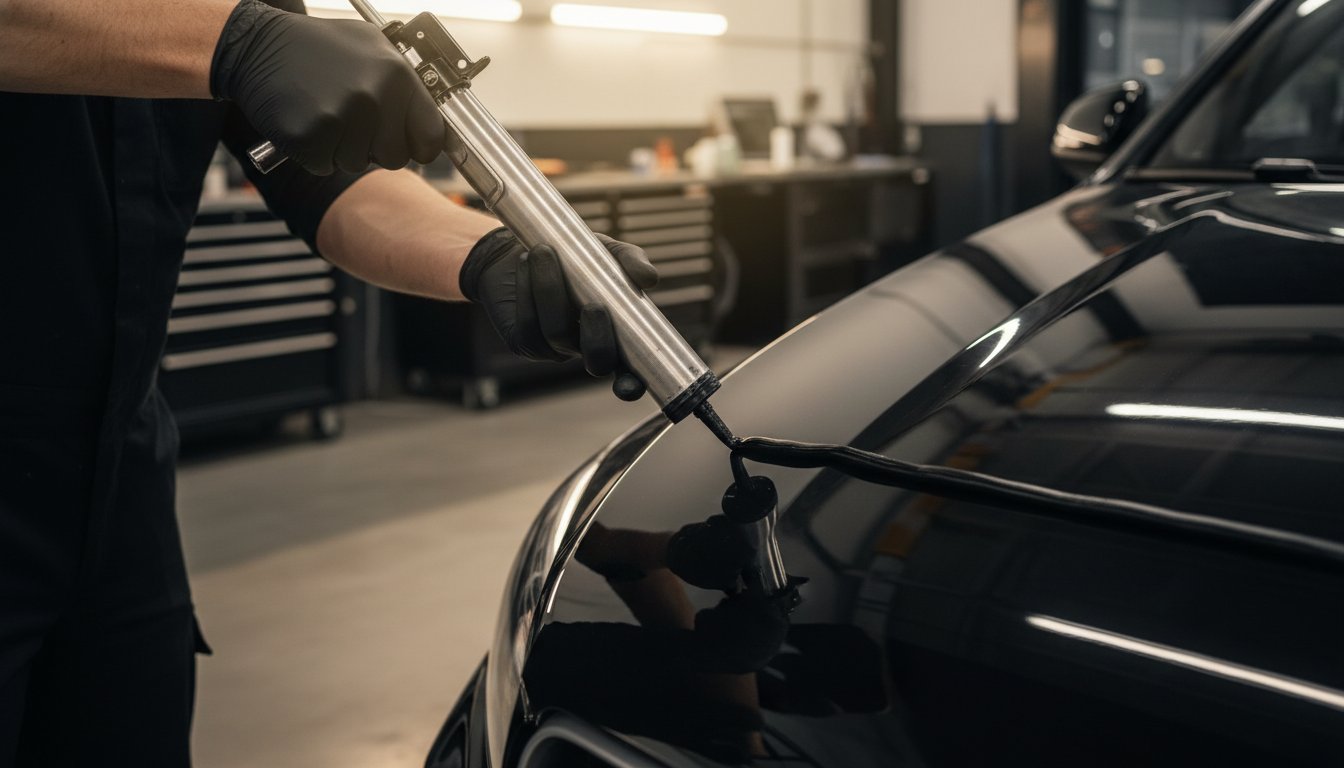
When your windshield is damaged, the most pressing question is often: "How long will my car be out of service?" The answer has evolved significantly with modern vehicle technology. Today, a professional windshield replacement is a precise, multi-step process where total downtime depends on the installation, adhesive curing, and safety system recalibration.
For most modern vehicles, the entire service—from arrival to driving away safely—takes between one to two hours. This includes the physical glass replacement, the crucial adhesive curing period, and the necessary recalibration of your car's advanced safety features.
This guide provides a fact-based timeline, breaking down each stage of the process so you can plan your day with confidence and understand the critical safety standards that protect you on the road.
The Total Timeline: Installation vs. Safe Drive-Away Time (SDAT)
Understanding a windshield replacement timeline requires separating the hands-on labor from the essential chemical bonding process. While a technician's work might be finished in about an hour, the service isn't complete until your vehicle is safe to drive. This critical safety window is known as the Safe Drive-Away Time (SDAT).
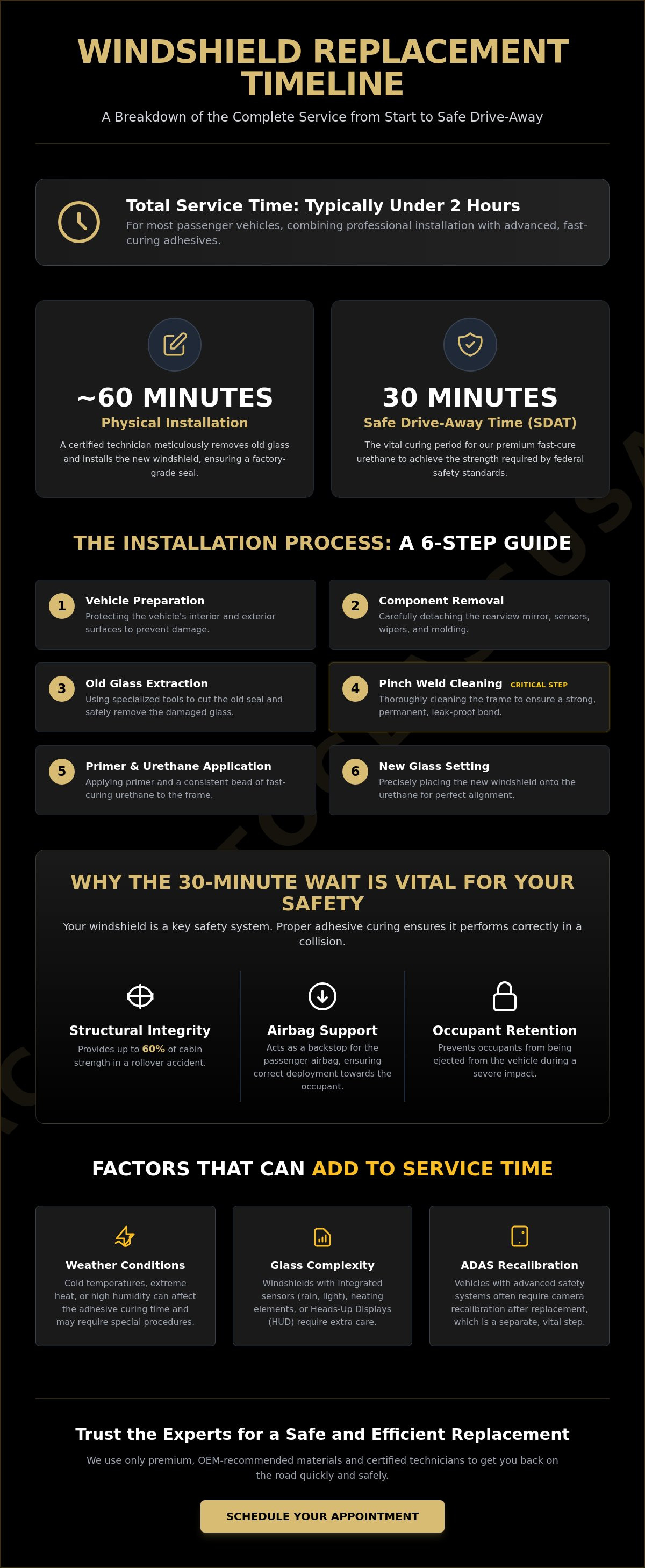
- Installation Time: This is the physical labor of removing the old windshield and installing the new one. For a certified technician, this typically takes about 60 minutes.
- Safe Drive-Away Time (SDAT): This is the minimum time required for the powerful adhesive to cure enough to meet federal safety standards. At Pinnacle Auto Glass, we use premium, fast-cure adhesives that achieve this in just 30 minutes.
- Total Service Time: The combination of installation, a 30-minute SDAT, and any necessary ADAS recalibration results in a total appointment time of one to two hours for most vehicles.
Rushing this process can have severe consequences. A windshield that is not properly bonded can fail during a collision, compromising the vehicle's structural integrity and the performance of its airbags. A professional service prioritizes safety over speed, using advanced materials to deliver both efficiency and security.
The Physical Installation Phase (Approximately 60 Minutes)
The hands-on portion of a windshield replacement is a meticulous procedure that ensures a perfect, leak-proof fit. A certified technician follows a precise workflow to protect your vehicle and prepare it for the new glass.
The process includes:
- Vehicle Preparation: The technician protects the vehicle's interior and exterior surfaces around the windshield to prevent any damage during the replacement.
- Component Removal: Wiper arms, cowlings, and interior trim pieces like the rearview mirror are carefully removed to access the old windshield's seal.
- Old Windshield Removal: Specialized tools are used to cut through the old urethane adhesive and safely lift the damaged glass from the vehicle's frame (the pinchweld).
- Pinchweld Preparation: This is a critical step. The technician removes the old urethane, cleans the pinchweld down to the metal, and applies a professional-grade primer. This ensures the new adhesive forms a strong, permanent bond.
- New Glass Installation: A bead of premium, OEM-recommended urethane is applied to the pinchweld or the new glass. The new windshield is then carefully set into place using precision tools to ensure perfect alignment.
- Reassembly: All trim, wipers, and sensors are reinstalled, and the vehicle is cleaned of any debris.
Understanding Safe Drive-Away Time (30 Minutes)
Once the new windshield is set, the clock starts on the Safe Drive-Away Time (SDAT). This is not an arbitrary waiting period; it is a scientifically determined window required for the urethane adhesive to cure to a strength that meets Federal Motor Vehicle Safety Standards (FMVSS).
Here’s why this 30-minute wait is non-negotiable:
- Structural Integrity: The windshield provides up to 60% of a vehicle's cabin strength in a rollover accident. The urethane bond is what holds it in place, and it must be partially cured to provide this support.
- Airbag Support: The passenger-side airbag deploys upward, using the windshield as a backstop to direct its force toward the passenger. An improperly cured bond can cause the windshield to pop out, rendering the airbag ineffective.
- Fast-Cure Adhesives: Pinnacle Auto Glass exclusively uses premium, fast-cure urethane. This advanced adhesive is designed to achieve the required bond strength in just 30 minutes under a wide range of conditions, significantly reducing your vehicle's downtime without compromising safety.
For a detailed explanation of this crucial waiting period, explore our guide on why Safe Drive Away Time is vital for your protection.
Key Variables That Affect Your Replacement Speed
While the 1-2 hour timeline is accurate for most modern vehicles, several factors can influence the total duration of your appointment. The primary variable is the technology embedded in your windshield. A professional technician assesses these factors to provide an accurate time estimate before starting the work.
- Advanced Driver Assistance Systems (ADAS): If your vehicle has features like lane-keeping assist or adaptive cruise control, the cameras and sensors attached to the windshield will require recalibration, adding 30 to 60 minutes to the service.
- Vehicle Make and Model: Luxury vehicles, large SUVs, and commercial trucks often have more complex trim, larger glass, or additional integrated features like heating elements or rain sensors that can add to the labor time.
- Service Environment: Whether you choose an in-shop or mobile replacement, the technician needs a controlled environment. Extreme weather like heavy rain or freezing temperatures can impact a mobile appointment, though professionals use techniques and materials to manage these conditions effectively.
- Damage Severity: A simple crack is straightforward, but a completely shattered windshield requires extensive cleanup of glass fragments from the vehicle's interior and ventilation system, which can extend the initial preparation phase.
ADAS Recalibration: The Modern Time Factor (30 to 60 Minutes)
Today's windshields are advanced technology hubs. They provide a clear view of the road and serve as the mounting point for the cameras and sensors that run your vehicle's Advanced Driver Assistance Systems (ADAS). After a replacement, these systems must be recalibrated to ensure they function correctly.
This is not an optional step; it is essential for your safety. An uncalibrated camera can fail to detect lane markings or obstacles, leading to system failure or an accident. The time required depends on the type of recalibration your vehicle needs:
- Dynamic Recalibration (30-45 minutes): The technician uses a diagnostic tool and drives the vehicle at specific speeds on well-marked roads to let the system recalibrate itself.
- Static Recalibration (45-60 minutes): This process is performed in a controlled shop environment. The technician uses precise targets and patterns placed at specific distances from the vehicle to reset the camera's parameters.
- Dual Recalibration (Approximately 60 minutes): Some vehicles require both a static and a dynamic recalibration to fully restore system functionality.
Pinnacle Auto Glass includes this essential service as part of a complete ADAS recalibration to guarantee your safety systems are restored to manufacturer specifications.
Vehicle Type and Glass Complexity
Not all windshields are created equal. The design and features of your vehicle's glass directly influence the time and complexity of the replacement job.
- Standard vs. Feature-Rich Glass: A basic windshield on an older sedan is simpler to replace than one on a modern luxury SUV equipped with acoustic interlayers, rain sensors, heating elements, and heads-up display (HUD) technology.
- Hardware Transfer: Technicians often need to carefully transfer hardware like rain sensors, light sensors, and camera brackets from the old windshield to the new one. This requires precision and adds time to the installation phase.
- Oversized Glass: Large vehicles like commercial trucks, RVs, or full-size vans have heavy, oversized windshields. These often require two technicians to lift and set the glass safely, which is factored into the service schedule to ensure a secure and efficient installation.
How Weather and Materials Dictate the Clock
The chemical reaction that cures urethane adhesive is sensitive to environmental conditions like temperature and humidity. However, a professional auto glass provider like Pinnacle Auto Glass mitigates these factors by using advanced, all-weather adhesives and proven techniques to ensure a safe and consistent 30-minute drive-away time.
While extreme weather can pose challenges, it doesn't have to cause significant delays. Our certified technicians are trained to manage environmental variables to deliver a reliable bond every time.
The Role of Temperature and Humidity
Urethane adhesives are moisture-cured, meaning they draw ambient moisture from the air to trigger the chemical reaction that hardens the bond. This gives them unique properties in different climates.
- The Curing 'Sweet Spot': Moderate temperatures (60-80°F) with average humidity provide ideal conditions for urethane to cure predictably.
- Humidity as a Catalyst: Unlike many other adhesives, high humidity can actually speed up the initial curing process for urethane. Technicians account for this to ensure the windshield is set correctly before the adhesive becomes too firm.
- Managing Cold Weather: In colder temperatures, the curing reaction slows down. Professionals overcome this by using specialized cold-weather primers and fast-curing urethanes that are formulated to perform reliably even in low temperatures.
- Mobile Service Considerations: For mobile appointments during rain or snow, a technician requires adequate shelter (like a garage or carport) to keep the pinchweld dry. A clean, dry surface is essential for the primer and adhesive to bond correctly.
Urethane Quality and Curing Chemistry
The type of adhesive used is the single most important factor in determining your vehicle's Safe Drive-Away Time. Opting for a provider that uses high-quality materials is crucial for both safety and convenience.
- Standard vs. Premium Adhesives: Cheaper, slow-cure urethanes can require a vehicle to sit for three to eight hours before it's safe to drive. Pinnacle Auto Glass uses only premium, OEM-recommended fast-cure urethanes to ensure a 30-minute SDAT.
- High-Modulus, Non-Conductive Urethane: Modern vehicles require advanced adhesives. High-modulus urethanes are stiffer and contribute more to the vehicle's structural integrity. Non-conductive formulas prevent interference with radio antennas or other electronics embedded in the glass.
- Full Bond Strength: While the vehicle is safe to drive after 30 minutes, the urethane will continue to cure for another 24 to 48 hours to reach 100% of its bond strength. This is why following post-replacement care instructions is so important.
Post-Replacement Care: The Critical First 48 Hours
Once your technician hands you the keys, your cooperation is needed for the next 24-48 hours to protect the new seal as it reaches maximum strength. Following a few simple guidelines will prevent leaks, wind noise, and bond failure.
Taking these precautions ensures the longevity and safety of your professional windshield replacement.
Immediate Restrictions After Driving Away
For the first 24 hours, the urethane seal is still vulnerable to sudden changes in pressure. Treat your vehicle gently to allow the bond to set properly.
- Keep a Window Cracked: Leave a window open about one inch. This prevents a buildup of air pressure inside the cabin when you close a door, which can stress the fresh seal and create micro-leaks.
- Avoid High-Pressure Car Washes: Do not take your vehicle through an automatic car wash for at least 48 hours. The high-pressure water jets can force their way past the new seal and cause a permanent leak. Hand washing is acceptable if you avoid spraying water directly at the windshield edges.
- Leave Retention Tape On: The technician will apply retention tape to hold the windshield's moldings in place while the adhesive sets. Leave this tape on for at least 24 hours to ensure the trim is secure. It will not harm your vehicle's paint.
Long-term Bonding and Safety Checks
After the initial 24-hour period, you can gradually return to normal use, but remain mindful of the new glass for the first few days.
- Close Doors Gently: Avoid slamming vehicle doors for the first 48 hours. The resulting pressure spike can still impact the curing seal.
- Listen for Wind Noise: On your first drive on the highway, turn off the radio and listen for any unusual whistling or "whooshing" sounds, which could indicate a small gap in the seal.
- Check for Leaks: After the first rainfall or a gentle hand wash, check the interior perimeter of the windshield for any signs of moisture.
- Verify ADAS Functionality: Pay attention to your vehicle's safety features. Ensure your lane departure warning and adaptive cruise control are behaving as expected. If you notice any issues, contact your service provider immediately.
Streamlining Your Service with Professional Solutions
Choosing an experienced and well-equipped auto glass provider is the key to minimizing your vehicle's downtime. A professional company like Pinnacle Auto Glass combines certified technicians, premium materials, and efficient workflows to get you back on the road quickly and safely.
Our entire process is designed to respect your time while upholding the highest standards of vehicle safety, whether you own a single car or manage a large commercial fleet.
Mobile Service vs. In-Shop Efficiency
We offer both mobile and in-shop services to fit your schedule. Both options provide the same high level of quality and safety, but they cater to different needs.
- Mobile Convenience: Our mobile service brings the auto glass shop to your home or workplace, saving you a trip and minimizing disruption to your day. To ensure the fastest service, please have a safe, relatively flat area for our technician to work, with enough space to open the vehicle's doors.
- In-Shop Environment: An in-shop appointment provides a perfectly controlled environment, ideal for complex installations or ADAS recalibrations that require a level floor and specific lighting. It eliminates any potential weather-related delays.
With Pinnacle Auto Glass, both service options are optimized for an efficient workflow, ensuring your total appointment time remains within the one to two-hour window whenever possible.
Minimizing Downtime for Commercial Fleets
For fleet managers, vehicle downtime directly translates to lost revenue. We specialize in providing rapid, reliable glass services for commercial vehicles, including semi-trucks and heavy-duty equipment, to keep your operations moving.
- Specialized Timelines: We understand the unique requirements of commercial glass. Our technicians are experienced with the larger glass, specialized gaskets, and complex mounting systems found on heavy-duty trucks, ensuring an efficient and safe replacement.
- Coordinated Service: We can schedule and coordinate service for multiple vehicles at your location, streamlining the process and minimizing the logistical burden on your team.
- Rapid ADAS Recalibration: Ensuring the ADAS on your fleet vehicles is functioning correctly is critical for safety compliance and liability protection. Our expertise in rapid recalibration helps get your assets back in service faster.
Frequently Asked Questions
- Can I drive my car immediately after a windshield replacement?
- No. You must wait for the Safe Drive-Away Time (SDAT) to elapse. At Pinnacle Auto Glass, we use fast-cure adhesives that have a 30-minute SDAT, after which your vehicle is safe to drive.
- How long does the actual installation of the glass take?
- The physical process of removing the old windshield and installing the new one typically takes a certified technician approximately 60 minutes.
- Does rain or cold weather make the replacement take longer?
- While extreme weather can be a factor, professional technicians use climate-controlled urethanes and require cover for mobile service in the rain to maintain a consistent timeline. With the right materials and procedures, the 30-minute SDAT remains reliable.
- How long do I have to wait before I can wash my car?
- You should wait at least 48 hours before taking your vehicle to a high-pressure car wash. This allows the urethane adhesive to fully cure and prevents the water jets from damaging the new seal.
- Will ADAS recalibration add extra time to my appointment?
- Yes. If your vehicle is equipped with ADAS features, recalibration is a mandatory safety step that adds 30 to 60 minutes to the total service time, depending on the type of calibration required (dynamic, static, or dual).
- Can I leave the retention tape on for more than 24 hours?
- Yes. Leaving the tape on for an extra day will not cause any harm. It is more important to leave it on for at least the minimum 24-hour period than to remove it too early.
- How long does it take to replace a windshield on a semi-truck?
- Replacing a semi-truck windshield is a more involved process due to the size and mounting system of the glass. While times can vary, our technicians are highly experienced in commercial vehicles to ensure the service is completed as efficiently as possible to minimize fleet downtime.
- What happens if I drive my car before the safe drive-away time?
- Driving before the SDAT is extremely dangerous. The fresh adhesive has not cured enough to secure the windshield, meaning it could detach during a collision, causing airbags to fail and the roof to collapse. It also risks creating a faulty seal that leads to wind noise and water leaks.


