
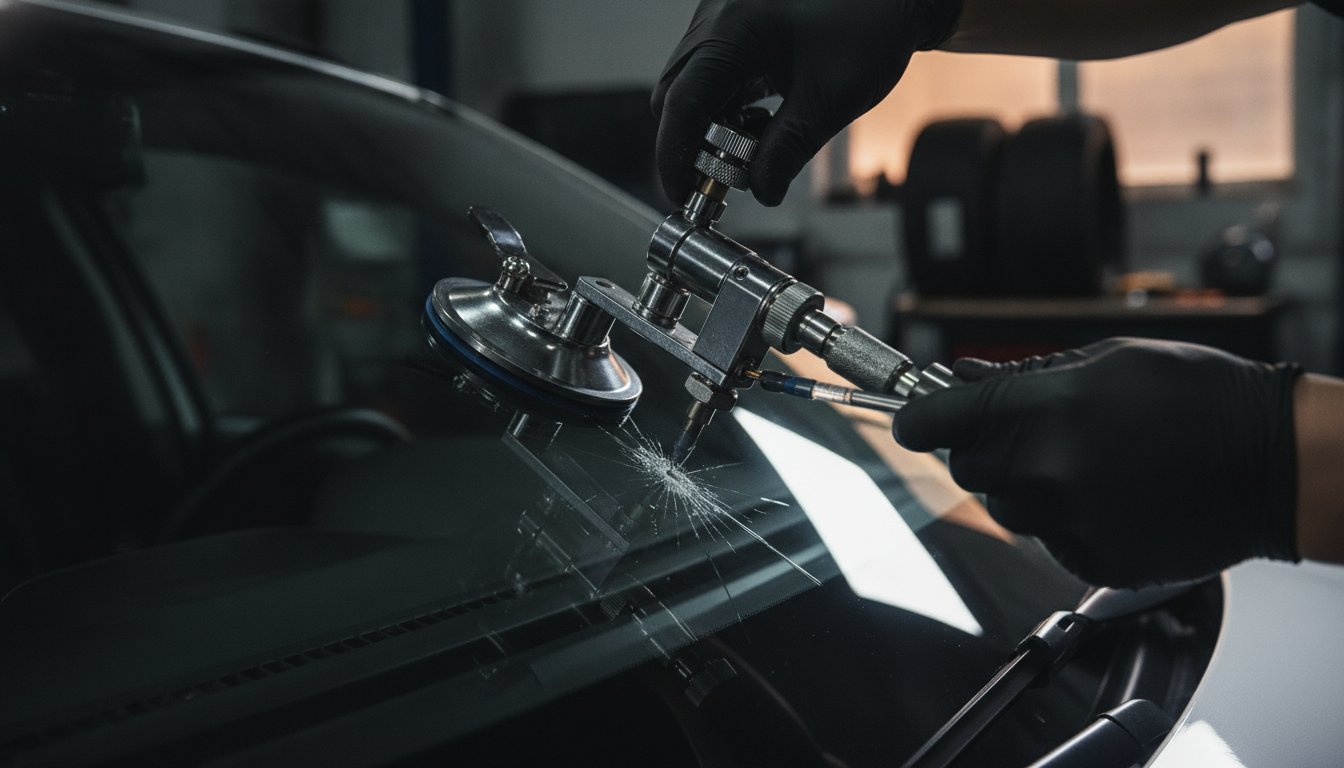
Did you know your windshield provides up to 60% of your cabin's structural strength in a rollover accident? It's a startling statistic that changes how you look at that small mark on your glass. Most drivers feel a pit of dread when they hear a stone hit the glass. You're likely worrying that a tiny crack will spider-web across the surface during your next commute or wondering if a DIY kit is actually worth the effort. Professional rock chip windshield repair is the most reliable solution to stop damage in its tracks and restore the integrity of your safety glass without the high cost of a full replacement.
We understand the confusion surrounding repair effectiveness and the worry about how a claim might affect your insurance. This 2026 guide provides the professional clarity you need to make an informed decision. You'll learn how to accurately assess damage, understand the vacuum-sealed resin injection process, and identify when a repair is the right choice for your safety. We'll walk through the essential steps to identify chip types, the growing importance of ADAS recalibration in modern vehicles, and the specific criteria professionals use to ensure your windshield meets federal safety standards.
Key Takeaways
- Use the Dime Test to quickly determine if your damage is small enough for a structural resin repair or if a full replacement is necessary.
- Understand why professional rock chip windshield repair relies on vacuum-sealed technology to remove air from fractures, ensuring 100% glass integrity.
- Learn the safety limits of repair, including why having more than three chips often necessitates a complete windshield replacement.
- Discover the critical performance differences between professional-grade anaerobic resins and the basic acrylics found in retail DIY kits.
- Follow the professional methodology for moisture removal and injector bridge setup to achieve a permanent and optically clear result.
Understanding Rock Chips and Why They Spread
Your vehicle's windshield isn't just a simple pane of glass; it's a sophisticated piece of laminated safety glass. This structure consists of two layers of glass bonded together by a clear plastic interlayer called polyvinyl butyral (PVB). This design ensures that if the glass breaks, the shards remain attached to the plastic core rather than showering the cabin. When road debris strikes the outer layer, the kinetic energy creates an internal fracture. This fracture creates a small pocket of air between the glass and the PVB. This air pocket is the foundation of every rock chip.
Physics dictates how that small impact turns into a massive crack. Thermal expansion is the primary culprit. Glass expands when it's hot and contracts when it's cold. If you park in the sun and then blast your air conditioning, the glass surrounding the break experiences rapid temperature shifts. These shifts put immense stress on the weakened area around the chip. Road vibrations also play a cumulative role. Every bump or pothole sends micro-vibrations through the frame of the vehicle, acting like a tiny hammer that drives the fracture deeper into the glass structure.
One of the most overlooked factors in a successful rock chip windshield repair is the "contamination window." As soon as the glass breaks, the fracture is exposed to the elements. Dust, road salt, and windshield washer fluid begin to seep into the break immediately. If these contaminants settle inside the chip, they create a barrier that prevents repair resin from bonding to the glass properly. This is why speed is critical. A clean, fresh break is much easier to restore to full structural integrity than one that's been exposed to road grime for weeks.
Common Types of Rock Chip Damage
- Bullseye: This circular impact features a dark ring around the point of contact. It is generally the easiest type to repair because the resin flows smoothly into the uniform, cone-shaped break.
- Star Break: These fractures have multi-directional legs radiating from a central point. They are highly unstable and can spread across the entire windshield in a single afternoon if left untreated.
- Half-Moon: Caused by a glancing blow, this partial bullseye requires precise resin placement to ensure the air is fully evacuated from the asymmetrical break.
Immediate First Aid for Your Windshield
Protecting the break before your rock chip windshield repair appointment is vital for a clear result. Follow these steps to maximize the chances of a perfect bond:
- Cover the chip with a small piece of clear tape to keep out dirt and moisture.
- Avoid high-pressure car washes, as the force can drive water and soap deep into the laminate layer.
- Park in the shade whenever possible to minimize the glass expansion and contraction caused by direct sunlight.
The 2026 Guide to Assessing Repairability
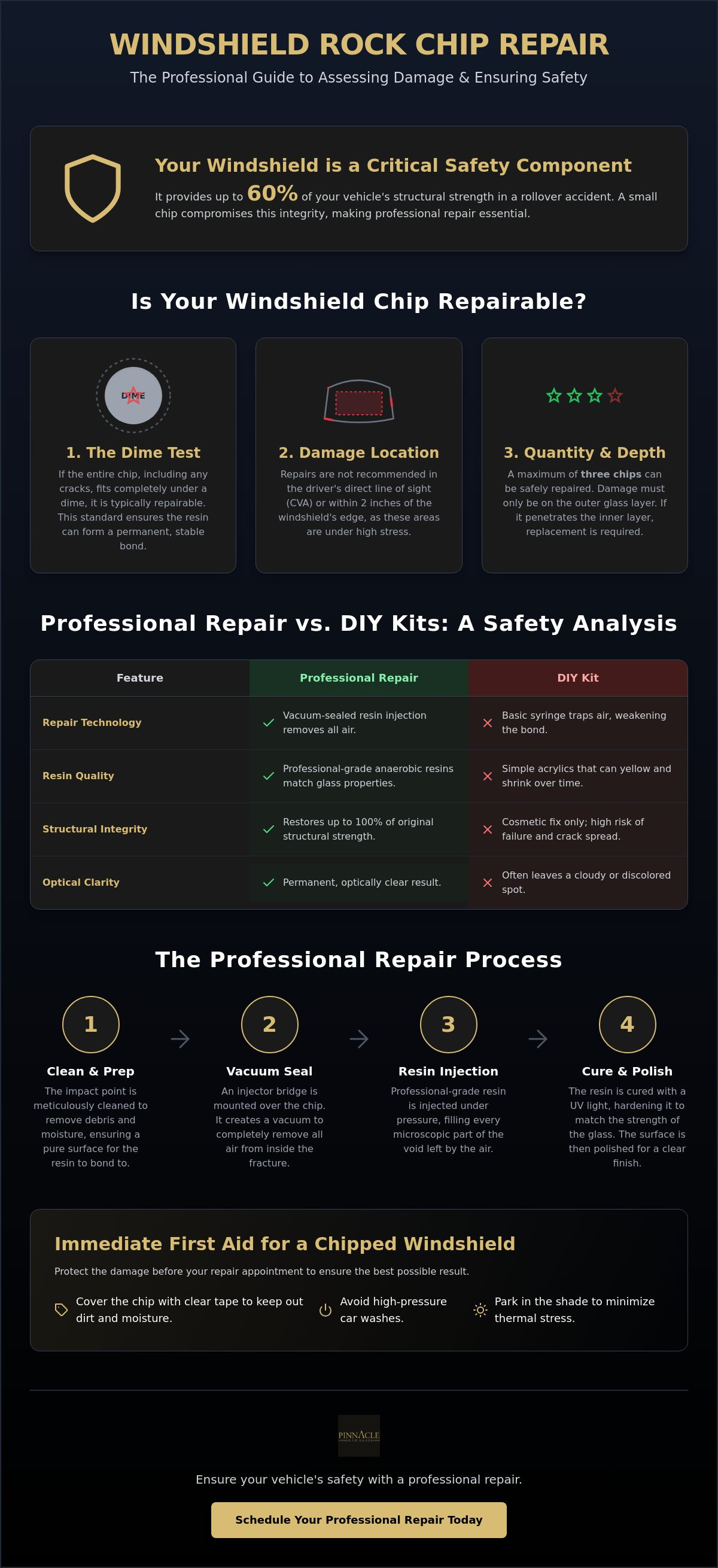
Determining whether a break is repairable requires more than a quick glance. Professional technicians use specific metrics to ensure the glass remains safe and functional. The "Dime Test" is the standard starting point. A standard dime serves as the industry benchmark for determining if a rock chip windshield repair can successfully restore the glass's structural integrity. If the impact point and all radiating fractures fit under the coin, the damage is typically a candidate for resin injection. This size limit exists because the resin needs a stable environment to bond properly. Larger breaks often lack the surface area required to maintain a permanent seal under the stresses of driving.
Quantity and location also dictate the path forward. Most industry safety protocols limit repairs to three chips per windshield. Multiple impact points compromise the structural tension of the glass, making a full replacement the safer choice. Depth is another critical factor. A rock chip windshield repair is only possible if the damage is confined to the outer layer of glass. If the debris has pierced the plastic interlayer or damaged the inner glass pane, the windshield's integrity is lost. Additionally, any damage within two inches of the frame is considered high-risk. The edges of the glass are under the highest amount of tension; chips in this zone are much more likely to spread rapidly into long cracks. These guidelines align with NHTSA safety standards for windshield repair, which prioritize the driver's safety and the vehicle's structural performance.
The Critical Vision Area (CVA)
The CVA is an 8.5 by 11 inch rectangle centered directly in front of the driver's seat. Safety standards are much stricter in this zone. even a high-quality repair can cause slight light refraction or visual distortion, especially during night driving. If a chip is located in the CVA, a replacement is often recommended to prevent driver distraction and ensure a clear, unobstructed view of the road.
Sensors and ADAS Obstruction
Modern vehicles feature a "blackout" zone at the top of the windshield that houses cameras and sensors. These systems power Lane Departure Warning and Emergency Braking. A small chip in this area can act like a smudge on a camera lens, causing system malfunctions. If damage is near these sensors, you'll likely need ADAS calibration auto glass services. The experts at Pinnacle Auto Glass can provide a definitive assessment.
Professional Repair vs. DIY Kits: A Safety Analysis
Many drivers see a low-cost kit at a local auto parts store and assume it's a simple weekend fix. This comparison is misleading. A professional rock chip windshield repair isn't just about filling a hole; it's about restoring the mechanical bond of the glass layers. DIY kits lack the specialized equipment needed to achieve a permanent, structural weld. While they might hide the blemish temporarily, they often fail to address the underlying fracture, leaving your vehicle vulnerable to sudden glass failure.
The most critical difference is the vacuum factor. Air trapped inside a fracture prevents resin from reaching the very tips of the cracks. Professional tools use a dual-stage process to pull a deep vacuum before injecting resin. This removes all air and moisture from the break. DIY kits rely on simple pressure, which frequently leaves micro-bubbles behind. These air pockets expand and contract with temperature changes, eventually causing the chip to spread. Professionals also utilize high-grade anaerobic resins. These materials are engineered to match the refractive index of automotive glass perfectly. This ensures the repair is nearly invisible and won't yellow or shrink after months of UV exposure.
The Hidden Risks of DIY Windshield Repair
Attempting a home repair is often a "one-shot" gamble. Once you inject retail-grade acrylic resin into a break and it cures, you've permanently sealed any trapped dirt or air inside. A technician cannot re-repair a failed DIY job because the hardened resin blocks the path for professional-grade materials. This permanent scarring often turns a fixable $110 chip into an expensive windshield replacement. Additionally, retail kits rarely include the tools for thorough moisture removal, which is essential for a long-term bond.
Structural Integrity and Airbag Deployment
Your windshield is a primary safety component that provides up to 60% of the cabin's structural strength in a rollover. It also serves as the backstop for the passenger-side airbag. During a crash, the airbag deploys upward and bounces off the glass to protect the occupant. If the glass is weakened by an improper repair, it may shatter or pop out under the force of the deployment. Choosing a professional windshield repair ensures these safety systems function exactly as the manufacturer intended. It's a small investment that maintains the life-saving engineering of your vehicle.
Step-by-Step: How Professional Rock Chip Repair Works
Professional rock chip windshield repair is a methodical process that requires specialized hardware and surgical precision. The procedure begins with a thorough decontamination of the impact site. Technicians use a carbide probe to remove loose glass shards and microscopic road debris. If moisture is present inside the fracture, a specialized heating tool or dry-out solution is applied. Any remaining liquid or dirt will prevent the resin from bonding, leading to a visible blemish or future failure. Ensuring the site is perfectly clean is the most critical step for achieving a clear, permanent result.
Once the site is prepped, the technician mounts the "bridge" over the break. This tool features a suction-mounted injector that seals directly against the glass surface. The first phase is the vacuum cycle. The injector pulls a deep vacuum to extract air pockets from the internal fractures. Following this, the technician initiates the pressure cycle. This forces high-viscosity resin into every micro-crack, filling the void previously occupied by air. This cycle may be repeated several times to ensure every leg of the fracture is completely saturated with resin.
Advanced Injection Techniques
Sometimes, a standard injection isn't enough to reach the tips of a star break. Technicians may use a probe from the inside of the glass to gently flex the laminate. This subtle movement opens the fractures just enough to allow the resin to flow into the furthest reaches of the legs. In cases where the impact point is too small for resin to enter, micro-drilling becomes necessary. Using a high-speed diamond bit, the technician creates a tiny, precise channel into the outer layer of glass. This provides a direct path for the resin to reach the core of the damage. These advanced steps ensure that 100% of the air is displaced by structural resin.
Curing and Finishing
The final stage transforms the liquid resin into a solid, permanent bond. A high-intensity UV light is placed over the repair site for several minutes. This initiates a chemical reaction called polymerization, which hardens the resin to match the strength and clarity of the original glass. After the internal structure is secure, a thicker pit resin is applied to the surface impact point. This fills the divot and is cured under a plastic tab to ensure a flush finish. Finally, the technician scrapes away excess resin with a razor blade and polishes the area. The result is a smooth surface that won't interfere with your wiper blades. If you have a chip that needs this level of professional care, contact us for a rock chip windshield repair to secure your vehicle's safety.
Securing Your Vehicle with Pinnacle Auto Glass
Maintaining your vehicle's safety requires a partner who understands the technical demands of modern glass. We bring nationwide expertise to every rock chip windshield repair, ensuring that your glass meets original equipment manufacturer standards. Our team specializes in high-tech solutions for all vehicle types, from passenger cars to heavy-duty commercial trucks. If the damage exceeds repairable limits, we provide seamless windshield replacement services to restore your car's structural integrity. We treat every vehicle with the same level of precision, whether it's a family SUV or a long-haul semi-truck.
Logistics shouldn't be a barrier to safety. We manage specialized care for commercial fleets and offer dedicated Fleet Glass Services to keep your business moving. Our technicians understand the unique requirements of Commercial Truck Glass, focusing on durability and rapid turnaround times. Our team also handles the paperwork. We coordinate directly with major insurance providers to simplify the claims process. This often results in a $0 out-of-pocket cost for chip repairs under comprehensive policies, removing the financial stress from your maintenance schedule. We act as your advocate to ensure the job is done right without unnecessary administrative hurdles.
Why Choose a Certified Auto Glass Technician?
Safety is our priority. Our technicians follow industry-standard safety protocols to ensure every bond is permanent and secure. This expertise is especially critical for vehicles with Advanced Driver Assistance Systems. We ensure your ADAS sensors are clear and functional after any glass work, maintaining the reliability of your lane-keep and braking features. By using professional-grade materials, we offer peace of mind that a DIY kit simply cannot provide. Our work is backed by our commitment to quality, ensuring that your repair holds up against the elements and road vibrations for years to come.
Convenient Mobile and In-Shop Options
We value your time. Our mobile service options minimize vehicle downtime by bringing our tools directly to your home or office. This convenience helps you address a rock chip windshield repair before a small blemish turns into a costly replacement. We provide a clear path forward from the moment you notice damage. Whether you prefer an in-shop appointment or on-site assistance, our goal is to provide a fast-paced, efficient resolution. Contact Pinnacle Auto Glass for a professional assessment today to secure your windshield and protect your passengers. We are ready to assist you with the expertise your vehicle deserves.
Protect Your Safety with Professional Glass Restoration
A small impact doesn't have to lead to a costly replacement. Acting quickly prevents thermal expansion and road vibrations from turning a minor blemish into a dangerous crack. A professional rock chip windshield repair utilizes specialized vacuum injection technology to remove air and moisture. This ensures a permanent bond that DIY kits simply can't match. This process preserves the essential safety functions of your glass, including the support needed for proper airbag deployment and roof strength.
Pinnacle Auto Glass provides the expertise needed for modern, high-tech vehicles. As certified ADAS recalibration specialists with national fleet and commercial expertise, we ensure every repair meets stringent safety standards. We utilize professional-grade vacuum injection technology to deliver optically clear and structurally sound results. Don't wait for the next temperature shift to compromise your vision or vehicle safety.
Schedule Your Professional Rock Chip Repair with Pinnacle Auto Glass today. We are ready to help you maintain your vehicle's value and safety standards with efficient, reliable service.
Frequently Asked Questions
How long does a professional rock chip repair take?
A standard professional repair typically takes about 30 minutes to complete. This timeframe includes the initial cleaning, the vacuum and pressure cycles for resin injection, and the final UV curing process. Complex breaks with multiple legs may require slightly more time to ensure the resin reaches every fracture tip. It is an efficient process designed to get you back on the road quickly.
Will the rock chip be completely invisible after repair?
No repair can make a chip 100% invisible, but a professional service significantly improves optical clarity. You should expect a 70% to 90% improvement in the appearance of the blemish. The primary goal of the resin is to restore structural integrity and prevent the damage from spreading. While the mark is minimized, its main purpose is to maintain safety standards.
Can a chip be repaired if it has already started to crack?
Repairs are often possible if the crack is shorter than six inches and doesn't reach the edge of the glass. However, once a chip begins to "run" or crack, the structural stability of the windshield decreases rapidly. Technicians must assess the damage to ensure a repair can still meet safety standards or if a full replacement has become the safer option.
Does car insurance typically cover rock chip repairs?
Most comprehensive auto insurance policies cover the full cost of rock chip windshield repair with no deductible. Insurers prefer paying for a repair rather than a full replacement because it is more cost-effective for them. We coordinate directly with major providers to streamline the claims process, often resulting in no out-of-pocket expense for the vehicle owner.
Is it safe to drive my car immediately after a windshield repair?
You can drive your vehicle immediately after the technician completes the UV curing process. Unlike a full replacement that requires several hours for the adhesive to set, the resin used in chip repairs hardens instantly under ultraviolet light. The glass is structurally stable and ready for the road as soon as the final polish and inspection are finished.
What happens if the chip spreads during the repair process?
While rare, the pressure required to inject resin can occasionally cause an unstable chip to spread into a larger crack. If this occurs, the windshield will likely require a full replacement to maintain vehicle safety. Professional technicians use specialized tools and pressure-regulation techniques to minimize this risk, but the existing tension in damaged glass makes it a possibility.
Can a rock chip repair fail over time?
A professional rock chip windshield repair is designed to be a permanent fix that lasts for the life of the glass. Failures are extremely rare when using high-quality anaerobic resins and proper vacuum technology. Most issues occur with DIY kits that fail to remove air properly, leading to yellowing or the fracture spreading months after the initial application.
Do I need to recalibrate my cameras after a chip repair?
Most rock chip repairs do not require ADAS recalibration because the windshield is not removed from the vehicle frame. However, if the chip is located directly in the camera's field of vision or within the sensor blackout zone, a technician must verify that the repair doesn't interfere with system performance. We assess these high-tech zones during every inspection to ensure your safety systems remain functional.


