
Did you know that a single day of vehicle downtime in 2026 can cost your fleet between $448 and $760 in lost revenue and operational expenses? It's a staggering figure that highlights why efficient maintenance is no longer just a checkbox. You already know that keeping your drivers on the move is the top priority. However, managing auto glass for commercial vehicles often feels like a constant battle against tight schedules and evolving safety regulations. It's frustrating when a minor chip escalates into a major compliance violation or a significant liability risk for your organization.
This guide provides the roadmap you need to master fleet glass management. You'll learn how to streamline your repair processes, ensure total safety compliance, and establish predictable maintenance schedules that protect your bottom line. We'll examine the latest FMCSA standards, the critical necessity of ADAS recalibration, and proactive strategies to minimize time in the shop. By the end of this article, you'll have the tools to transform glass care from a reactive headache into a strategic advantage that keeps your fleet safe and operational.
Key Takeaways
- Understand how maintaining glass integrity ensures DOT compliance and protects the structural safety of your vehicle cabs.
- Learn why specialized handling is required for the unique stress points and large surface areas of auto glass for commercial vehicles.
- Discover why ADAS recalibration is a non-negotiable safety step after every windshield replacement to keep your collision warnings accurate.
- Explore how strategic glass management and mobile services can significantly reduce operational downtime and lost revenue.
- Identify the critical criteria for choosing a commercial glass partner that prioritizes OEM standards and heavy-duty expertise.
Why Commercial Vehicle Glass is a Critical Business Asset
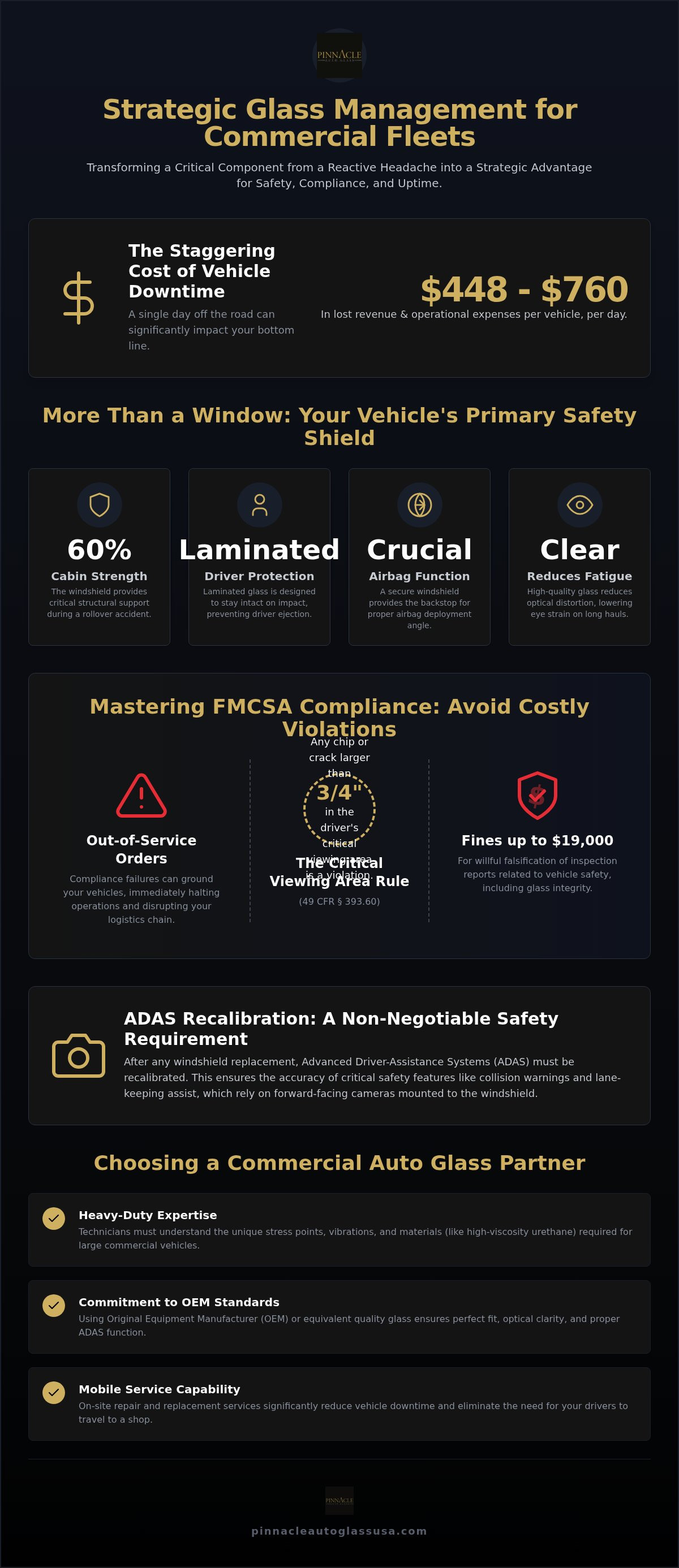
Fleet managers often view windshields as a simple maintenance commodity. This perspective is a mistake. High-quality auto glass for commercial vehicles functions as a primary safety component and a shield against liability. A windshield isn't just a window; it's a structural element that provides up to 60% of the cabin's strength during a rollover accident. Most modern windshields utilize Laminated glass, which is designed to stay intact upon impact and prevent driver ejection.
Beyond physical protection, glass integrity directly impacts your bottom line through asset preservation. Professional care ensures that your vehicles maintain their resale value. Neglected chips lead to spreading cracks that compromise the vehicle's frame and aesthetic appeal. By prioritizing proactive glass management, you transform a potential liability into a reliable business asset.
Safety Standards and Regulatory Compliance
Compliance is non-negotiable for fleet operations. The Federal Motor Carrier Safety Administration (FMCSA) maintains strict standards for driver visibility. Any crack or chip larger than 3/4 of an inch in the driver's critical viewing area is a violation. Under 49 CFR § 393.60, commercial vehicles must maintain a clear field of vision. These defects can lead to "out-of-service" orders, grounding your vehicles and disrupting your logistics chain. As of 2026, the FMCSA has increased fines for willful falsification of inspection reports to as much as $19,000.
Safety extends to the vehicle's internal systems as well. For commercial vans, the windshield provides the necessary backstop for proper airbag deployment. If the glass bond is weak or the integrity is compromised, the airbag may not deploy at the correct angle. Additionally, high-quality glass reduces optical distortion. This prevents driver fatigue during long hauls, directly lowering the risk of accidents caused by eye strain or poor visibility.
The Economic Impact of Glass Maintenance
The financial difference between a repair and a replacement is significant. A single day of vehicle downtime can cost a fleet between $448 and $760 in lost revenue. Choosing professional windshield repair for minor chips prevents these expensive disruptions. It's a faster, more cost-effective solution than waiting for a full emergency replacement. Mobile services further reduce costs by allowing repairs to happen at your yard, eliminating the need for drivers to transport vehicles to a shop.
Managing your auto glass for commercial vehicles also mitigates insurance risks. Documented, professional glass maintenance proves a commitment to safety. This can be a powerful defense in liability cases. When you treat glass as a critical asset, you protect your drivers, your cargo, and your company's financial stability.
Understanding the Specific Glass Needs of Heavy-Duty Fleets
Operating a fleet in 2026 requires more than just standard maintenance. The physical demands placed on auto glass for commercial vehicles far exceed those of passenger cars. These vehicles face constant high-velocity debris, extreme temperature fluctuations, and structural vibrations from heavy diesel engines. Because of these factors, the glass must meet higher stress-tolerance thresholds. Large-surface-area windshields, common in box trucks and buses, require specialized handling equipment and precise installation techniques to avoid stress cracks during the curing process.
The durability of these installations depends heavily on the quality of the seals and adhesives used. Heavy-duty vehicles often require high-viscosity urethane that provides a faster drive-away time and superior bonding strength. This ensures the glass stays secure during long-haul routes across varied terrain. Maintaining these standards is essential for staying compliant with FMCSA 49 CFR 393.60, which mandates specific visibility and structural requirements for all commercial carriers. Proper installation prevents the whistling and leaks that often plague poorly fitted commercial glass.
Semi-Truck and Logistics Vehicle Requirements
Class 8 trucks and logistics vehicles present unique challenges. Many models still utilize two-piece windshield designs. This modular approach allows fleet managers to replace only the damaged side, reducing costs and repair time. However, these systems require expert alignment to prevent wind noise. High-impact resistance is critical for long-haul routes where road debris is a constant threat. Working with semi truck windshield replacement specialists ensures that the glass used meets or exceeds OEM specifications for these heavy-duty applications. Whether your fleet uses gasket-set glass or modern glue-in windshields, the technician must understand the specific load-bearing requirements of the truck's cab.
Delivery Vans and Last-Mile Fleet Glass
Last-mile delivery fleets face a different set of risks. Urban routes involve high-frequency stops, tight maneuvers, and increased exposure to road hazards that frequently damage auto glass for commercial vehicles. Modern delivery vans, such as the Ford Transit or Mercedes Sprinter, feature expansive windshields that are often integrated with complex sensor arrays. These sensors support advanced safety systems like collision avoidance and lane-keep assist. Because these vehicles are the backbone of rapid logistics, a fast turnaround is vital. Any delay in repair directly impacts delivery quotas and customer satisfaction. Implementing a professional fleet glass management strategy helps you coordinate these diverse needs across your entire inventory without missing a beat. This proactive approach ensures that every vehicle in your fleet, from the smallest van to the largest rig, remains safe and road-ready.
ADAS Recalibration: The Essential Requirement for Commercial Safety
ADAS recalibration is the precise process of realigning a vehicle's cameras and sensors after a windshield replacement. It's not an optional upgrade. It's a mandatory safety requirement for any modern fleet. Most auto glass for commercial vehicles now serves as the primary mounting platform for sophisticated technology. These systems include Lane Departure Warning (LDW), Automatic Emergency Braking (AEB), and adaptive cruise control. Even a 1-degree misalignment can cause these systems to fail. At highway speeds, that small error can result in the system missing a hazard by several yards. This level of precision is why following the rigorous standards set by the Auto Glass Safety Council is essential. It's the only way to restore your vehicle to its original OEM safety specifications.
Why Fleets Cannot Skip Recalibration
Liability is the biggest risk when you skip this step. If a vehicle is involved in a collision and the post-accident investigation reveals an uncalibrated sensor, your organization faces massive legal and financial exposure. ADAS is designed to reduce the frequency of commercial road accidents by compensating for human error and driver fatigue. It's a critical safety net for your team. Operating a vehicle with disabled or inaccurate safety features is a gamble you can't afford to take. For a comprehensive breakdown of these systems, see our ADAS calibration auto glass reference guide.
Dynamic vs. Static Recalibration for Commercial Trucks
There are two primary types of recalibration. Static recalibration happens in a controlled shop environment using high-tech targets, specialized software, and laser alignment tools. This method requires a large, level space with specific lighting conditions. Dynamic recalibration requires a technician to drive the vehicle on a clear road at specific speeds, allowing the system to "learn" its environment. Many heavy-duty commercial vehicles and specialized chassis require a combination of both methods. This specialized work demands advanced diagnostic equipment and a technician who understands the nuances of commercial safety arrays. General repair shops often lack these specialized tools. You need a partner who can handle the specific chassis requirements of your fleet to ensure every sensor is perfectly aligned before the vehicle returns to service.
Minimizing Downtime with Strategic Glass Management
Downtime is the enemy of fleet profitability. Every hour a vehicle sits in a shop is an hour it isn't generating revenue. For many logistics operations, this represents hundreds of dollars in lost opportunities per day. Strategic management of auto glass for commercial vehicles focuses on keeping assets in the field. Centralized billing and scheduling systems allow fleet managers to oversee repairs across multiple locations through a single point of contact. This organization eliminates the administrative burden of coordinating with dozens of local vendors and ensures that every repair meets company standards.
The Benefits of Mobile Commercial Glass Service
Mobile service is the most effective tool for maintaining fleet uptime. Instead of paying a driver to sit in a waiting room, the repair shop comes to your fleet yard or job site. This flexibility allows for repairs to be scheduled during vehicle off-hours, such as overnight or between shifts. By integrating reducing fleet downtime with mobile glass repair into your operational plan, you ensure that glass damage never dictates your delivery schedule. It's a logistical win that keeps your drivers focused on their routes rather than maintenance logistics.
Creating a Proactive Glass Maintenance Schedule
Reactive maintenance is always more expensive than a proactive approach. A simple rock chip can be repaired in about 30 minutes, whereas a full windshield replacement requires hours of installation and adhesive cure time. To stay ahead of damage, implement a simple 4-step process for your team:
- Inspect: Drivers should perform a visual glass check during every pre-trip inspection.
- Report: Create a streamlined system for drivers to flag chips immediately.
- Repair: Schedule mobile service for minor damage before it spreads into a crack.
- Recalibrate: Ensure all safety sensors are aligned if a replacement is unavoidable.
Consistency is key to this strategy. Partnering with a dedicated provider for nationwide service ensures that your auto glass for commercial vehicles is handled with the same high quality regardless of where the vehicle is located. This standardization helps you maintain safety compliance and predictable maintenance costs across your entire organization. If you're ready to streamline your operations, you can schedule your fleet glass services through a single, authoritative partner today.
Choosing a Partner for Commercial Auto Glass Excellence
Selecting a service provider for auto glass for commercial vehicles is a strategic business decision. A reliable partner does more than just replace glass; they act as a safeguard for your fleet's operational integrity. You need a provider with documented expertise in heavy-duty applications and access to high-quality glass that meets or exceeds OEM standards. This ensures that every replacement provides the same structural strength as the original part. Additionally, a partner with nationwide coverage is essential for fleets that operate across state lines, providing a consistent standard of care regardless of the vehicle's location.
Integrated service is another critical factor. Your provider must offer ADAS recalibration as a standard part of the glass replacement process. Splitting these tasks between different vendors increases the risk of error and extends your vehicle's downtime. By choosing a single partner capable of handling both the physical installation and the technical sensor alignment, you simplify your logistics and ensure the vehicle is 100% road-ready upon completion.
Technical Certification and Expertise
Technical competence is the foundation of fleet safety. Working with a certified auto glass technician is vital to ensure that every job complies with current safety protocols. These professionals undergo specific training for 2026 commercial safety technologies, including the complex sensor arrays found in late-model semi-trucks and delivery vans. They utilize industry-leading adhesives designed for rapid drive-away times. These high-performance urethanes allow your trucks to return to the road sooner without compromising the bond's structural integrity or the driver's safety.
Pinnacle Auto Glass: Your Commercial Fleet Partner
Pinnacle Auto Glass delivers professional solutions that meet the demands of modern fleet operations. We understand that your priority is safety and efficiency. Our team provides comprehensive fleet glass management, specializing in semi-trucks and ADAS recalibration. We make coordination easy by providing a single point of contact for your entire fleet. This centralized approach eliminates administrative headaches and ensures consistent quality across all your assets. Prioritize the safety of your commercial drivers by partnering with an expert dedicated to excellence in auto glass for commercial vehicles. We are ready to assist you in keeping your fleet compliant, safe, and on the move.
Streamline Your Fleet Safety and Efficiency
Managing a modern fleet in 2026 requires a shift from reactive repairs to strategic glass management. High-quality auto glass for commercial vehicles is a critical safety component that protects both your drivers and your bottom line. Maintaining DOT compliance and ensuring precise ADAS recalibration are fundamental to reducing liability and keeping your operations running smoothly. By prioritizing proactive inspections and mobile repairs, you can effectively eliminate the high costs associated with vehicle downtime.
Pinnacle Auto Glass is ready to act as your dependable guide. We provide High-Quality OEM Standard Glass and Expert Mobile Service for Minimal Downtime to keep your logistics on track. Our team includes Certified ADAS Recalibration Specialists who ensure your safety systems function exactly as intended. Don't wait for a minor chip to become a major operational disruption. Get a Professional Quote for Your Commercial Fleet Glass Today and secure the expert care your drivers deserve. We're ready to help you maintain a safer, more efficient fleet.
Fleet Management Frequently Asked Questions
Do commercial vehicle windshields require different glass than passenger cars?
Commercial windshields are engineered to withstand higher stress and more frequent debris impact than standard passenger cars. These windshields often cover larger surface areas and require specialized lamination to maintain the structural integrity of a heavy-duty cab. While passenger cars focus on aesthetics and weight, glass for commercial vehicles prioritizes durability and optical clarity for long-haul drivers. Using the correct glass grade is essential for meeting FMCSA safety standards.
How long does it take to replace a semi-truck windshield?
A standard replacement usually takes between one and three hours. The exact duration depends on the vehicle's make and whether the windshield is a one-piece or two-piece design. You must also account for the adhesive safe drive-away time, which ensures the bond is strong enough for road use. Mobile technicians can perform these installations at your facility to minimize the time your vehicle spends out of rotation.
Is ADAS recalibration mandatory for commercial trucks after glass replacement?
Recalibration is mandatory for any vehicle equipped with Advanced Driver Assistance Systems. When a windshield is replaced, the cameras and sensors are disturbed. Even a tiny misalignment can cause safety features like collision avoidance to malfunction. Following manufacturer protocols for recalibration is the only way to return the vehicle to its original safety standards and protect your organization from liability risks during an accident investigation.
Can commercial glass repairs be performed at our fleet yard?
Professional mobile services allow for repairs and replacements to be completed at your fleet yard or job site. This approach is the most efficient way to manage auto glass for commercial vehicles because it removes the logistical burden of moving heavy equipment to a shop. Technicians arrive with all the necessary tools and specialized adhesives to get your drivers back on the road without disrupting your delivery schedule.
Does commercial auto insurance typically cover glass replacement?
Most commercial insurance policies with comprehensive coverage include glass repair and replacement. However, policy details vary regarding deductibles and whether the insurer covers the full cost of ADAS recalibration. It's best to review your policy or work with a provider that understands the nuances of commercial claims. This ensures you maximize your benefits while maintaining the safety and compliance of your entire fleet without unexpected out-of-pocket costs.
What happens if a fleet vehicle is driven with an uncalibrated ADAS camera?
Driving with uncalibrated cameras renders your safety systems unreliable. A camera that is off by just one degree may not detect hazards correctly, leading to delayed emergency braking or inaccurate lane departure warnings. This creates a dangerous environment for your drivers and increases your liability in the event of an accident. Manufacturers require recalibration to ensure these systems function as a dependable safety net on the highway.
How can I reduce the frequency of windshield damage in my fleet?
You can reduce damage by establishing a proactive inspection routine. Encourage drivers to check for small chips during their daily pre-trip walk-arounds. Repairing a minor chip immediately prevents it from spreading into a large crack that requires a full replacement. This repair-first protocol is a cost-effective strategy that significantly lowers the total cost of maintaining auto glass for commercial vehicles over the long term.
What is the difference between OEM and aftermarket glass for commercial vehicles?
OEM glass is manufactured by the same company that produced the vehicle's original glass, ensuring a perfect match in fit and clarity. Aftermarket glass is produced by third-party manufacturers and may have slight variations. For vehicles with ADAS technology, OEM glass is often preferred because it provides the precise optical quality required for camera sensors to function correctly. Choosing high-quality glass ensures long-term durability and safety compliance.


